What Is Worth Buying in Dubrovnik?
A local specialist's honest guide to what is worth buying in Dubrovnik, from Plavac Mali wine and olive oil to the Dubrovnik Pass, plus what to skip on the Stradun.
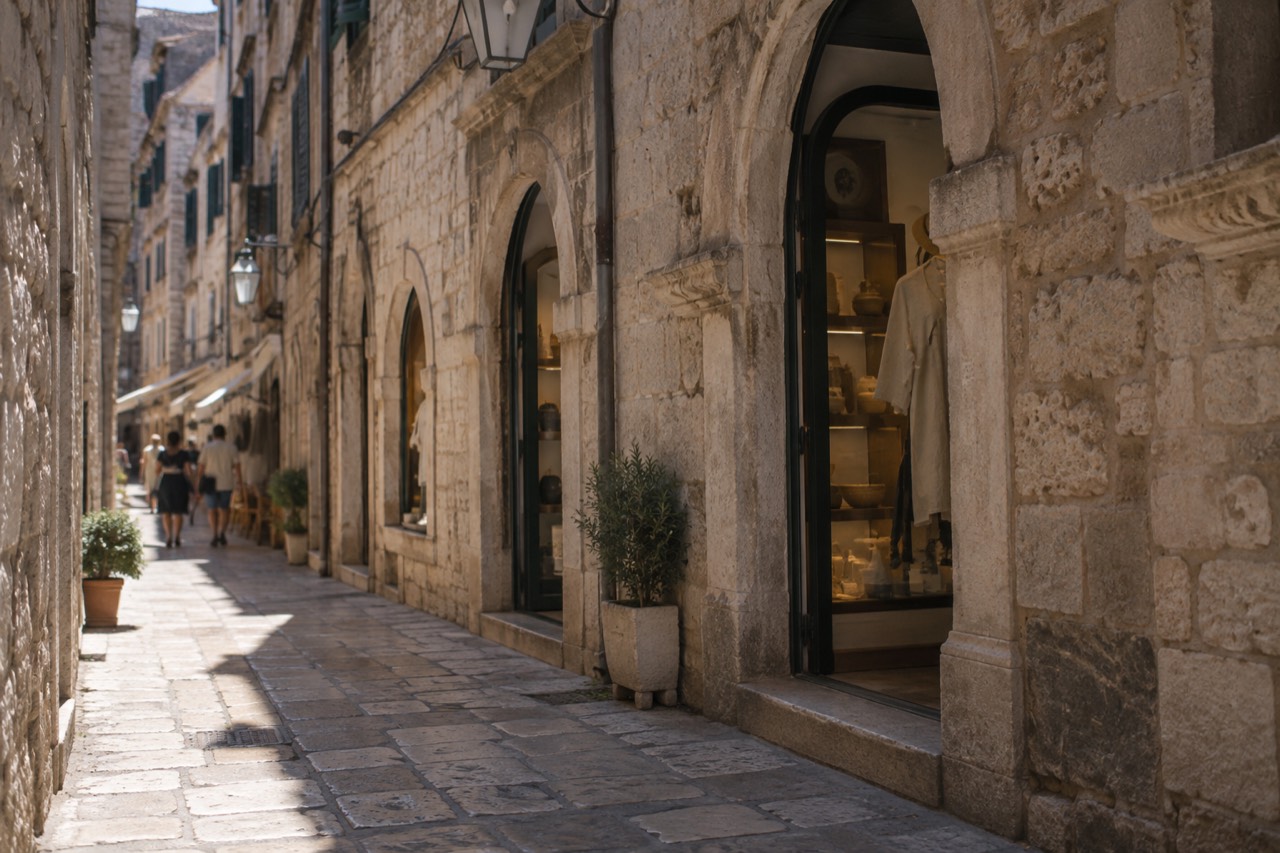
What Is Worth Buying in Dubrovnik?
The honest answer: Croatian wine, locally pressed olive oil, lavender products, salt and oysters from the Pelješac and Ston region, and, if you are sightseeing hard, the Dubrovnik Pass. Skip the mass-produced trinkets that line the Stradun, because most of them were not made anywhere near this city. I have walked these streets with travellers since 2015, and the purchases people still talk about a year later are always food, drink and one good photograph of the view, never a fridge magnet.
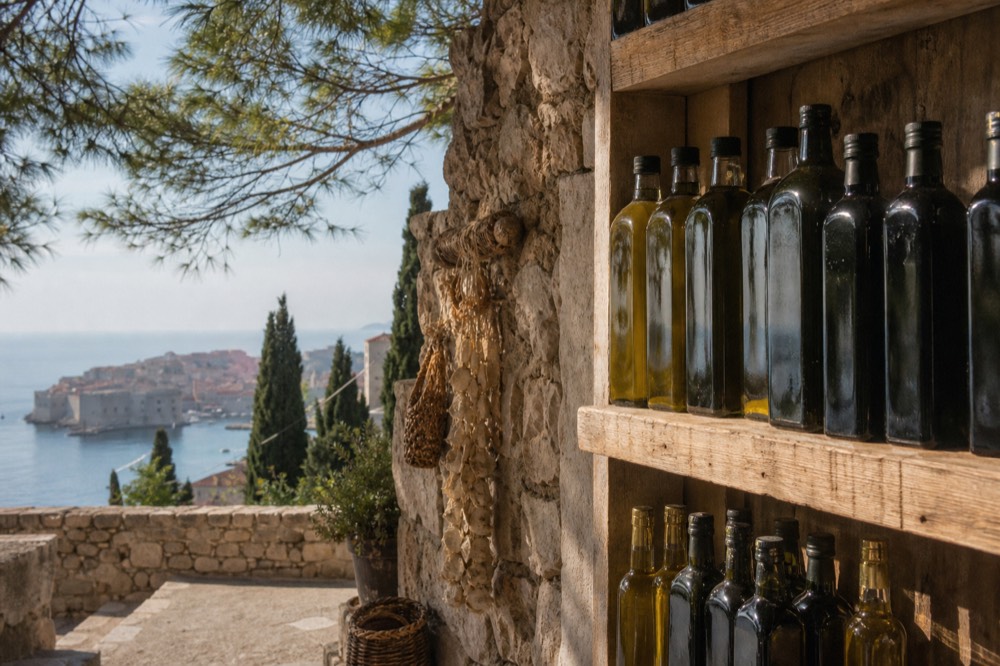
Start with wine, because it is the single best value leaving this city. The local reds are Plavac Mali and its richer cousin Dingač, grown on the steep slopes of the Pelješac peninsula just up the coast. A bottle that would cost you a small fortune abroad sells here for a price that still surprises visitors, and shops in the Old Town will pack it for travel. You taste first, then buy, which is the order I recommend for anything you plan to carry home.
Olive oil is the second purchase worth making. Dalmatian oil is peppery and green, and small producers around Dubrovnik sell it in tins and dark bottles in shops a street or two off the main drag. Lavender comes third: sachets, soaps and essential oil from Croatian lavender fields are light, inexpensive and genuinely local. Then there is salt. Ston, an hour up the coast, has working salt pans, and its salt plus the region's famous oysters make a food-focused detour one of the better day trips from the city. You can read more in our Ston and Pelješac guide.
| What to buy | Where it comes from | Why it is worth it |
|---|---|---|
| Plavac Mali and Dingač wine | Pelješac peninsula and nearby hills | Local reds at prices well below what they fetch abroad |
| Olive oil | Small Dalmatian producers | Peppery, green and hard to find outside Croatia |
| Lavender products | Croatian lavender fields | Light, cheap and genuinely local |
| Ston salt | Ston salt pans | A working tradition, not a souvenir cliché |
| Dubrovnik Pass | Official city pass | Walls plus ten more sights for the walls-only price in main season |
The one thing I tell every visitor: the shops on the Stradun itself, the 298-metre limestone street that runs the length of the Old Town, are mostly aimed at people who will never come back. Walk one street north or south, into the parallel lanes, and the character of the retail changes completely. That is where the food shops, the wine merchants and the small galleries are. If you want a shortcut to knowing which streets matter, the Old Town walking tour with a local guide starts from $20 per person and is rated 4.8 across 5,826 reviews on the live listing. It is a walking tour rather than a shopping tour, but a local guide will point you at the shops worth returning to, and the Old Town walk with a local guide page has the details.
Alex was a fantastic guide, she explained the complex history of Dubrovnik to give a lasting impression of the history of the area. Really appreciated that she aimed for shaded areas on a boiling September day. The food recommendations for after were much appreciated too! Great tour for a first experience of the old town!
Sophie
That review touches on something worth spelling out for shoppers. The food recommendations a guide hands you at the end of a walk are often the most valuable thing you take home, because they steer you toward konobas and shops that survive on repeat local business rather than one-time foot traffic. A two-hour walk in the right company effectively pays for itself in the money you do not waste on the wrong restaurant or the wrong bottle. Between the two walks and the tasting trip above, you have the full spread of ways to buy well here: taste first, walk first, or go straight to the source in the Konavle Valley.
Is It Worth Buying a Dubrovnik Pass?
Yes, in main season, if you plan to walk the city walls and visit even two or three more sights. The one-day pass costs 40 euro, exactly the price of the standalone walls ticket between 1 March and 30 November, and adds ten more sights plus a 24-hour bus ticket. In December the walls ticket alone drops to 20 euro and no pass tier is on sale at all, so the maths flips completely.
The details matter here, so let me be precise. The standalone adult City Walls ticket is 40 euro in main season, 1 March to 30 November, and 20 euro in December. That 40 euro ticket is actually the walls plus Fort Lovrijenac combination, and it also covers the Western Outer Wall, closed December through February, and the Collection of Coins of the Republic of Ragusa. There is no family ticket, only adult and child 7 to 18, which costs 15 euro in main season and 5 euro in December, with under 6 free. The operator's own site, the Society of Friends of Dubrovnik Antiquities, lists the full structure.
The pass, sold on the official Dubrovnik Pass site, comes in three durations. Every tier lists City Walls plus Lovrijenac Fortress as its first inclusion, and every tier allows a one-time visit to each institution, the walls included. Beyond the walls you get the Rector's Palace, the Maritime Museum, the Ethnographic Museum, Marin Držić House, the Natural History Museum, the Franciscan Monastery Museum, the Museum of Modern Art, the Dulčić-Masle-Pulitika Gallery, Pulitika Studio and the archaeological exhibitions. The three-day and seven-day tiers add House Bukovac in Cavtat plus suburban bus coupons.
| Pass tier | Price | Transport included | Extra sights beyond the walls |
|---|---|---|---|
| One day | 40 euro | 24-hour bus ticket | Ten sights in the city |
| Three days | 50 euro | 72-hour bus ticket, suburban coupons | Ten sights plus House Bukovac in Cavtat |
| Seven days | 60 euro | 168-hour bus ticket, suburban coupons | Ten sights plus House Bukovac in Cavtat |
So the decision is simple arithmetic. If you are in town between March and November and the walls are on your list, the one-day pass costs the same as the walls ticket and everything else it adds is effectively free. If you are visiting museums over several days, the three-day pass at 50 euro is the better buy. If you come in December, do not buy a pass, because no winter tier exists; buy the 20 euro walls ticket at the gate instead. The checkout sells one ticket type only, the adult pass for ages 7 and up, and the season window is printed on the sale page itself.
One shopping-adjacent warning about the pass: buy it from the official site, not from resellers on the street, and check what is actually open on your dates. Museums close on some weekdays in the off season, and a pass bought for a Monday in November can cover a wall of closed doors. The walls themselves run 08:00 to 19:30 in the operator's stated hours, which makes an early pass day entirely doable: walls at opening, museums through the middle of the day, bus back to your hotel in the late afternoon. A family of four with two children aged 7 to 18 pays 40 euro each for the adults and 15 euro each for the children on the standalone route in main season, and the pass pricing follows the same single adult ticket type, so do the sums for your own group before you commit. There is no shortcut around the arithmetic, but the arithmetic is at least honest and published.
Is Dubrovnik Good for Shopping?
Honestly, only in a narrow sense. Dubrovnik is not a shopping city like Zagreb or Split; it is small, expensive and heavily oriented toward tourists, so the retail scene is concentrated in a few streets and skews toward souvenirs. What it does well is food, wine and small independent makers, and those are worth seeking out. Fashion hunters and bargain hunters will both leave disappointed.
The geography of shopping here takes half a day to learn. The Stradun, laid out in its final plan by the 1272 Statute according to the Dubrovnik Tourist Board, carries the highest rents and therefore the most generic stock. The lanes running off it hold the interesting shops: galleries, a chess-set tradition this city is genuinely known for, and food merchants selling oil, wine and candied bitter orange, a local speciality. Outside the walls, Gruž market is where the city actually shops, and it is the place to buy lavender, honey, brandy and fruit at prices locals pay. Our Gruž market guide covers it in detail.
| Shopping area | What it is good for | What to skip |
|---|---|---|
| Stradun and Pile approach | People-watching, ice cream, one or two established names | Mass-produced souvenirs and branded trinkets |
| Side lanes of the Old Town | Galleries, chess sets, food and wine shops | Anything you cannot identify the origin of |
| Gruž market | Lavender, honey, brandy, produce at local prices | Nothing much; go early for the best stalls |
| Boutiques in Ploče and Lapad | Casual browsing near the beaches | Expecting mall-style selection |
Price expectations need calibrating too. Dubrovnik recorded about 4.2 million overnight stays in 2025, sharing first place among Croatian destinations with Rovinj, according to the Croatian Bureau of Statistics. A city with that volume of visitors prices its prime retail space accordingly, and some of that rent lands in your receipt. The same bottle of water, the same sunhat, the same magnet costs more inside the walls than it does ten minutes away in Gruž or Lapad. Buy consumables outside the walls and save your Old Town money for the things that only exist here.
The chess sets deserve a special mention because they are one of the few genuine crafts associated with the city, and our Dubrovnik chess set guide explains what distinguishes a real one from the imports. Beyond that, think of shopping in Dubrovnik as a food-and-craft errand rather than a day out. Two hours in the right lanes beats two days on the main street. If your suitcase is small, prioritise the light and unbreakable: lavender, salt in sealed packaging, and one or two bottles of wine packed by the shop. Olive oil travels well in tins, and tins survive baggage handlers better than glass. Leave the ceramics and the bulky woodwork unless you are driving home, because shipping fragile goods out of a small seasonal city is more trouble than the object is worth.
What Not to Do in Dubrovnik?
The mistakes I see most: shopping on the Stradun at cruise-peak hours, walking the walls at midday in summer, assuming summer is the busiest season, buying without checking origin labels, and stretching a few hours into a rushed half-day. September and October, not July and August, are the two biggest cruise months, so timing your purchases around the crowds matters more than most visitors expect.
Let me give you the counter-intuitive fact first, because it changes how people plan. Port Authority data shows 2025 cruise passengers peaked in September at 101,246 and October at 100,132, above July's 96,072 and August's 87,385. The Port Authority limits cruise passengers to 8,000 a day in most cases, with a 2+1 berthing arrangement, and the Old Town's official carrying capacity, from the UNESCO carrying-capacity assessment, is 11,275 people. Six counters at every Old Town entrance update a headcount every 15 minutes, and on one September morning the count climbed from 5,419 at 08:00 to a 7,739 peak at 10:00. So "avoid the crowds by coming in autumn" is simply wrong here. Autumn is lovely, but it is the busiest cruise season of the year.
| Common mistake | What to do instead |
|---|---|
| Buying souvenirs on the Stradun at midday | Shop the side lanes early morning or after 18:00 |
| Walking the walls at noon in high summer | Enter at 08:00 opening or late afternoon |
| Assuming July and August are peak cruise months | Plan around September and October, the real peaks |
| Buying a pass in December | No winter tier exists; buy the 20 euro walls ticket instead |
| Buying wine or oil without tasting or checking origin | Taste first, read the label, then buy |
The other mistakes are quieter. Do not buy anything labelled "Dalmatian" or "Croatian" without turning it over and reading the origin, because plenty of stock in the tourist streets is imported. Do not buy a winter Dubrovnik Pass, because no such product is on sale, and be wary of anyone quoting you 2027 prices for anything, walls, cable car or tours, because 2027 is not on sale yet. Do not change money at exchange offices with poor rates scattered near the gates; cards are widely accepted and the rates inside banks are fairer. And do not try to see the whole Old Town, the walls and a boat trip in one day. People who sprint Dubrovnik remember only the sprinting.
One more, since we are on purchases: do not buy your Lokrum ticket from anyone other than the official office at Luža in the Old City Port, open 08:00 to 18:00. The official ticket is 30 euro per person and covers both the reserve entry and the return boat transfer, boats leave the City Harbour at 09:00 and then every 15 minutes from 10:00 to 18:00, and the ticket stays usable for three days. Anyone selling you something structurally different is selling you something else. The same principle applies to every purchase in this city: if the seller cannot tell you where the thing was made or what is in the bottle, that silence is your answer.
Is Dubrovnik, Croatia Worth Visiting?
Yes, unreservedly, and the numbers back it up. The Old Town has been UNESCO-listed since 1979, inscribed under criteria (i), (iii) and (iv) across a 24.7-hectare property, and it spent 1991 to 1998 on the World Heritage in Danger list during the war before recovering completely. About 4.2 million overnight stays in 2025 say most visitors are not regretting the trip.
The city earns it. The walls alone, 1,940 metres long, up to 25 metres high, and 4 to 6 metres thick on the land side, are the best-preserved fortification circuit of this scale you can walk anywhere, and the view from them over the red roofs to the Adriatic is the photograph everyone came for. The cable car lifts you 367 metres to the upper terminal at 405 metres above sea level in 3 minutes 30 seconds, with a stated view range of up to 60 km on a clear day. Fort Lovrijenac stands on its 37-metre sea rock just outside the walls. None of that is marketing; it is just what is here.
Worth visiting is not the same as worth visiting blindly, though. The city is expensive by Croatian standards, small enough that a careless two days can feel repetitive, and busy in ways that surprise people who expected August to be the peak. Plan around the real patterns: come for the walls at opening, eat where the konobas are, take one boat out to the Elaphiti islands or Lokrum, and leave room to do nothing on a bench by the harbour. The visitors who love Dubrovnik are almost always the ones who bought less and walked more. For the full picture of what the city offers beyond shopping, start with Things to Do in Dubrovnik and work outward from there.
Common Questions About Shopping in Dubrovnik
What is worth buying in Dubrovnik?
Croatian wine, especially Plavac Mali and Dingač, locally pressed olive oil, lavender products, Ston salt and, if you are sightseeing in main season, the Dubrovnik Pass. Skip the mass-produced souvenirs on the Stradun and shop the side lanes and Gruž market instead.
Is It Worth Buying a Dubrovnik Pass?
Yes, in main season. The one-day pass costs 40 euro, the same as the standalone walls ticket between 1 March and 30 November, and adds ten more sights plus a 24-hour bus ticket. In December the walls ticket drops to 20 euro and no pass tier is on sale.
Is Dubrovnik Good for Shopping?
In a narrow sense. It is not a shopping city, but it does food, wine and small independent makers very well. Expect high prices in the tourist core and better value in Gruž market and the side lanes of the Old Town.
What Not to Do in Dubrovnik?
Do not shop the Stradun at cruise-peak hours, walk the walls at summer midday, buy a winter pass that does not exist, or assume July and August are the busiest months. September and October are the two biggest cruise months of the year.
Is Dubrovnik, Croatia Worth Visiting?
Yes. A UNESCO-listed Old Town since 1979, a walkable 1,940-metre wall circuit and about 4.2 million overnight stays in 2025 all point the same way. Visit with a plan, buy selectively and walk more than you shop.