What Stone Is Used in Dubrovnik?
Discover the stone that built Dubrovnik's iconic Old Town and city walls, and learn why this limestone is so central to the city's history and appearance.
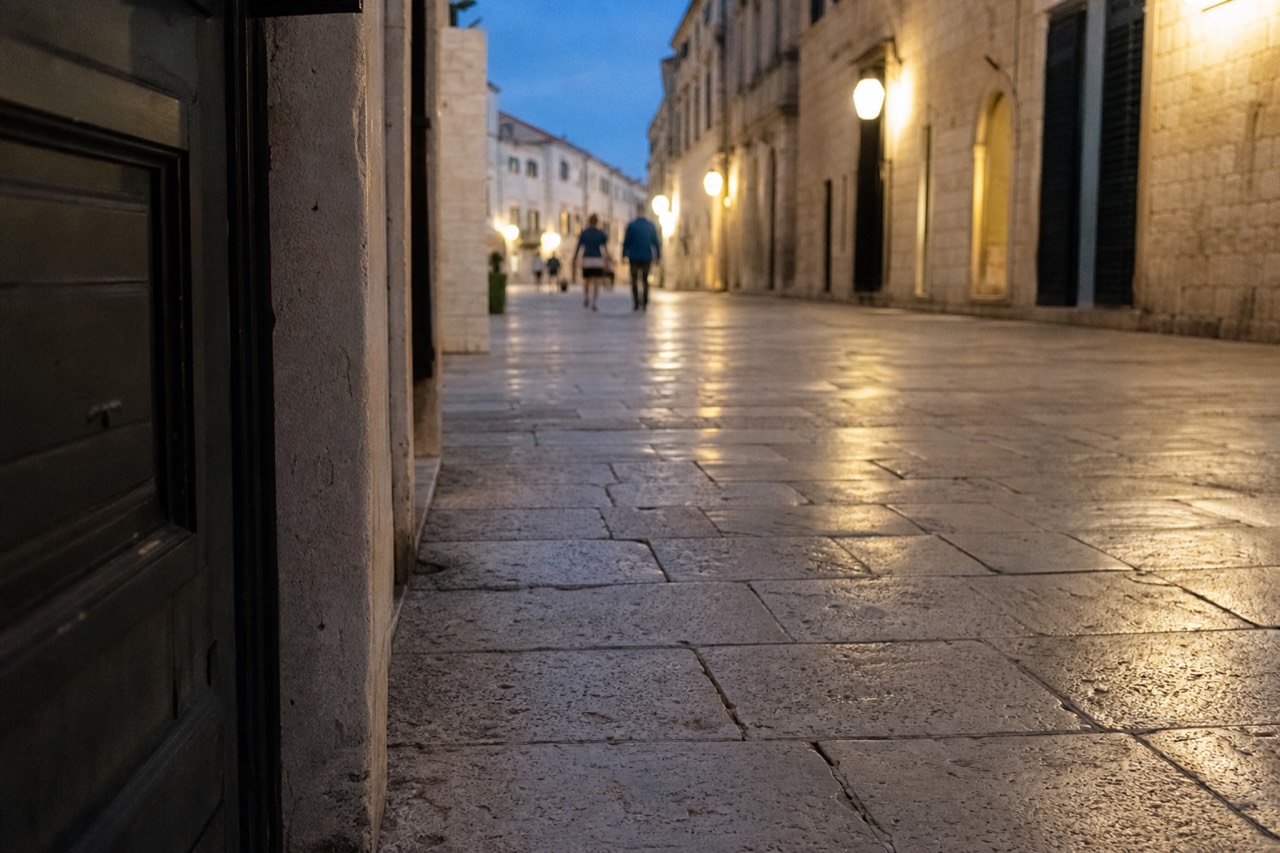
When you walk through Things to Do in Dubrovnik, the first thing you notice is the stone. It glows pale under the sun, a uniform, creamy white that makes the Old Town feel like a single sculpted object rather than a collection of buildings. The question is a natural one: what stone is used in Dubrovnik? The answer is a local white limestone, a sedimentary rock that has been quarried along the Adriatic coast for centuries and that gives the city its unmistakable character.
What Stone Is Used in Dubrovnik?
Dubrovnik's Old Town, city walls and the Stradun are made almost entirely of a local white limestone, a sedimentary rock quarried from the Adriatic coast that hardens and lightens with age. The stone is the city's defining material, giving the historic core its uniform, pale glow and its UNESCO World Heritage character.
The limestone is a type of bioclastic limestone, rich in shell fragments and marine fossils. It formed millions of years ago in the shallow seas that covered this part of the Adriatic, and it has been the building material of choice for Dubrovnik's monuments since the medieval period. The specific quarries that supplied the Republic of Ragusa were likely on the nearby islands of Brač and Korčula, as well as on the Pelješac peninsula, where the same stone is still extracted today. The workability of the stone when freshly cut, combined with its durability once it has cured in the open air, made it ideal for the ambitious defensive walls and the elegant palaces of the city.
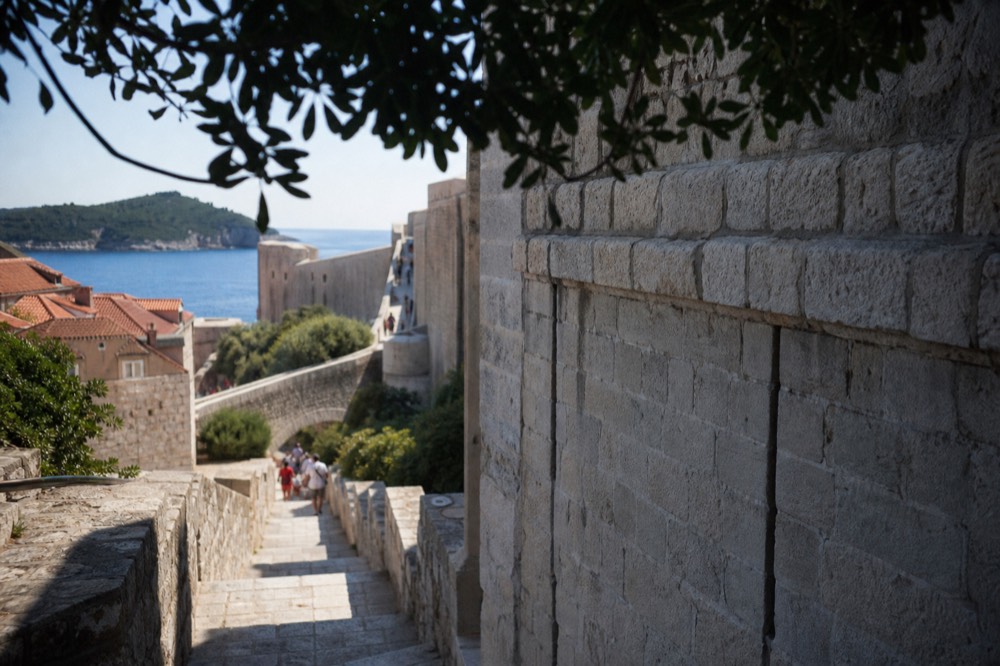
The most famous application of this stone is the city walls, which run for 1,940 metres and reach a height of up to 25 metres. The main wall is 4 to 6 metres thick on the land side and 1.5 to 3 metres on the sea side, and the entire circuit contains 16 towers, 3 fortresses, 6 bastions, 2 corner fortifications, 3 bulwarks with rows of turrets, 3 moats, 2 flank fortresses, 1 breakwater and 2 drawbridges. Every block is limestone, and the walls have withstood earthquakes, sieges and centuries of salt spray. The Stradun, the city's main thoroughfare, is paved with the same stone, and its 298-metre length was fixed by the 1272 Statute. The polished limestone slabs have been worn smooth by centuries of foot traffic, and they shine brilliantly after rain.
The stone's colour is one of its most distinctive features. It starts as a pale beige when first quarried, then bleaches to a near white under the Dalmatian sun. The contrast between the white stone and the terracotta roof tiles is the classic Dubrovnik vista, and the stone's reflective quality means the Old Town seems to glow in the late afternoon light. The limestone also contains small amounts of iron oxide, which can produce subtle veining in some blocks, but the dominant impression is of a clean, luminous surface.
| Feature | Measurement |
|---|---|
| Total length | 1,940 m |
| Maximum height | up to 25 m |
| Thickness, land side | 4 to 6 m |
| Thickness, sea side | 1.5 to 3 m |
| Towers | 16 |
| Fortresses | 3 |
| Bastions | 6 |
| Corner fortifications | 2 |
| Bulwarks with rows of turrets | 3 |
| Moats | 3 |
| Flank fortresses | 2 |
| Breakwater | 1 |
| Drawbridges | 2 |
The stone was also used in the city's religious and civic buildings. The Rector's Palace, the Franciscan Monastery and the Sponza Palace are all limestone constructions, and their carved details, capitals, arches and window frames, demonstrate the material's fine grain and suitability for ornament. The Republic of Ragusa invested heavily in keeping a consistent supply of high-quality stone, and the quarries were managed as a strategic resource. The same limestone can be found in the walls of Ston, the defensive outpost that protected the Republic's salt pans, and in many of the aristocratic summer villas scattered along the coast. The stone from Ston is particularly notable because the walls there are the longest defensive stone wall in Europe, and the limestone blocks are larger and rougher-hewn than the finely dressed stone of the Dubrovnik walls. The quarries on the Pelješac peninsula are still active today, and the stone that built the Old Town is still being extracted for restoration work and new construction across the region.
The limestone's durability is remarkable, but it does require maintenance. The Society of Friends of Dubrovnik Antiquities, which operates the walls, oversees a continuous programme of conservation. The stone is cleaned, repointed and replaced where necessary, and the work is done using the same techniques and materials as the original builders. The result is a city that looks much as it did centuries ago, a living monument to the stone that built it. Many visitors who spend time walking the walls and the Stradun find themselves asking the same question: is it worth doing the city walls in Dubrovnik? The answer is an emphatic yes, and the stone itself is a large part of the reason why.
What Not to Do in Dubrovnik?
Avoid walking the city walls in the middle of a summer day without water and sun protection, as the stone radiates heat and there is little shade. Don't eat at the overpriced tourist traps on the Stradun itself; instead, step a street or two back for better value. And never underestimate the climb to Fort Lovrijenac, which stands on a 37-metre-high sea rock.
The limestone walls become a heat trap in July and August, and the circuit can take an hour or more with no shelter. The best times to walk the walls are early morning, when the stone is still cool, or late afternoon, when the light is golden and the crowds have thinned. The same applies to the climb up to Fort Lovrijenac, which sits on a 37-metre-high sea rock and offers one of the best views of the Old Town, but the steps are steep and exposed. Another mistake is assuming you can simply wander into any restaurant on the Stradun. The main street is lined with places that trade on their location rather than their food, and you will pay a premium for a mediocre meal. Walk into the side streets, especially the ones around Prijeko or in the residential parts of the Old Town, and you will find far better value and more authentic cooking.
It is also a mistake to skip the Dubrovnik Pass if you are planning to walk the walls and visit a few museums. The one-day pass costs the same 40 euro in main season (1 March to 30 November) as the walls ticket alone, but it adds entry to ten more sights and a 24-hour bus ticket. You can buy the pass online or at the tourist board office, and it is a genuine saving. Another thing to avoid is arriving at the Old Town at 10:00 in the morning during cruise season, when the headcount can hit 7,739, as it did on a September day in 2026. The early morning and the evening are quieter, and the light is better for photography. The limestone looks its best in the low sun, and the crowds are thinner, so you get a better experience and better photographs.
Don't limit yourself to the Old Town. Many visitors never leave the walled city, but the area around Gruž Harbour, the Lapad peninsula and the rocky beaches of Babin Kuk are all worth exploring. The number 6 bus from Pile Gate to Lapad is easy to use, and the seafront promenade in Lapad is a relaxed, local-feeling alternative to the Old Town crowds. Finally, don't underestimate the distance from the cruise port to the Old Town. It is a 30-minute walk from the Gruž cruise terminal to Pile Gate, and in the heat, a taxi or a bus is a better option. The stone streets of the Old Town are beautiful, but they are also hard on the feet, so wear comfortable shoes and take breaks.
Is Dubrovnik Worth Visiting?
Absolutely. Dubrovnik is a UNESCO World Heritage site with one of the most complete medieval walled Old Towns in the world, a unique limestone city that has survived earthquakes and war. The combination of history, architecture, coastal scenery and Game of Thrones fame makes it one of the most compelling destinations on the Adriatic.
The Old Town is the main draw, and it is a place that rewards slow exploration. The limestone streets, the narrow alleys, the hidden courtyards and the baroque churches all feel like a living museum. The city walls are the headline attraction, and walking the full circuit is one of the great travel experiences in Europe. The UNESCO inscription from 1979 recognises the city under criteria (i), (iii) and (iv), and the property area of 24.7 hectares, with an 1,188.6-hectare buffer zone, is packed with history. The city was on the World Heritage in Danger list from 1991 to 1998 during the war, and its restoration since then has been meticulous.
The stone fabric of the city is a large part of its appeal. You can see the different shades of limestone, the marks of quarrying, and the way the stone has been used in the defensive walls, the palaces, the fountains and the paving. The Stradun, the Rector's Palace, the Franciscan Monastery and the Sponza Palace are all built from the same material, and the visual unity of the Old Town is a direct result of the limestone. The city also has a lively cultural life, with the Dubrovnik Summer Festival, concerts in the Rector's Palace atrium, and a growing food scene. For anyone wondering whether the Old Town is worth visiting, the answer is unequivocal: the stone alone makes it worth the trip, and the rest of the city's offerings only deepen the experience.
The walls are a UNESCO monument in their own right, and a guided walk can bring the stone to life. The 2-hour Ancient City Walls & Wars walking tour covers the history of the fortifications and the sieges they endured, and the guide will point out the different phases of construction and the quarry marks on the blocks. The tour is rated 4.8 across 1,387 reviews and starts from $29.58 per person.
The city is also a gateway to the Elaphiti Islands, the Pelješac peninsula, and the day-trip destinations of Mostar and Montenegro. You can fill a week easily, and the city's compact size means you can walk everywhere. The cable car to Mount Srđ, the Lokrum ferry, and the beaches of Lapad and Banje are all within reach. The stone of the city is the backdrop to everything, and it is that pale, glowing limestone that you will remember long after you leave.
What Is Dubrovnik Best Known For?
Dubrovnik is best known for its monumental stone city walls, which encircle the Old Town for 1,940 metres and reach a height of 25 metres. The walls, the Stradun, the Rector's Palace and the Franciscan Monastery are all built from the same white limestone, and the city's appearance as King's Landing in Game of Thrones has cemented its global fame.
The walls are the symbol of the city, and they are visible from the moment you approach. The defensive system was built up over centuries, with the final bastion of St Stephen finished in 1660, and it is a masterpiece of military engineering. The walls are free-standing in places, with the sea crashing against the limestone blocks on the south side, and the views from the top are spectacular. The Stradun, the main street, is the other iconic image of Dubrovnik, and its limestone paving has been polished by millions of feet. The street is lined with baroque buildings, all built after a devastating earthquake, and the uniformity of the limestone facades is a deliberate architectural choice.
The Game of Thrones connection has brought a new wave of visitors, and the city's appearance as King's Landing is a major part of its modern fame. The Walk of Shame scene was filmed on the Jesuit Staircase, the Red Keep is the Rector's Palace, and the city walls stand in for the walls of King's Landing. The limestone backdrop is perfect for the fantasy setting, and the contrast between the white stone and the blue sea is unmistakable.
The same limestone is used in the walls of Ston, a short drive north of Dubrovnik. The Ston walls are the longest defensive stone wall in Europe, and they were built to protect the salt pans that were a major source of wealth for the Republic of Ragusa. The stone in Ston is the same local limestone, and the town is also famous for its oysters and mussels, which are harvested from the bay and served in the local restaurants. The Pelješac peninsula is also the home of Plavac Mali, the red grape that produces some of Croatia's most celebrated wines, and the limestone soils of the peninsula contribute to the wine's distinctive mineral character.
The oyster and mussel tasting tour to Ston is a half-day trip that includes a seafood lunch and a visit to the Pelješac vineyards. The tour is rated 4.9 across 111 reviews and starts from $157 per person. The limestone landscape of the Pelješac peninsula is dramatic, and the oyster farms in the bay are a working part of the local economy.
The Dubrovnik Combo Tour, which combines the Old Town and the city walls, is another way to experience the stone city in depth. The 3-hour 30-minute walk covers the Stradun, the walls and the main landmarks, and it is rated 4.8 across 1,183 reviews. The guide will point out the different types of limestone and the quarry marks, and the tour starts from $50.94 per person. Check availability on the live listing.
What Is Dubrovnik Famous For?
Beyond the walls, Dubrovnik is famous for its maritime history as the Republic of Ragusa, its role as a filming location for Game of Thrones and Star Wars, its summer festival, and the distinctive limestone-paved Stradun. The city is also famous for its coastal scenery, Lokrum Island, and the cable car to Mount Srđ.
The Republic of Ragusa was a maritime power that rivalled Venice, and the city's wealth was built on trade and diplomacy. The limestone palaces and churches are a legacy of that period, and the city's motto, "Non bene pro toto libertas venditur auro" (Liberty is not well sold for all the gold), is carved in stone above the Rector's Palace. The city's diplomatic skill kept it independent for centuries, and the stone walls were a vital part of that defence. The walls were never breached by an enemy force, a testament to both the engineering and the material. The limestone absorbed cannon fire better than many other stones, and the thickness of the walls, 4 to 6 metres on the land side, meant that even direct hits rarely caused structural damage.
The cable car to Mount Srđ is another famous attraction, and the upper terminal at 405 metres offers a 360-degree view of the Old Town, the islands and the coast. The track is 778.2 metres long and rises 367 metres in 3 minutes 30 seconds, and the cabins have a capacity of 32 plus 1. The view from the top is one of the best ways to see the limestone city in its setting, and the summit restaurant is a popular spot for sunset. The cable car is closed January to March, and in the peak summer months it runs until midnight.
Lokrum Island is a nature reserve and a popular day trip, accessible by boat from the Old Harbour. The island is covered in limestone and pine trees, and it has a Benedictine monastery, a botanical garden and a saltwater lake. The Lokrum ticket is 30 euro per person and includes the reserve entry and the return boat transfer. The boats leave at 09:00 and then every 15 minutes from 10:00 to 18:00. The island is a peaceful escape from the stone city, and the swimming is excellent.
The city's fame is also tied to its food and wine. The Pelješac peninsula is the source of the stone for the walls, but it is also the home of Plavac Mali, the red grape that produces some of Croatia's best wines. The Ston oysters and mussels are a local delicacy, and the seafood in Dubrovnik's restaurants is generally excellent. The stone of the city is the backdrop to every meal, every walk and every memory, and it is the reason the Old Town looks the way it does. The visual consistency of the limestone, from the paving underfoot to the walls overhead, creates a sense of place that is unmatched anywhere else on the Adriatic coast.
Common Questions About Dubrovnik Stone
What stone is used in Dubrovnik?
Dubrovnik is built almost entirely from a local white limestone, a sedimentary rock quarried from the Adriatic coast. The stone is rich in marine fossils and hardens and lightens with age, giving the Old Town its characteristic pale glow. The same limestone was used for the city walls, the Stradun, the palaces and the churches.
Why is Dubrovnik's stone so white?
The limestone starts as a pale beige when quarried and bleaches to a near white under the Dalmatian sun. The stone's reflective quality is enhanced by the polishing effect of centuries of foot traffic, and the contrast with the terracotta roof tiles makes the white appear even brighter.
What is the Stradun made of?
The Stradun is paved with the same white limestone that forms the city walls. The 298-metre-long street was laid out in its current form after a major earthquake, and the smooth, polished limestone slabs have been worn glossy by centuries of use.
Where did the stone come from?
The limestone was quarried from the nearby islands of Brač and Korčula, as well as from the Pelješac peninsula. The Republic of Ragusa managed the quarries as a strategic resource, and the stone was transported by sea to the city.
Is Dubrovnik's stone the same as Brač stone?
The limestone used in Dubrovnik is similar to the famous Brač stone, but the two are not identical. Brač stone is known for its use in buildings like the White House in Washington, D.C., while Dubrovnik's stone is a local variant with its own characteristics. Both are high-quality white limestone.
How has the stone held up over time?
The stone has proven remarkably durable, withstanding earthquakes, salt spray and centuries of tourism. The city walls have stood since the 13th century, and the limestone's resistance to erosion is one of the reasons the Old Town is so well preserved. The stone does require regular maintenance, and the Society of Friends of Dubrovnik Antiquities oversees the conservation of the walls.