What Time of Day Is Best to Walk the Dubrovnik Walls?
The best time of day to walk the Dubrovnik city walls, with real crowd counts, ticket prices, shade logic and a timing plan for each season.
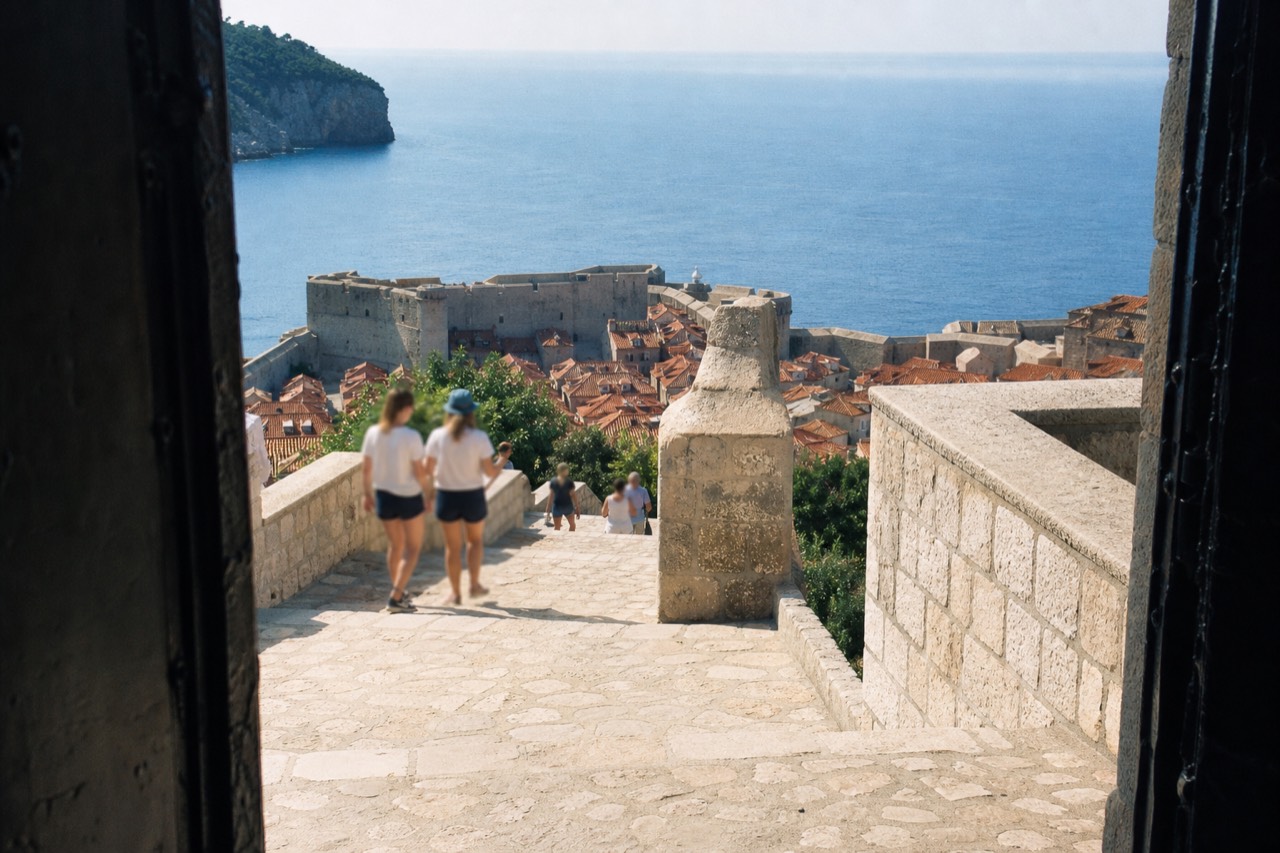
What Time of Day Is Best to Walk the Dubrovnik Walls?
The honest answer, from someone who has walked this circuit in every month and every hour the gate is open: go at 08:00, or go after 16:00, and never arrive between 10:00 and 12:00. The wall's operator states working hours of 08:00 to 19:30, and the middle of that window belongs to the crowds. Everything below explains why, with the actual headcounts the city publishes, the shade problem that decides summer timing, and the ticket arithmetic that changes with the season.
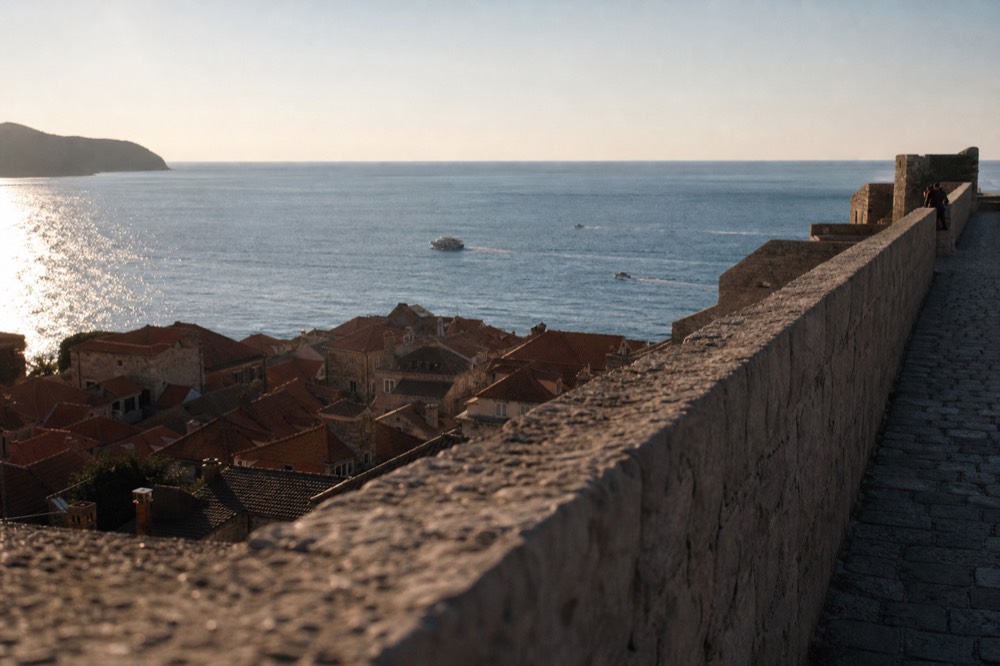
What Time of Day Is Best to Walk the Dubrovnik Walls?
The best time is the first hour after opening, 08:00 to 09:00, when the counters read 5,419 people in the Old Town against a 7,739 peak at 10:00. The second best window is 16:00 to closing, when day trippers have left, the light turns gold and the stone has stopped radiating heat. Avoid 10:00 to 12:00 entirely in July, August and September.
Six counters at every Old Town entrance update a headcount every 15 minutes, and the city publishes the curve. On 8 September 2026, a representative busy day, the count ran 1,200 at 04:00, 1,725 at 06:00, 3,139 at 07:00, 5,419 at 08:00, 7,297 at 09:00, a 7,739 peak at 10:00, then 7,205 at 11:00. The official carrying capacity of the Old Town, from the UNESCO carrying-capacity assessment, is 11,275 people, and the wall itself is the single biggest magnet inside it. The pattern is consistent: the wall fills with the tour groups that start at 09:00 and 09:30, and it empties when they leave for lunch.
| Time | People counted in the Old Town | What it means for the wall |
|---|---|---|
| 08:00 | 5,419 | Opening hour, thinnest wall traffic of the morning |
| 09:00 | 7,297 | Guided groups arriving, wall filling fast |
| 10:00 | 7,739 | Peak of the day, queues at the ticket office |
| 11:00 | 7,205 | Still crowded, little shade yet |
The second reason is heat. The circuit is 1,940 metres long, up to 25 metres high, and 4 to 6 metres thick on the land side, which means the top of the wall is a stone plateau with almost nowhere to hide from the sun. In July and August the open-water sea temperature average is 24.9 and 25.8 degrees, and the air above the wall is hotter still; the stone you are standing on has been absorbing that since 10:00. Walking it at 08:00 means the surface is still cool from the night. Walking it after 17:00 means the sea breeze has arrived and the light on Lokrum and the open Adriatic is at its best for photographs.
The third reason is the queue. The 40 euro adult ticket in main season covers the walls plus Fort Lovrijenac, and there is exactly one combination ticket, so everyone who wants the wall buys the same product. The ticket office line at Pile Gate is shortest in the first 30 minutes and again after 16:00. If you would rather not queue at all, a guided option bundles the ticket into the walk: the Check availability link shows the combined Old Town and walls outing in one booking.
The trio above spans the three realistic ways to do this: a guided combo that covers the Old Town streets and the wall together, the plain admission ticket if you want to walk alone, and a panorama bus if your knees or your schedule rule out the stairs. For the full picture on the circuit itself, the length, the towers and where to enter, read the companion guide to the city walls.
One more variable is worth planning around: the cruise calendar. Because September and October now carry more cruise passengers than July and August, an 08:00 start in early autumn matters just as much as it does in high summer. On the 18 days a year when arrivals exceed the 8,000-passenger daily limit, the morning window is your only reliable margin, since tenders and shuttle buses deliver most passengers into the Old Town between 09:00 and midday. If your dates are flexible, checking the published headcount curve the evening before gives you a concrete read on whether tomorrow looks like a 5,4-person morning or a 7,739-person one.
The direction you walk also changes how the day feels. Most guided groups move clockwise from Pile Gate, so starting at 08:00 and walking the same way keeps you ahead of them, while an afternoon start in the opposite direction means you meet the crowds once and leave them behind rather than following them for the full 1,940 metres. Either way, the last stretch before closing is the quietest of the whole day, with the stone finally releasing its heat and the counter numbers falling as the day trippers drain out through the gates. Bring water regardless of the hour: there is little shade on top, and the 4-to-6-metre-wide land-side stretch offers no escape from the sun until the sea breeze arrives after 17:00.
Is It Worth It to Walk the City Walls in Dubrovnik?
Yes, and it is the one sight in the city I would not skip. The wall is 1,940 metres of continuous medieval fortification with 16 towers, 3 fortresses and 6 bastions, finished in 1660, and it is the only place you can read the whole Old Town, the sea and Mount Srd at once. At 40 euro in main season it is expensive, but nothing else comes close.
The Old Town was inscribed by UNESCO in 1979 under criteria (i)(iii)(iv), a 24.7-hectare property with a 1,188.6-hectare buffer zone, and the wall is the reason the listing exists in the form it does. The circuit reached its shape in the 13th century and was completed in 1660 with the Bastion of St Stephen. Walking it, you pass 16 towers, 3 fortresses, 6 bastions, 2 corner fortifications, 3 bulwarks with rows of turrets, 3 moats, 2 flank fortresses, 1 breakwater and 2 drawbridges, per the operator's own description of the structure. The Stradun below you is 298 metres long, its final plan fixed by the 1272 Statute.
Is it worth the money? That depends on the season, and this is where most generic advice goes wrong. In main season, 1 March to 30 November, the adult ticket is 40 euro and the one-day Dubrovnik Pass is also 40 euro, adding ten more sights plus a 24-hour bus ticket, so the pass wins on arithmetic if you will visit anything else that day. In December the standalone ticket drops to 20 euro and no pass tier is on sale at all, so the comparison flips. The walls operator's own site carries the structural details at citywallsdubrovnik.hr.
The value question also has a timing dimension. A wall walked at 08:00 with room to stop and photograph is a five-star experience. The same 40 euro ticket at 11:00 in September, behind a slow-moving column of tour groups on a stairway with no passing room, is a different product entirely. That is the whole argument of this page: the ticket price is fixed, the experience is not, and the time of day is the variable you control.
If you want the wall explained rather than just walked, the guided options earn their fee. The Old Town & Walls Combo Walk runs about 3 hours 30 minutes, from $50.94 per person, rated 4.8 across 1,183 reviews, and it stitches the street-level history and the wall circuit into one narrative.
For a shorter, cheaper taste, the 2-Hour City Walls Walk from Dubrovnik Walks covers the circuit's highlights in about 2 hours, from $29.58 per person, rated 4.8 across 1,387 reviews.
Can You Walk the Walls of Dubrovnik for Free?
No, there is no free way onto the wall circuit, and no viewpoint that replicates it. The adult ticket is 40 euro in main season, 1 March to 30 November, and 20 euro in December; a child 7 to 18 pays 15 euro, then 5 euro, and under 6 goes free. There is no family ticket, only those two paid article types.
People ask this constantly, and the answer deserves precision because the internet is full of half-truths. The 40 euro ticket is actually the walls plus Fort Lovrijenac combination, and it also covers the Western Outer Wall, closed December through February, and the Collection of Coins of the Republic of Ragusa at Gundulić Square 6. Lovrijenac bought on its own is 15 euro, and the fortress stands on a 37-metre-high sea rock just outside the wall, so some travellers do Lovrijenac alone as a budget alternative. It gives you the classic postcard view of the walled city, but it is not the wall.
| Ticket | Main season (1 Mar to 30 Nov) | December |
|---|---|---|
| Adult, walls + Lovrijenac | 40 euro | 20 euro |
| Child 7 to 18 | 15 euro | 5 euro |
| Child 6 and under | free | free |
| Lovrijenac fortress alone | 15 euro | 15 euro |
What about the free views? The cable car to Mount Srd costs 30 euro for an adult round trip, so it is not free either, but the panorama bus options are cheaper: the Hop-On Hop-Off Yellow Bus Tour with audio guide runs from $35.46 per person and is rated 4.9 across 1,147 reviews. And if your budget is genuinely zero, the free walking tours on GuruWalk are the honest free option in this city: the Ancient Old City Finest Tour of Dubrovnik runs 1 hour 45 minutes, rated 4.87 across 2,242 reviews, pay what you think it was worth. None of them puts you on the wall, but they do put the city in context. For the full ticket mechanics, see how much it costs to walk the walls.
One more arithmetic note, because it trips people up in December. The one-day Dubrovnik Pass costs the same 40 euro as the walls ticket in main season and adds ten more sights plus a 24-hour bus ticket, which is why I recommend it from March through November. But the pass is sold as a summer product only, 01.03.2026 to 30.11.2026, one adult ticket type, and no winter tier exists at any price. In December the standalone ticket at 20 euro is the only walls product on sale. The official pass detail is at dubrovnikpass.com.
Can I Walk the Dubrovnik City Walls?
Yes, if you can manage stairs and about two hours on your feet, and thousands of people of every age do it daily. The circuit is 1,940 metres with long stair climbs, narrow passing points and almost no shade, and the operator's stated hours are 08:00 to 19:30. It is a walk, not a hike, but it is not flat and it is not step-free.
The physical profile matters more than most articles admit. The wall runs up to 25 metres high, and the land-side stretch between the Pile Gate entrance and Minčeta involves the steepest sustained stairs on the circuit. The sea side is gentler and cooler, with the wall only 1.5 to 3 metres thick there, and the views opening over Lokrum and the open Adriatic. Most people enter at Pile, climb to Minčeta, then descend along the sea face toward the Old Port, which front-loads the hardest climb into the first 20 minutes, another argument for doing it at 08:00 while it is still cool.
Timing changes the difficulty. In July and August, with the open-water average at 24.9 and 25.8 degrees, the wall surface after 11:00 is genuinely hot, and heat, not distance, is what defeats people. Carry water, because there are very few chances to buy any once you are up. In April, May and October the circuit is comfortable at almost any hour, and the question becomes purely about crowds, which is why shoulder-season visitors can ignore half of this page.
If stairs are a hard limit, you still have options that keep the views. The cable car climbs 367.0 metres over a 778.2-metre track in 3 minutes 30 seconds to the Mount Srd station at 405.0 metres, and the operator states a view range of up to 60 km on a clear day. An adult round trip is 30 euro, a child 4 to 12 pays 8 euro, and under 4 goes free. The trade is simple: the cable car gives you the single grand panorama, the wall gives you two hours inside it. For more on how long the circuit actually takes, read how long it takes to walk the city walls.
Which Season Changes the Answer?
September and October flip the usual logic, because cruise passengers peaked in those two months in 2025, at 101,246 and 100,132, above July's 96,072 and August's 87,385. In high autumn the early-morning slot matters as much as in midsummer. In December, January and February the crowd problem disappears but the Western Outer Wall closes.
This is the single most useful thing I can tell you that a generic travel article will not: the busiest cruise months in Dubrovnik are not the hottest ones. The Port Authority's own monthly figures put September first and October second for cruise passengers in 2025, so the romantic idea of an empty autumn wall is only half true. The sea is still warm, the September open-water average is about 23.6 degrees against an August average of 25.8, and the light is beautiful, but the morning counters still climb fast. The Port Authority's cruise figures are published at portdubrovnik.hr.
| Season | Best window for the wall | Why |
|---|---|---|
| June to August | 08:00 to 09:30, or after 17:00 | Heat and tour groups both peak midday |
| September and October | 08:00 sharp | Busiest cruise months of the year, still warm |
| April, May, early November | Any morning, or late afternoon for light | Comfortable temperatures, thinner queues |
| December to February | Any hour, ticket 20 euro in December | Fewest visitors, Western Outer Wall closed |
The evening window deserves its own word. The operator's stated hours run to 19:30, and in June, July and August the sun sets late enough that a 17:00 start finishes in golden light with the Old Town turning orange below you. The wall thins noticeably after 16:00 as day tours depart. The catch is the exit: you finish where the circuit ends, and in the long days you walk out into the liveliest hour of the Stradun, which is either the reward or the ordeal, depending on your temperament.
Putting It Together: A Timing Plan
Buy the one-day Dubrovnik Pass in main season if you will see anything else that day, since it costs the same 40 euro as the walls ticket and adds ten sights plus buses. Enter at Pile at 08:00, climb to Minčeta first while it is cool, and be off the wall by 10:30. If you are not a morning person, start at 16:30 in summer and finish in the golden hour.
That is the whole plan, and it works in every month the wall is open. The pass arithmetic only holds from 1 March to 30 November, so in December buy the standalone 20 euro ticket and enjoy a circuit with room to breathe. Whatever you choose, book the guided options ahead in September and October, because those are the two months when the morning slots sell out first, and the whole point of this page is that the time of day is the difference between the Dubrovnik wall you imagined and the one you sometimes get.
For everything else the city offers beyond the wall, start with Things to Do in Dubrovnik and work outward from there.
Common Questions About the Best Time to Walk the Dubrovnik Walls
What time of day is best to walk the Dubrovnik walls?
The first hour after opening, 08:00 to 09:00, when the Old Town counters read 5,419 people against a 7,739 peak at 10:00. The second best window is after 16:00, when the tour groups have left and the light is at its best.
Is It Worth It to Walk the City Walls in Dubrovnik?
Yes. The 1,940-metre circuit with its 16 towers and 3 fortresses is the defining experience of the city, and the only place to see the whole Old Town, the sea and Mount Srd at once. At 40 euro in main season it is pricey, but no other sight in Dubrovnik compares.
Can You Walk the Walls of Dubrovnik for Free?
No. The adult ticket is 40 euro in main season and 20 euro in December, with children 7 to 18 at 15 euro then 5 euro, and under 6 free. There is no family ticket and no free access period. Fort Lovrijenac alone, at 15 euro, is the cheapest paid viewpoint alternative.
Can I Walk the Dubrovnik City Walls?
Yes, if you can handle stairs and roughly two hours on your feet. The circuit climbs up to 25 metres high with steep sections near Minčeta and almost no shade. It is a walk rather than a hike, but it is not step-free, and in summer heat it is best done at opening time.
What Time Do the Dubrovnik Walls Open?
The operator's stated working hours are 08:00 to 19:30. Arrive for 08:00 in the busy months, because the crowd curve peaks at 10:00 and the wall stays full through the middle of the day.
When Is the Wall Least Crowded?
At 08:00, and again after 16:00. Counter-intuitively, September and October are the two busiest cruise months of the year, ahead of July and August, so autumn mornings need the early start as much as summer ones.