What to Do in Dubrovnik Besides Old Town?
Beyond the walled Old Town: Lokrum, Mount Srd, Lapad beaches, kayaking to Betina Cave and the Elaphiti islands, with verified prices and honest advice on where to stay.
What to Do in Dubrovnik Besides Old Town?
Plenty: ride the cable car up Mount Srd for the panorama, take the boat to Lokrum island's reserve and swimming coves, spend an afternoon on Lapad's beaches, paddle a kayak out to Betina Cave, or give a full day to the Elaphiti islands. Dubrovnik recorded about 4.2 million overnight stays in 2025, and a large share of that time is spent well beyond the walls.
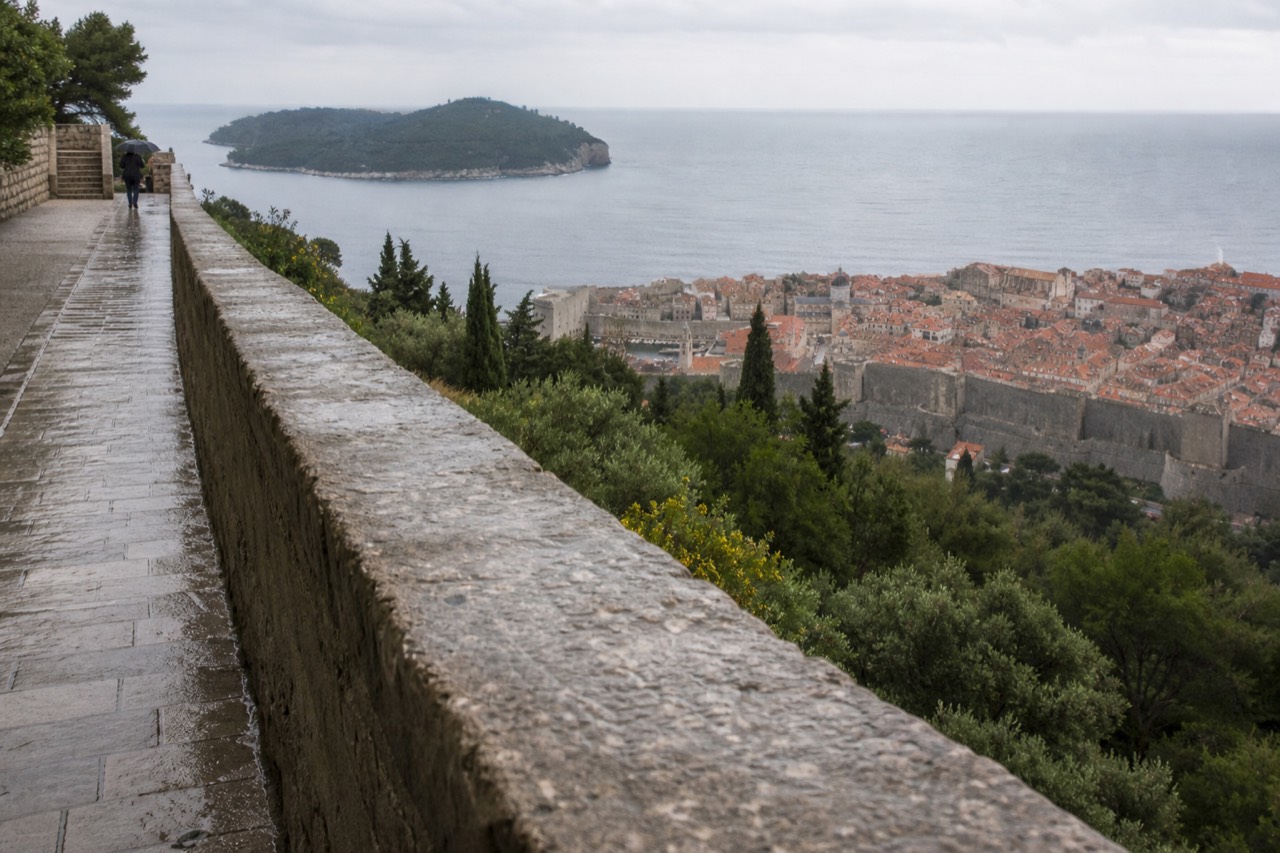
I have walked visitors through this city since 2015, and the pattern repeats every season. Travellers arrive convinced that Dubrovnik equals the walled Old Town, spend two dense days inside it, and then discover, usually on day three, that the places they end up talking about at dinner were all outside it. The pine-scented reserve on Lokrum. The long beach curve of Lapad bay. The view from 405 metres up on Srd, where the operator states you can see up to 60 km on a clear day. The afternoon a kayak guide points back at the walls from the water and the whole city snaps into perspective.
The honest framing is this: the Old Town is the reason you come, and the reason you stay longer than two days is everything around it. The city itself counts 41,562 inhabitants at the 2021 census, and almost none of them live their daily lives inside the UNESCO perimeter. Their Dubrovnik is Gruž market, Lapad's café terraces, the coastal path to Sveti Jakov, the ferry piers. This article walks through that second Dubrovnik, then answers the four questions every visitor asks on the way: whether the Old Town is worth it at all, where to sleep, which street matters most, and how to get in from the airport.
If you only have a short stay and want the walls handled properly rather than walked alone, a guided combination saves the most time. The options below cover the combo walk, a walls-only admission ticket, and a panorama ride for the day the heat makes stairs unappealing.
Is Dubrovnik Old Town Worth Visiting?
Yes, unambiguously. The walled city is a UNESCO World Heritage Site, inscribed in 1979 under criteria (i), (iii) and (iv), covering 24.7 hectares with a 1,188.6-hectare buffer zone. The walls run 1,940 metres, up to 25 metres high, and the Stradun stretches 298 metres through the middle of it. Few cities this size concentrate that much intact history.
Worth it is not the same as flawless, though, and pretending otherwise does nobody a favour. The Old Town gets genuinely crowded. Six counters at every entrance update a headcount every 15 minutes, and the official carrying capacity from the UNESCO assessment is 11,275 people. On a real September morning the count read 5,419 at 08:00, peaked at 7,739 at 10:00, and still held 7,205 at 11:00. Those numbers are manageable if you time yourself around them and punishing if you do not. Walk the walls at opening, do the Stradun and the lanes before midday, and the Old Town is everything the photographs promise.
The walls themselves are the single biggest line item, so know what you are buying. The adult ticket is 40 euro in main season, 1 March to 30 November, and 20 euro in December. Child 7 to 18 is 15 euro, then 5 euro, and under 6 goes free. There is no family ticket; the operator sells exactly two paid article types. That 40 euro is the walls plus Fort Lovrijenac combination, and it also covers the Western Outer Wall, closed December through February, and the Collection of Coins of the Republic of Ragusa. Lovrijenac alone is 15 euro. The operator's stated hours at the time of the price check were 08:00 to 19:30, and the full dimensions are on the walls operator's own site.
| Ticket | Main season (1 Mar to 30 Nov) | December |
|---|---|---|
| Adult | 40 euro | 20 euro |
| Child 7 to 18 | 15 euro | 5 euro |
| Under 6 | free | free |
One comparison worth knowing: the one-day Dubrovnik Pass also costs 40 euro in main season and lists City Walls + Lovrjenac Fortress as its first inclusion, plus ten more sights and a 24-hour bus ticket. That equivalence is main season only. In December the standalone walls ticket drops to 20 euro while no winter pass tier is on sale at all. If you are visiting inside the March to November window and plan even two of the pass museums, the pass usually wins; in December it is not a contest, because it does not exist.
Because the walls are the densest two hours of sightseeing in the city, many visitors hand the route-finding to a guide. The combo tour from Dubrovnik Walks bundles the Old Town walk and the full walls circuit into roughly 3 hours 30 minutes, from $50.94 per person, rated 4.8 across 1,183 reviews. It is the most efficient way to see both halves of the Old Town story, the street-level city and the rampart-level one, without working out the entrance logistics yourself.
Should I Stay in Old Town or New Town in Dubrovnik?
Stay inside the walls for atmosphere and short walking distances, at a premium price and with luggage dragged over stone steps. Stay in Lapad for beaches, restaurants where locals actually eat, and better value, roughly a 15 to 20 minute bus ride from Pile Gate. Cruise passengers and one-night visitors should stay central; anyone with three or more days usually prefers Lapad.
I send different travellers to different answers here, and the deciding factors are nights in town and tolerance for stairs. The Old Town after the day-trippers leave is a different place: quiet lanes, lamplight on limestone, the sound of the sea under the walls. But it comes with real trade-offs. Delivery vehicles are restricted, so hotels manage luggage by hand cart. Prices run high. And the nearest proper swimming beach is a walk away.
Lapad is where the city's own hotel tradition grew up, a peninsula of beaches, pine shade and pedestrian lanes about a 15 to 20 minute bus ride from Pile Gate. The budget anchor there is Hotel Komodor, a three-star rated 7.8 out of 10 across 822 Expedia reviews, about a 29-minute walk from the Gruž cruise and ferry port and best connected to Pile Gate by the number 6 bus rather than on foot. Mid-range travellers land at Hotel Lapad, and the luxury pick is Hotel Excelsior over in Ploče, east of the Old Town, which suits anyone who wants the walls view without the walls address.
A practical middle path: split the stay. Two nights inside the walls for the evening magic, then Lapad for beaches and boats. Splitting also solves the "should I rent a car" question, because you will not want one for either half. If your dates fall in the shoulder months, note that September and October are the two busiest cruise months of the year, September at 101,246 passengers and October at 100,132 in 2025, ahead of July's 96,072 and August's 87,385. Staying outside the walls is the single best buffer against those crowds.
Wherever you sleep, you will still spend your first morning inside the walls, and that morning is worth protecting.
What Is the Best Street in Old Town, Dubrovnik?
The Stradun, formally the Placa, is the main street and the one most visitors mean by "best": 298 metres of polished limestone running from Pile Gate to the clock tower, laid out by the 1272 Statute that fixed the final plan of both the city and its main street. But the best street to actually linger on is usually Prijeko, the parallel dining lane one block north.
The Stradun is unavoidable and worth understanding rather than just crossing. It is the city's spine, the place where the 1272 Statute's planning still shows in every building line, and the polished stone underfoot, worn smooth by centuries of footsteps, is slick when wet in a way that surprises people. Walk it once early, before 08:00, when the count across the Old Town sits near the day's floor and the limestone catches low light. The same street at 11:00 is a river of people. The full index of guides sits on Things to Do in Dubrovnik.
One block north, Prijeko and its continuation run the length of the Old Town as a narrower, restaurant-lined lane with far more character per square metre. The lanes that climb the hillside above it, toward the Jesuit steps, are where the residential Old Town survives: laundry lines, cats, doorways from every century the city has lived through. South of the Stradun, toward the walls, the grid tightens into the quietest corners. The Dubrovnik Tourist Board's own page on the Placa records the 298-metre length and the 1272 Statute if you want the primary source.
If the phrase "best street" means the one with the best single view, the answer changes: the small terrace lanes on the southeast side, where the wall drops away to the sea, give you the Buža-bar cliff edge without the queue. But as a first answer, the Stradun for history and Prijeko for dinner is the combination I give most visitors.
How Do I Get from the Dubrovnik Airport to Old Town?
The airport sits well south of the city, and the practical options are the airport bus, a private transfer, or a shared transfer from $20 per person taking roughly 1 hour. There is no train and no metro; every route is road. Buses and transfers terminate at Pile Gate or the bus station depending on the service, and from Pile the Old Town is a two-minute walk.
The shared departure transfer on the roster runs from $20 per person and takes about an hour, rated 4.5 across 57 reviews, which makes it the cheapest door-to-adjacent-door option worth booking ahead. Private transfers cost more and buy you a fixed pickup time and no stops. The airport bus is the local standby, and for most Old Town hotels it beats a car that cannot enter the walls. Full detail on timetables and fares is in the airport to Old Town transfer guide.
One warning I give everyone: do not plan the arrival day around the Old Town. You will land, transfer, check in, and by then the walls are hot and the lanes are full. Land, drop bags, and spend that first afternoon in Lapad or on Lokrum, then hit the Old Town at 08:00 the next morning when the counters read in the low thousands rather than the high ones. The one-day Dubrovnik itinerary is built around exactly that sequencing.
How Do You See the Whole City Without Climbing the Walls?
Two rides answer this. The cable car lifts you from 38 metres to 405 metres above sea level in 3 minutes 30 seconds, adult round trip 30 euro. The e-tuk-tuk panorama tour covers the city's viewpoints in 1 hour 45 minutes, from $59.24 per person, and is rated a perfect 5 across 1,799 reviews. Together they show you Dubrovnik the walls cannot.
The cable car is the classic. Two cabins, each carrying 32 plus 1, run the 778.2-metre track at 6.5 metres per second, a system built in 1969 and up to 40 metres above the ground at its highest point. From the top station on Srd the operator claims a view range of up to 60 km, about 37 miles, on a clear day, and on a clear day you believe it: the Old Town becomes a single terracotta shape, the Elaphiti islands string out north-west, and the Montenegrin coast sits on the horizon. Prices are 30 euro adult round trip, 17 one way, 8 euro round trip for a child 4 to 12, 5 one way, under 4 free. It runs from 09:00, with closing hours that stretch to midnight in high summer, and it is closed January to March. Current hours are on the operator's timetable page.
| Cable car ticket | 2026 price |
|---|---|
| Adult round trip | 30 euro |
| Adult one way | 17 euro |
| Child 4 to 12 round trip | 8 euro |
| Child 4 to 12 one way | 5 euro |
| Under 4 | free |
The e-tuk-tuk is the underrated alternative, especially on hot afternoons and for travellers with limited mobility. Eco Tuk Tours runs electric tuk-tuks on a 1 hour 45 minute circuit through the panorama roads above the city, and a perfect 5 rating across 1,799 reviews is the strongest score of any vehicle tour in the roster. It costs more than a bus tour and less than a private transfer, and it reaches angles the big buses physically cannot.
For anyone who wants the view, the commentary and the walking all bundled, the cable car and Old Town combination from Elite Travel runs 4 hours 30 minutes from $163.50 per person, rated 4.6 across 716 reviews.
What Lies Beyond the City Walls?
Three big answers: Lokrum island, a 30 euro ticket covering reserve entry and the return boat, with departures at 09:00 then every 15 minutes from 10:00 to 18:00; the Elaphiti islands by full-day cruise, from $59.16 with lunch, rated 4.9 across 10,312 reviews; and sea kayaking to Betina Cave from $35.49 per person. Each one reframes the city from the water.
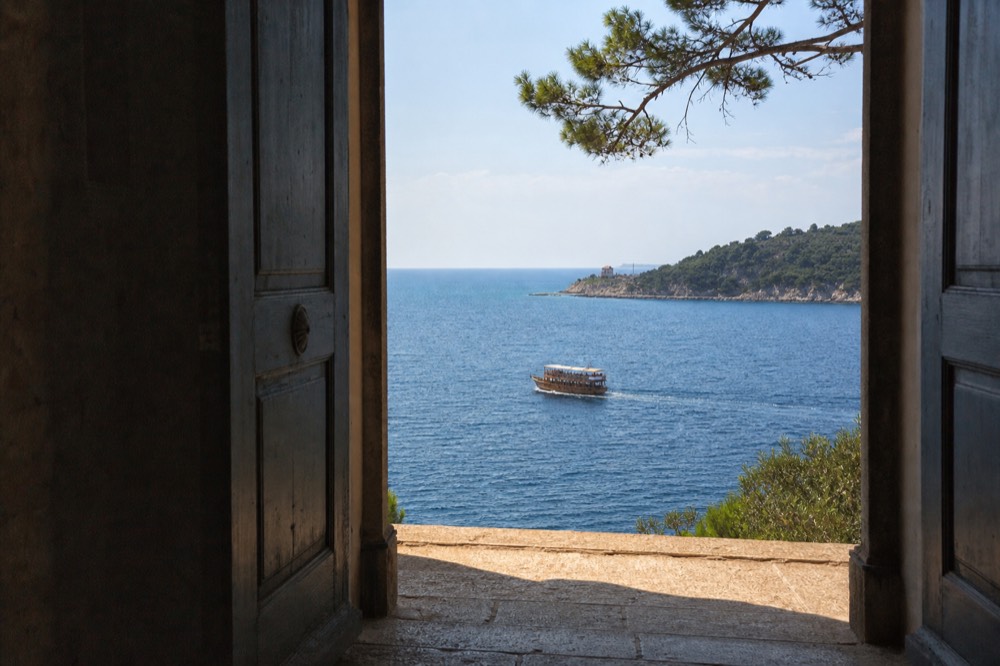
Lokrum is the easiest escape in Dubrovnik and the one I recommend most often for a half day. The 30 euro per-person ticket covers both the reserve entry and the return boat transfer, whether you use the official boat or arrange your own transport, and the ticket office at Luža in the Old City Port works 08:00 to 18:00. Boats leave the City Harbour at 09:00, then every 15 minutes from 10:00 to 18:00, and a ticket stays usable for three days, which makes it forgiving of changing plans. On the island: peacocks, a botanical garden, rocky swimming spots, and the ruins that Game of Thrones fans recognise instantly. There is a combined Dubrovnik, Trsteno, Lokrum ticket at 42 euro that adds the arboretum and an air-conditioned boat. The schedule is published by the Lokrum Reserve's official site.
The Elaphiti cruise is the full-day version of the same idea. The most-reviewed product in the entire roster is the Zrinka boat's Elaphite islands cruise, 8 hours with a fish picnic lunch, from $59.16 per person and rated 4.9 across 10,312 reviews. A step up in price and comfort, the Regina Maris runs the same waters from $74.58 with lunch included, rated 4.8 across 6,751 reviews, and the Karaka pirate ship sails the Elaphiti from $65. For the full planning picture, the Elaphiti islands guide covers which island suits which day.
Kayaking is the third door out of the city, and the one that gives you the walls from sea level. Guided kayak and snorkelling tours run day or sunset from $36.50 per person, rated 4.9 across 4,286 reviews, and the two-hour circuit around Lokrum and Betina Cave starts at $35.49. Betina Cave, a green-lit sea cave reachable only from the water, is the swimming stop everyone photographs. The sea kayaking guide covers routes, seasons and what to bring.
| Escape | Time needed | Entry or tour price | Best for |
|---|---|---|---|
| Lokrum island reserve | half day | 30 euro incl. return boat | Swimming, ruins, easy logistics |
| Elaphiti islands cruise | 8 hours | from $59.16 with lunch | A full day off your feet |
| Sea kayaking to Betina Cave | 2 to 3 hours | from $35.49 | Active travellers, sunset |
| Cable car to Mount Srd | 1 to 2 hours | 30 euro round trip | The panorama, golden hour |
Whichever of these you choose, book the boat and kayak time slots ahead in the September and October window. Those are the two heaviest cruise months of the year, and the small-boat trips are the first things to fill. The trio below covers the walls combo, the bare admission ticket and the panorama ride, which between them handle the Old Town half of any stay.
Common Questions About What to Do in Dubrovnik Besides Old Town
What to do in Dubrovnik besides Old Town?
Ride the cable car up Mount Srd, take the boat to Lokrum island, spend an afternoon on the Lapad beaches, kayak to Betina Cave, or take a full-day Elaphiti islands cruise. Day trips to Cavtat, Trsteno Arboretum and the Pelješac peninsula add further options once you have more than three days.
Is Dubrovnik Old Town Worth Visiting?
Yes. It is a UNESCO World Heritage Site inscribed in 1979, covering 24.7 hectares, with 1,940 metres of walls and the 298-metre Stradun at its centre. Walk the walls at opening time to avoid the mid-morning peak of around 7,739 people counted at 10:00 on a busy September day.
Should I Stay in Old Town or New Town in Dubrovnik?
Stay in the Old Town for atmosphere and short distances, at a higher price and with luggage carried over stone. Stay in Lapad for beaches, value and restaurants, about a 15 to 20 minute bus ride from Pile Gate. Travellers with three or more days usually prefer Lapad or split the stay between the two.
What Is the Best Street in Old Town, Dubrovnik?
The Stradun, formally the Placa, is the main street: 298 metres of polished limestone from Pile Gate to the clock tower, its final plan fixed by the 1272 Statute. For dining and character, Prijeko, one block north, is the lane most visitors end up preferring.
How Do I Get from the Dubrovnik Airport to Old Town?
By road only: the airport bus, a private transfer, or a shared transfer from $20 per person taking roughly 1 hour. Most services terminate at Pile Gate, from which the Old Town is a two-minute walk. There is no train or rail connection of any kind.
How Much Does Lokrum Island Cost?
The Lokrum ticket is 30 euro per person and covers both reserve entry and the return boat transfer, whether you travel on the official boat or arrange your own transport. A combined ticket with Trsteno Arboretum and an air-conditioned boat is 42 euro.