Where Is the Clearest Water in Croatia?
Where to find the clearest water in Croatia, from Dubrovnik's caves and islands to the wider Adriatic coast, with sea temperatures, swim-season timing and safety advice.
Where Is the Clearest Water in Croatia?
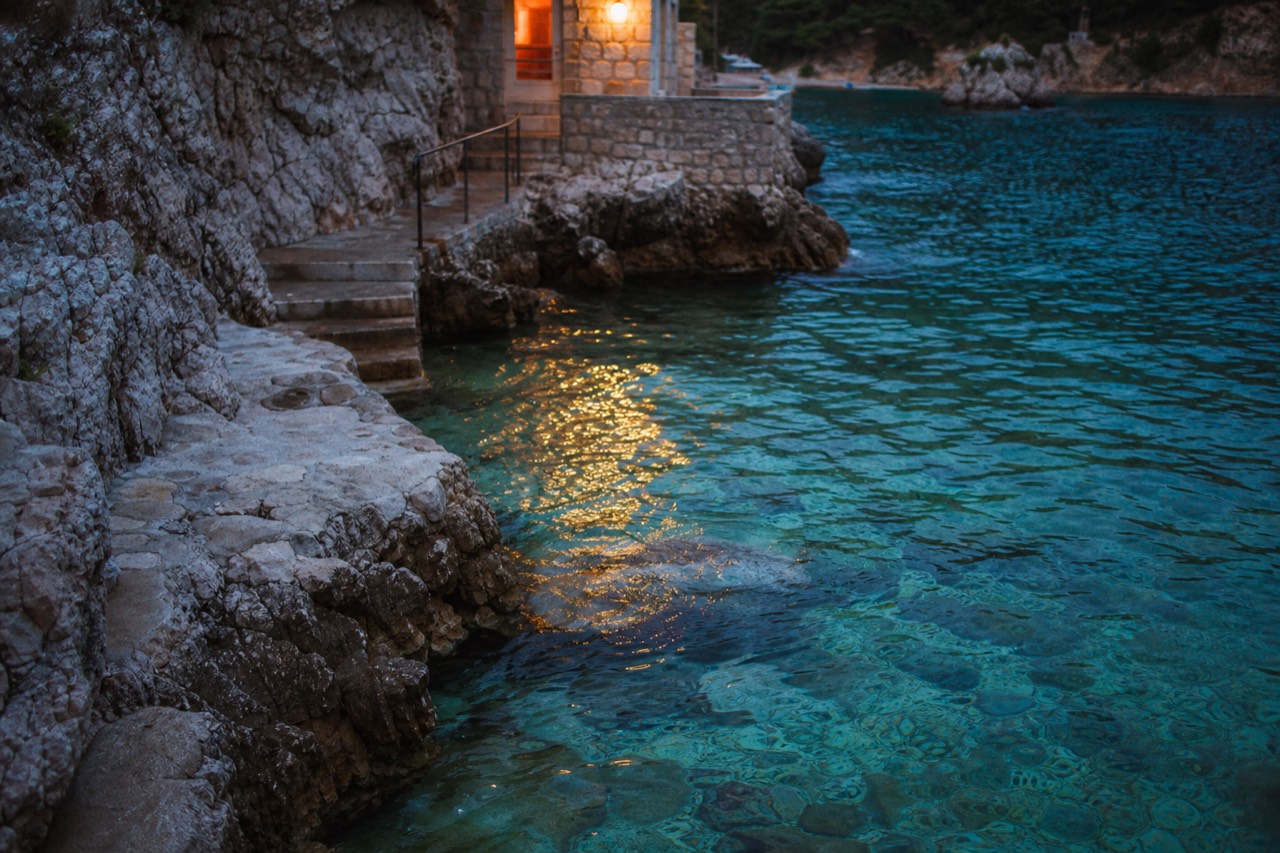
The clearest water in Croatia sits in the cave systems and island bays of the southern Adriatic, above all the Blue Cave and the coves around the Elaphiti Islands and Lokrum near Dubrovnik. The open sea off the Dalmatian coast is remarkably clear everywhere, but enclosed limestone coves, where there is no river sediment and little current, hold the glassiest, most transparent water in the country.
I get asked this more than almost any other question, and the honest answer is that visitors arrive expecting one famous beach and discover that clarity is the default condition of the Croatian Adriatic, not an exception to hunt for. The sea along this coast is fed by a limestone karst landscape. There are almost no rivers dumping sediment into the water south of Zadar, the seabed is pale stone and white sand rather than dark silt, and the water column is poor in the nutrients that feed plankton blooms. Put those three things together and light passes deep into the water and scatters back blue, which is exactly what your eye reads as clarity.
That said, some places are measurably, visibly clearer than others, and they cluster in the far south. Around Dubrovnik the coast is a maze of sea caves and island shelves. Betina Cave, just outside the Old Town walls, is a limestone cavern where the water glows an impossible electric blue because light enters through the submerged mouth and reflects off the white rock floor. The Blue Cave further up the coast works on the same principle at a grander scale. The Elaphiti Islands, Koločep, Lopud and Šipan, are ringed with small coves where the water is shallow over pale stone, which is the classic recipe for that turquoise you see on postcards. Šunj beach on Lopud, a wide sandy bay on the island's far side, is the one most families end up loving, because the sand keeps the water calm and the shallows stay warm.
Lokrum, the wooded island a short boat ride from the Old City Harbour, deserves its own mention. The reserve's rocky swimming spots sit in deep, still water that reads navy a few metres from shore and pale green over the shelves. A Lokrum ticket is 30 euro per person and covers both the reserve entry and the return boat transfer, whether you travel on the official boat or arrange your own transport, with departures from the City Harbour at 09:00 and then every 15 minutes from 10:00 to 18:00. You can check the details and the schedule on the official Lokrum Reserve site.
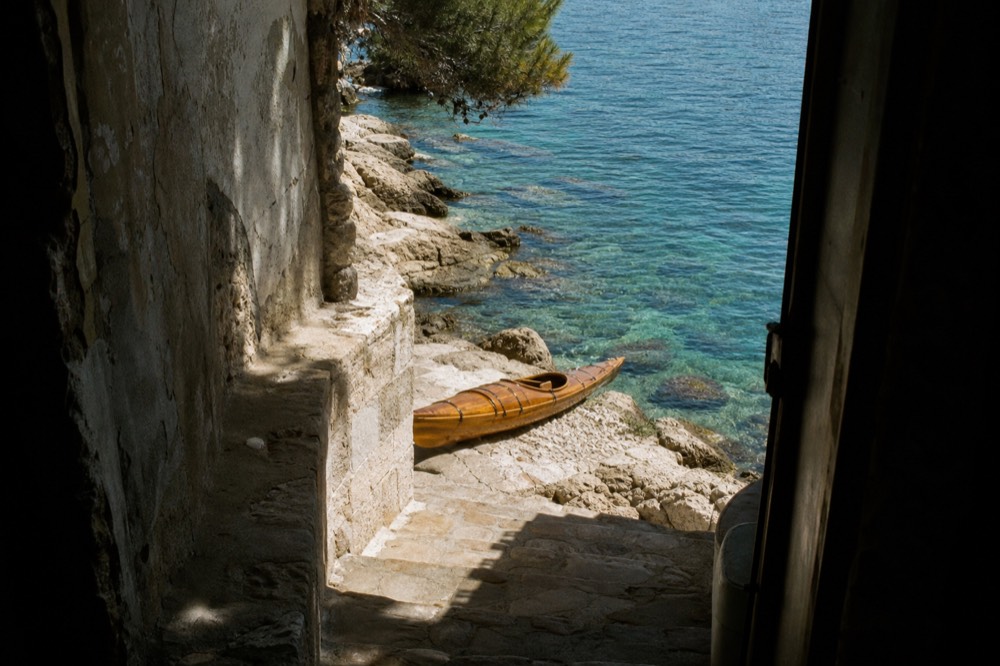
The reason I steer people toward kayaks and small boats rather than beaches for the very best water is simple: the clearest patches are the ones you cannot walk to. The coves around Betina Cave and the Lokrum cliffs are only reachable from the sea. A guided paddle gets you there, gets you a swim stop, and puts a local guide between you and the tidal and wind conditions that change daily. The roster's most popular options here are a 2 hours 30 minutes guided kayak and snorkel tour from $35 per person, rated 4.9 across 3,619 reviews, and a 2-hour kayak circuit of Lokrum Island and Betina Cave from $35.49, rated 4.9 across 1,518 reviews. If you want a fuller treatment of the options, the guide to sea kayaking in Dubrovnik breaks down routes, seasons and what to bring.
One reviewer of the Lokrum and Betina Cave kayak tour put the appeal better than I can:
If you would rather see the clear water from a deck than a cockpit, the boat tours deliver the same coastline with lunch included. The full-day Elaphite Islands cruise with a fish picnic lunch runs about 8 hours from $59.16 per person, rated 4.9 across 10,312 reviews, and the Blue Cave and Šunj Beach boat tour with drinks starts from $63.48, rated 4.87 across 3,105 reviews. For the single most transparent water within day-trip range of Dubrovnik, the Mljet National Park and 3-island boat tour, about 10 hours from $153.99 per person, reaches the salt lakes of Mljet, where the water is famously still and clear, ringed by pine forest.
What Is the Best Month to Go to Croatia?
For clear, swimmable water the best months are June through September, with July and August the warmest, around 24.9 and 25.8 degrees respectively on the long-run average for this coast, and September the sweet spot at about 23.6 degrees with thinner crowds. For sightseeing without swimming, May and early October give you clear air, lower prices and the same blue sea, just too cool for most people to swim comfortably.
Those sea temperatures deserve a careful explanation, because they are the most misquoted numbers in Croatian travel writing. They come from the NOAA OISST v2.1 long-run average for 1991 to 2020, an open-water grid-cell figure for the sea off Dubrovnik, not this year's water and not a beach thermometer. An independent EU dataset, EMODnet, corroborates them within about 1 degree: August 24.90 and September 23.15 on its older reference window. The practical meaning is solid even with the caveat: the swimming season on the southern Adriatic runs roughly June through September, and the water in sheltered shallow bays runs warmer than the open-sea average. On one early September day the Croatian met service's own Dubrovnik buoy read 27.0 to 27.4 degrees against that 23.6 September mean, which tells you exactly how much a sheltered sandy bay like Šunj can add.
| Month | Average sea temperature | What it means for swimmers |
|---|---|---|
| May | 18.6 degrees | Bracing; locals swim, most visitors watch |
| June | 22.5 degrees | Comfortable swimming begins |
| July | 24.9 degrees | Peak warmth, peak crowds on beaches |
| August | 25.8 degrees | Warmest water of the year |
| September | 23.6 degrees | Still swimmable, noticeably quieter |
| October | 21.0 degrees | Mild days, cool swims, empty coves |
Two crowd facts should shape your month as much as the water temperature. Cruise passengers at the Port of Dubrovnik peaked in September 2025 at 101,246 and in October at 100,132, both above July's 96,072 and August's 87,385, so the idea that everyone leaves in September is simply wrong; what changes is that the beaches empty out while the Old Town stays busy. And the Port Authority limits cruise passengers to 8,000 a day in most cases, with counters at every Old Town entrance updating a headcount every 15 minutes, so the crush is managed rather than random. If clear water and room to swim in it are the priority, June and the second half of September are the two windows I would pick first. The September in Dubrovnik guide covers that shoulder season in detail.
Air temperature follows a similar curve, but the sea lags it: May can feel summery on land while the water is still 18.6 degrees, and October afternoons can be T-shirt weather with a sea that has already started cooling. Wind matters too. The prevailing summer breeze is a light northwesterly, and on the days it freshens, the water near exposed headlands picks up chop and loses its glassy look while the sheltered bays stay flat and clear. That is another quiet argument for islands over open mainland beaches: a cove on Lopud or a cave near Lokrum holds its clarity in conditions that churn the water off a headland.
Is There White Water Rafting in Croatia?
Yes, but not near Dubrovnik. Croatia's white water rafting is concentrated on the inland rivers of the karst hinterland, above all the Cetina below the Dinara mountains, roughly two hours' drive up the coast, plus the Zrmanja and the Kupa. There is no rafting around Dubrovnik itself: the sea here is calm and the nearest whitewater runs are a separate inland trip, usually booked from Split or Omiš.
The geography explains it. The Dalmatian coast is limestone that swallows rainwater into underground channels, so the coast itself is short on rivers, and the rivers that do exist drop off the karst plateaus inland. The Cetina is the classic run: a pool-and-drop canyon river with easy Grade II to III rapids in normal conditions, suitable for beginners and families with older children, and cold, remarkably clear water in its own right. The clarity is the same limestone effect you see in the sea, which is why the Cetina's lower stretches are also popular for canyoning. If a rafting day is a priority on a Croatia trip, the practical plan is to split your stay: sea days in Dubrovnik, then two or three nights around Split or Omiš, from which the Cetina runs are a short drive. The full index of guides sits on Things to Do in Dubrovnik.
What Dubrovnik offers in the adventure line is vertical and marine instead. The panorama zipline above the city, from $64 per person and rated 4.9 across 2,109 reviews, runs lines over the slopes of Srđ with the Old Town and the islands below you, and it is the closest thing to an adrenaline fixture on the local roster. Sea kayaking covers the endurance-and-swim niche. Snorkelling needs no operator at all: a mask and the rocky edges of any cove will show you fish within a few metres of shore, because the water really is that clear.
A practical note on combining the two halves of that plan: the coastal drive from Dubrovnik toward Split passes the mouth of the Neretva valley, and the fast catamaran and bus options between the two cities are covered in the Dubrovnik to Split transport guide. Rafting operators run daily departures through the summer with hotel pickup in the Omiš and Split area; in spring the water is higher and the runs more vigorous, while late summer mellows the rapids but keeps the canyon scenery. Book a day ahead in July and August, when the Cetina is at its busiest.
What to Be Careful of in Croatia?
The main things to be careful of in Croatia are the sun and the sea urchins, sea conditions on unpatrolled beaches, pickpocketing in the busiest Old Town lanes in peak season, and the border crossings if you day-trip to Montenegro or Bosnia. None of these are serious risks; Croatia is a safe country, and the dangers that catch visitors out are almost all small, physical and avoidable with basic preparation.
Start with the sea, since that is why you are here. Sea urchins live on rocky seabeds all along the coast, and their spines in a bare foot are the single most common beach injury in Dalmatia. The locals' answer is correct: wear rock shoes, or swim from sandy entries like Šunj where urchins have nothing to hold onto. Jellyfish appear occasionally, usually harmless mauve stingers, but if you are swimming far from help, a full-body sting is worth avoiding, so look before you leap into an unfamiliar bay. Never dive head-first into unknown water; the Adriatic is deep close to shore, but rocks shelve irregularly, and the cliffs around Lokrum and Betina Cave are for jumping only where a local operator says it is safe.
The sun is the underestimated one. The Dalmatian summer combines high UV with a sea breeze that masks how hot you are, and boat decks and kayak cockpits reflect it from below as well as above. Sunscreen, a hat, more water than you think you need, and shaded hours in the middle of the day are not tourist clichés here, they are the difference between a good week and a burnt first two days. On the water, book tours that provide shade and drinks; the full-day Elaphite cruises do, and reviewers consistently mention it.
On land, the risks are ordinary city risks. Pickpocketing happens in the Stradun and the Pile Gate crush in July and August, so carry valuables as you would in any crowded Mediterranean city. The Old Town's limestone streets are polished by four centuries of feet and turn treacherous when wet, so flat shoes with grip beat sandals, and the stairs everywhere, and I mean everywhere, punish anyone who packs only dress shoes. The city's counting system logs a peak of 7,739 people in the Old Town core at 10:00 on a busy September morning against an official carrying capacity of 11,275, so the crowds are real but bounded; the Port Authority's cruise limits are the reason it does not get worse.
Finally, the borders. A day trip to Montenegro or to Mostar in Bosnia means leaving and re-entering the Schengen area and Croatia's external border, and the queues at Debeli Brijeg and Metković can run from minutes to hours depending on the day and the number of tour buses. Bring your passport, not just a ID card, bring euros for Bosnia, and book a tour whose operator manages the border timing, because they know which hours to avoid. Tap water is safe everywhere in Croatia, credit cards are widely accepted, and the emergency number is 112; none of the three should worry you.
Is Split in Croatia Worth Visiting?
Yes, Split is worth visiting, especially as the second half of a Dalmatian pairing with Dubrovnik: it carries a Roman palace at its heart that is still a living neighbourhood, it is the ferry hub for the central islands, and it sits closer than Dubrovnik to the Cetina rafting country. It is louder and less picture-perfect than Dubrovnik, and the two cities suit different halves of a trip rather than competing for the same one.
Diocletian's Palace is the reason Split exists. The Roman emperor built his retirement complex on this bay, and the city grew inside and on top of it, so today apartments, cafés and shops occupy the palace's walls, cellars and peristyle. Walking it is nothing like walking a museum: you move through a functioning town whose street plan is a Roman building. Add the Riva, the palm-lined seaside promenade, and Marjan, the wooded hill on the peninsula's western tip with swimming spots on its rocky shores, and you have a compact city that rewards two full days rather than one rushed stop between ferries.
The honest comparison, which travellers ask for constantly, is that Dubrovnik is the showpiece and Split is the engine. Dubrovnik's walled Old Town is smaller, more coherent and more photographed; Split is bigger, grittier around the edges, cheaper to eat in, and unbeatable as a base, because the catamarans to Hvar, Brač, Vis and Šolta leave from its waterfront. If clear water is the thread of your trip, Split's contribution is access: from its port you can be swimming off a central Dalmatian island within a couple of hours of leaving your hotel. The Split versus Dubrovnik comparison works through the trade-offs in detail, and the island hopping guide covers what you can reach from each.
For a trip built around this article's question, the itinerary almost writes itself. Give Dubrovnik its days for the walls, the caves and the southern islands, where the water is at its clearest, then move up the coast. Split gives you the palace, the rafting canyons inland, and the central islands, each with its own coves. Either direction works, and the bus-and-catamaran connections between the two run daily through the season. Whichever half you linger in, the water will not disappoint: on this coast, the only real mistake is packing without a mask.
Common Questions About the Clearest Water in Croatia
Where is the clearest water in Croatia?
The clearest water is in the enclosed limestone coves and sea caves of the southern Adriatic: the Blue Cave, Betina Cave near Dubrovnik, the bays of the Elaphiti Islands such as Šunj on Lopud, and the waters around Lokrum. The open sea along the whole Dalmatian coast is clear by Mediterranean standards, but sheltered coves over pale stone hold the most transparent water.
Where is the clearest water in Croatia?
where is the clearest water in croatia? The answer most locals give is the far south: the caves and island bays around Dubrovnik, where limestone, low nutrients and still water combine for glassy visibility.
Can You Swim in Dubrovnik in September?
Yes. The long-run September average for the open sea off this coast is about 23.6 degrees, and sheltered bays run warmer. September is one of the best swimming months: the water is close to its summer warmth while the beaches thin out, though the Old Town stays busy with cruise visitors.
Do You Need Water Shoes in Croatia?
On rocky beaches, yes. Most Dalmatian beaches are smooth limestone rather than sand, and sea urchins sit on the rocks in shallow water. Sandy bays like Šunj on Lopud are the exception. Rock shoes cost little and prevent the most common beach injury on this coast.
Is the Sea in Croatia Warm Enough to Swim?
From June through September, comfortably. The long-run averages run 22.5 degrees in June, 24.9 in July, 25.8 in August and 23.6 in September. May at 18.6 and October at 21.0 are swimmable for the hardy but cool for most people.
What Is the Best Month to Go to Croatia?
June or the second half of September for a swimming trip with room to move, July and August for the warmest water and fullest season, May or early October for sightseeing and lower prices with a sea that is mostly too cool for long swims.