Which Is Cheaper, Dubrovnik or Split?
An honest cost comparison of Dubrovnik and Split, with Dubrovnik's verified entry prices, tour rates and hotel figures, plus where Split usually comes out ahead.
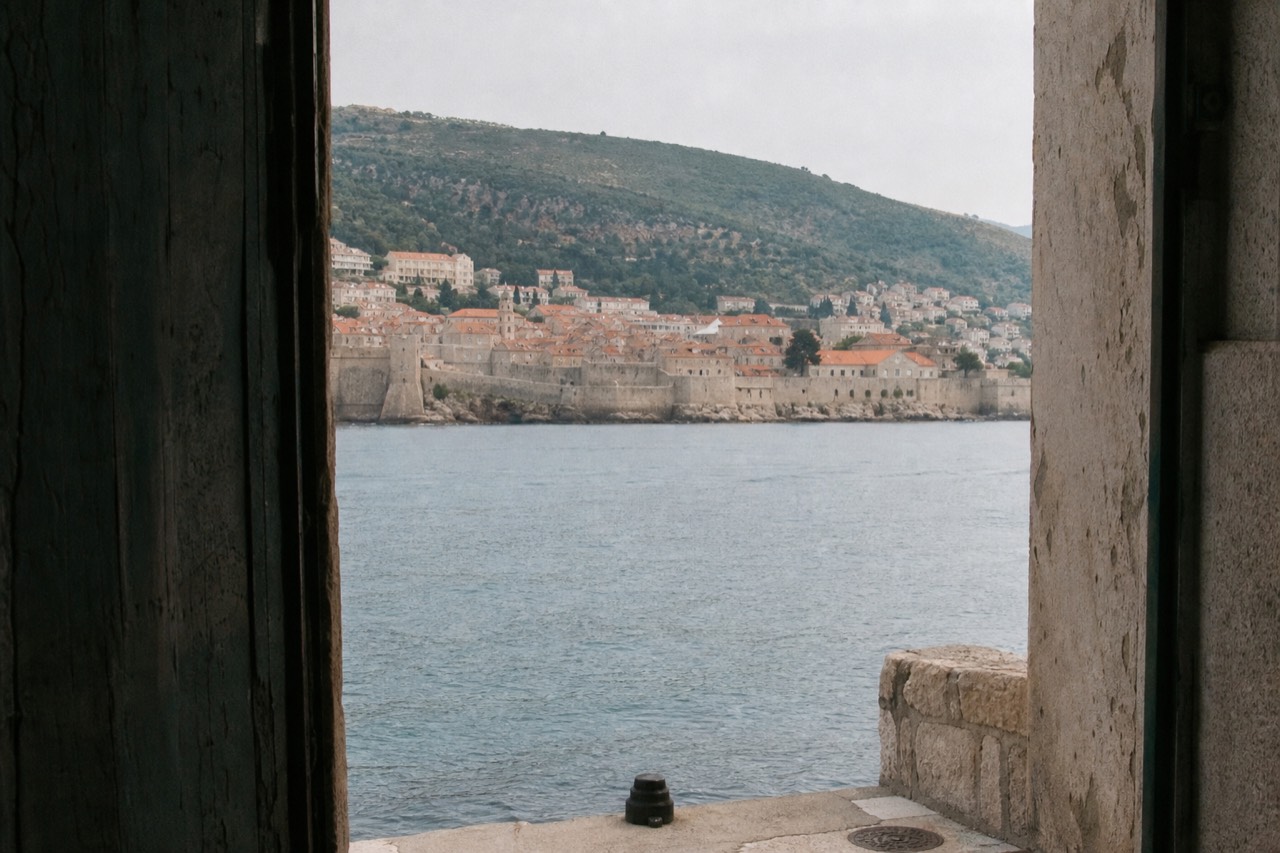
Which Is Cheaper, Dubrovnik or Split?
Split is cheaper overall, and the gap is widest in accommodation and everyday eating, where Split's larger supply of rooms and konobas keeps prices down. Dubrovnik's headline costs are higher but unusually transparent: the walls ticket is 40 euro in main season, the one-day Dubrovnik Pass is also 40 euro, and a Lokrum visit is 30 euro, all published figures you can budget before you fly.
I get this question constantly, and I always answer it the same way: Split wins on the daily burn rate, Dubrovnik wins on predictability. Split is a working city that happens to contain a Roman palace, so it has the supply side of a normal Croatian city: ordinary bakeries, ordinary neighbourhood restaurants, ordinary apartment blocks with rooms to rent. Dubrovnik is a city of 41,562 residents at the 2021 census that recorded about 4.2 million overnight stays in 2025, sharing first place among Croatian destinations with Rovinj. When demand outruns a small city's supply by that margin, prices rise, and they stay high through the whole season.
What surprises most first-time visitors is that Dubrovnik's biggest costs are fixed and knowable in advance. You can sit at home, open the operators' own webshops and price the entire sightseeing side of the trip to the euro before you leave. The walls and Lovrijenac combination is 40 euro for an adult in main season, 1 March to 30 November, and 20 euro in December. The cable car round trip is 30 euro. Lokrum, boat included, is 30 euro. There is no haggling and no mystery, which is more than can be said for a lot of Mediterranean destinations.
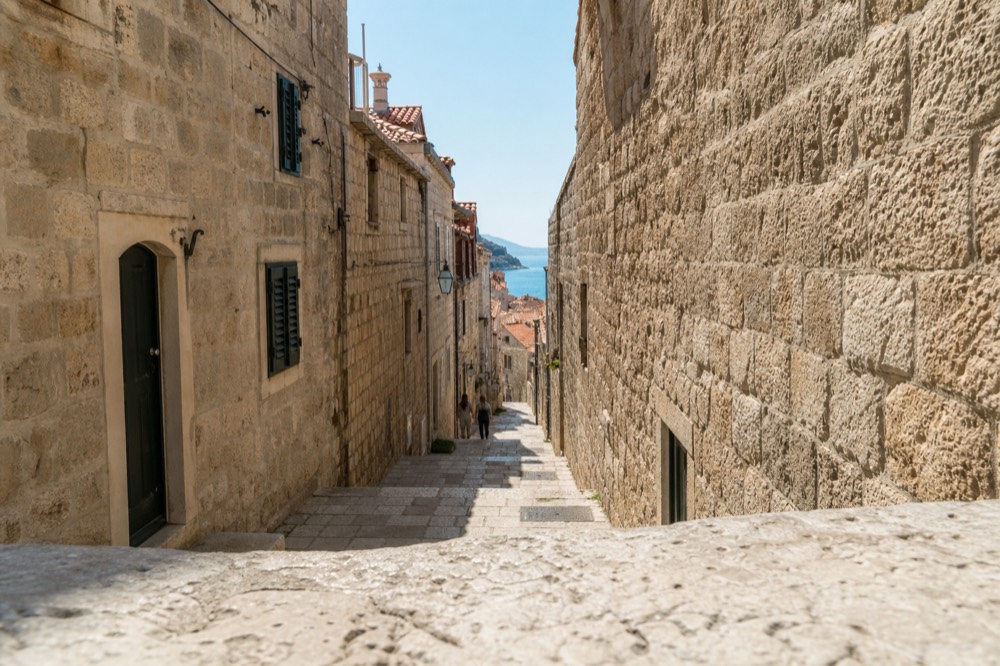
Split's equivalent headline sights are cheaper or free. Diocletian's Palace is not a ticketed monument at all: you walk into it, live in it, drink coffee in it, and pay only for the substructures and the cathedral bell tower if you want to climb them. That structural difference, a free city-sized monument versus a walled town with a single paid perimeter, is the cleanest single explanation of why a sightseeing day in Split costs less than a sightseeing day in Dubrovnik.
The honest summary, category by category, looks like this. Accommodation: Split cheaper, clearly. Food and drink: Split cheaper, especially away from the Riva. Sights: Split cheaper per day, Dubrovnik more concentrated and arguably more spectacular per euro. Tours and day trips: roughly level, because the same operators price similar products in both cities. Flights: genuinely variable, and I will deal with that separately because it is where most of the confusion lives.
One more framing point before the numbers. Comparing the two cities on price alone slightly misses what each is for. Split is the better base for island hopping and for travellers moving up or down the coast, which is exactly the argument we make in our island hopping comparison for both cities. Dubrovnik is the destination people fly into specifically to see, and its costs should be judged against that. If you want the fuller picture of which city suits you beyond money, start with our Split versus Dubrovnik comparison.
Is It Cheaper to Fly to Split or Dubrovnik?
Neither airport wins consistently on airfare alone: fares to Split and Dubrovnik move with the same seasonal demand, and the difference on a given date is usually smaller than the difference between booking windows. Where the money actually separates is on the ground: Split's airport bus and transfer costs into the city run lower than Dubrovnik's equivalents, and Split offers cheap onward rail and bus links that Dubrovnik has never had.
People expect a clean answer here and there isn't one, because the two airports sit on the same airline routes serving the same seasonal demand. Both are served heavily in summer, both thin out dramatically from November to March, and both charge the premium that island-and-coast demand produces in July and August. On any random date you might find either one 20 or 50 euro cheaper, and a week later the ranking flips. The reliable saving is not in the destination but in the timing: shoulder months are cheaper into both cities, full stop.
What I can put real numbers on is the ground side, and it favours Split structurally. Dubrovnik Airport sits well south of the city, and every way of covering that distance costs money, which we break down in our airport to Old Town transport guide. Split's airport is closer to its city centre, and once you are in Split you are also standing on Croatia's rail network, something Dubrovnik has never had: there is no train station in Dubrovnik at all, so every onward movement is a bus, a ferry or a paid transfer.
The other structural point matters for anyone combining the two cities. Split is a transport hub with ferries to the central Dalmatian islands and long-distance transport north, so flying into Split and out of Dubrovnik, or the reverse, often prices out better than a return to either one. The choice of which end to start from is a money question and an itinerary question at once.
For the airfare itself, treat the two airports as one market and book the cheaper combination of date and routing. If the fares tie, take Split: the ground costs are lower, the onward options are cheaper, and the city's own sightseeing, as the next section shows, costs less per day.
What's Cheaper, Split or Dubrovnik?
Split is cheaper in every everyday category: beds, plates of food, coffee and ordinary drinks. Dubrovnik's published sightseeing prices are higher but capped and knowable, roughly 40 euro for the walls and Lovrijenac, 30 euro for the cable car round trip and 30 euro for Lokrum with the boat, so its total trip cost depends almost entirely on how many nights you stay and where you sleep.
Let me put Dubrovnik's fixed costs on the table, because these are the figures people actually need and they are all primary-source verified. This is the full price of the sightseeing side of a Dubrovnik day:
| Dubrovnik item | Main season price | December price |
|---|---|---|
| City Walls + Fort Lovrijenac, adult | 40 euro | 20 euro |
| City Walls, child 7 to 18 | 15 euro | 5 euro |
| Fort Lovrijenac alone | 15 euro | 15 euro |
| Cable car, adult round trip | 30 euro | closed January to March |
| Lokrum entry with return boat | 30 euro | 30 euro |
| Dubrovnik Pass, one day, adult | 40 euro | not on sale |
Two honesty notes on that table, because I would rather flag them than have you discover them at a ticket window. First, the one-day Dubrovnik Pass costs the same 40 euro as the standalone walls ticket in main season, 1 March to 30 November, and adds ten more sights plus a 24-hour bus ticket; in December the walls ticket drops to 20 euro and no pass tier is on sale at all, so the equivalence is a main-season fact only. Second, there is no family ticket for the walls: the operator sells exactly two paid article types, adult and child 7 to 18, with under 6 free. If a site tells you otherwise, it has not read the operator's own shop. More of these guides are collected on Things to Do in Dubrovnik.
The pass question deserves a beat more, because it is the single best lever for cutting a Dubrovnik sightseeing budget. Every tier lists the City Walls plus Lovrijenac Fortress as its first inclusion, and every tier allows a one-time visit to each institution. At 40 euro for one day, 50 for three days and 60 for seven, the pass pays for itself the moment you add the Rector's Palace or the Maritime Museum to your walls walk. The full inclusion list is in our Dubrovnik Pass guide.
Now the everyday side, where Split's advantage lives. I will not print invented Split prices, and I don't need to: the structural argument is enough. Split has far more beds at far more price points, from university-city studio flats to full resort hotels, and its restaurant scene serves locals as well as visitors, which keeps a realistic mid-range konoba dinner achievable in a way Dubrovnik's Old Town, with its captive audience inside the walls, rarely manages. Dubrovnik's food costs are real and worth planning for, which is why we keep a dedicated Dubrovnik trip cost breakdown.
Where Dubrovnik does compete on value is tours. The operator market here is deep and price-competitive in a way its reputation for expense would not suggest. The cheapest paid Old Town walk starts at $20 per person, rated 4.8 across 5,826 reviews, and a full-day Elaphite islands cruise with lunch starts at $59.16 per person, rated 4.9 across 10,312 reviews. Here is the tour-price picture from the verified roster:
| Dubrovnik tour type | Entry price | Rating and reviews |
|---|---|---|
| Old Town walking tour | from $20 | 4.8 across 5,826 reviews |
| 2-hour city walls walk | from $29.58 | 4.8 across 1,387 reviews |
| Sea kayaking with snorkelling | from $35 | 4.9 across 3,619 reviews |
| Elaphite islands cruise with lunch | from $59.16 | 4.9 across 10,312 reviews |
| Lokrum and Betina Cave boat tour | from $39.42 | 4.6 across 1,154 reviews |
| Mostar and Kravica day trip | from $35 | 4.6 across 10,019 reviews |
One budget line worth knowing about: Dubrovnik also has genuinely free guided walks. Three pay-what-you-want tours run on GuruWalk, including a 1 hour 45 minute Old City walk rated 4.87 across 2,242 reviews and a free Game of Thrones and history walk rated 4.74 across 444 reviews. You pay nothing up front and tip what you think the walk was worth. Split has free walks too, but Dubrovnik's free options are unusually well reviewed for a city with this reputation for expense, and they are the single fastest way to cut a first-day budget.
That crowd data is a cost question in disguise. The shoulder months, late September and October especially, are when Dubrovnik's prices soften while its weather and sea temperatures, an average of about 23.6 degrees in September and 21.0 in October on the long-run NOAA series, stay swimmable. Anyone optimising for value should be reading our best time to visit guide alongside the price tables above.
A few practical notes on the sightseeing line items themselves. The City Walls ticket is a combined one: it covers both the walls circuit and Fort Lovrijenac, which sits just outside the walls across a small bay, so you do not need to buy the 15 euro standalone Lovrijenac ticket if you are walking the walls anyway. Children aged 7 to 18 pay 15 euro in main season, dropping to 5 euro in December, and under 6s go free, so a family of four doing the walls in December pays 50 euro rather than the 110 euro the main-season rate would suggest. The cable car is the one item with a seasonal closure, shutting from January to March, so a winter visitor who wants the view from Mount Srd has to walk up or skip it. Lokrum's 30 euro is an all-in price covering the return boat from the Old Port and the island's reserve entry, which makes it better value than it first looks next to the walls.
The December picture deserves its own line of arithmetic. An adult doing the walls, the cable car and Lokrum in main season spends 100 euro on sightseeing before a single meal; in December the same three items cost 50 euro, because the walls drop to 20 euro, the pass disappears, and Lokrum and the cable car hold steady, assuming the cable car is running outside its January to March closure. That is a 50 percent cut on the fixed sightseeing side of the ledger, and it stacks with the softer shoulder-season prices mentioned above. The trade-off, of course, is shorter days and a cooler sea, but the money math is unambiguous: if your Dubrovnik priorities are the walls, the view and the island, the calendar is worth as much attention as the itinerary.
Is It Cheaper to Fly Into Split or Dubrovnik?
For the flight alone it is a coin toss that depends on your dates, but for the total trip Split usually lands cheaper because the ground segment is smaller: cheaper airport-to-city transport, cheaper beds, cheaper meals and cheaper onward connections. Fly into Dubrovnik when the city itself is the point of the trip, because you will pay for concentration and get it.
The practical way to make this decision is to price three things separately and add them: the fare, the first and last transfer, and your nightly base cost times your nights. The fare is the volatile part and I have watched it swing both ways across a season. The other two are stable and both favour Split. Dubrovnik's airport transfer options, which we price in full in our airport bus and transfer guide, are not ruinous, but every euro of them is a euro Split travellers partly keep.
There is also a hybrid worth considering, and it is the one I recommend to budget-conscious friends: fly into one city and out of the other, travelling between them by bus or ferry. The coastal bus and the Split to Dubrovnik ferry route both exist, the ferry being the more scenic and the bus the more frequent, and the through-cost is modest compared with what you save by pricing two one-way fares against each other. The full routing options, with the trade-offs of each, are laid out in our Dubrovnik to Split transport guide.
A word on where the money goes once you are inside Dubrovnik, because it is not where people expect. The walls ticket is the famous 40 euro, but the quiet budget killers are the small ones: a coffee on the Stradun, the 298-metre limestone main street laid out by the 1272 Statute, costs what a prime-pedestrian-street coffee costs anywhere in Europe. The locals' workaround is simple and free: buy your coffee a street or two off the Stradun, where the prices drop sharply within two minutes' walk. The same rule applies to lunch. Our cheap eats guide exists precisely because the gap between a Stradun table and a side-street konoba can fund a museum entry.
And a note on the one cost category where Dubrovnik can actually beat Split: border day trips. From Dubrovnik you can be in Bosnia and Herzegovina or Montenegro in under an hour, and those trips, priced in a cheaper economy once you cross, are among the best value days out of either city. The Mostar and Kravica waterfall day trip starts at $35 per person and carries a 4.6 rating across 10,019 reviews, one of the most-reviewed products on the whole coast.
Split cannot offer that particular trick: its day trips run to inland Dalmatia and the islands, wonderful but within the same price economy. So if your dream trip is waterfalls and a Ottoman-bridge old town for the price of a lunch, Dubrovnik is paradoxically the budget base, as long as you sleep outside the walls. Our where to stay guide covers the neighbourhood trade-offs, including Lapad, where the budget three-star Hotel Komodor scores 7.8 out of 10 across 822 reviews on the 10-point scale.
The verdict, then, is not one city but one method. Price the fare to both, add the transfer, multiply your nightly budget by your nights, and only then decide. Split wins the arithmetic for most budgets. Dubrovnik wins for travellers who want the concentrated, walkable, wall-ringed version of the Adriatic and are willing to pay a known premium for it. Both are honest cities to budget for, which is more than most destinations can say.
Common Questions About Dubrovnik vs Split Costs
Which is cheaper, Dubrovnik or Split?
Split is cheaper overall, especially for accommodation and everyday eating. Dubrovnik's sightseeing costs are higher but fixed and published: 40 euro for the walls and Lovrijenac in main season, 30 euro for the cable car round trip and 30 euro for Lokrum with the boat, so its total cost is predictable if you plan ahead.
Is Split or Dubrovnik cheaper for a short city break?
Split, in most cases. Its headline monument, Diocletian's Palace, is free to walk through, and its beds and meals run cheaper than Dubrovnik's. A two-night Split break can skip almost every ticket queue, while a two-night Dubrovnik break usually includes at least the 40 euro walls ticket per adult.
Is it cheaper to fly to Split or Dubrovnik?
Neither wins consistently on airfare: both airports serve the same seasonal demand and fares swing both ways depending on date and booking window. The reliable saving is on the ground, where Split's airport-to-city transport and onward bus and rail links cost less than Dubrovnik's equivalents.
Is it cheaper to fly into Split or Dubrovnik for a trip combining both?
Price both open-jaw combinations before booking. Flying into one city and out of the other, travelling between them by bus or ferry, often beats a return fare to either, and starting in Split usually gives you the cheaper first and last days of the trip.
Can you visit Dubrovnik cheaply?
Yes, with three levers: sleep outside the walls in Lapad or Gruž, eat a street or two off the Stradun, and use the free pay-what-you-want walking tours on GuruWalk, including a 1 hour 45 minute Old City walk rated 4.87 across 2,242 reviews. The one-day Dubrovnik Pass at 40 euro also matches the standalone walls ticket in main season while adding ten more sights and a 24-hour bus ticket.
When are both cities cheapest?
In the shoulder months, and the crowd data backs it for Dubrovnik specifically: cruise passengers peaked in September and October 2025, at 101,246 and 100,132, above July and August, so late October and the spring months carry softer prices with the sea still swimmable, about 21.0 degrees on the long-run October average.