Which Part of Croatia Has the Best Beaches?
The honest answer to which part of Croatia has the best beaches, region by region, from Istria's stones to Dalmatia's pebble coves, with swimming seasons and where to base yourself.
Which Part of Croatia Has the Best Beaches?
The best beaches in Croatia sit along the southern Dalmatian coast, from Makarska down through the Elaphiti Islands to Dubrovnik, where the sea is the warmest and the coves are the most dramatic. Istria and the Kvarner Gulf win on accessibility and sandy stretches, while central Dalmatia, around Split and Hvar, wins on variety. If warm, swimmable, postcard-clear water is the goal, southern Dalmatia is the strongest single answer.
That is the short version, and it comes with an honest caveat: Croatia is not a sand-beach country. Most of its coastline is limestone, so the typical Croatian beach is smooth white pebble or flat rock shelf, and the water is startlingly clear precisely because there is so little sand to stir up. Travellers arriving expecting Caribbean-style sand are sometimes disappointed; travellers arriving to swim, snorkel and kayak usually conclude the pebbles were a fair trade. The clarity is the payoff, and it is consistent along nearly the whole coast.
The regional differences are real, though, and they matter more than most guidebooks admit. The water warms as you move south, the scenery gets steeper, and the beaches get smaller and more dramatic. The NOAA long-run averages for the Adriatic off Dubrovnik put August at 25.8 degrees and September at 23.6, against July's 24.9, and those are open-water grid-cell figures, not beach thermometer readings. The same dataset reads cooler the further north you go, which is why the swimming season around Istria is genuinely shorter than around Dubrovnik.
There is one more thing the south has that the north does not: islands you can reach on a morning boat trip. The Elaphiti chain off Dubrovnik, Koločep, Lopud and Šipan, holds some of the country's most loved swimming spots, including Lopud's Sunj beach, one of the few genuinely sandy beaches in southern Dalmatia. You can read more about that stretch in our Elaphiti Islands guide, and the beaches nearest the city itself are covered in the Dubrovnik beaches guide.
If the beach is the whole point of your trip, the fastest way into the water around Dubrovnik is from the sea rather than from the shore. The caves and coves below the walls and around Lokrum are only properly reached by kayak or boat, and the two formats below are the strongest options on the roster.
Which Is the Nicest Part of Croatia to Visit?
For a first visit built around the coast, central and southern Dalmatia together form the nicest part of Croatia to visit: Split and its islands for variety, then Dubrovnik and the Elaphiti chain for drama and warmth. Istria is the nicest part for food, hill towns and a slower pace. Kvarner suits travellers who want old seaside grandeur without Dalmatia's summer intensity. Each region rewards a different trip.
The honest framing is that Croatia is really three coastal countries stitched together. Istria, the peninsula in the north, is the one that feels Italian: truffle country, hill towns like Motovun, and a shoreline of small family resorts around Poreč and Rovinj. Rovinj in particular shares first place with Dubrovnik among Croatian destinations by overnight stays, with about 4.2 million nights recorded in each in 2025 according to the Croatian Bureau of Statistics, which tells you both places are doing something right and neither is a secret. Istria's beaches are mostly rock and concrete platforms, serviceable rather than spectacular, but the region as a whole is arguably the most complete food destination in the country.
Central Dalmatia, anchored by Split, is the variety play. Within a short ferry radius you have Hvar's lavender hills and nightlife, Brač's Zlatni Rat, the most photographed beach in Croatia, a pebble spit that reshapes itself with wind and current, and Šolta and Vis for quieter swimming. Zlatni Rat deserves its fame but also its crowds; Vis, further out, holds Stiniva, a cove reached through a narrow rock gap that regularly lands on European best-beach lists. The trade-off is ferry logistics: the islands eat half a day of your trip each way.
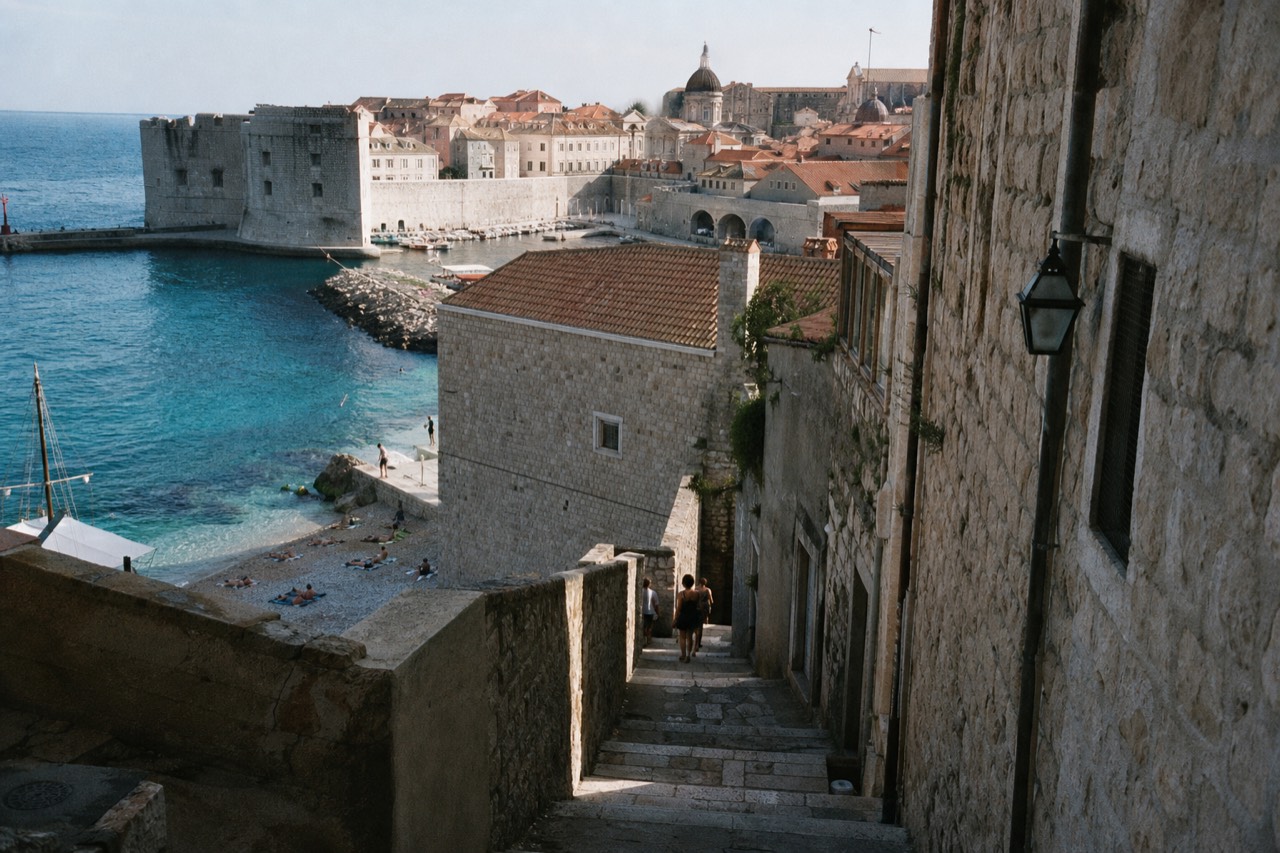
Southern Dalmatia, from Makarska through the Pelješac peninsula to Dubrovnik, is the scenery and warmth play. The Makarska Riviera sits under the Biokovo mountain range, so you swim with a wall of rock behind you, and the water down here is the warmest in the country. Pelješac is quietly becoming the connoisseur's corner, with the Ston walls, oyster farms at Mali Ston, and vineyards of Plavac Mali on the slopes. And Dubrovnik itself, for all its crowds, holds a UNESCO-inscribed Old Town, listed in 1979 under criteria (i), (iii) and (iv) with a 24.7-hectare property area, right above swimming water.
| Region | Beach character | Water warmth | Best for |
|---|---|---|---|
| Istria and Kvarner | Rock, concrete platforms, some sand | Coolest of the three | Food, hill towns, family resorts |
| Central Dalmatia | Pebble spits and island coves | Warm | Variety, islands, nightlife |
| Southern Dalmatia | Small pebble coves, dramatic rock | Warmest in Croatia | Swimming, scenery, boat trips |
One planning note that catches almost everyone: the busiest stretch of the southern coast is not midsummer. Port Authority data shows cruise passengers at the Port of Dubrovnik peaked in September 2025 at 101,246 and October at 100,132, above July's 96,072 and August's 87,385. If you are planning a beach trip around Dubrovnik and hoping for thin crowds, early July or late May beats September, counter-intuitive as that sounds.
Which Part of Croatia Is the Nicest?
The nicest part of Croatia, as opposed to the one with the best beaches, is southern Dalmatia around Dubrovnik, because it concentrates the country's strongest assets in one small area: a walled UNESCO city, warm swimming water, forested islands within easy reach, and the Pelješac wine and oyster country an hour up the coast. Istria is the runner-up and arguably wins on food. Nothing else combines all four.
Niceness is a matter of taste, so let me argue it properly. What southern Dalmatia offers is compression. From a base in Dubrovnik or Lapad you can walk a 1,940-metre circuit of medieval walls in the morning, swim off a rock ledge in the afternoon, and be on Lokrum, a wooded reserve island whose ticket, 30 euro per person, covers both the reserve and the return boat transfer, the same day. Boats leave the City Harbour at 09:00, then every 15 minutes from 10:00 to 18:00, so the island fits any schedule. The next day the Elaphiti Islands, the day after that Pelješac's oyster beds and Plavac Mali vineyards. Very few places in Europe put that sequence together inside a one-hour radius.
The objection is always the crowds, and it is a fair one. Dubrovnik recorded about 4.2 million overnight stays in 2025, and the Old Town's official carrying capacity, from the UNESCO carrying-capacity assessment, is 11,275 people at any one time, measured by six counters at the Old Town entrances updating every 15 minutes. On a real September day in 2026 the count read 5,419 people at 08:00, peaked at 7,739 at 10:00, and stood at 7,205 by 11:00. Those are manageable numbers if you time your day around them, and the beaches are the escape valve: the crowd concentrates inside the walls, while the coves along the coast and the islands stay comparatively calm.
The water itself deserves the final word on niceness. The September average for this coast is about 23.6 degrees, from the NOAA 1991 to 2020 long-run series, and it is an open-water average, not a beach reading: the Croatian met service's own Dubrovnik buoy read 27.0 to 27.4 degrees across one September day against that 23.6 mean, because sheltered shallow bays run warmer. The swimming season here runs meaningfully later than it does in Istria, and that alone moves the needle for a September or October trip.
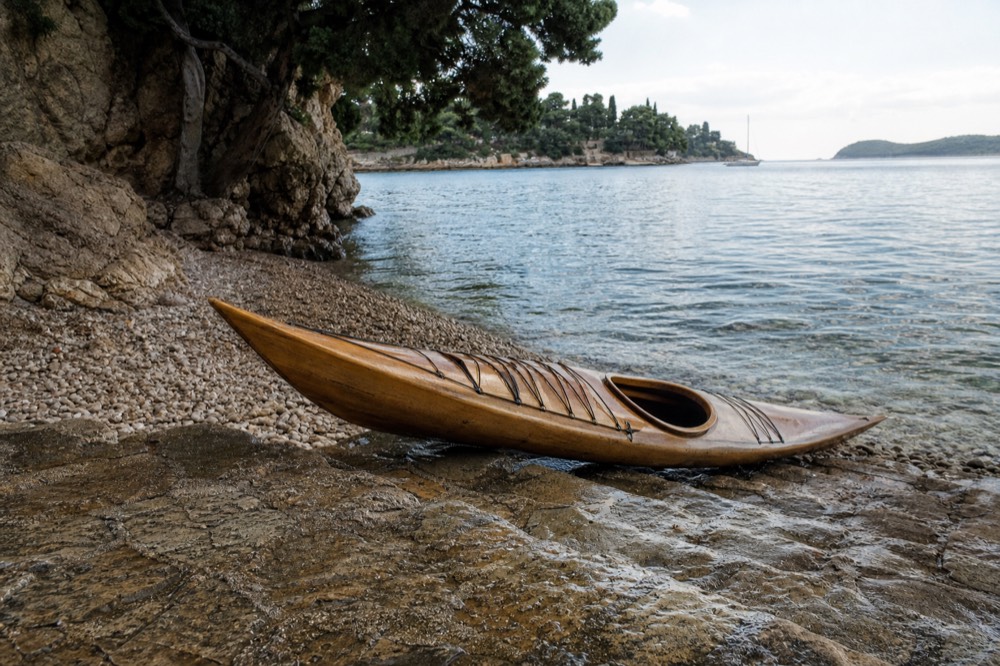
The nicest water in the region, though, is not reachable by towel. The coves below the city walls and around Lokrum's rocky shoreline, including the Betina Cave area, are reached from the sea, which is why the kayak tours out of Dubrovnik are so consistently the top-rated experiences on the roster. The guided day and sunset kayaking and snorkelling tour from Adventure Dalmatia runs from $36.50 per person and is rated 4.9 across 4,286 reviews, and it puts you into water and caves the beach crowds never see.
What Part of Croatia Is Best to Stay In?
Stay in southern Dalmatia if swimming and scenery lead your trip: base in Dubrovnik itself for a short stay, or Lapad for a beach-and-buses balance. Stay in central Dalmatia, around Split or Hvar, if you want island hopping and nightlife. Stay in Istria, around Rovinj or Poreč, for food, value and a slower rhythm. For a two-week trip, split it: Istria first, then Dalmatia south.
The single most common mistake is treating Croatia's coast as one continuous strip you can day-trip across. You cannot. The coast road winds and the distances are real: Dubrovnik to Rovinj is the better part of a full day's drive. So the region you sleep in is effectively the region you get, and the choice deserves more thought than most travellers give it. More of these guides are collected on Things to Do in Dubrovnik.
For a beach-centred trip of a week or less, southern Dalmatia wins on concentration. Inside Dubrovnik itself the choice is between the Old Town, atmospheric and expensive, and the surrounding areas. Lapad is the practical beach base: a peninsula west of the city with its own bay of pebble beaches, a seaside promenade, restaurants and regular buses into the Old Town. Ploče, east of the city, trades beach proximity for views and quiet. Gruž, around the port, is the value corner with the market and the ferry and cruise terminals. Each of these is covered in detail in our where to stay in Dubrovnik guide.
For longer stays, or trips where beaches are one ingredient rather than the whole cake, central Dalmatia is the strongest all-rounder. Split is a genuine city with a Roman palace at its core, and it is the ferry hub for Hvar, Brač, Vis and Šolta, which means your beach options rotate daily. The trade-off is that you are always partly a commuter: the best water is a ferry ride away. Hvar Town itself has a small beach scene plus the Pakleni islands a water taxi away, which is a genuinely excellent arrangement.
Istria answers a different question. If your group contains people who care about beaches and people who emphatically do not, Istria keeps everyone happy: the non-beach faction gets hill towns, truffle restaurants, Roman amphitheatres and wine cellars, and the beach faction gets a serviceable, family-friendly shoreline with far thinner crowds than Dalmatia in July and August. Prices run gentler too. What Istria cannot offer is the warm late-season swimming window the south enjoys, or the island-and-fortress drama of the Dalmatian coast.
A practical note on timing your stay, whichever region you pick: Croatian beach season is shorter than the flight season. Flights and hotels run hard through October, but the sea cools steadily. Off Dubrovnik the long-run October average is 21.0 degrees and November's is 18.5, against August's 25.8. Swimmable, for most people, through early October in the south; through mid-September with comfort in the north. Plan the beach legs of the trip accordingly, and if you are stretching into autumn, base yourself as far south as you can.
What Is the Most Beautiful Part of Croatia?
The most beautiful part of Croatia is the southern Dalmatian coast around Dubrovnik, where a fortified medieval city, forested islands and a steep limestone mountain backdrop meet the clearest, warmest water in the country. The Dubrovnik Riviera and the Elaphiti Islands deliver the highest concentration of postcard scenery. Istria's interior and central Dalmatia's islands are beautiful in different, quieter registers.
Beauty claims need evidence, so here is the case for the south. Start with the raw geography: the old city sits on a promontory between mountain and sea, its walls running 1,940 metres around a street plan fixed by the 1272 Statute, with the Stradun, 298 metres of polished limestone, as its spine. Fort Lovrijenac stands alone on a 37-metre-high sea rock across the water, according to the Dubrovnik Tourist Board. Above it all rises Mount Srđ, reached by a cable car that climbs 367 metres over a 778.2-metre track in three and a half minutes, with a stated view range of up to 60 km on a clear day. Few cities anywhere stack city, rock, island and mountain into one frame so tightly.
Then there are the islands. The Elaphiti chain, Koločep, Lopud and Šipan, is a short boat ride from the Gruž port and feels like a different century: car-light villages, pine woods down to the water, and coves that hold their calm even when the Old Town is at capacity. Lopud's Sunj beach is the sandy exception in a pebble country, a shallow crescent that families love. Further out, Mljet's national park puts two saltwater lakes inside a forested island, and it is arguably the most atmospheric swim in Croatia even if it takes a longer day to reach.
Central Dalmatia's beauty is of a wilder kind. The Biokovo range dropping into the sea at Makarska, Hvar's lavender and hidden coves, Vis's Stiniva, a beach enclosed by cliffs that you descend into through a rock gap: this is the region for travellers whose idea of beauty includes a scramble. Istria's beauty is interior and green, more Tuscany than Adriatic postcard, and it peaks in spring and autumn rather than in beach season. All three are real. The south simply packs more of it per kilometre.
The best way to see the southern coast's beauty, honestly, is from the water. Every viewpoint on land gives you one frame; a boat gives you the whole sequence, walls, cliffs, caves and islands, in a single arc. The Elaphiti cruise on the Karaka, a replica of an argosy, runs from $65 per person, is rated 4.8 across 757 reviews, and turns the coastline itself into the itinerary.
When Is the Best Time to Swim in Croatia?
The best swimming window in Croatia runs from late June through September, and it is longest and warmest in the south: August averages 25.8 degrees off Dubrovnik and September 23.6, against July's 24.9. Northern waters run cooler and the comfortable season there ends weeks earlier. For warm water with thinner crowds, aim for the second half of September in southern Dalmatia, not August.
The water-temperature story is the one place where the regional answer is unambiguous, so it is worth the detail. The headline numbers come from the NOAA OISST v2.1 long-run average for 1991 to 2020, an open-water grid-cell series, not a beach thermometer, and it is corroborated within about 1 degree by an independent EU dataset. Off Dubrovnik the monthly means run 18.6 degrees in May, 22.5 in June, 24.9 in July, 25.8 in August, 23.6 in September, 21.0 in October and 18.5 in November. The same series reads cooler to the north, and the gap widens exactly when it matters, in the shoulder months that decide how long your beach season runs.
Two caveats keep those numbers honest. First, they are long-run averages, not this year's water: on a single September day the Croatian met service's Dubrovnik buoy read 27.0 to 27.4 degrees, well above the 23.6 September mean, because sheltered shallow bays hold heat. Second, they are open-water figures, so an exposed rock shelf will feel closer to the mean and a shallow cove will feel warmer. The practical reading: June through September is comfortable in the south, July through August is the safe bet in the centre, and June is a gamble in the north.
| Month | Sea temperature off Dubrovnik | What it means for swimming |
|---|---|---|
| May | 18.6 degrees | Bracing; hardy swimmers only |
| June | 22.5 degrees | Comfortable, thin crowds |
| July | 24.9 degrees | Peak warmth, peak crowds |
| August | 25.8 degrees | Warmest water of the year |
| September | 23.6 degrees | Warm water, thinning crowds |
| October | 21.0 degrees | Swimmable early in the month |
Pair the water temperature with the crowd data and a clear strategy emerges. July and August give you the warmest water and the most competition for it. September gives you water only about 2 degrees cooler than August and beaches you can actually lie down on, though around Dubrovnik itself the cruise calendar stays heavy through the month. October is the connoisseur's month in the far south: 21.0 degrees on average, warm afternoons, and a coast that has largely emptied. If your trip is built around the water rather than the nightlife, the shoulder edges of the season are where the value sits.
However you time it, the strongest swimming on the southern coast happens off the beaches and coves rather than on them, and the three options below cover the water from a kayak, a snorkel mask and a boat deck.
Common Questions About the Best Beaches in Croatia
Which part of Croatia has the best beaches?
Southern Dalmatia, from Makarska through the Elaphiti Islands to Dubrovnik, has the best beaches for swimming: the warmest and clearest water in the country, small pebble coves and sandy Sunj beach on Lopud. Central Dalmatia wins on variety and Istria on family-friendly access, but for pure water quality and scenery the south leads.
Which Is the Nicest Part of Croatia to Visit?
Central and southern Dalmatia together make the nicest first visit: Split and its islands for variety, then Dubrovnik and the Elaphiti chain for drama and warm water. Istria is the nicest region for food, hill towns and a slower pace, while Kvarner suits travellers wanting old seaside grandeur.
Which Part of Croatia Is the Nicest?
Southern Dalmatia around Dubrovnik is the nicest single stretch, because it compresses a walled UNESCO city, warm swimming water, forested islands and the Pelješac wine and oyster country into one small area. Istria is the runner-up and arguably wins on food.
What Part of Croatia Is Best to Stay In?
Stay in southern Dalmatia if swimming and scenery lead your trip, basing in Dubrovnik or Lapad. Stay around Split or Hvar for island hopping and nightlife, or in Istria around Rovinj and Poreč for food, value and thinner crowds. For a two-week trip, split it between Istria and Dalmatia.
What Is the Most Beautiful Part of Croatia?
The southern Dalmatian coast around Dubrovnik is the most beautiful part of Croatia: a fortified medieval city, forested islands and a limestone mountain backdrop meeting the clearest water in the country. Central Dalmatia's islands and Istria's green interior are beautiful in quieter registers.
When Can You Swim in Croatia?
The comfortable swimming season runs from late June through September in the south, with August averaging 25.8 degrees off Dubrovnik and September 23.6. Northern waters are cooler and their season ends weeks earlier. October is still swimmable in the far south at a 21.0-degree average.