Why Do So Many Americans Go to Dubrovnik?
Americans now make up one of the largest visitor groups in Dubrovnik. Here is what is pulling them across the Atlantic, from Game of Thrones to cruise schedules, and how long to stay.
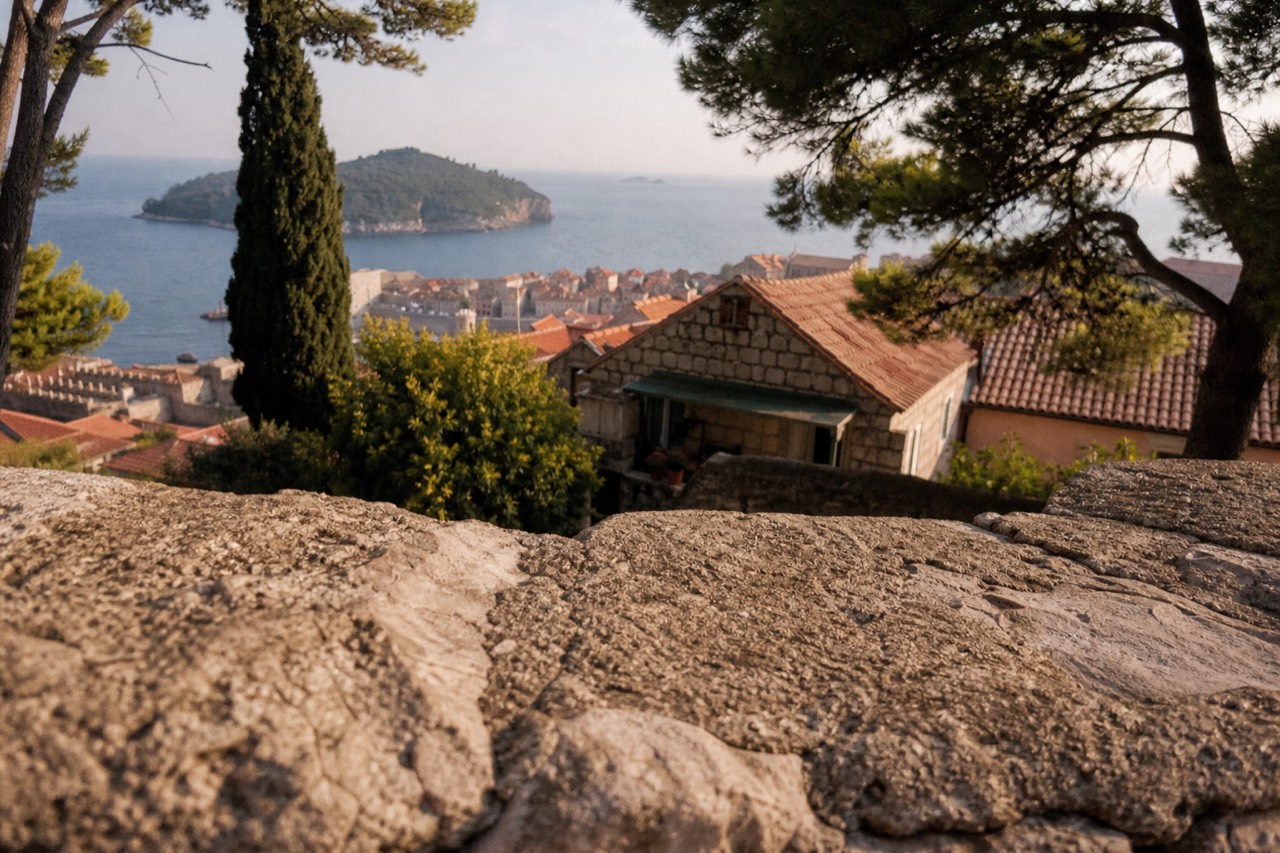
Why Do So Many Americans Go to Dubrovnik?
Americans go to Dubrovnik because a UNESCO-listed walled city became a television landmark, because cruise lines made it a scheduled stop, and because Croatia entered the United States visa-waiver programme, removing the paperwork barrier that once pushed Americans toward Western Europe instead. The numbers behind the boom are real: Dubrovnik recorded about 4.2 million overnight stays in 2025, sharing first place among Croatian destinations with Rovinj, and the Port Authority counted 625,257 cruise passengers in the same year, up from 582,499 in 2024.
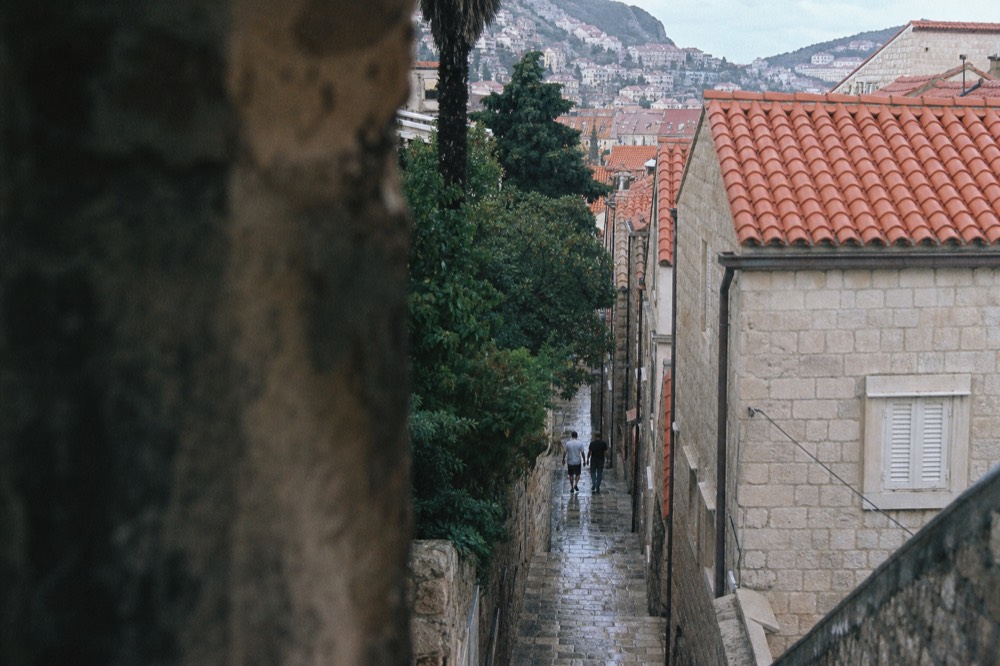
I have watched this change from the street level. When I started guiding international travellers in 2015, American visitors were a minority in most groups, and the question "where exactly is Croatia?" was common on day one. Today Americans are routinely the largest single nationality on a summer walking tour, and they arrive knowing the street names, the show that filmed here and even the cliff bar they want to find. The city did not get closer. It got famous.
Three forces did most of the work, and they compound each other. Television gave Dubrovnik a visual identity that no brochure could buy. Cruise scheduling turned a deliberate destination into an incidental one, a place you visit because the ship is already there. And the practical friction that once kept Americans in Paris and Rome, visa paperwork and unfamiliar airports, faded just as direct flights across the Atlantic multiplied. Each force feeds the next: a cruise passenger who falls for the walls comes back for a week, and tells the neighbours.
The cruise schedule deserves a closer look, because it explains the rhythm of the crowds better than any generalisation about "summer". The Port Authority's own monthly figures for 2025 show the counter-intuitive pattern I warn every visitor about:
| Month (2025) | Cruise passengers |
|---|---|
| July | 96,072 |
| August | 87,385 |
| September | 101,246 |
| October | 100,132 |
September and October, not July and August, were the two busiest cruise months of 2025. Americans planning around school holidays often assume they are avoiding the peak by travelling in early autumn, and on paper they are, but the ships peak then too. The Port Authority limits cruise passengers to 8,000 a day in most cases and refused about forty call requests in a single season, a cap described on its cruise destination page. Even so, of 243 cruise days a year, 18 exceed 8,000 passengers and 4 exceed roughly 10,000. Plan around the ships and you have already won half the battle.
For a first visit, the fastest way to convert that wall of information into a city you can read is a short guided walk. The walking tours overview compares the formats, but the short version: a 90-minute orientation walk costs about the same as lunch and saves you hours of map-staring.
Why Is Dubrovnik So Famous?
Dubrovnik is famous because it is a complete, intact walled city on the sea, inscribed by UNESCO in 1979 under criteria (i), (iii) and (iv), and because Game of Thrones used it as the filming stand-in for King's Landing. The walls run 1,940 metres, stand up to 25 metres high, and carry 16 towers, 3 fortresses and 6 bastions along their circuit. Very few places on earth deliver that combination in one photograph, and the photograph is what travels.
The fame has two distinct layers, and Americans arrive carrying both. The older layer is architectural and historical. The Old City sits on the World Heritage List, reference C 95bis, with a property area of 24.7 hectares inside the walls and a 1,188.6-hectare buffer zone around it, a status recorded on the UNESCO listing page. The Stradun, the limestone main street, is 298 metres long, and a statute fixed the final plan of both the city and that street in 1272. Fort Lovrijenac stands on a 37-metre-high sea rock just outside the walls. This is a city whose shape was settled by that statute, and it still reads that way when you walk it.
The newer layer is television. Game of Thrones filmed here across multiple seasons, and the mapping is unusually direct: the Pile Gate area, the Lovrijenac exterior, the Jesuit Staircase and the harbour all appear on screen. For a large share of American visitors under about forty-five, Dubrovnik was a place they had already walked before they ever bought a plane ticket. That is a strange kind of fame, but it is durable, and it routes straight into bookings. The Game of Thrones filming locations guide maps every site if you want to do it yourself.
The numbers say the fame is now self-sustaining. Croatia overall recorded 20.7 million arrivals and 94.8 million overnight stays in commercial accommodation in 2025, per the Croatian Bureau of Statistics, and Dubrovnik sits at the very top of the destination table. The city of 41,562 inhabitants, counted at the 2021 census, hosts a summer population that regularly exceeds its own residents several times over inside the walls on a peak morning. Fame at that intensity stops being marketing and becomes infrastructure, and the infrastructure, from airport capacity to tour supply, has grown to match it.
If you are planning a first trip around this fame, three formats cover almost everybody: a short orientation walk, a guided walls circuit, and a Game of Thrones tour with the Lokrum option. Here they are side by side.
One honest note about the television pull. A guided Game of Thrones tour is the single most efficient way to see the filming sites, because several are easy to walk past unrecognised, and the best-reviewed option bundles Lokrum island, where the Iron Throne photo lives. Lewis, a guest on the Game of Thrones, Lokrum and Throne tour, put it this way:
Brilliant day! Tour guide was very welcoming and informative! Highly recommend if you love Game of Thrones, definitely book the extra hour to go to Lokrum Island aswell! Also helps you get your bearings in the Old Town!
Lewis
That last line is the part I would underline. Even visitors who come for the show leave with their bearings set, which is exactly what the first day of any trip needs. A guided walk and a guided walls circuit together, roughly five hours of walking across two mornings, will do more for your trip than any amount of pre-reading.
Why Are There So Many Abandoned Hotels in Dubrovnik?
The abandoned hotels around Dubrovnik, most visibly the Kupari bay complex a few kilometres south-east of the Old Town, are the physical residue of the war. When the region's tourism economy collapsed during the fighting, the buildings were left empty, and in the years since they have simply never been rebuilt. The Old Town itself spent 1991 to 1998 on UNESCO's List of World Heritage in Danger, a fact recorded on the same listing page that celebrates its inscription. The shells hit the hotels harder than the monuments.
This is the part of the Dubrovnik story American visitors ask me about most, usually after they have taken the coastal path or the bus past the ruins and realised the postcard has a shadow. Before the war, this stretch of coast was a busy resort belt serving package tourism, and the hotels were large, purpose-built and full through the season. The war ended that trade abruptly. The Old Town, protected by its walls and by an international restoration effort, was rebuilt and re-listed. The resort belt, commercially riskier and lower on every priority list, simply was not.
The economics of the aftermath kept the ruins standing. Rebuilding a large resort requires capital, a confident market and a planning decision, and for years the coast had none of the three in the right combination. Meanwhile the walled city, a compact, walkable, UNESCO-branded product, recovered on a completely different model: small hotels, apartments, cruise calls and day visitors. The two recoveries never rejoined. What you see today is one tourism economy that rebuilt inside the walls and one that is still waiting outside them.
The contrast matters to a visitor for practical reasons, not just atmospheric ones. The derelict strip is genuinely interesting, and the bay beside it is swimmable, but nobody should book accommodation expecting a resort and find a ruin. The abandoned Kupari guide covers what is actually there now, how to reach it and what to expect. For lodging, the live market is in Lapad and the Old Town perimeter, and the difference between those areas is a real decision, which the where to stay guide walks through.
There is also a quieter point worth making. The ruins are why the American boom feels so concentrated. A city that rebuilt its hotel stock across its whole footprint would spread visitors wider. A city that rebuilt only its core funnels almost every visitor through the same 24.7 hectares, which is why the counting system exists and why a September morning can feel like Times Square even though the resident population is 41,562. The abandoned hotels are not a footnote to the crowds question. They are half of its answer.
How Many Days Do I Need to See Dubrovnik?
Most travellers need three full days in Dubrovnik: one for the Old Town and the city walls, one for an island or sea day, and one for either a cable car morning plus beaches or a day trip beyond the city. Two days works if you are decisive, and four lets you slow down without inventing filler. Fewer than two days, and you are really visiting the walls, not the city.
The honest arithmetic behind that answer starts with the walls circuit. The full walk is 1,940 metres of stone stairs and heat, and it is not something you bolt onto the end of a tired afternoon. The adult ticket is 40 euro in main season, 1 March to 30 November, and 20 euro in December, and that ticket is actually a combination: it covers the walls, Fort Lovrijenac across the bay, the Western Outer Wall (closed December through February) and the Collection of Coins of the Republic of Ragusa. The operator's stated hours at time of check were 08:00 to 19:30, and the early slot is worth the alarm.
The one-day Dubrovnik Pass costs the same 40 euro as the standalone walls ticket in main season, and adds ten more sights plus a 24-hour bus ticket, which is why I point most first-time visitors toward it. The three-day pass is 50 euro and the seven-day pass is 60 euro, both adding suburban bus coupons and House Bukovac in Cavtat. In December the comparison flips: the standalone walls ticket drops to 20 euro and no pass tier is on sale at all, so the "pass costs the same as the walls" line is strictly a main-season fact.
| Ticket | Main season (1 Mar to 30 Nov) | December |
|---|---|---|
| City Walls adult (includes Lovrijenac) | 40 euro | 20 euro |
| City Walls child 7 to 18 | 15 euro | 5 euro |
| Child 6 and under | free | free |
| Dubrovnik Pass, one day | 40 euro | not on sale |
| Dubrovnik Pass, three days | 50 euro | not on sale |
| Dubrovnik Pass, seven days | 60 euro | not on sale |
Day two belongs to the sea, and the choice is wider than most visitors expect. A Lokrum ticket is 30 euro per person and covers both the reserve entry and the return boat transfer, with boats leaving the City Harbour at 09:00 and then every 15 minutes from 10:00 to 18:00. A full Elaphiti islands cruise with lunch runs about 8 hours and starts from $59.16 per person on the most-reviewed option, rated 4.9 across 10,312 reviews. Sea kayaking to Lokrum and Betina Cave starts from $35.49. Any of these resets your relationship with the city, because Dubrovnik makes a different impression from the water than from the walls.
Day three is the flexible one. The cable car lifts you from a lower terminal at 38.0 metres to the Mount Srd station at 405.0 metres, a 367.0-metre rise over a 778.2-metre track in 3 minutes 30 seconds, and an adult round trip is 30 euro. From the top, the operator claims a view range of up to 60 km on a clear day, and on a clear day I believe it. Alternatively, day three is the day to leave: Mostar, Montenegro, the Peljesac peninsula and the Elaphiti islands are all realistic day trips, and the day trips guide ranks them by travel time and border friction.
If you walk the walls with a guide rather than alone, the interpretive payoff is large, because the fortifications are a story about siege engineering and maritime power that is invisible without narration. Linda_a, a guest on the 2-Hour City Walls Walk, described it exactly:
This well organized tour helped put Dubrovnik's past (and present) into perspective. It's incredible that the city walls have withstood the test of time. Antun was a wonderful guide.
linda_a
That perspective is what turns a hot two-hour stair climb into the highlight of a trip, and it is the reason I put a guided walls circuit ahead of a solo ticket for most first-time visitors.
How Many Days Are Sufficient in Dubrovnik?
Two days are sufficient for most visitors to see the essential Dubrovnik. Day one covers the city walls and the Old Town, while day two is best spent on one sea experience, such as a visit to Lokrum or a short cruise, giving you a complete taste of the city without rushing. Anything beyond two days buys depth rather than coverage: full boat days, border-crossing day trips, slow restaurant evenings. Cruise passengers with a single day can compress the walls plus a cable car ride, but they are sampling the city, not seeing it.
The distinction between "need" and "sufficient" is worth taking seriously, because the answer changes with your travel style. A visitor who wants photographs and the feeling of the place is genuinely done in two days. A visitor who wants to swim, eat slowly, take one boat day and one border-crossing day trip will fill four without strain. And a visitor travelling in peak season should add a buffer day, because crowds steal time in ways that are hard to budget for in advance. On a busy September morning the Old Town count can hit 7,739 people at 10:00, and every queue, restaurant and viewpoint slows accordingly.
| Stay length | What fits comfortably | What you give up |
|---|---|---|
| One day | Walls circuit, Stradun, one viewpoint | Islands, beaches, every day trip |
| Two days | Walls, Old Town, Lokrum or a short cruise | Elaphiti full day, Mostar, Montenegro |
| Three days | All of the above plus a full boat day | One distant day trip only |
| Four days or more | Everything plus two day trips and slow mornings | Nothing, if the pace suits you |
Timing inside each day matters as much as the day count. The half-hourly count curve from a real September day reads 1,200 people at 04:00, 3,139 at 07:00, 5,419 at 08:00, a 7,739 peak at 10:00 and 7,205 at 11:00. The lesson is blunt: be inside the walls by 08:00 or after 16:00, and spend the middle of the day on the water, at a beach, or up on Srd. The crowd curve is predictable enough to plan around, and most visitors simply do not know it exists.
Season shifts the sufficient-day answer too. September is the month I recommend most often to Americans who can travel off the school calendar, and not only for the crowds. The September average sea temperature for this coast is about 23.6 degrees, a long-run open-water average rather than a beach thermometer, and sheltered bays run warmer still. October's average is 21.0 degrees, still swimmable for most people, and the cruise calendar stays at its annual peak through the month, so the sea is warm exactly when the ships are thickest. Choose your mornings accordingly.
One last planning note for the American traveller specifically. Distances here are shorter than they look on a map of Europe, but borders are real: Montenegro and Bosnia and Herzegovina are outside the Schengen area, so a passport check sits in the middle of those day trips, and the queue length is not something any schedule can promise. Build your itinerary around the Things to Do in Dubrovnik guides rather than a generic Balkans route, and the days take care of themselves.
Common Questions About Why Americans Visit Dubrovnik
Why do so many Americans go to Dubrovnik?
Television fame, cruise scheduling and the removal of visa friction combined to make Dubrovnik one of the most recognizable destinations in Europe for American travellers. The city recorded about 4.2 million overnight stays in 2025 and 625,257 cruise passengers, and Americans are now among the largest visitor groups in a city of 41,562 residents.
Why Is Dubrovnik So Famous?
It is a fully intact walled city on the sea, inscribed by UNESCO in 1979, and it served as the filming location for King's Landing in Game of Thrones. The walls run 1,940 metres with 16 towers and 3 fortresses, and the visual combination is instantly recognizable in photographs.
Why Are There So Many Abandoned Hotels in Dubrovnik?
The derelict resorts, concentrated around Kupari bay, date from the collapse of the region's package-tourism economy during the war. The Old Town was rebuilt and removed from UNESCO's danger list in 1998, but the resort belt was never reconstructed, so one tourism economy recovered inside the walls while the other outside them did not.
How Many Days Do I Need to See Dubrovnik?
Three full days covers the essential city: walls and Old Town on day one, an island or sea day on day two, and the cable car plus beaches or a day trip on day three. Two days is workable if you are decisive, and one day is a sample rather than a visit.
How Many Days Are Sufficient in Dubrovnik?
Two days is sufficient for the walls, the Old Town and one sea experience such as Lokrum or a short cruise. Beyond two days you are adding depth, boat days and border-crossing day trips, rather than checking essential sights off a list.
When Is the Busiest Time for Cruise Crowds?
September and October, not July and August. Cruise passengers peaked at 101,246 in September and 100,132 in October 2025, above July's 96,072 and August's 87,385. The Port Authority caps most days at 8,000 cruise passengers, but 18 days a year still exceed that figure.