Dubrovnik or Hvar: Which Croatian Gem Fits Your Trip?
Two of Croatia's most famous destinations, two very different trips. Here is how Dubrovnik and Hvar actually compare on nightlife, access, crowds and cost, and how to choose between them, or fit both in.
Short answer
Dubrovnik is a walled UNESCO city of 24.7 hectares with 4.2 million overnight stays in 2025; Hvar is a island town built around beaches, boats and late nights. Dubrovnik wins on history and day trips, Hvar on nightlife and swimming. The two connect by seasonal catamaran, so many travellers do both.
Dubrovnik or Hvar: Which One Fits Your Trip?
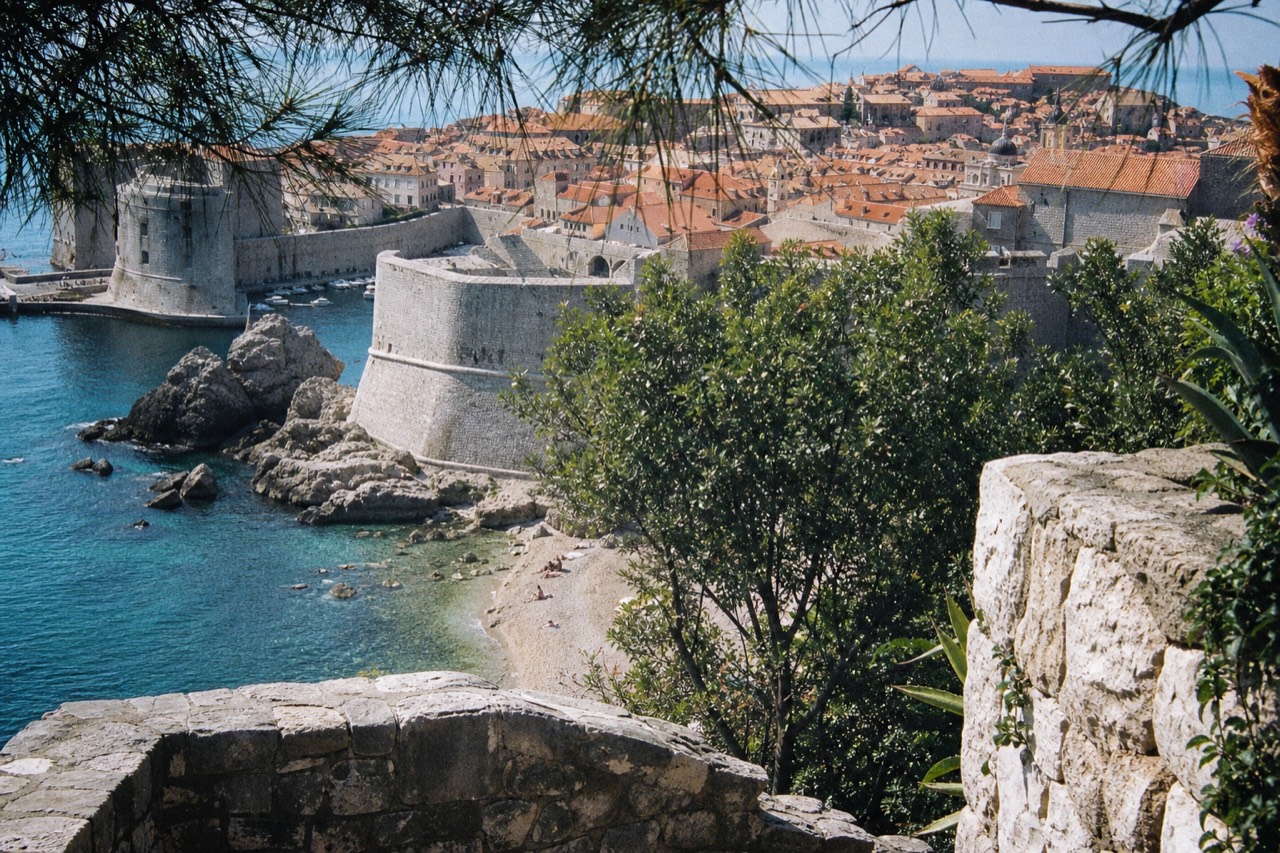
Dubrovnik is a compact walled city of 24.7 hectares, inscribed by UNESCO in 1979, that recorded about 4.2 million overnight stays in 2025, sharing first place among Croatian destinations with Rovinj. Hvar is a long island town built around a harbour, beaches and a famously late nightlife. One is a museum you can sleep inside, the other is a beach party with a Venetian facade.
I have walked the Stradun at every hour of the day for years, and the honest answer to "Dubrovnik or Hvar" is that the question is usually asked by two different travellers. If your holiday is measured in fortresses, museums, staircases and stone, Dubrovnik is the destination and everything else is a day trip. If it is measured in swim stops, boat decks and bars that fill after midnight, Hvar will feel like the main event and Dubrovnik the cultural interlude.
The two are not rivals in any real sense. They are 40-odd nautical miles apart on the same coast, connected in season by fast catamarans, and a lot of visitors string them together in one itinerary: a few nights in the walled city, then a catamaran west to the island. The choice only becomes either/or when time is short, and that is when the differences below start to matter.
This site is called Things to Do in Dubrovnik, so you can guess where I base myself, but I will keep the comparison honest. Hvar does some things plainly better, and pretending otherwise would send the wrong traveller to the wrong island.
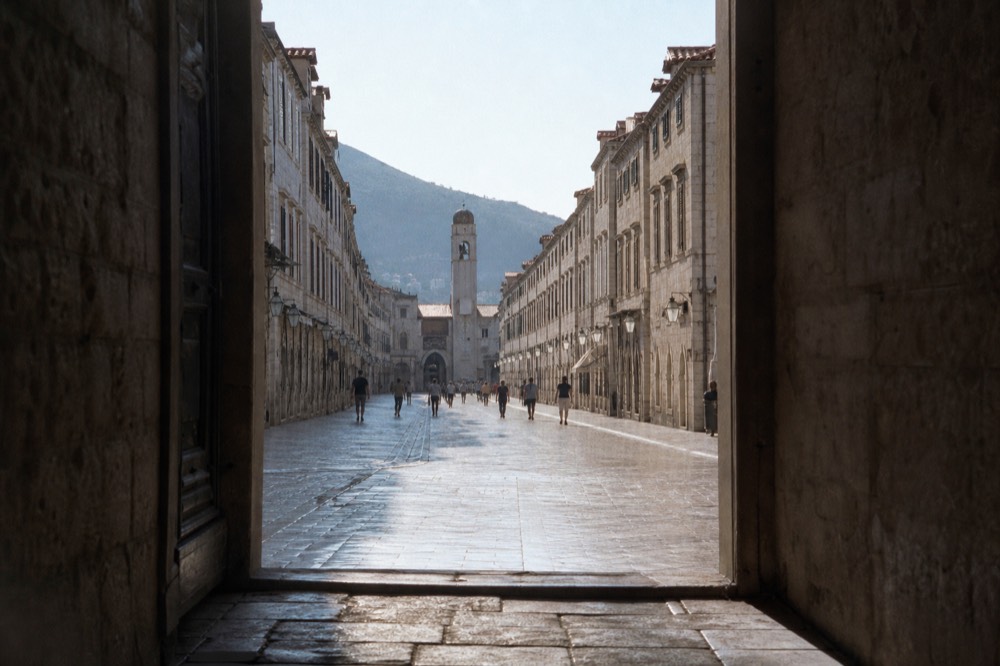
Start with the frame that matters most: what each place actually is. Dubrovnik's Old Town is a car-free limestone bowl inside a 1,940-metre wall circuit, and nearly everything you came to see sits inside it or looks down on it. Hvar town is a small harbour settlement on a long island, and its centre of gravity is the water: the pakleni islets offshore, the beaches around the bay, the boats that leave every morning. Dubrovnik pulls you inward into streets; Hvar pushes you outward onto the sea.
| Factor | Dubrovnik | Hvar |
|---|---|---|
| Core experience | Walled UNESCO city, museums, fortresses, stair streets | Harbour town, beaches, offshore islets, boat days |
| Best for | History, architecture, viewpoints, day trips inland and abroad | Nightlife, swimming, sailing, island hopping |
| Scale of the old core | 24.7 hectares inside the walls | A small harbour town on a long island |
| Peak-season crowds | Heavy, with cruise passengers peaking in September and October | Heavy in July and August, centred on the waterfront |
| Day-trip range | Montenegro, Mostar, the Elaphiti islands, Korcula, Ston | The Pakleni islets, Vis, Korcula, lavender villages inland |
| Car needed | No | No for Hvar town; useful for inland villages and quiet bays |
For deeper planning on the island side, read the Hvar from Dubrovnik guide, which covers the connection in detail, or the best time to visit Dubrovnik if your dates are still flexible.
Is the Nightlife Better in Dubrovnik or Hvar?
Hvar, and it is not close. Hvar town has a waterfront strip of bars that run late into the night, beach clubs on the Pakleni islets reachable by water taxi, and a reputation as one of the Adriatic's party capitals. Dubrovnik's nightlife is real but modest: wine bars, cocktail terraces and one nightclub inside a fortress, with most venues winding down rather than up.
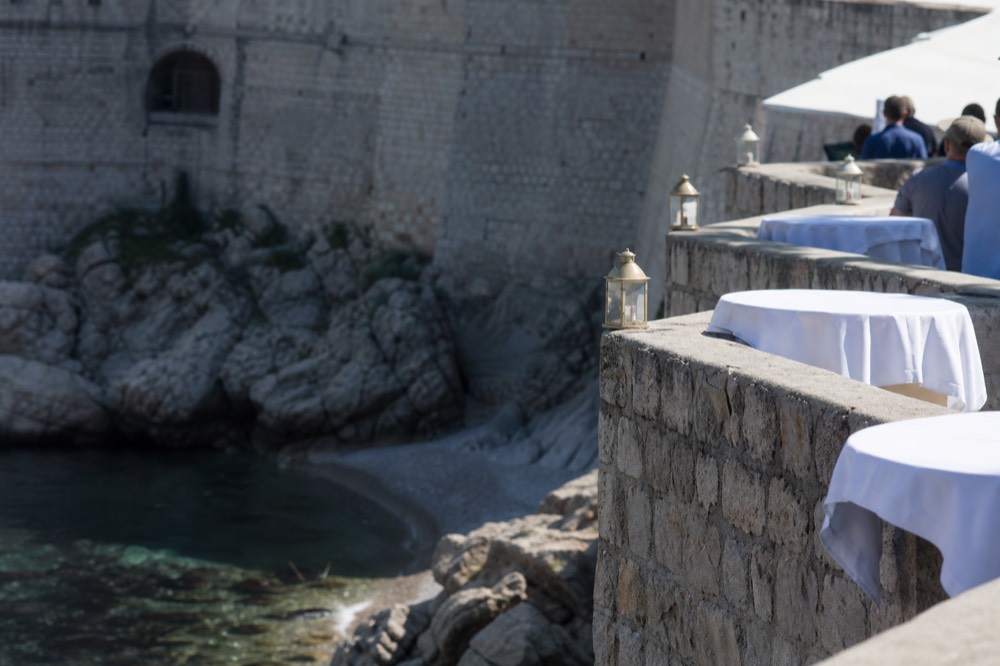
Dubrovnik's evening scene is built for people who spent the day on the walls and want a glass of posip with their feet up. The Stradun and its side streets fill with restaurant tables after dark, the cliffside bars do a busy sunset trade, and there is exactly one proper nightclub inside a historic fortification, which you can read about in the Culture Club Revelin guide. It is a good night out. It is not a party island.
Hvar is a party island. The waterfront and the surrounding square stack bar after bar, the music carries across the bay, and in July and August the town runs on a schedule that starts late and ends later. Add the beach clubs a short taxi-boat ride away and you have the closest thing Croatia's south coast has to a Hvar-and-nothing-else destination for a certain kind of traveller. If your holiday needs a dance floor, the answer to this section's question decides your whole itinerary, and the is Hvar a party island answer page takes that apart in more detail.
One counter-intuitive point on the Dubrovnik side, because it affects every evening out in the old city: the crowds do not peak in July and August. Port Authority data shows cruise passengers in 2025 peaked in September, at 101,246, and October, at 100,132, above July's 96,072 and August's 87,385. The busiest streets of the year are in early autumn, not midsummer, and if you hate crowds that matters more than the temperature chart.
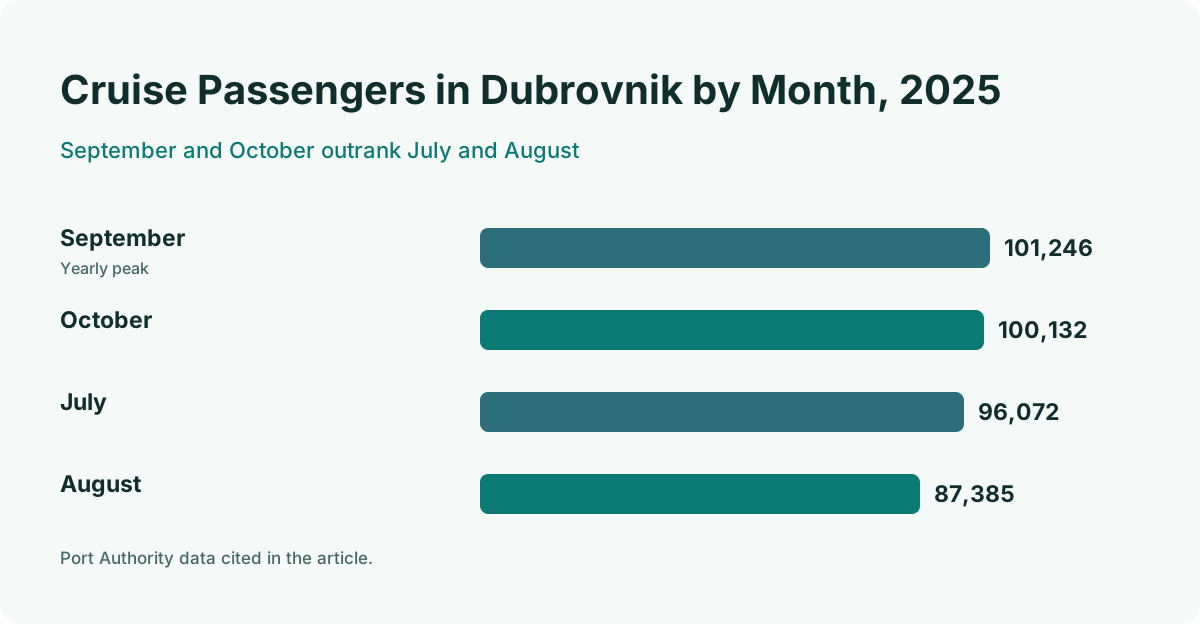
| Month (2025) | Cruise passengers | What it means for your evening |
|---|---|---|
| July | 96,072 | Hot, busy, family-heavy |
| August | 87,385 | Hot, busy, peak domestic season |
| September | 101,246 | The busiest cruise month of the year |
| October | 100,132 | Second busiest, but softer weather and lighter evenings |
The practical takeaway: if nightlife is the point, go to Hvar, ideally in July or August when the beach clubs are fully open. If you are going to Dubrovnik anyway and want its best evening atmosphere, September delivers warm sea and long light with the year's heaviest daytime crowds, so book dinner and any evening plans ahead.
If you would rather escape the evening crush on the water than lean into it, a sunset boat is the Dubrovnik alternative to a Hvar night out, and the sunset cruise options are covered separately.
How Long Is the Ferry from Dubrovnik to Hvar?
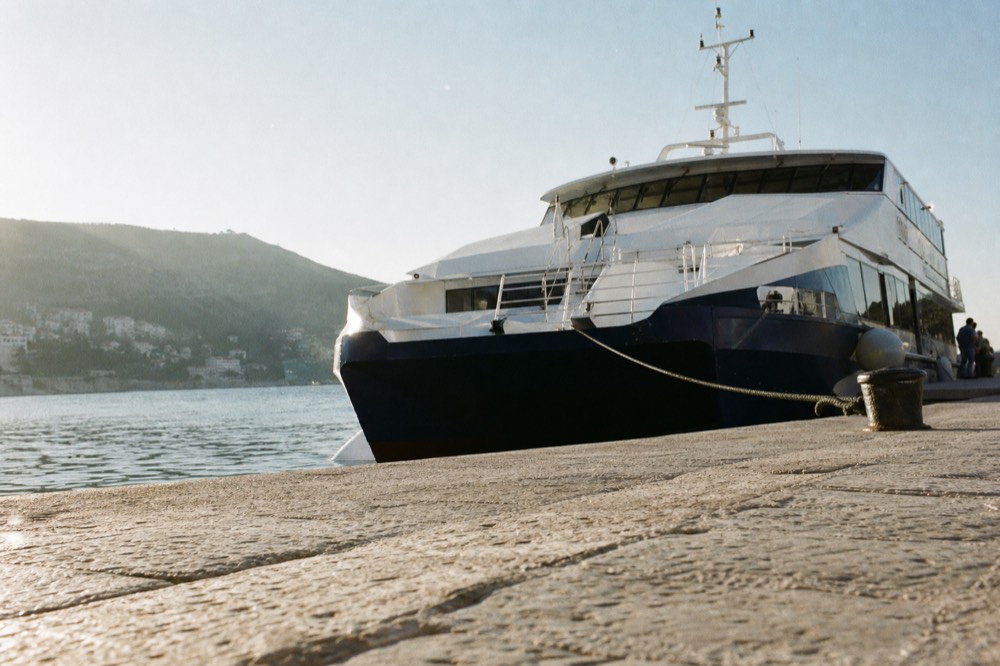
The direct link is a seasonal fast catamaran between Dubrovnik and Hvar town, run by private operators rather than the state ferry line, with sailings concentrated in the warmer months. I will not print a crossing duration here: the timetables change between operators and seasons, so treat the live schedule as the only source and book ahead in July and August.
This is one of those questions where the internet is full of confident, contradictory answers, and the honest position is that the crossing time depends on which operator, which vessel and which month you sail. What is stable is the shape of the connection: fast catamarans for foot passengers only, no cars, running from Dubrovnik's Gruž port to Hvar town and usually continuing to Split, with the densest schedules from late spring to early autumn. The Gruž and the bus station guide explains how the port fits into the city.
Booking matters more on this route than on most. Catamarans are small, seats sell out in peak weeks, and a missed sailing can cost you a night in the wrong town. Reserve as soon as your dates are firm, and if the direct sailing is full or out of season, the standard fallback is to travel via Split: up the coast by bus or transfer, then out to Hvar by catamaran or car ferry. It is longer, but it runs more often and the Split to Hvar leg is one of the busiest sea routes in the country.
| Route option | Vessel type | Cars? | Notes |
|---|---|---|---|
| Dubrovnik to Hvar town, direct | Seasonal fast catamaran | No | Foot passengers only; timetables vary by operator, book in peak season |
| Dubrovnik to Split, then Split to Hvar town | Bus or transfer, then catamaran | No | Runs more often; the fallback when the direct sailing is full |
| Split to Stari Grad (Hvar island) | Car ferry | Yes | The vehicle route onto the island; Stari Grad is a drive from Hvar town |
One planning note from experience: Gruž is not the Old Town. The port sits west of the walled city, and how to get between the two is its own question with its own costs, covered in the cruise port to Old Town guide. Leave real time for the transfer on sailing day, because the catamaran will not wait for your taxi.
Is It Easier to Get to Hvar from Split or Dubrovnik?
Split, clearly. Split has both the fast catamarans to Hvar town and the year-round car ferry to Stari Grad, with frequent departures and an airport under 30 minutes from the port. From Dubrovnik you depend on a single seasonal catamaran route, so if Hvar is the centrepiece of your trip, flying into Split and finishing in Dubrovnik is the smoother order.
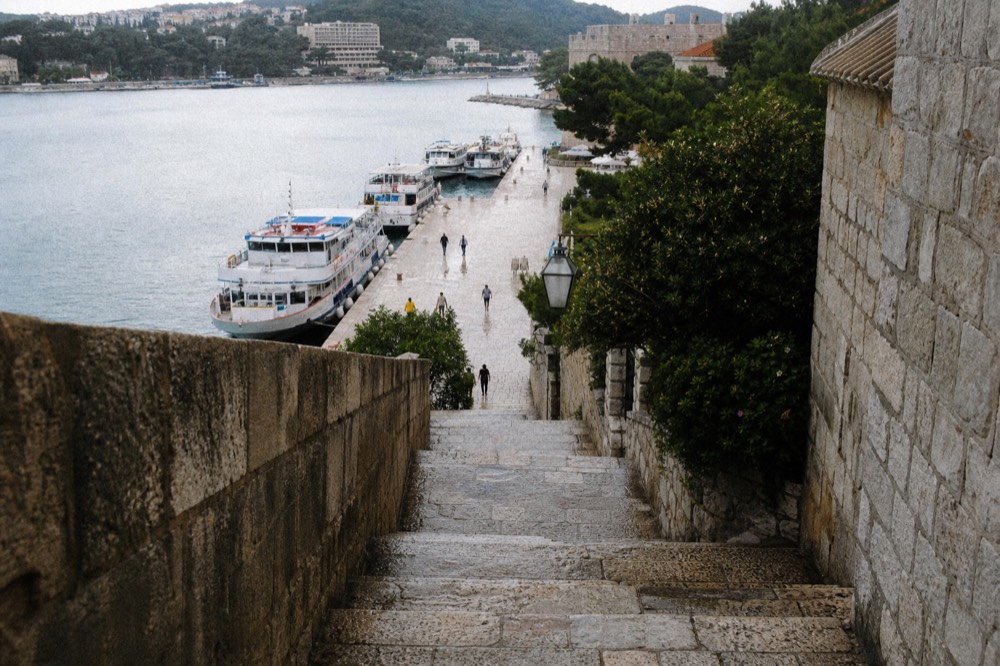
The asymmetry is structural. Split is the regional transport hub: its ferry terminal stacks catamaran and ferry departures for the central Dalmatian islands, Hvar included, and the catamaran ride to Hvar town is short enough that islanders commute on it. Dubrovnik, at the far southern end of the coast, is a spoke rather than a hub. Its sea connections run mostly east and south, toward Montenegro and Greece, or out to the near islands like the Elaphiti, with the seasonal catamaran to Hvar and Split as the main westward link.
That is why the classic two-centre itinerary runs Split first, then Hvar, then Dubrovnik. You fly into Split, island-hop westward on the dense catamaran network, and finish in Dubrovnik, where the day trips change character entirely: instead of more islands, you get Montenegro, Mostar and the Pelješac peninsula, none of which exist as easy options from Split. The comparison of the two cities as bases is its own topic, handled in Dubrovnik vs Split.
There is a case for the reverse order, though, and it is about energy. Dubrovnik is intense: stairs, stone, crowds, tickets, timetables. Hvar is loose: swim, eat, sail, repeat. Some travellers prefer to do the culture first and collapse onto a beach afterward, which means Dubrovnik first and the catamaran west as a reward. Either direction works; what does not work well is day-tripping Hvar from Dubrovnik. The connections make a there-and-back in one day fragile at best, and if the sea is rough you simply lose the day.
If you are based in Dubrovnik and craving an island day, the smarter move is the near islands. The Elaphiti chain sits just off the city, runs on reliable full-day boats, and gives you the swim-and-lunch day that Hvar advertises without the long crossing. The Elaphiti islands guide covers the chain, and the full-day cruise with lunch is the most reviewed excursion on this coast, rated 4.9 across 10,312 reviews, from $59.16 per person.
What Not to Do in Dubrovnik?
Do not day-trip Hvar from Dubrovnik on a tight schedule, do not drive into the Old Town expecting to park, do not buy a walls ticket without checking whether the Dubrovnik Pass covers you, and do not plan your visit for September thinking the crowds have gone. The September cruise peak of 101,246 passengers makes early autumn the busiest stretch of the year inside the walls.
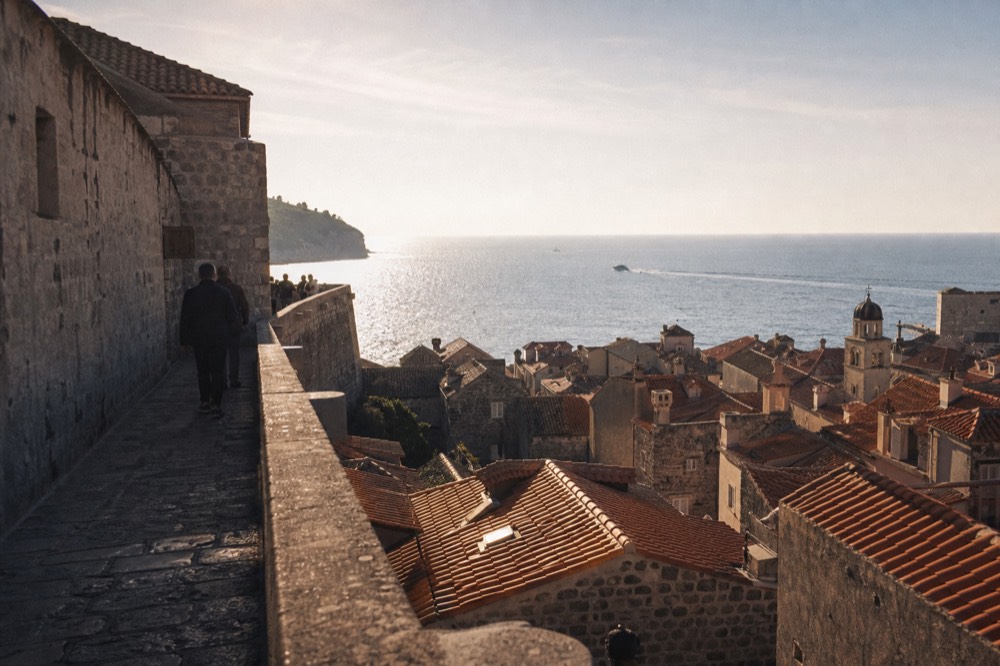
The first mistake is treating Dubrovnik as a half-day stop. The walls circuit alone, 1,940 metres of it with stairs at both ends, takes a solid two hours in summer heat, and the town rewards a second morning before the day-trippers arrive. The counting system backs this up: on a sample early-September day the Old Town held 5,419 people at 08:00, peaked at 7,739 at 10:00, and was back down to 7,205 by 11:00. The quiet window is early, and the mistake is sleeping through it.
The second is the ticket mistake. The adult City Walls ticket is 40 euro in main season, 1 March to 30 November, and it already includes Fort Lovrijenac. The one-day Dubrovnik Pass also costs 40 euro in main season and adds ten more sights plus a 24-hour bus ticket, so for many visitors the pass is the same money for strictly more. But that equivalence is a main-season fact only: in December the walls ticket drops to 20 euro and no pass tier is on sale at all. The full breakdown is in the Dubrovnik Pass guide, and the city walls tickets guide covers the fine print.
| Ticket | Main season (1 Mar to 30 Nov) | December |
|---|---|---|
| City Walls adult (includes Lovrijenac) | 40 euro | 20 euro |
| City Walls child 7 to 18 | 15 euro | 5 euro |
| Child 6 and under | free | free |
| Dubrovnik Pass, one day | 40 euro | not on sale |
| Fort Lovrijenac alone | 15 euro | 15 euro |
The third mistake is logistical: arriving by car. The Old Town is car-free and the parking around it is scarce and expensive, a problem with its own parking guide. Stay outside the walls with a bus connection, or arrive by airport transfer and leave the car at home.
The fourth is subtler: assuming Dubrovnik's borders are the Adriatic. They are not. The city sits minutes from Bosnia's Mostar and an hour from Montenegro's Bay of Kotor, and skipping both to spend a third day shopping on the Stradun is the most common regret I hear from visitors. The border crossings are the friction, which is exactly why guided day trips earn their fee on these routes.
The standard Montenegro day trip runs from $58 per person, rated 4.4 across 5,611 reviews, and handles the two border crossings and the bay road while you watch the scenery.
A traveller named Nithya described the semi-private version of that day in her own words: "We booked the semi-private tour. 6 people total. Robert was fantastic! He was so knowledgeable and enthusiastic about everything. The tour was well organized and we had just the right time at the spots. Extremely satisfied with this tour and would certainly recommend to anyone. Also the border in September only took us 15 minutes."
Beaches, Swimming and the Island Difference
Hvar wins on swimming and beach life. Its beaches, coves and the Pakleni islets put warm, swimmable water at the centre of the day, and the sheltered bays run warmer than the open-sea averages. Dubrovnik's swimming is real but secondary: a handful of small beaches and cliff spots around the walls, with the September open-water average at about 23.6 degrees on the long-run NOAA series.
That sea temperature figure needs its caveat, because it gets misused constantly. The 23.6 degree September number is a NOAA long-run average for 1991 to 2020, an open-water grid-cell figure, not this year's water and not a beach thermometer. Sheltered shallow bays run warmer: the Croatian met service's own Dubrovnik buoy read 27.0 to 27.4 degrees on one early-September day against that 23.6 monthly mean. In Hvar's sheltered coves the same effect applies. The swimming season guide carries the month-by-month table.
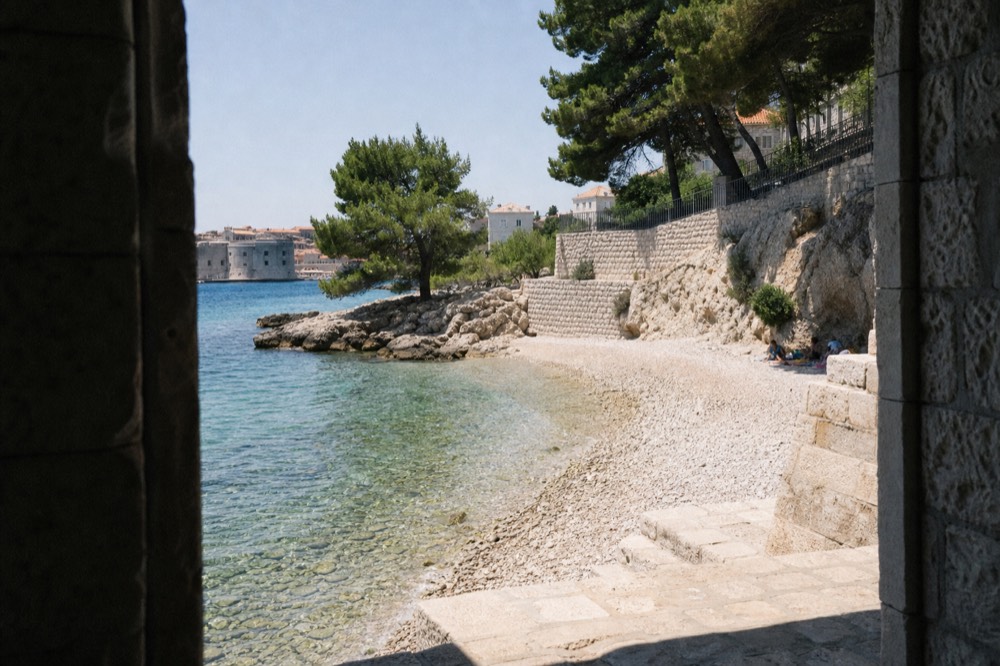
Dubrovnik's own beaches are mostly concrete ledges, pebble pockets and one famous cliff bar, strung along the coast outside the walls. They are good for a cooling dip after a hot morning of sightseeing, not for a beach holiday. If your ideal day is two hours of culture and six hours of horizontal swimming, Hvar is the better base and Dubrovnik the excursion. If your ideal day is the reverse, the calculation flips, and the beaches guide maps which coves are worth the walk.
The water sports split the same way. Kayaking around Dubrovnik's walls and out to Lokrum is a genuine highlight, rated 4.9 across thousands of reviews on the main operators, and the kayaking guide covers the routes. Hvar's equivalent is a rented boat or a skippered day among the islets. Both are excellent; only one of them sits under a UNESCO wall while you paddle.
Which One Should You Actually Choose?
Choose Dubrovnik if history, walls, viewpoints and cross-border day trips are the point, and choose Hvar if nightlife, beaches and boat days are. If you have a week, do both: Split into Hvar by catamaran, then Hvar to Dubrovnik in season, finishing with the walls and a Montenegro or Mostar day trip. The either/or version of this question only exists for trips under four days.
For a short trip, the tie-breaker is travel style rather than merit. Dubrovnik concentrates everything into a walkable car-free core, so three days delivers a complete visit: walls, fortresses, Lokrum, an island cruise, a border day trip. Hvar spreads its appeal across water and evening, so a short stay works only if you commit to the beach-and-bar rhythm and skip the sightseeing checklist. The how many days in Dubrovnik guide breaks down exactly what each day buys you.
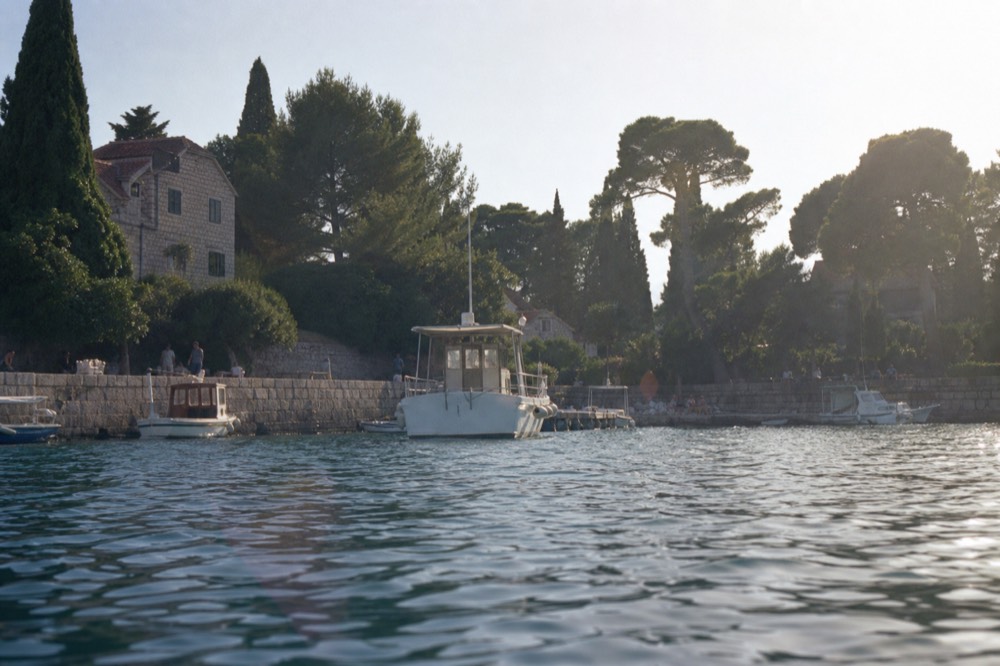
There is also a seasonality argument. Dubrovnik's shoulder months, late April, May, June and October, are lovely: the walls are open, the sea is warming or still warm, and the October cruise crowds thin out after mid-month. Hvar outside July and August is a quieter, almost sleepy island, and a lot of its beach-club energy simply closes. If you are travelling in May or October, Dubrovnik is the safer bet for a full experience; in July and August, Hvar is at its best and Dubrovnik at its most crowded.
Money, briefly, because someone always asks: both are among Croatia's pricier destinations, and neither is a budget pick in peak season. Dubrovnik's costs are concentrated in tickets and restaurants, and the trip cost guide itemises them. Hvar's costs concentrate in accommodation and beach clubs. The difference is smaller than the reputations suggest, and the budget Dubrovnik guide shows how the walled city is done cheaply.
Whichever you pick, book the two things that actually sell out: the catamaran seat between them, and any guided day trip in peak weeks. Everything else in either town can be arranged on arrival.
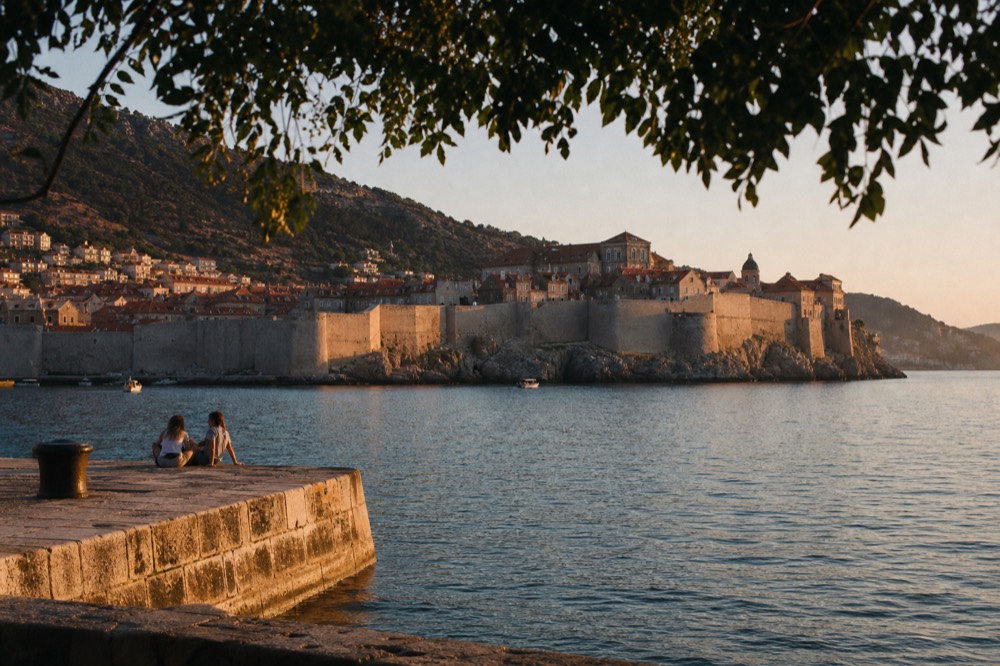
Common Questions About Dubrovnik vs Hvar
Is the Nightlife Better in Dubrovnik or Hvar?
Hvar, comfortably. Hvar town runs a waterfront strip of late bars and beach clubs on the Pakleni islets reachable by water taxi, and it is one of the Adriatic's best-known party destinations. Dubrovnik's evenings are wine bars, restaurant terraces and one nightclub inside a fortress, a good night out but not a party island.
is the nightlife better in dubrovnik or hvar?
As harvested, and the answer stands: Hvar. Dubrovnik's nightlife is pleasant and early; Hvar's is loud and late, especially from June through August when the beach clubs are fully open.
How Long Is the Ferry from Dubrovnik to Hvar?
The direct link is a seasonal fast catamaran from Dubrovnik's Gruž port to Hvar town, and the crossing time varies by operator and month, so check the live timetable rather than any secondhand figure. Book ahead in July and August, because catamaran seats sell out.
Is It Easier to Get to Hvar from Split or Dubrovnik?
Split. It has frequent catamarans to Hvar town plus a year-round car ferry to Stari Grad, with the airport close to the port. From Dubrovnik you rely on a single seasonal catamaran, so the classic route is Split first, Hvar, then Dubrovnik.
Can You Day-Trip to Hvar from Dubrovnik?
Not reliably. The connections are seasonal and thin, and a rough sea can cancel the whole plan. For an island day from Dubrovnik, the Elaphiti islands just off the coast are the dependable option, with full-day boats running all season.
Which Is Better for a First Trip to Croatia?
Dubrovnik, for most first-timers. It packs a walled UNESCO old town, the walls circuit, Lokrum and cross-border day trips into a walkable base. Hvar is the better second stop once the sightseeing is done and you want sea and slow evenings.