Is Hvar, Croatia a Party Island?
Hvar Town has a real party reputation, but the island is bigger than its beach clubs. An honest look at Hvar's nightlife, how Split and Dubrovnik compare, and which Croatian islands suit a quieter trip.
Is Hvar, Croatia a Party Island?
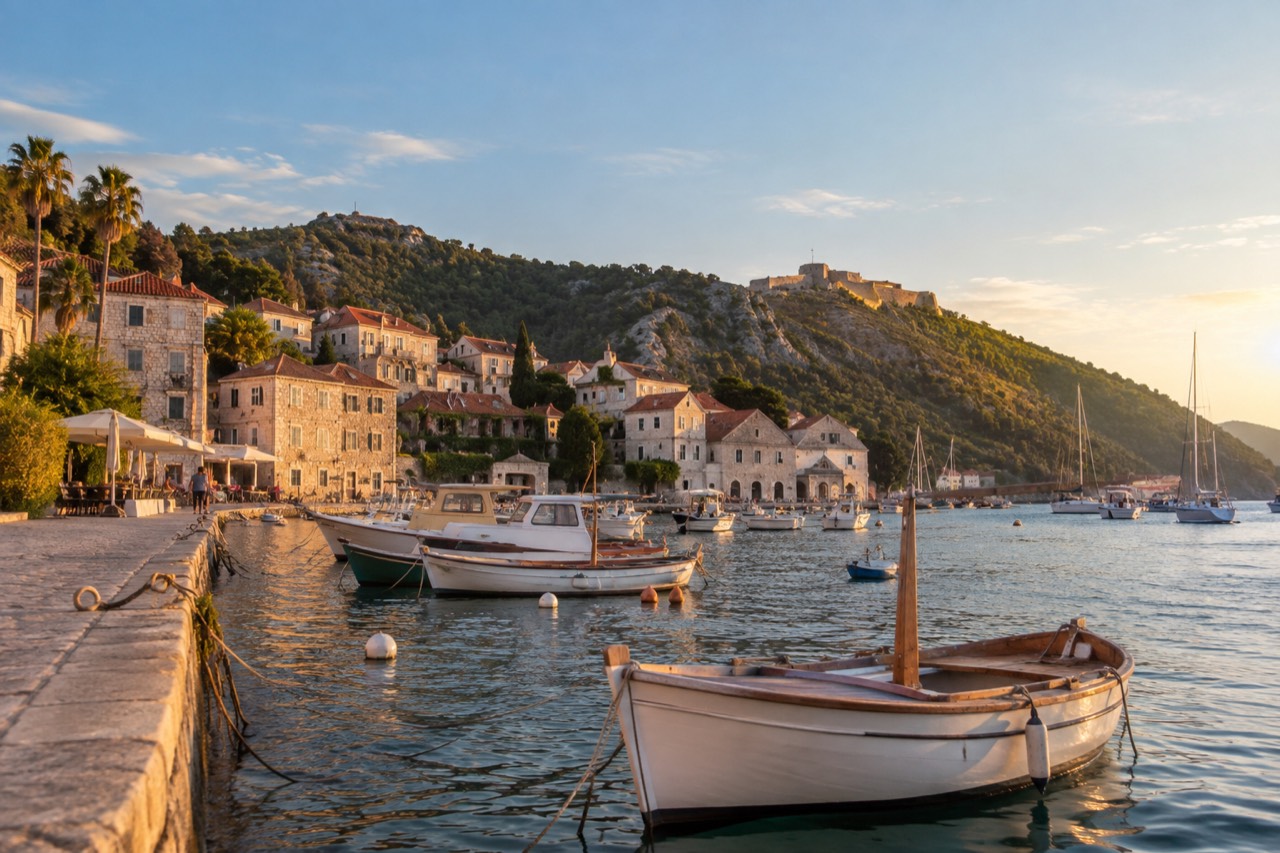
Yes and no, and the distinction matters. Hvar Town is one of the loudest party spots on the Croatian coast from late June through August, with beach clubs, yacht crowds and bars that run past midnight. But Hvar is also an island of lavender fields, quiet fishing villages and hiking trails, and from October to May the same town is a sleepy stone harbour. Calling the whole island a party island confuses one town's high season with the place itself.
The reputation has a specific geography. Hvar Town, on the island's south-west corner, is where the beach clubs and cocktail bars cluster along the waterfront and the riva fills with superyachts in summer. The rest of the island tells a different story. Stari Grad, on the north side, is a working town with a long history and a calmer pace. The interior is lavender terraces, dry-stone walls and old villages where the loudest thing in the evening is the crickets. Jelsa sits between the two, family-oriented and relaxed even in August.
The season matters as much as the postcode. The party economy in Hvar Town runs hard for roughly ten weeks, from late June to the end of August, when the weather is at its most reliable and the yachts arrive. Outside that window the clubs cut their schedules or close, and the town reverts to what it is the rest of the year: a small Adriatic port that lives on wine, olives and tourism of a gentler kind. Travellers who visit in May or September are often surprised at how quiet it feels, and that surprise is the honest answer to the question.
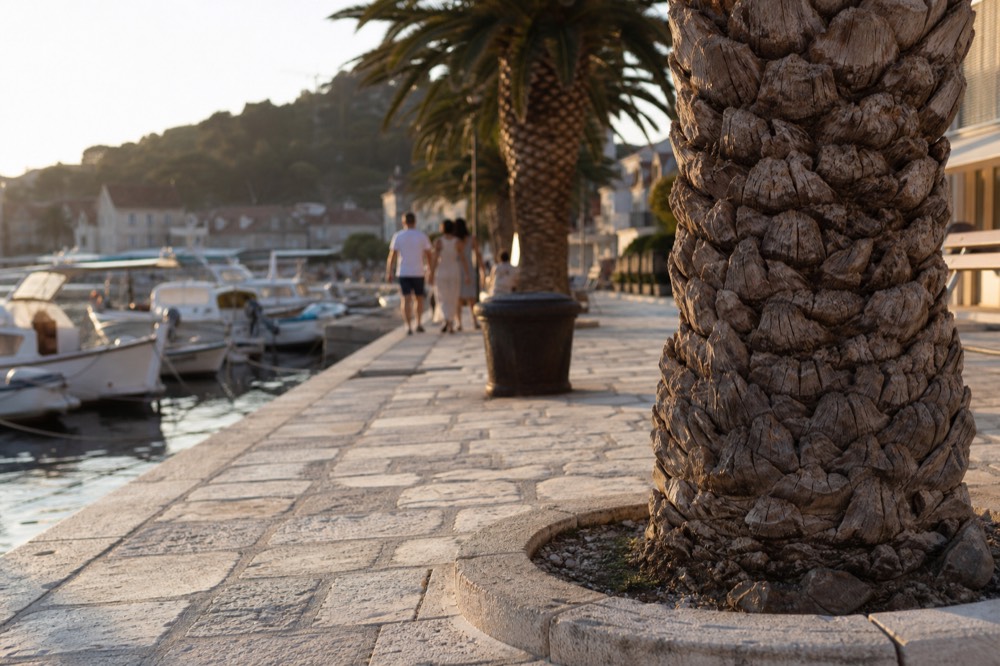
Who you travel with changes the experience too. A group of friends in their twenties looking for beach clubs will find exactly that in Hvar Town, easily. A couple or a family staying a few streets back from the riva will find restaurants, swimming spots and evening walks, and can simply not engage with the club scene at all. It is not a resort island where the party is inescapable; the noise is concentrated in a small zone and falls off fast once you climb away from the water.
If you are planning a Croatian trip that includes nightlife but not only nightlife, it helps to compare the coastal cities before deciding where your evenings go. This site is built around Dubrovnik, so the comparison below leans on what I know from working there, and there is a fuller head-to-head in the Dubrovnik versus Hvar guide.
Is Split, Croatia a Party Island?
Split is a city, not an island, and its nightlife is a city's nightlife rather than a resort's. It has a genuine bar scene in and around the Diocletian's Palace quarter, a few clubs, and a student population that keeps things lively year-round. But nobody flies to Split purely for the party the way they do for Hvar Town. Split's evening appeal is bars, restaurants and people-watching, with the islands sitting an hour or so offshore.
Split's big structural advantage is that it never fully closes. Because it is a working city with universities, hospitals and a permanent population, its restaurants and bars have customers in February, not just August. The palace quarter, a Roman structure that is still lived in, turns into an open-air maze of bars in the evening, and the Riva promenade fills with the strolling crowds that Dalmatian evenings are built around. It is social, and it is fun, and it is a different species from a beach club.
The relationship between Split and the islands is the practical point for most travellers. Split's ferry port is the main jumping-off point for the central Dalmatian islands, and day trips or island hops are easy to arrange. That makes Split a sensible base if your group is split, pardon the phrase, between people who want a big night out and people who want a quiet one. The partiers can take a boat to Hvar Town for the day and the evening, and everyone else can stay put with a book and a glass of plavac mali.
For context on how Croatia's tourism actually distributes itself: the Croatian Bureau of Statistics recorded about 4.2 million overnight stays in Dubrovnik in 2025, shared first place nationally with Rovinj, and 94.8 million nights across the country's commercial accommodation (DZS release). The point for a nightlife question is that the coast's party hotspots are a thin layer on top of a very large, mostly quiet, family-and-couples tourism economy. Split reflects that mix more honestly than any single party island does.
| Place | Nightlife character | Peak party window | Quietest option nearby |
|---|---|---|---|
| Hvar Town | Beach clubs, cocktail bars, yacht scene | Late June to August | Stari Grad and Jelsa on the same island |
| Split | Palace-quarter bars, city pace, students | June to September, quieter rest of year | Marjan hill and the suburbs |
| Dubrovnik | Restaurant and bar evenings, a few clubs | July and August | Lokrum island and the Elaphiti islands |
Is Dubrovnik a Party Island?
No. Dubrovnik is not an island at all, and its nightlife is the gentlest of the three. The Old Town has bars, a famous cliffside spot and one nightclub inside a fortress, but the evening economy runs on restaurants, wine and sunset viewpoints rather than beach clubs. If your trip is anchored in Dubrovnik and you want a big night, you will find one or two, but you will not find Hvar Town's scene.
Dubrovnik's evenings have a particular rhythm. The Old Town empties of day-trippers in the late afternoon, the Stradun, all 298 metres of it, softens into golden light, and the terraces above the walls fill up for the sunset hour. That is the local idea of a good night out: a long dinner, a glass of wine from the Pelješac peninsula, maybe a nightcap with the illuminated walls in view. The UNESCO-listed Old City, inscribed in 1979 under criteria (i), (iii) and (iv) with a 24.7-hectare property area (UNESCO listing), is simply not built for loud nightlife, and the city has never tried to make it so.
That said, Dubrovnik is not dry. There is a nightclub inside a fortress just outside the walls that runs events through the summer, and the cliff bar hanging over the sea on the southern walls is one of the most memorable drink spots on the entire Adriatic. The bar scene is small, walkable and concentrated, which makes it easy to plan an evening around. There is more detail in the guide to Dubrovnik's nightlife, and the question of whether Hvar or Dubrovnik does evenings better has its own page in is the nightlife better in Dubrovnik or Hvar.
The evening I would actually recommend to most visitors is on the water rather than in a bar. The panoramic sunset cruise on the Karaka, a replica of a historic Dubrovnik ship, runs 1.5 hours, adults only, from $59 per person, rated 4.8 across 833 reviews. You get the Old Town and Lokrum from the sea in the last light, a drink included, and a crowd that came for the view rather than the volume. It is the calm version of a party-island evening, and it is the one I point people toward when they ask whether Dubrovnik can compete with Hvar after dark. More of these guides are collected on Things to Do in Dubrovnik.
For a shorter, cheaper option in the same spirit, the Cavtat sunset cruise with a cold platter and drinks runs about an hour from $23.66 per person and is rated 4.9 across 203 reviews. Cavtat itself is the anti-Hvar: a quiet harbour town half an hour south of the city, where the evening entertainment is the promenade and a fish restaurant.
One more evening option deserves a mention because it costs nothing up front. Magical Dubrovnik Nights: History and Legends is a free, pay-what-you-want evening walk on GuruWalk, 1 hour and 45 minutes, rated 4.9 across 288 reviews. A local guide leads you through the Old Town's darker stories after the day crowds have gone. It is a reminder that a memorable night out does not have to involve a dance floor at all.
What Is the Prettiest Island in Croatia?
There is no official answer, and anyone who gives you one is selling something, but the names that come up again and again are Hvar for its lavender and light, Korčula for its wooded hills and medieval town, Mljet for its lakes and forest, and the Elaphiti islands for their closeness and simplicity. "Prettiest" depends on whether you mean dramatic, green, historic or unspoiled, and the honest answer is that Croatia offers all four.
Beauty on this coast comes in recognisable flavours. Hvar's is agricultural and golden: lavender fields, vineyards on terraces, and a town of Venetian facades facing the setting sun. Korčula's is green and structured, a pine-covered island with a walled town that is often called a small Dubrovnik, and it has its own quiet wine tradition in grk and pošip. Mljet is the wild one, most of it a national park with two saltwater lakes and dense forest, and almost no nightlife to speak of. The Elaphiti chain, Koločep, Lopud and Šipan, is the low-effort beauty option, reachable from Dubrovnik on a day boat.
If I had to pick a single prettiest for a first-time visitor with limited days, I would point at Mljet for pure landscape and Korčula for the combination of landscape and town. Both are, not coincidentally, poor choices if a party is what you are after, which is exactly the point of this question. The islands that top the beauty lists and the islands that top the party lists barely overlap. A traveller who asks for the prettiest island is usually asking for the opposite of Hvar Town in August, and the answer should say so plainly.
From Dubrovnik, the practical routes matter. The Elaphiti islands are the easiest, with full-day cruises running from the city, and there is a full Elaphiti islands guide on this site. Korčula is a longer day trip by boat or bus, and Mljet is a full day with an early start, covered in the Mljet day trip guide. Hvar from Dubrovnik is possible but awkward, involving ferry connections through Split, which is one reason Dubrovnik-based travellers who want an island day usually end up on Lokrum or the Elaphiti chain instead.
| Island | Best for | Nightlife level | Reachable from Dubrovnik as a day trip |
|---|---|---|---|
| Hvar | Beach clubs, lavender, people-watching | High in Hvar Town, in season | Not practical |
| Korčula | Medieval town, wine, pine woods | Low | Yes, a long day |
| Mljet | National park, lakes, forest | Almost none | Yes, a long day |
| Lopud (Elaphiti) | Sandy beach, easy boat day | Almost none | Yes, easily |
| Lokrum | Botanical gardens, quiet coves, quick escape | None, it closes in the evening | Yes, boats every 15 minutes |
Lokrum deserves a special word here because it is the closest thing Dubrovnik has to its own island, and it is the anti-party in physical form. The ticket is 30 euro per person and covers both the reserve entry and the return boat transfer, with boats leaving the City Harbour at 09:00, then every 15 minutes from 10:00 to 18:00. Peacocks, botanical gardens, rocky swimming coves and no bars of any consequence. It is a ten-minute boat ride from the busiest street in the country and it feels like a different century.
A few timing notes help if beauty is the goal. Lavender on Hvar blooms in June and early July, so travellers chasing those golden fields should plan around that window rather than the peak of August. On Korčula, the walled town rewards an early morning or late afternoon walk, when the day-trip crowds thin and the light hits the stone. On Mljet, the national park entry is separate from your transport, so budget extra time and money for it, and the walking and cycling trails around the two lakes are the main draw.
One more honest point: pretty and convenient do not always align. The Elaphiti chain wins on ease, Lokrum wins on proximity, but Mljet and Korčula win on scale. If you have only one island day from Dubrovnik and want the strongest single impression of Croatian island beauty, take the long day to Mljet. If you want beauty plus a town to wander and a glass of local wine at the end of it, take the long day to Korčula.
What Is the Nicest Island to Visit in Croatia?
"Nicest" usually means the best overall experience rather than the single most beautiful view, and by that measure the strongest everyday answers are Korčula for a first island stay, Lopud for an easy day trip, and Hvar itself for a short visit outside the peak party weeks. The nicest island is the one whose pace matches yours: Korčula and Mljet for slow travellers, Hvar Town for a two-night social burst, the Elaphiti chain for families.
The practical test I would apply is simple. Ask how many nights you have, whether you are moving by ferry or on an organised trip, and whether your group wants quiet or company in the evenings. A couple with three nights and a car might love Korčula town, with its walls, its wine bars and its evening promenade. A family based in Dubrovnik is better served by Lopud's sandy Šunj beach on a day cruise. A group of friends flying into Split for a long weekend will genuinely enjoy Hvar Town, and should not be talked out of it, provided they go in the season window when it is actually running.
Timing advice matters most for Hvar, and it doubles as the honest closing note on the party question. September is the sweet spot for most of the coast: the sea is still warm, the September average for this coast is about 23.6 degrees as a long-run open-water figure, and the crowds thin noticeably. Dubrovnik's own visitor data backs the pattern up in a way that surprises people: cruise passengers in 2025 peaked in September at 101,246 and October at 100,132, both above July's 96,072 and August's 87,385 (Port Authority statistics). The lesson transfers to the islands: late summer is busy everywhere, but it is busy with a different, calmer crowd, and the water is at its warmest.
For Dubrovnik-based travellers, the honest routing is this. Do not try to force Hvar into a Dubrovnik itinerary; the transport makes it a project. Spend your island energy on Lokrum for a half day and the Elaphiti chain for a full one, keep your evenings in the city for dinner, a sunset boat or a legends walk, and save Hvar for a future trip based in Split, where it belongs. That is how most people who know the coast actually use these places, and it is the plan that leaves nobody in the group complaining.
If an evening on the water, a short sunset run to Cavtat or a free history-and-legends walk through the Old Town sounds like your kind of night, these are the three I would compare first.
Common Questions About Whether Hvar Is a Party Island
Is Hvar, Croatia a party island?
Partly. Hvar Town is one of the loudest party spots on the Croatian coast from late June through August, with beach clubs and a yacht-driven bar scene. The rest of the island, including Stari Grad and Jelsa, is quiet, and outside the ten-week peak the whole island calms down considerably.
Is Split, Croatia a Party Island?
Split is a city, not an island. Its nightlife is a city scene built around bars in the Diocletian's Palace quarter and a year-round local population, not beach clubs. Many travellers use Split as a base and take the ferry to Hvar Town for the louder nights.
Is Dubrovnik a Party Island?
No. Dubrovnik sits on the mainland, and its evenings run on restaurants, wine bars and sunset viewpoints. There is one nightclub inside a fortress near the walls and a famous cliff bar, but nothing on the scale of Hvar Town's summer scene.
What Is the Prettiest Island in Croatia?
There is no official answer, but the names that recur are Hvar for lavender and light, Korčula for woods and a medieval town, Mljet for its national park lakes, and the Elaphiti islands for simplicity close to Dubrovnik. The prettiest depends on whether you want dramatic, green, historic or unspoiled.
What Is the Nicest Island to Visit in Croatia?
For most first-time visitors, Korčula makes the best island stay, Lopud the easiest day trip, and Hvar Town a fun short visit outside the peak party weeks. Match the island to your pace rather than chasing a single "best" name.
Can You Visit Hvar From Dubrovnik?
It is possible but awkward, usually involving ferry connections through Split, so it is not a realistic day trip. Travellers based in Dubrovnik are better served by Lokrum and the Elaphiti islands, while Hvar fits more naturally into a Split-based itinerary.