Croatia eSIM Guide for Dubrovnik Travellers
A Croatia eSIM is the quiet upgrade that makes everything else in Dubrovnik easier, from booking walls tickets on the day to pulling up a bus timetable while you stand at Pile Gate. Here is how to think about connectivity, and how it fits around the things people actually come here for.
Short answer
A Croatia eSIM is worth setting up before you land in Dubrovnik. The Old Town runs on same-day digital bookings: the City Walls ticket is 40 euro in main season, the one-day Dubrovnik Pass is also 40 euro, and the cable car round trip is 30 euro. Having data the moment you land lets you compare and buy on the spot.
Dubrovnik is a city you get around with your feet and your phone in equal measure. The streets are polished limestone, the walls are 1,940 metres of stone, and between them sits a UNESCO-listed core of 24.7 hectares that does not always give up its practical details easily. Ticket offices, boat schedules, bus timetables and tour availability all move faster than a printed guide can. That is the honest case for sorting your connectivity before you arrive, and it is the thread this guide follows: what a Croatia eSIM actually does for you here, and how it fits around the questions every visitor ends up asking, from whether the city is worth the flight to where to sleep cheaply.
I have walked these streets with visiting travellers since 2015, and the pattern never changes. The people who arrive with working data make faster, calmer decisions. The people hunting for free Wi-Fi outside a closed ticket office in the midday heat do not, and they pay for it in queues, missed windows and full boats.
Do You Need an eSIM in Croatia?
You do not strictly need an eSIM to visit Croatia, but in Dubrovnik it removes a whole layer of friction from your first hour onwards. The city's key tickets, including the 40 euro City Walls combination and the 40 euro one-day Dubrovnik Pass, are sold through online shops, and same-day availability for popular tours shifts hour by hour. A working data connection from the moment you land means you buy at real prices instead of guessing at them.
An eSIM is a digital SIM profile you download onto a compatible phone before or just after you arrive, which then connects you to a local Croatian network without swapping a physical card. You install it at home over Wi-Fi, and it activates when your phone registers on the network here. For most travellers it beats airport kiosks and physical SIM cards on one simple point: you are not standing in a queue at the arrivals hall making decisions with jet lag and a dead battery.
The practical question is what you will actually use data for. In Dubrovnik the honest answer is bookings, maps and the small logistics that eat a day when they go wrong. The table below shows the things visitors most often need to check or buy online, with the verified prices you should expect to pay when you get there.
| Item | Why you need data for it | Verified price |
|---|---|---|
| City Walls + Lovrijenac ticket | Sold through the operator's own webshop | 40 euro adult, main season |
| Dubrovnik Pass, one day | Official pass site, same price as the walls | 40 euro |
| Cable car round trip | Operator's timetable and price page | 30 euro adult |
| Lokrum reserve ticket | Boat departure pattern and ticket office hours | 30 euro per person |
None of that requires a huge data allowance. The walls operator's own shop is the source for the 40 euro figure and the season boundaries, as published by the Society of Friends of Dubrovnik Antiquities, and it is a page you will want open while you decide. A modest plan is enough for a week of bookings and maps; the heavy users are the people streaming video on the beach, and they know who they are.
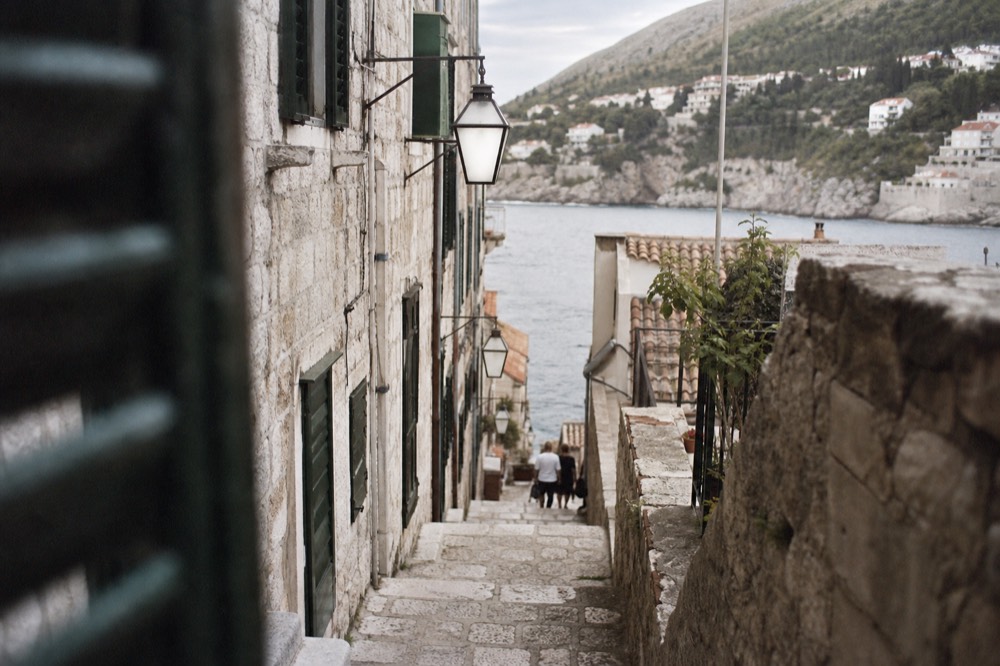
One planning note from experience: download your offline maps before you fly, whatever you decide about an eSIM. The Old Town's side streets confuse mapping apps at the best of times, and a cached map plus a live connection is the combination that works. The lanes around the cathedral and the streets climbing toward the walls drop signal-shadowed corners that no app handles gracefully, and a phone that already knows where it is keeps working when the connection stutters.
How Does a Croatia eSIM Work Day to Day in Dubrovnik?
In practice a Croatia eSIM works like this: you install the profile before departure, it activates on the local network when you land, and from then on your phone behaves normally. You will use it most at decision moments, comparing tour listings at breakfast, checking the Lokrum boat pattern, pulling up a bus timetable at Pile Gate. Coverage across the Old Town, Lapad and the wider county is dependable on the major networks.
The reason this matters more here than in some destinations is how much of Dubrovnik's day-trip economy runs on same-day digital decisions. Tour operators release availability live, and the popular slots, the sunset kayaks, the small-group walks, the boat trips with lunch, fill in a pattern you can only see if you can look. The roster below shows three of the most-booked options with their verified entry prices and ratings, all of which you would typically compare on a phone over morning coffee.
| Tour | Format | From (per person) | Rating |
|---|---|---|---|
| E-Tuk Tuk Panorama Ride | 1 hour 45 minutes, guided | $59.24 | 5 across 1,799 reviews |
| Hop-On Hop-Off Bus, Audio Guide | 1 hour 30 minutes, self-paced | $35.46 | 4.9 across 1,147 reviews |
| Old Town Walk, Local Guide | Guided walking tour | $20 | 4.8 across 5,826 reviews |
Those three make a useful spread for a first visit: a guided panorama, a self-paced loop and a proper walk with a local. Prices and ratings sit on the live listings, and the figures above are the verified ones, so anything wildly different is a signal to look closer at what you are actually being sold. The e-tuk-tuk ride in particular is the kind of product where same-day booking is normal, and where a phone in hand beats a desktop at the hotel every time.
There is a second, quieter benefit that nobody mentions until it bites. Croatia uses the euro, cards are widely accepted in the parts of town you will visit, and a data connection means your banking app's security checks work when they need to. Travellers who arrive offline sometimes discover their bank wants to verify a payment it cannot reach them to verify, usually at the exact moment they are trying to pay for something time-sensitive.
What Should You Book Online Before You Land?
Book nothing that locks you in rigidly, but have your first day sketched out online before you land. The two things worth pre-arranging are your walls-or-pass decision, since both cost 40 euro in main season and the pass adds ten more sights, and one anchor tour for your first full day. Everything else, boats, kayaks, dinners, you can decide on the ground with data in hand.
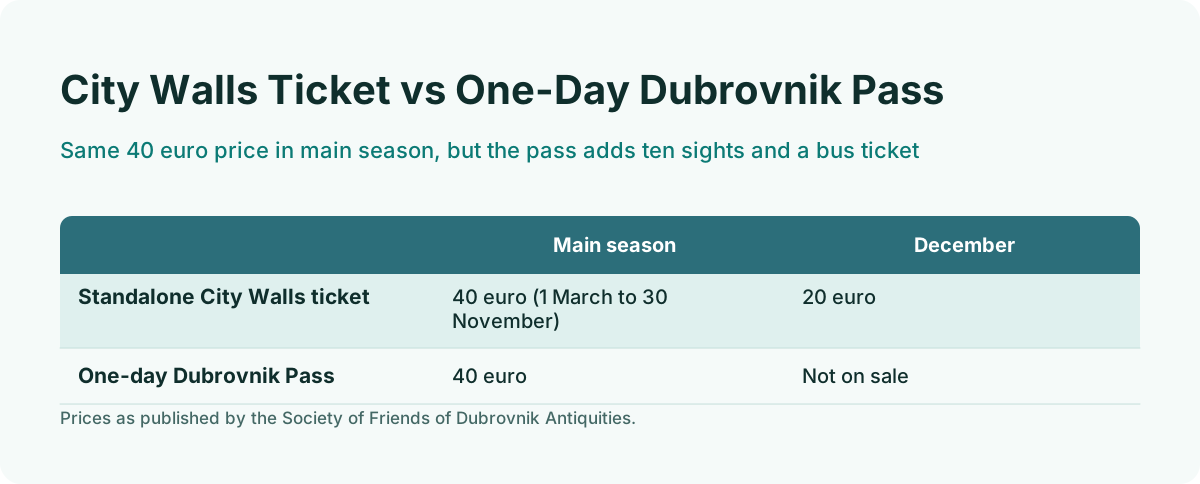
The walls-versus-pass decision is the one travellers ask me about most, and it rewards a few minutes with the official site. The one-day Dubrovnik Pass costs the same 40 euro as the standalone walls ticket between 1 March and 30 November, and adds ten more sights plus a 24-hour bus ticket. In December the standalone walls ticket drops to 20 euro and no pass tier is on sale at all, so the comparison only holds in main season. The full structure is on the official Dubrovnik Pass site, and it is worth reading the inclusions list yourself rather than trusting a summary.
| Pass tier | Price | Sights | Transport |
|---|---|---|---|
| One day | 40 euro | Nine cultural sights, walls included | 24-hour bus ticket |
| Three days | 50 euro | Ten sights, adding House Bukovac in Cavtat | 72-hour bus ticket plus suburban coupons |
| Seven days | 60 euro | Ten sights, adding House Bukovac in Cavtat | 168-hour bus ticket plus suburban coupons |
Every tier allows a one-time visit to each institution, the walls included, so the pass is not a multi-visit walls ticket. That single-use rule is printed plainly in the checkout and is the detail people most often miss. If you plan to walk the walls twice, at dawn and at sunset, the pass does not cover the second lap.
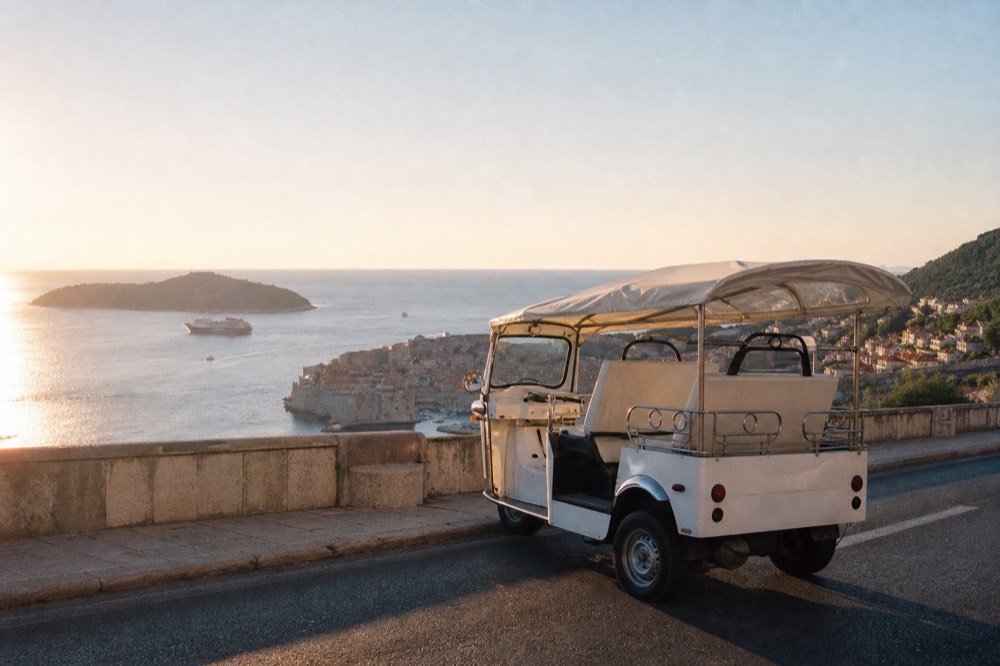
For the first-day anchor tour, I point people toward something that orients you physically before you try to find your way on foot. The e-tuk-tuk panorama ride does that job well: it is a 1 hour 45 minute loop rated 5 across 1,799 reviews, from $59.24 per person, and it shows you the shape of the city, the walls, the sea and Mount Srd in one comfortable sweep. It is also a sensible pick for anyone arriving on a hot day who wants the views before committing to stairs.
The reason an orientation ride earns its slot on day one is simple: Dubrovnik rewards knowing the geography. Once you have seen how the walls, the Stradun, the harbour and the cable car station relate to each other from above, every later decision, which gate to enter, which direction to walk, where to eat, gets easier. And with a working eSIM you can book that ride the night before from your accommodation, or even from the airport bus.
Beyond that first day, leave room to be spontaneous. Some of the best hours in Dubrovnik are the unplanned ones: a swim off Lokrum, a long lunch in a konoba, an evening walk when the day-trippers have gone and the stones give back the day's heat. Connectivity is a tool for making those hours easier, not a schedule to fill. The people who enjoy this city most treat the phone as a passport to decisions, not a leash.
Is Dubrovnik, Croatia Worth Visiting?
Yes, and the numbers make the case better than any slogan. Dubrovnik recorded about 4.2 million overnight stays in 2025, sharing first place among Croatian destinations with Rovinj. The walled Old Town is a UNESCO World Heritage Site covering 24.7 hectares, inscribed in 1979. Roughly 625,257 cruise passengers passed through in the same year, which tells you both that the world votes yes and that timing matters.
Worth is a personal word, so let me be concrete about what those 4.2 million nights are buying. They are buying a complete medieval walled city on the Adriatic, one where you can walk the entire 1,940-metre circuit of fortifications in a morning, swim from rocky beaches in the afternoon, and eat grilled fish in a stone alley at night. The Croatian Bureau of Statistics release that carries the overnight figure is published by the DZS, and it ranks Dubrovnik joint first in the country, ahead of every other destination on the coast.
The honest counterweight is crowding, and pretending otherwise would be dishonest. The Old Town has an official carrying capacity of 11,275 people, measured by six counters at every entrance updating a headcount every 15 minutes. On a busy September morning that curve climbs steeply: 5,419 people by 08:00, a peak of 7,739 at 10:00, easing to 7,205 by 11:00. Arrive early or late and you share the city with a fraction of those numbers, which is exactly why having your tickets already sorted on your phone matters.
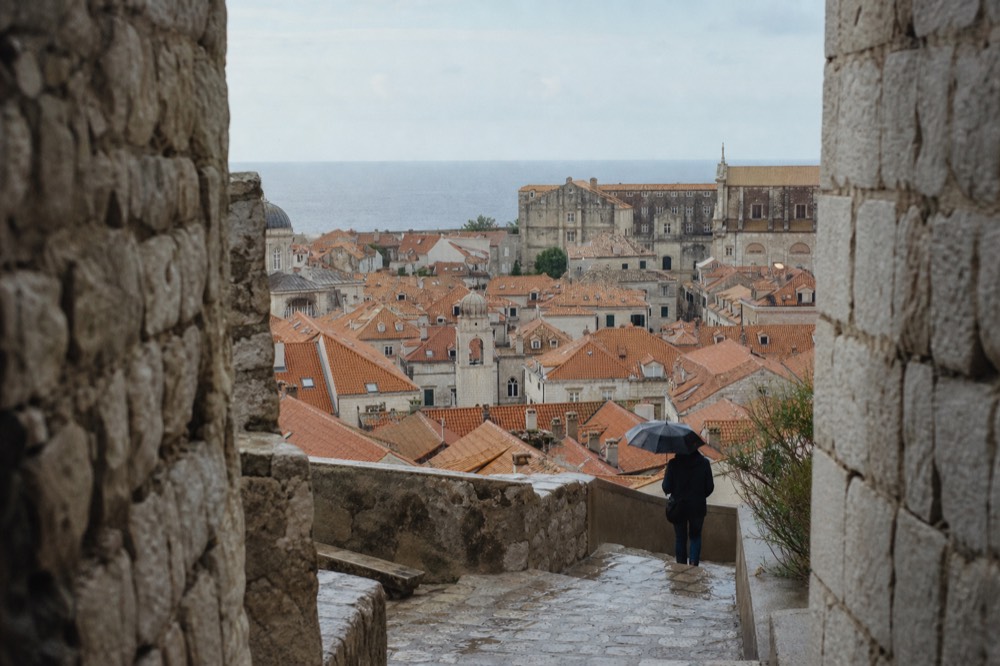
| Month, 2025 | Cruise passengers |
|---|---|
| July | 96,072 |
| August | 87,385 |
| September | 101,246 |
| October | 100,132 |
| Full year | 625,257 |
Note the shape of that table, because it runs against every instinct. September and October, not July and August, were the two busiest cruise months of 2025. The Port Authority's own statistics page carries the monthly breakdown, and the figures are published directly by the Port of Dubrovnik. If your dates are flexible and you want thinner crowds with warm sea, the shoulder logic here is not the obvious one.
So, worth visiting? Yes, with a plan. For help building one, our best time to visit guide breaks down the months in detail, and the how many days guide settles the trip-length question honestly. Both are pages you will read on your phone, which is rather the point of this whole article.
Are There Hostels in Dubrovnik, Croatia?
There are hostels in Dubrovnik, though fewer than the city's reputation suggests and mostly outside the walls in Lapad and Gruž, where the modern city actually lives. The walled Old Town itself is short on budget beds and long on apartments and boutique hotels. Budget travellers do stay here affordably, but they do it by choosing the neighbourhood first and the bed second.
The geography matters more than the price list. Inside the walls you are paying for the address; a few hundred metres away in Lapad you get seafront promenades, beaches, restaurants and bus links for meaningfully less. Gruž, around the cruise and ferry port, is cheaper still and practical if you are island hopping or arriving by boat. The trade is always the same: walk more, pay less, and in a city this compact the walking is rarely a hardship.
On the hotel side of the ledger, the verified budget anchor is Hotel Komodor in Lapad, a three-star rated 7.8 out of 10 across 822 Expedia reviews, about a 29-minute walk from the Gruž cruise and ferry port, with the number 6 bus to Pile Gate rather than a walk. For a mid-range base in the same neighbourhood, Hotel Lapad is the standard pick, and luxury travellers gravitate to Ploče, where Hotel Excelsior sits above the old harbour with the walls in view.
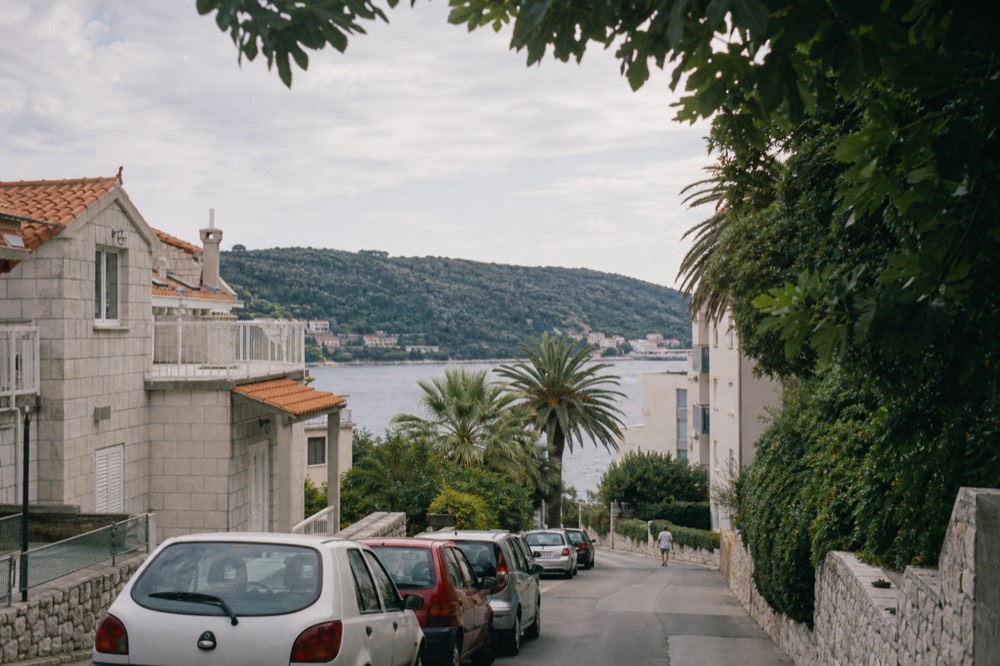
For hostel and guesthouse hunting specifically, an eSIM earns its keep early. Budget accommodation here turns over fast in high season, and the difference between booking from the airport bus and booking from home can be the difference between a bed in Lapad and a much longer commute from far outside town. Our where to stay overview walks through every neighbourhood if you want the full picture before committing to one.
What Is Dubrovnik, Croatia Famous For?
Dubrovnik is famous for three things stacked on top of each other: the complete medieval city walls, 1,940 metres of fortification you can walk end to end; the polished limestone of the Stradun, the 298-metre main street at the city's heart; and, for a decade of television, King's Landing, the Game of Thrones capital filmed throughout the Old Town. Everything else the city is known for flows from those three.
The walls are the headline act and deserve the reputation. They run up to 25 metres high, are 4 to 6 metres thick on the land side and 1.5 to 3 metres on the sea side, and carry 16 towers, 3 fortresses, 6 bastions, 2 corner fortifications, 3 bulwarks, 3 moats, 2 flank fortresses, 1 breakwater and 2 drawbridges. The circuit reached its shape in the 13th century. You do not need to memorise any of that to enjoy the walk, but it explains why the walk feels the way it does, why the sea side is so narrow and exposed, and why the land side feels like a fortress first and a promenade second.
| The Walls by the Numbers | Figure |
|---|---|
| Total length | 1,940 metres |
| Maximum height | Up to 25 metres |
| Thickness, land side | 4 to 6 metres |
| Thickness, sea side | 1.5 to 3 metres |
| Towers / fortresses / bastions | 16 / 3 / 6 |
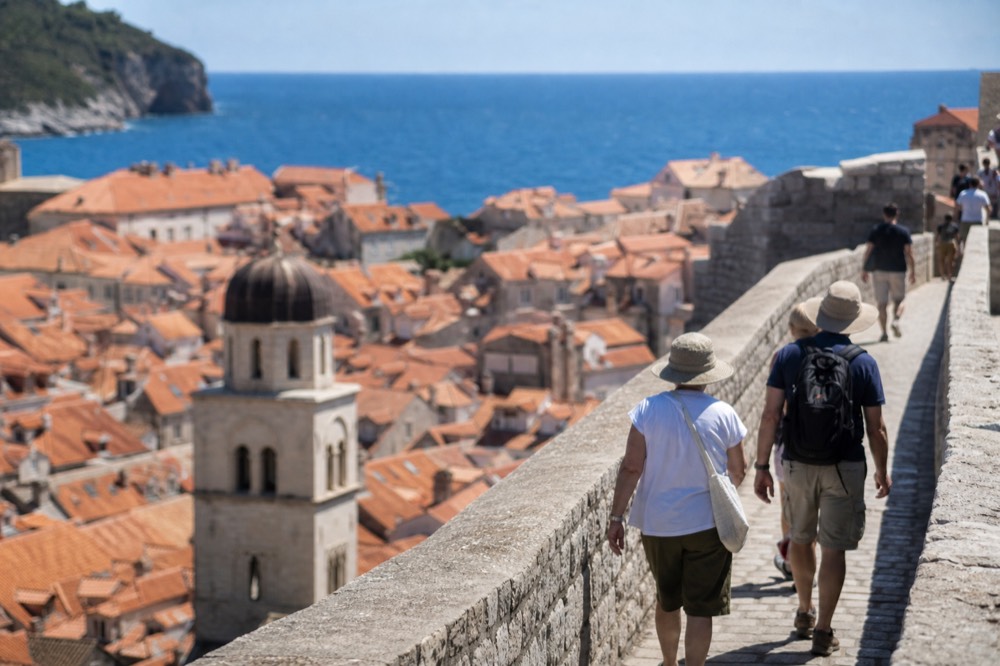
The Stradun is the second pillar. The 298-metre limestone street runs from Pile Gate to the clock tower, and the Statute from 1272 fixed the final plan of both the city and its main street, which is why the lane widths feel so disciplined for a medieval place. At night, when the day crowds thin, it is one of the great walks in Europe, and it costs nothing.
The third pillar is fictional and no less real for it. Game of Thrones filmed its King's Landing scenes here, and a decade later the city still draws travellers who know the staircase before they know the Rector's Palace. If that is you, our Game of Thrones locations guide maps every filming site, and a data connection helps you find the less obvious ones down side streets.
Why Is Dubrovnik, Croatia Famous?
Dubrovnik is famous because it survived intact. The Old Town was inscribed by UNESCO in 1979 under criteria (i)(iii)(iv), spent 1991 to 1998 on the World Heritage in Danger list during the war, and was rebuilt stone by stone afterward. That survival, combined with a natural harbour setting and a television franchise, turned a small city of 41,562 residents into one of the most recognisable places on the Mediterranean.
The UNESCO inscription is the formal recognition, but the danger-list years are the part of the story that gives the city its weight. When you walk the walls and see the sea of red rooftops, you are looking at a roofscape that was largely restored after the siege, and the history guide covers that period properly. The city's fame is not just beauty; it is beauty that was nearly lost and deliberately brought back.
Fame has consequences, and honesty requires naming them. A city of 41,562 residents hosting 4.2 million overnight stays is under real pressure, and the Port Authority now limits cruise passengers to 8,000 a day in most cases, refusing about forty call requests in a single season. That is the context in which your own visit sits, and it is why the timing advice in this guide keeps coming back to early mornings and shoulder months.
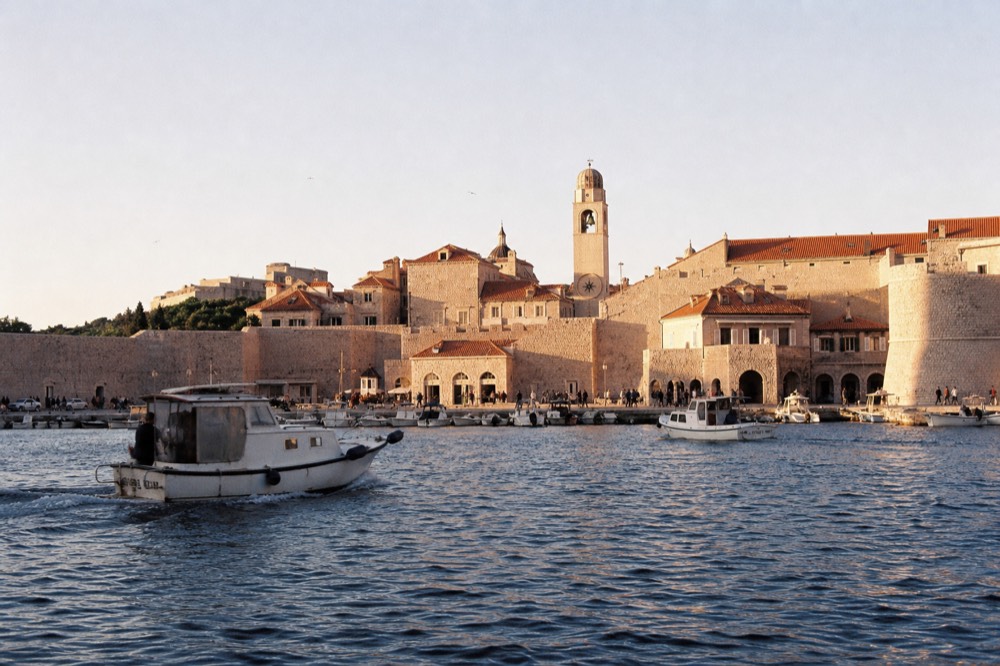
For getting oriented without exhausting yourself, the hop-on-hop-off bus with audio guide is the other format worth knowing: from $35.46 per person, rated 4.9 across 1,147 reviews, running about 1 hour 30 minutes. It pairs naturally with an eSIM because the audio commentary and the route map both live on your phone.
How Do You Put Connectivity and Planning Together?
Treat the eSIM as infrastructure and the bookings as the payload. Install the eSIM at home, download offline maps on the airport Wi-Fi as a backup, pre-book your walls-or-pass choice and one anchor tour, then let the trip breathe. A simple checklist the night before you fly takes twenty minutes and saves hours of queueing and second-guessing across the week.
Here is the checklist I give travellers, in order. Check your phone supports eSIM installation before you buy anything. Install and activate the profile at home, while you still have unlimited Wi-Fi as a safety net. Download offline maps for Dubrovnik and, if you are island hopping, for the islands. Pre-book the walls ticket or the pass, and one tour for your first full day. Then stop planning and let the city do its work.
| Task | When | Needs data? |
|---|---|---|
| Install eSIM profile | At home, before departure | No, home Wi-Fi |
| Download offline maps | At home or airport | No, any Wi-Fi |
| Buy walls ticket or pass | Before or on arrival day | Yes |
| Book first-day tour | Night before day one | Yes |
| Check Lokrum boat pattern | Morning of the boat day | Yes |
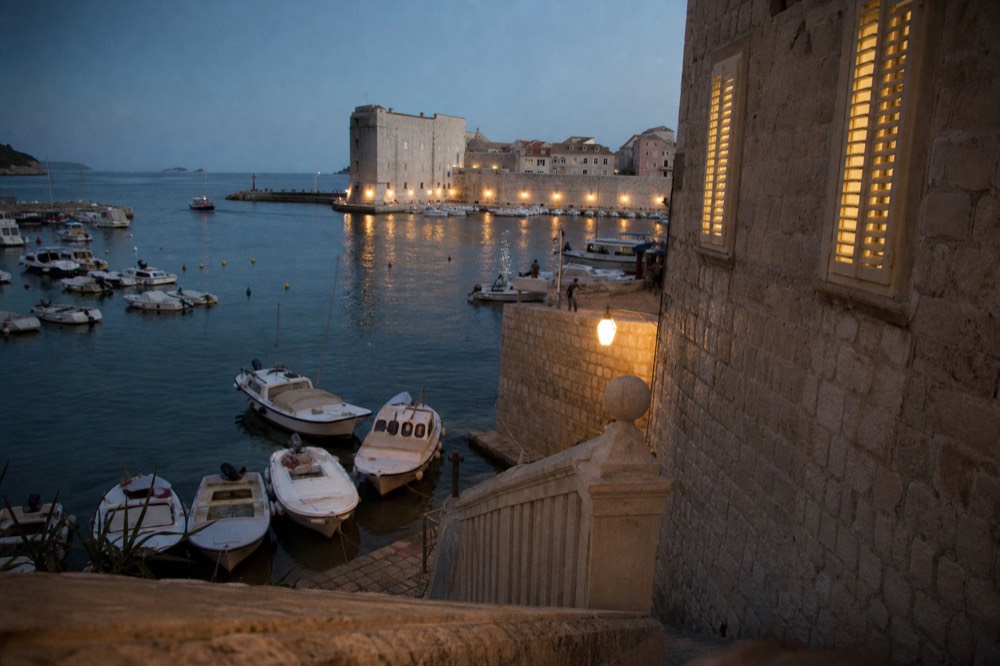
Once you are rolling, the cheapest paid Old Town walk starts at $20 per person, rated 4.8 across 5,826 reviews, and it is the kind of thing you can decide on at breakfast and join an hour later. That spontaneity, booking a walk or a kayak or a sunset boat the same morning, is exactly what a working connection buys you in this city. For everything else worth doing, Things to Do in Dubrovnik is the site's full catalogue, built around the same verified numbers this guide uses.
Common Questions About Croatia eSIMs and Dubrovnik
Is Dubrovnik, Croatia Worth Visiting?
Yes. The city recorded about 4.2 million overnight stays in 2025, sharing first place among Croatian destinations with Rovinj, and its walled Old Town has been a UNESCO World Heritage Site since 1979. The counterweight is crowding, so arrive early in the day and consider September or October, which carry high cruise numbers but fewer land tourists than midsummer.
is dubrovnik, croatia worth visiting?
Yes, with timing. The Old Town's official carrying capacity is 11,275 people, and a busy September morning peaks at 7,739 counted visitors at 10:00. Walk the walls at opening time, do the Stradun in the evening, and the city earns its reputation easily.
Do I Need an eSIM for Croatia?
You do not need one, but it helps. Croatia's key Dubrovnik tickets, including the 40 euro City Walls combination ticket and the 40 euro one-day Dubrovnik Pass, are sold through online shops, and same-day tour availability is easiest to see with a live connection. Install the profile at home and it activates when you land.
Are There Hostels in Dubrovnik, Croatia?
Yes, though most sit outside the walls in Lapad and Gruž rather than in the Old Town itself. Budget travellers generally choose the neighbourhood first: Lapad for beaches and promenades, Gruž for the port and lower prices. Hotel Komodor in Lapad is the verified budget hotel anchor, rated 7.8 out of 10 across 822 Expedia reviews.
What Is Dubrovnik, Croatia Famous For?
Three things: the complete 1,940-metre city walls you can walk end to end, the 298-metre limestone Stradun, and King's Landing from Game of Thrones, filmed throughout the Old Town. The city was inscribed by UNESCO in 1979 and rebuilt after the war years, when it spent 1991 to 1998 on the World Heritage in Danger list.
Does the Dubrovnik Pass Include the City Walls?
Yes, in every tier. All three pass tiers list City Walls + Lovrijenac Fortress as their first inclusion, with a one-time visit allowed to each institution. In main season, 1 March to 30 November, the one-day pass costs the same 40 euro as the standalone walls ticket and adds ten more sights plus a 24-hour bus ticket. In December the walls ticket drops to 20 euro and no pass tier is on sale.