Ferries From Dubrovnik: Every Boat Route Worth Knowing
Dubrovnik's harbour sends boats to Lokrum, the Elaphiti islands, Mljet and Korcula, but the schedules, prices and crowd patterns surprise most first-time visitors. Here is what the operators actually sell, and when the port is at its worst.
Short answer
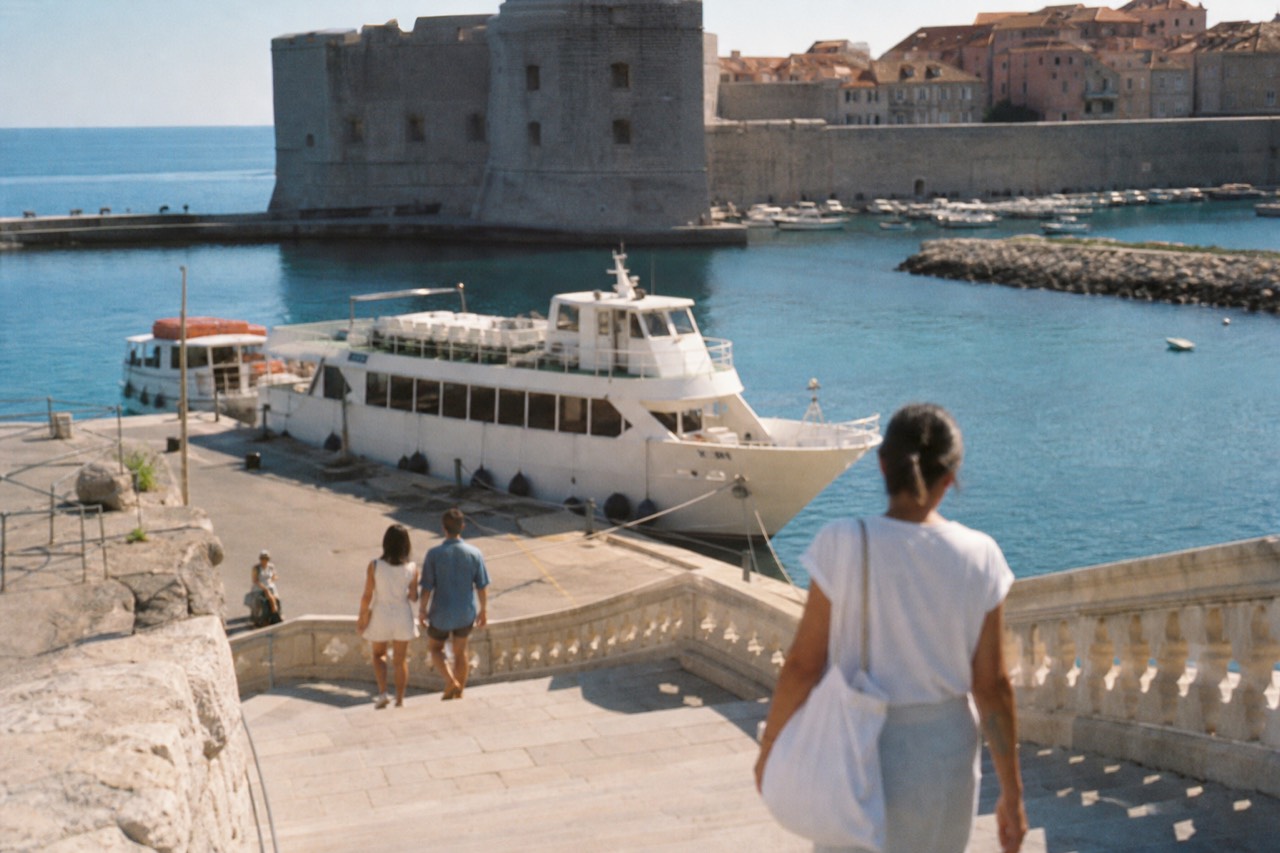
Ferries from Dubrovnik run to Lokrum (30 euro including return boat, departures at 09:00 then every 15 minutes from 10:00 to 18:00), and tour boats reach the Elaphiti islands from 59.16 dollar, Mljet from 139.47 dollar and Korcula on a day trip from 81.69 dollar. Cruise traffic peaks in September and October, not July and August.
The harbour is where Dubrovnik stops being a museum and starts being a working Adriatic port. I have watched this stretch of water for years, and the pattern never changes: travellers arrive convinced they will hop on a ferry to wherever they fancy, then discover that scheduled ferry service out of Dubrovnik is thinner than they imagined, while the tour-boat side of the harbour is enormous. Both halves of that sentence matter if you are planning island time.
The honest picture is this. The only true scheduled passenger ferry of interest to most visitors is the official Lokrum boat, which is run by the Lokrum Reserve itself and priced as part of your island ticket. Everything else that leaves Gruž or the old harbour for the islands is either a cruise operator's product or an international line, and the practical differences between those are what this guide untangles. I will also cover the timing questions people never think to ask until they are already standing on the pier, because in a city where cruise passengers peaked in September and October rather than July and August, the calendar matters as much as the route map.
Where Do Ferries From Dubrovnik Go To?
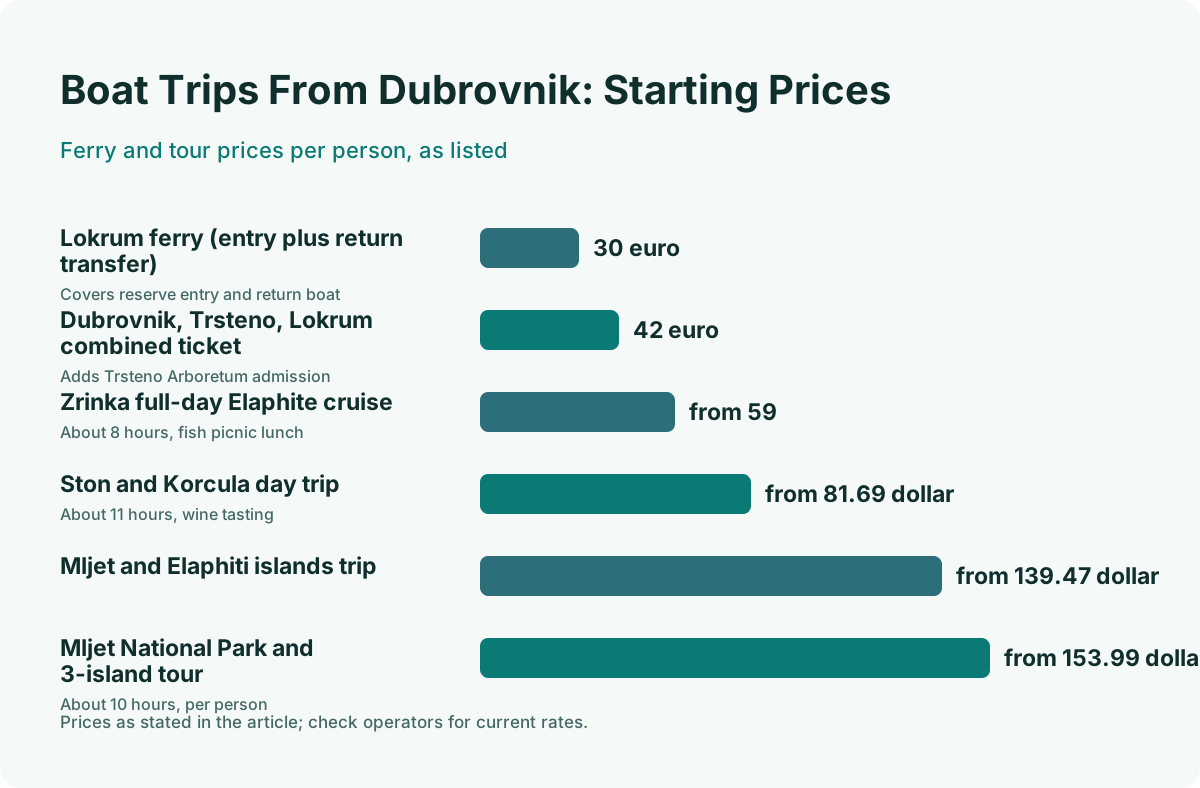
Ferries from Dubrovnik serve four main routes: the official Lokrum ferry from the old city harbour, island cruises to the Elaphiti chain and Mljet, day trips to Korcula and Ston, and international ferry lines from the Gruž terminal. Only the Lokrum boat is sold as a plain ferry ticket, at 30 euro per person covering both the reserve entry and the return transfer, while everything else is a tour product with a guide, a lunch or a sightseeing schedule.
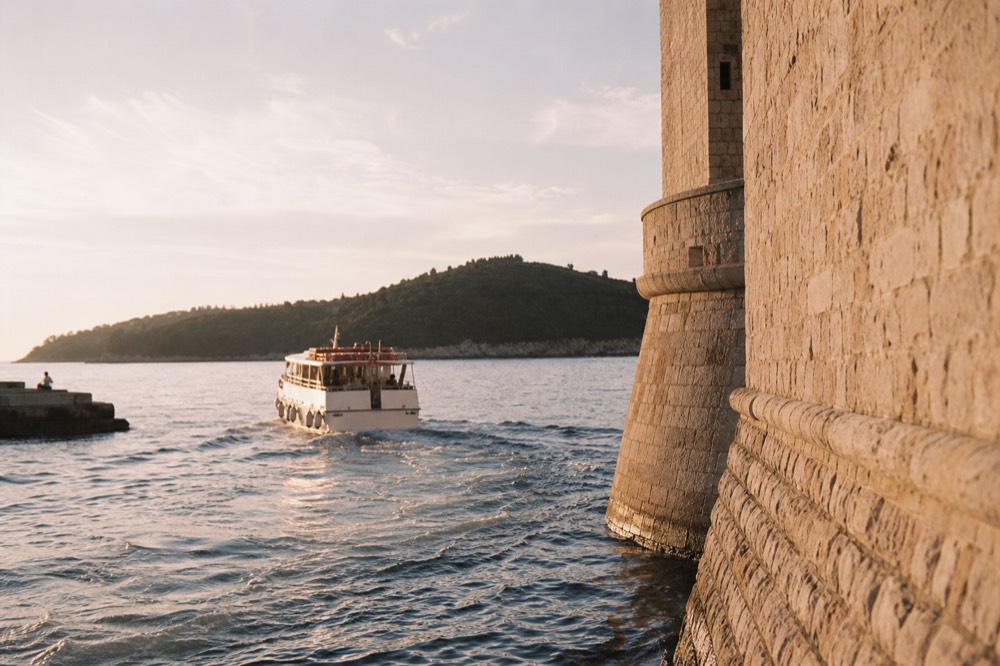
Start with Lokrum, because it is the one most visitors actually use. The Public Institution Lokrum Reserve runs its own boat, and the ticket is 30 euro per person whether you ride the official vessel or arrange your own transport to the island. That 30 euro covers entrance to the reserve and the return boat transfer together, which is why there is no separate cheaper ferry-only fare. Departures leave the City Harbour at 09:00, then every 15 minutes from 10:00 to 18:00, and the ticket office at Luža in the Old City Port works 08:00 to 18:00. A ticket stays usable for three days after the date printed on it, which gives you a little slack if the weather turns. The full schedule is published by the reserve itself at lokrum.hr.
There is also a combined ticket worth knowing about: Dubrovnik, Trsteno, Lokrum and back for 42 euro, which adds Trsteno Arboretum admission and an air-conditioned boat. If the arboretum was already on your list, that bundle quietly beats buying the pieces separately.
For the Elaphiti islands, Kolocep, Lopud and Sipan, there is no equivalent of a public hop-on ferry marketed to visitors at a simple fare. What the harbour actually sells are cruise products, and they are popular to a degree that surprises people: the most reviewed boat in the roster carries 10,312 reviews at a 4.9 rating. The Zrinka boat's full-day Elaphite cruise with a fish picnic lunch runs about 8 hours from 59.16 dollar per person, while the Regina Maris cruise, also 8 hours with lunch included, starts at 74.58 dollar. If you want more detail on the islands themselves, read the Elaphiti islands guide and the individual island pages for Lopud.
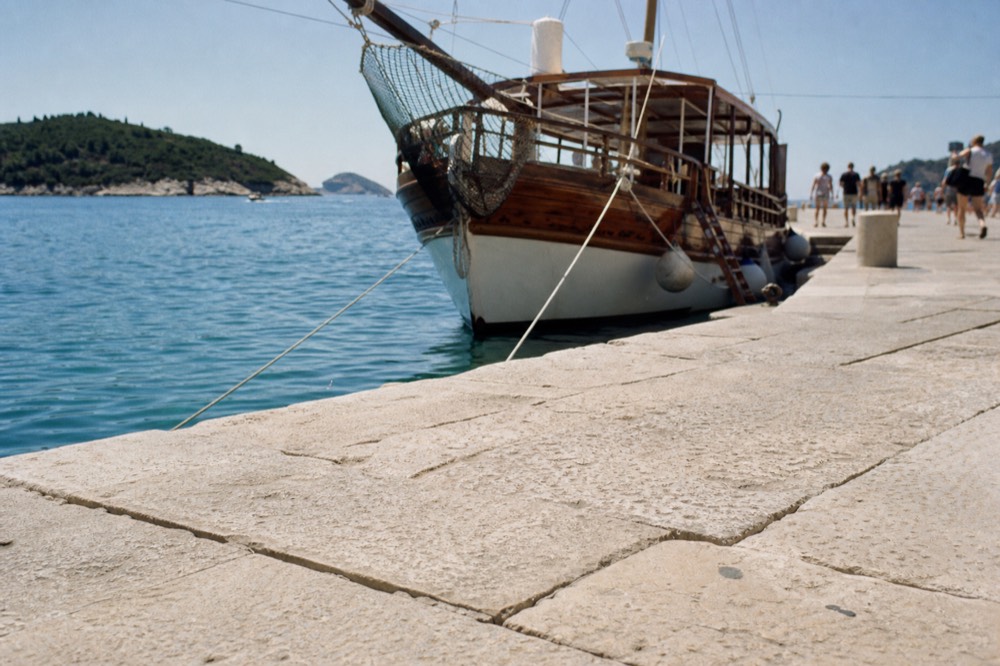
Mljet is the furthest reach of the day-boat world. Sea Breeze runs a Mljet National Park and 3-island boat tour, about 10 hours, from 153.99 dollar per person, and a Mljet and Elaphiti islands trip from 139.47 dollar. Korcula, further up the coast, is usually reached on a combined day trip rather than a standalone ferry hop for tourists: the Ston and Korcula trip with wine tasting runs about 11 hours from 81.69 dollar per person, rated 3.8 across 131 reviews. If you are weighing Korcula on its own merits, the Korcula day trip guide goes deeper.
Here is the full picture in one table, using only prices and ratings verified on the operators' live listings:
| Boat product | Destination | Duration | Price from | Rating |
|---|---|---|---|---|
| Official Lokrum boat | Lokrum Reserve | Return transfer, boats 09:00 then every 15 min 10:00-18:00 | 30 euro (entry + boat) | Not a rated tour product |
| Zrinka boat cruise with lunch | Elaphiti islands | About 8 hours | $59.16 | 4.9 across 10,312 reviews |
| Regina Maris cruise with lunch | Elaphiti islands | About 8 hours | $74.58 | 4.8 across 6,751 reviews |
| Karaka pirate ship cruise | Elaphiti islands | Day cruise | $65 | 4.8 across 757 reviews |
| Mljet park and 3-island tour | Mljet National Park | About 10 hours | $153.99 | 4.9 across 397 reviews |
| Ston and Korcula day trip | Ston, Korcula | About 11 hours | $81.69 | 3.8 across 131 reviews |
One more category completes the map: the Gruž terminal handles international and domestic car-ferries, and that is where you would arrive from or depart to Split, Korcula, Mljet or Italy on the scheduled lines. Those are transport services rather than sightseeing products, and their timetables shift with the season, so check the operator's own pages for the date you travel rather than trusting any fixed schedule printed in an article, including this one.
What Not to Do in Dubrovnik?
The three mistakes that cost visitors the most are walking the city walls at midday in high summer, assuming July and August are the busiest cruise months, and lingering in the Old Town on a September or October day without checking the cruise calendar. The walls circuit has almost no shade, and the busiest cruise months of 2025 were September (101,246 passengers) and October (100,132), ahead of July and August.
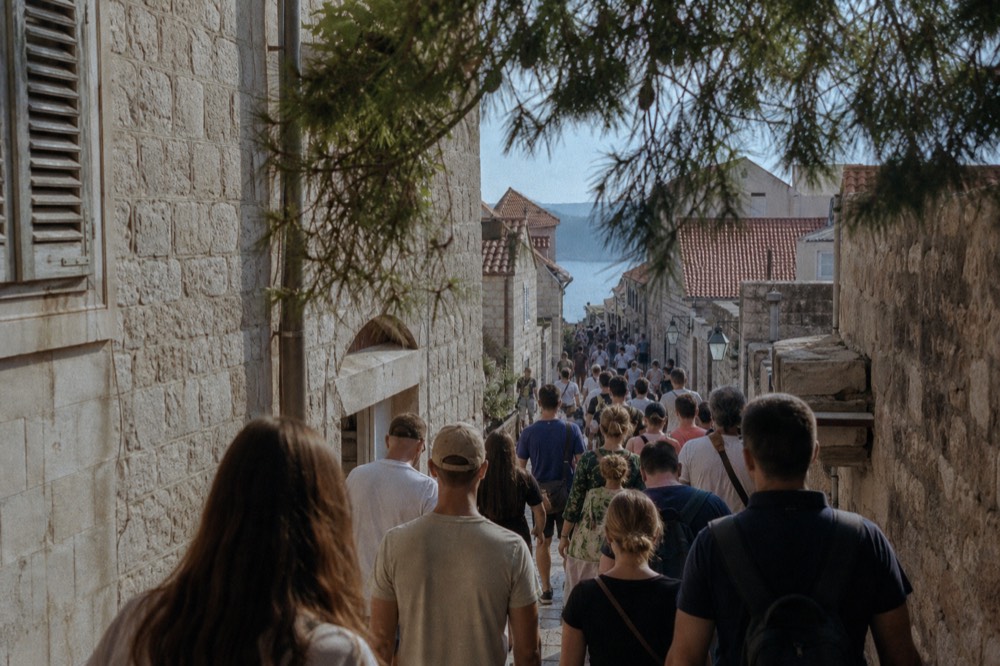
The midday walls walk is the classic error. The circuit is 1,940 metres of stone with the sun directly overhead for the middle hours of the day, and the ticket is not cheap: 40 euro for an adult in main season, 1 March to 30 November, dropping to 20 euro in December. That 40 euro is actually the walls plus Fort Lovrijenac combination, and it also covers the Western Outer Wall and the Collection of Coins of the Republic of Ragusa. Go at 08:00 when the gate opens, or in the late afternoon, and you trade heat and crowds for softer light anyway.
The second mistake is trusting the instinct that peak summer means peak crowds. Port Authority data says otherwise. Cruise passengers in 2025 peaked in September at 101,246 and October at 100,132, above July's 96,072 and August's 87,385. The full-year total was 625,257 passengers against 582,499 in 2024, and 461 cruise calls are scheduled for 2026. So the traveller who books late September believing they have dodged the season has, in cruise terms, walked straight into it. The Port Authority publishes the numbers at portdubrovnik.hr.
The third mistake is subtler: treating the Old Town as a place to linger all day on a heavy cruise day. The city runs six counters at every Old Town entrance, updating a headcount every 15 minutes, and the official carrying capacity from the UNESCO assessment is 11,275 people. On a real September morning the count read 1,200 at 04:00, 3,139 at 07:00, 5,419 at 08:00, 7,297 at 09:00, peaked at 7,739 at 10:00, and still held 7,205 at 11:00. The counter-intuitive move is to be on a boat during those hours, which is exactly why this ferries guide spends so much time on timing.
A fourth error worth naming: buying a standalone walls ticket in main season without comparing the pass. The one-day Dubrovnik Pass costs the same 40 euro as the walls ticket between 1 March and 30 November, and adds ten more sights plus a 24-hour bus ticket. That equivalence is a main-season fact only: in December the walls ticket falls to 20 euro and no winter pass tier is on sale at all. The Dubrovnik Pass guide works through the arithmetic in full.
And a fifth, practical one for anyone sailing: do not assume the cruise passenger counts are bodies on the street. Those figures are ship capacity, not people who actually walk ashore, so write "up to X cruise passengers scheduled" in your own planning head, never "X people will be in town."
Is Dubrovnik Worth Visiting?
Yes, and the numbers settle it: the Old Town has been UNESCO-listed since 1979 under criteria (i)(iii)(iv), the destination recorded about 4.2 million overnight stays in 2025, sharing first place in Croatia with Rovinj, and the walls, the Stradun, Lokrum and the Elaphiti boats sit within an hour of each other. The honest caveat is cost and crowds, both of which are manageable with timing rather than avoidance.
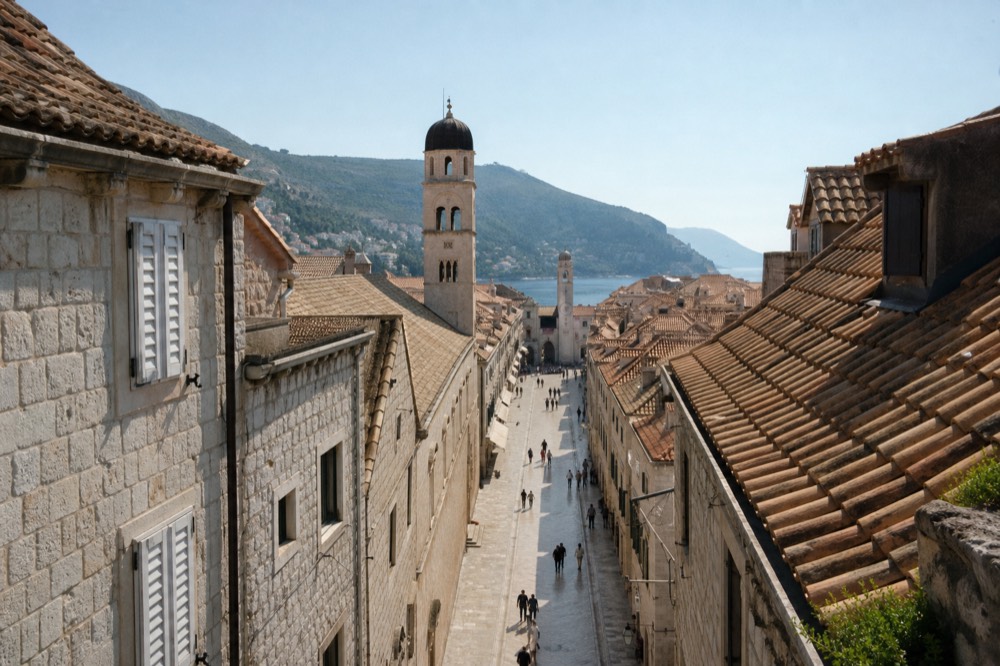
The heritage case is not marketing talk. The Old City of Dubrovnik was inscribed on the World Heritage List in 1979, with a property area of 24.7 hectares inside a 1,188.6-hectare buffer zone, and it sat on the List of World Heritage in Danger from 1991 to 1998 during the war years. What you walk through today is a recovered city, not a preserved film set, and that distinction is part of what makes it worth the airfare. The Stradun alone, 298 metres of polished limestone, was fixed in its final plan by the 1272 Statute, which is a remarkable thing to stand on.
The volume case is just as strong. About 4.2 million overnight stays in 2025 put Dubrovnik level with Rovinj at the top of Croatian destinations, per the Croatian Bureau of Statistics, and Croatia overall took 20.7 million arrivals and 94.8 million nights in commercial accommodation. People do not return in those numbers to a place that disappoints.
The worth-it question usually hides a different question: is it worth it in the way I want to travel? If your answer involves quiet, the strategy is the shoulder edge of the season, early mornings, and boats. If it involves energy, July and August deliver it, at a price. The is Dubrovnik worth visiting page takes the question head on, and the best time to visit page handles the calendar trade-offs month by month.
From a ferry traveller's perspective, worth-it compounds nicely: the same harbour that worries you with cruise crowds is the one that empties you out onto Lokrum, Lopud or Mljet within the hour, and those islands are the counterweight that keeps the city from ever feeling like a trap. The two experiences, walled city and open water, are closer together here than almost anywhere on the Adriatic.
When to Avoid Dubrovnik?
Avoid the city core between 10:00 and late afternoon on peak cruise days, avoid the walls at midday from June through August, and avoid early October if you want thin crowds, because the busiest remaining 2026 cruise days include 6 October with 2 ships and up to 5,798 passengers. September and October outrank July and August on cruise traffic, so "shoulder season" is a relative term here.
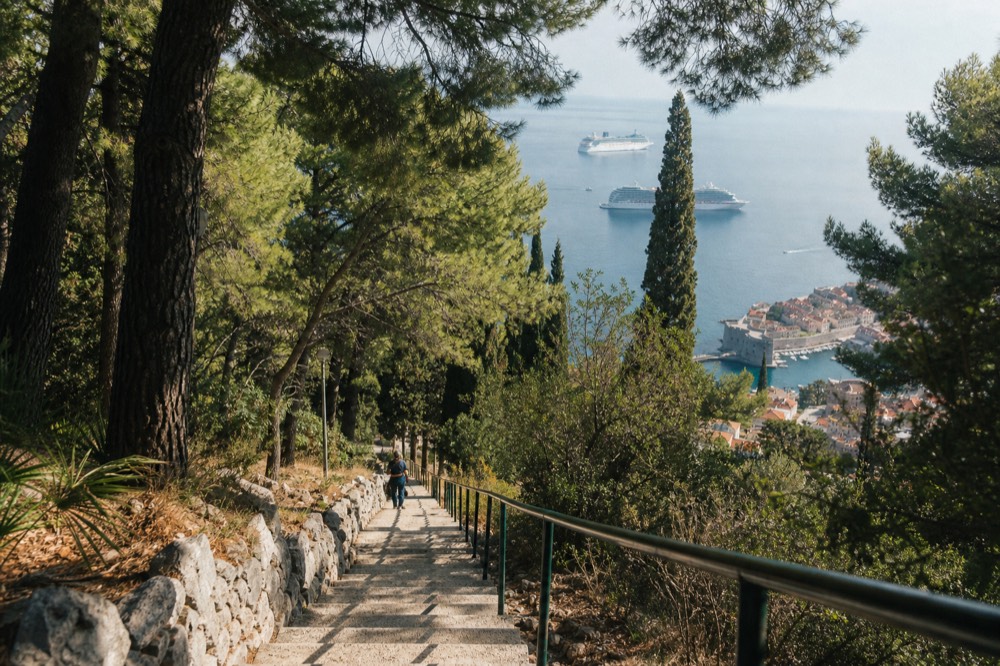
The Port Authority limits cruise passengers to 8,000 a day in most cases, with a "2+1" berthing arrangement, and out of 243 cruise days a year only 18 exceed 8,000 and only 4 exceed roughly 10,000. About forty call requests were refused in one season. That is a real management system, and it means the worst days are knowable in advance rather than random. Within the remaining 2026 season schedule, 149 ship calls across 80 cruise days carry 217,458 passengers by capacity, and the busiest days are 6 October (2 ships, 5,798), 29 September (2 ships, 5,675), 30 September (3 ships, 5,536) and 15 September (4 ships, 5,273). The wider set of guides lives on Things to Do in Dubrovnik.
Here is the monthly reality from the Port Authority's own data:
| Month 2025 | Cruise passengers | Month 2025 | Cruise passengers |
|---|---|---|---|
| January | 3,137 | July | 96,072 |
| February | 46 | August | 87,385 |
| March | 3,346 | September | 101,246 |
| April | 36,206 | October | 100,132 |
| May | 84,107 | November | 28,480 |
| June | 82,642 | December | 2,458 |
The within-day pattern matters just as much. On a measured September morning the Old Town count climbed from 1,725 at 06:00 to 3,139 at 07:00, 5,419 at 08:00 and a 7,739 peak at 10:00. The practical read: the hours before 09:00 and after about 17:00 belong to residents and the sharp-eyed visitor, and the middle of the day belongs to the flow. Plan your walls walk or your Stradun photography for one edge, and put a boat in the middle.
| Time on a measured September day | People counted in the Old Town |
|---|---|
| 04:00 | 1,200 |
| 06:00 | 1,725 |
| 07:00 | 3,139 |
| 08:00 | 5,419 |
| 09:00 | 7,297 |
| 10:00 | 7,739 (daily peak) |
| 11:00 | 7,205 |
Weather-wise, the sea tells you when swimming season is real. The September average for this coast is about 23.6 degrees, from a NOAA long-run 1991 to 2020 open-water average, and the Croatian met service's own Dubrovnik buoy read 27.0 to 27.4 degrees on 8 September 2026 against that 23.6 mean, because sheltered bays run warmer than the open-water grid cell. October's average is 21.0 and November's 18.5, so if swimming is the point, the avoidance window opens in earnest from late October. The swimming season page carries the full monthly series.
How Do You Book Ferry and Boat Tickets From Dubrovnik?
Buy the Lokrum ticket at the Luža office (08:00 to 18:00) or online, remembering it is valid for three days; book Elaphiti and Mljet cruises ahead in July, August and September because the best-reviewed boats fill first; and treat cable car tickets the same way, since the cabins carry only 32 plus 1 people each and the summer queue at sunset is real. Walk-up tickets exist, but the small boats go first.
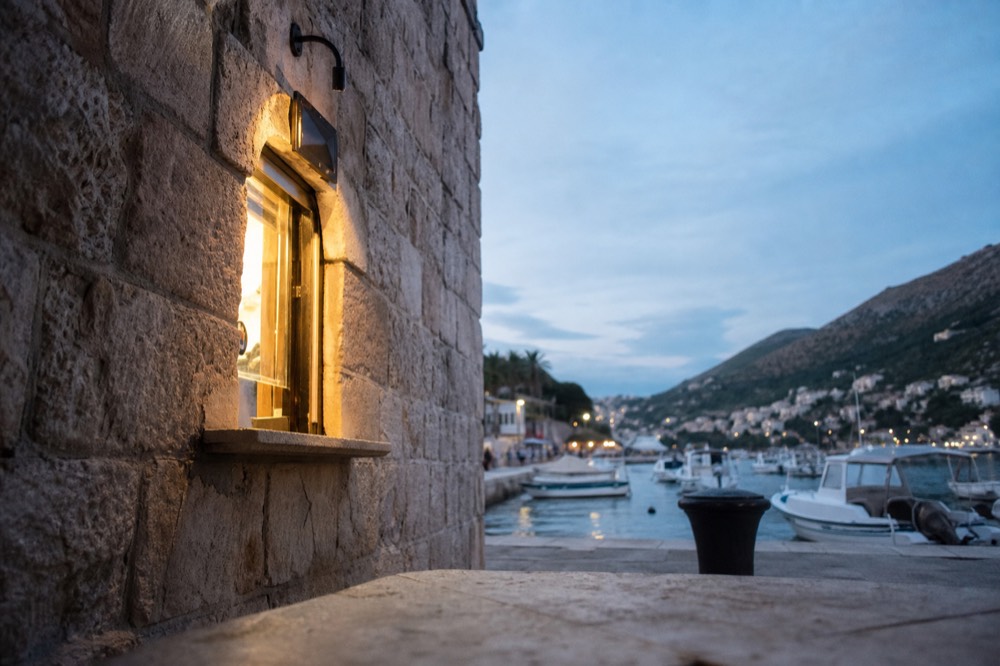
The Lokrum side is forgiving. Boats leave the City Harbour at 09:00 and then every 15 minutes from 10:00 to 18:00, so you are never waiting long, and the 30 euro ticket's three-day validity means a sudden cloud burst does not waste your money. The office at Luža opens at 08:00, which pairs neatly with a morning decision.
The cruise side is less forgiving. The Zrinka Elaphite cruise carries 10,312 reviews at 4.9, which tells you demand is heavy, and an 8-hour day with a fish picnic lunch has a fixed passenger list. One guest review captures the product well, and it is worth quoting because it names the exact thing people book these boats for:
This was a wonderful day. Nice and shaded on the boat as we cruised on the cool adriatic. Loved seeing the neat Elphiti Islands and a wonderful way to get out the the heat and large crowds for a bit. They kept the drinks flowing and lunch was phenomenal and a generous portion. This is the way to cruise the Adriatic.
Shelby_S
For the cable car, which is a ferry-adjacent decision on any Dubrovnik day, the operator's own numbers frame the booking question: two cabins, 32 plus 1 people each, a 778.2-metre track climbed in 3 minutes 30 seconds at 6.5 metres per second, from a lower terminal at 38.0 metres to the upper station at 405.0 metres. Adult round trip is 30 euro in 2026, one way 17 euro, children 4 to 12 at 8 euro round trip, under 4 free. It closes January to March and runs 09:00 to midnight in June, July and August, which makes the sunset slot both the best ride and a busy one. The cable car tickets page has the full timetable.
If you would rather someone else assemble the day, a combo can make sense. The cable car, walking tour and city walls combo runs about 4 hours 30 minutes from 90.66 dollar per person, rated 4.6 across 360 reviews, and folds three ticket desks into one booking.
Which Boat Trips Are Worth Booking Instead of a Ferry?
Book a boat tour instead of a ferry if you want flexibility and swim stops: the Blue Cave and Sunj Beach tour starts at 63.48 dollar, the Lokrum and Betina Cave tour at 39.42 dollar, and sunset options include the Karaka adults-only sail, 1.5 hours from 59 dollar, plus the Cavtat sunset cruise with unlimited drinks from 23.66 dollar. These trips deliver the water, the cliffs, and the swimming that a scheduled ferry never will.
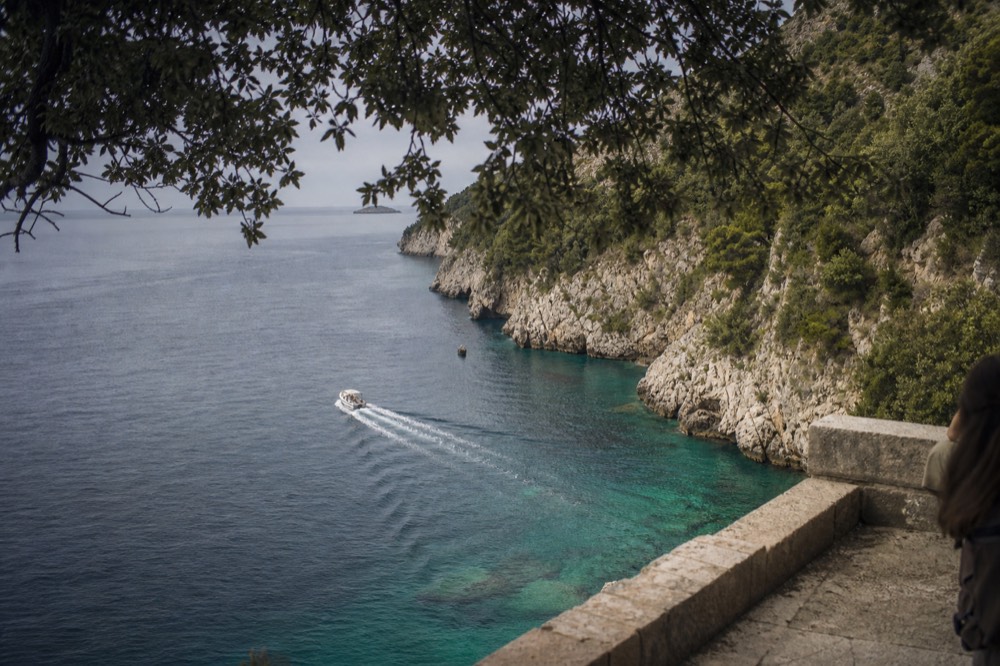
The distinction I draw for visitors is between transport and experience. A ferry moves you; these boats are the point. The Blue Cave and Sunj Beach tour, from 63.48 dollar and rated 4.87 across 3,105 reviews, pairs a cave with one of the best sandy beaches on this coast. The Lokrum and Betina Cave boat tour, from 39.42 dollar at 4.6 across 1,154 reviews, is the short-water option for a half day. There is even a self-drive boat rental for up to 6 people, about 8 hours from 259.6 dollar per person, rated 4.9 across 266 reviews, for travellers who want to be their own captain around the Elaphiti chain.
Sunset is the other gear entirely. The Karaka ship's adults-only panoramic sunset cruise, 1.5 hours from 59 dollar and rated 4.8 across 833 reviews, puts you on a replica galleon watching the walls go gold. The Cavtat sunset cruise with cold platter and unlimited drinks, about 1 hour from 23.66 dollar at 4.9 across 203 reviews, is the quiet alternative. The sunset cruise and sunset spots pages cover the rest of the evening.
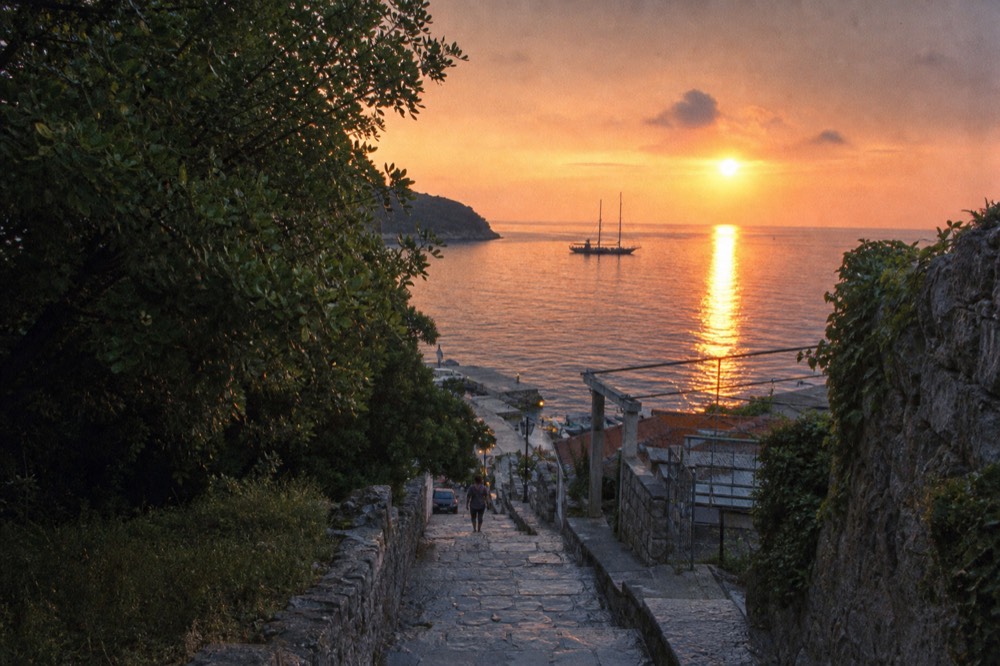
For a full-day commitment, the Ston and Korcula trip with wine tasting is the connoisseur's pick, about 11 hours from 81.69 dollar, pairing the Ston walls and oysters with Korcula town and a tasting, and the Mljet National Park trips from 139.47 dollar are the wilderness option, trading tavernas for pine forest and saltwater lakes. Every one of these leaves from the same two piers, which is why I tell people to think of Dubrovnik's harbour not as a station but as a menu.
Whatever you choose, anchor the booking to your calendar, not your optimism: check the cruise schedule for your dates, keep the middle of heavy days on the water, and let the evenings and early mornings have the city. That single habit, more than any ticket choice, is what separates the visitors who leave refreshed from the ones who leave footsore. The harbour will do the rest.
Common Questions About Ferries From Dubrovnik
Where do ferries from dubrovnik go to?
The official Lokrum boat runs from the City Harbour at 09:00 and then every 15 minutes from 10:00 to 18:00, with a 30 euro ticket covering reserve entry and the return transfer. Tour boats reach the Elaphiti islands from 59.16 dollar, Mljet from 139.47 dollar and Korcula with Ston from 81.69 dollar, while scheduled domestic and international car-ferries use the Gruž terminal.
When to avoid Dubrovnik?
Avoid the Old Town between 10:00 and late afternoon on peak cruise days, avoid the walls at midday in high summer, and know that September and October outrank July and August on cruise traffic: 101,246 and 100,132 passengers in those months of 2025 against 96,072 in July. The busiest remaining 2026 cruise days include 6 October with 2 ships and up to 5,798 passengers.
Do I need to book a Lokrum ferry ticket in advance?
Not usually. Boats leave every 15 minutes from 10:00 to 18:00, the ticket office at Luža opens at 08:00, and a ticket stays usable for three days after its date, so there is built-in flexibility. Book ahead only if you want a guaranteed first morning slot in peak season.
How much does the Lokrum boat cost?
30 euro per person, and that single ticket covers both entrance to the Lokrum Reserve and the return boat transfer, whether you ride the official boat or arrange your own transport. A combined Dubrovnik, Trsteno, Lokrum ticket with the arboretum and an air-conditioned boat is 42 euro.
Is a ferry or a boat tour better for the Elaphiti islands?
There is no simple public hop-on ferry marketed to visitors for the Elaphiti chain, so most travellers take a cruise product: the Zrinka full-day cruise with lunch from 59.16 dollar, rated 4.9 across 10,312 reviews, or the Regina Maris from 74.58 dollar. A self-drive boat rental for up to 6 people, from 259.6 dollar, is the do-it-yourself alternative.