Franciscan Monastery Dubrovnik: What to See, What It Costs and How to Plan the Visit
The Franciscan Monastery sits at the western end of the Stradun, a few steps from the Pile Gate, and most visitors walk straight past one of the most quietly beautiful interiors in the Old Town.
Short answer
The Franciscan Monastery stands at the west end of the Stradun, near Pile Gate. Its museum is on the Dubrovnik Pass inclusion list, and the one-day pass costs 40 euro in main season, 1 March to 30 November, the same as the standalone City Walls ticket. Allow 30 to 45 minutes for the cloister, museum and pharmacy.
The Franciscan Monastery occupies the block immediately inside the Pile Gate, and that single fact shapes almost every visit. I have walked past this corner hundreds of times, and the pattern never changes: the morning crowds stream down the Stradun toward the Rector's Palace, while the monastery's own door sees a fraction of that traffic. The building holds one of the oldest pharmacies in Europe, a cloister that guidebooks photograph more than they describe, and a museum collection that is quietly included on the Dubrovnik Pass. This page covers what you actually see inside, what it costs, the mistakes visitors make around the Old Town generally, and the flight questions that come up once people start planning the trip, because those questions land in my inbox almost every week.
One honesty note before anything else. The pharmacy's founding year is the single most repeated "fact" about this monastery, and it is also the one I will not print, because no primary source I trust has been read for it. What can be said plainly is that the pharmacy is described as one of the oldest still operating pharmacies in Europe, and that claim alone tells you why the room matters. Everything with a number below comes from a verified source: the walls operator's own webshop, the official Dubrovnik Pass site, the Dubrovnik Tourist Board, the Port Authority or the cable car operator.
What Is the Franciscan Monastery in Dubrovnik?
The Franciscan Monastery is a monastic complex at the western end of the Stradun, a short walk from the Pile Gate, combining a cloister, a museum, a library and a pharmacy that is described as one of the oldest in Europe. The museum is one of the sights on the Dubrovnik Pass inclusion list. Most visitors spend 30 to 45 minutes inside, and the cloister is the part people remember.
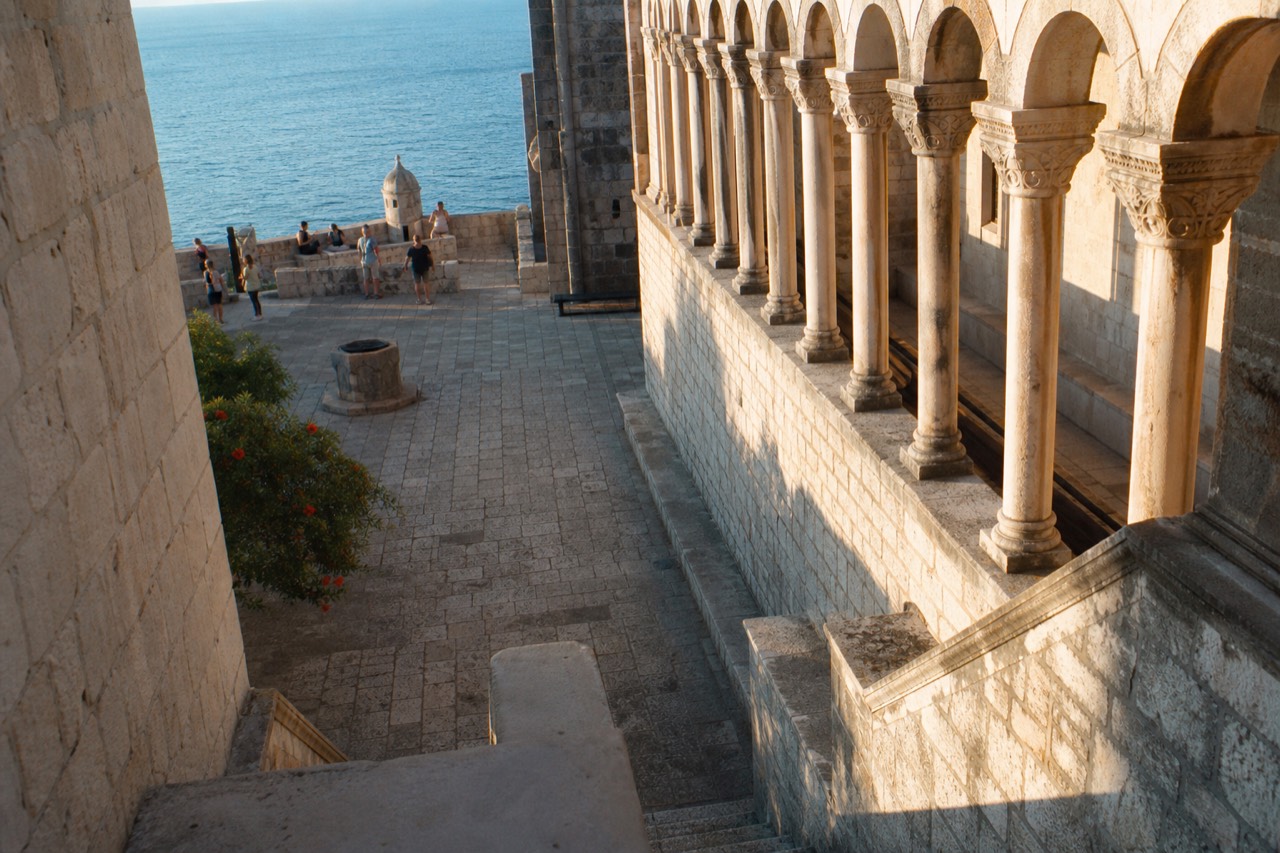
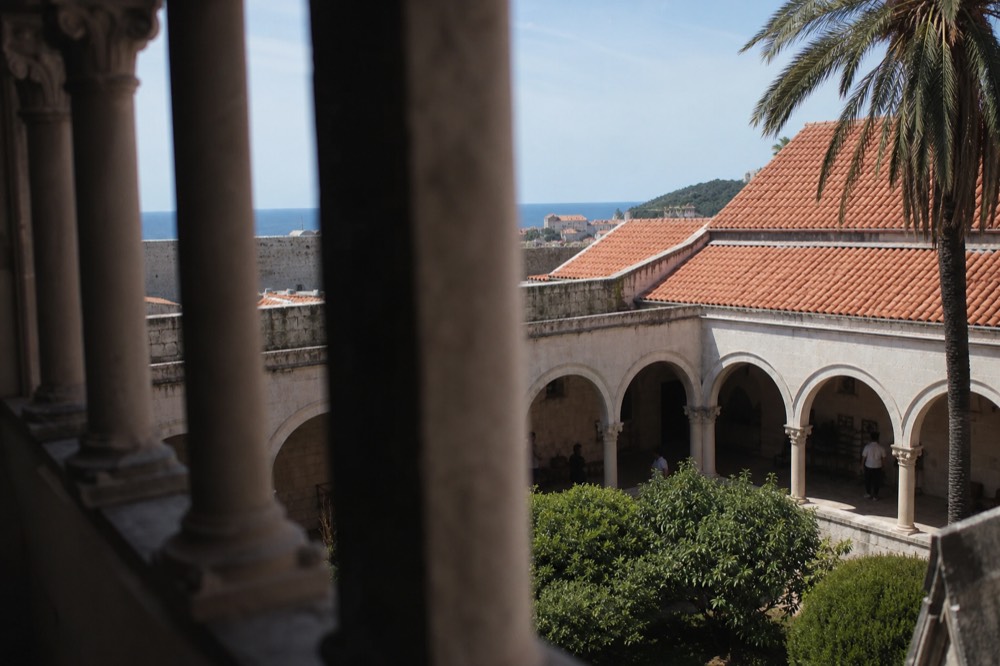
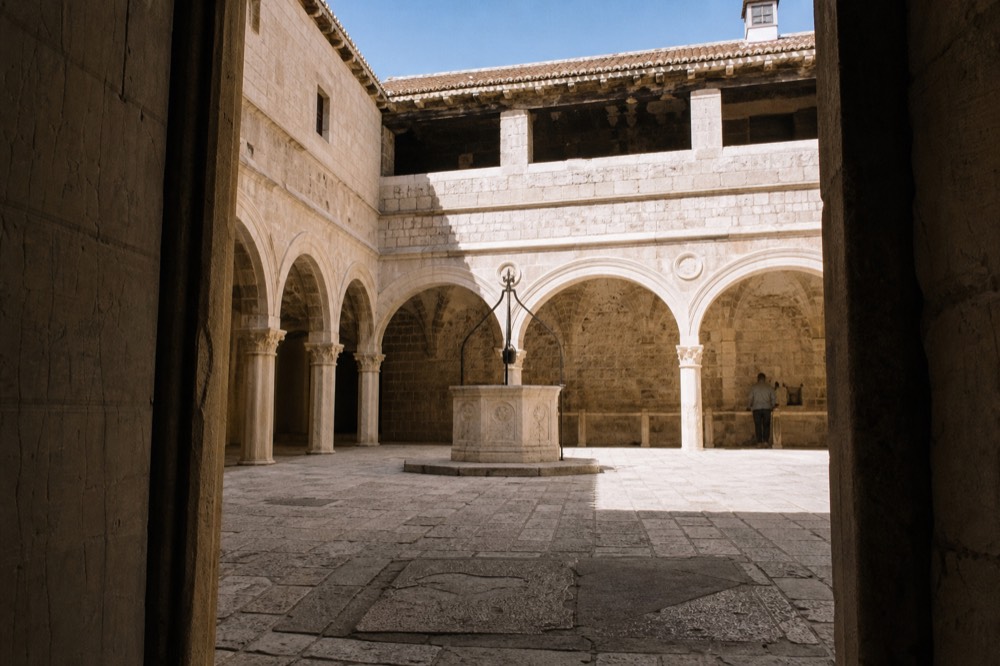
The monastery belongs to the Friars Minor Franciscan order, and the complex you enter today wraps around a rectangular cloister whose carved stone pillars give the courtyard its character. The proportions are what make it work: the arcade is intimate rather than monumental, and the light through it changes completely between morning and late afternoon. Visitors coming from the Stradun often arrive expecting a church and find instead a courtyard that asks you to slow down, which is a rare feeling in this part of the Old Town.
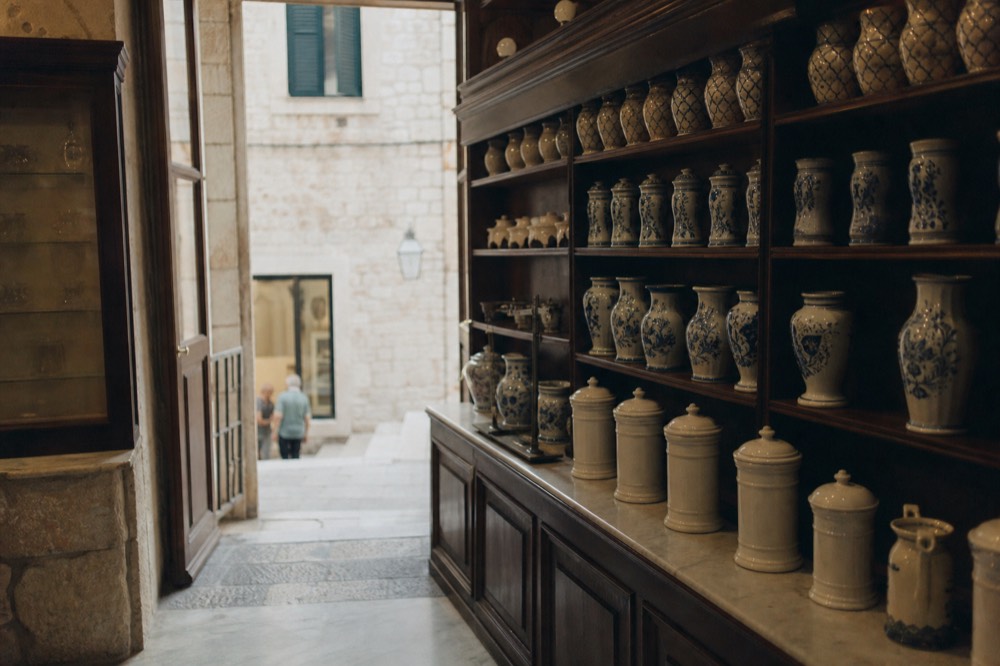
The interior collection spans several rooms. The museum displays liturgical objects, paintings, instruments and pharmacy equipment, including the vessels and lab ware that belonged to the old pharmacy's working life. The pharmacy itself is the emotional centre of the visit for most people: a small room fitted out as it would have looked when friars prepared remedies here for the city. The library and archive above it are not part of the standard visitor route, and that is worth knowing before you promise yourself a manuscript viewing.
Context matters here too. The Old City of Dubrovnik was inscribed on the UNESCO World Heritage List in 1979 under criteria (i), (iii) and (iv), with a property area of 24.7 hectares, and the monastery sits inside that protected core. The city as a whole counted 41,562 inhabitants at the 2021 census, a useful reminder of how small the resident base is under all the summer footfall. If you want the wider frame of the walled city before this visit, the city walls guide covers the full circuit.
How Much Does It Cost to Go to the Franciscan Monastery in Dubrovnik?
The museum's standalone admission price is not a figure I can print, because no verified source for it is in this site's research record; check the price at the entrance or on the live listing before you go. What is verified is the pass route: the Friars Minor Franciscan Monastery Museum is on the Dubrovnik Pass inclusion list, and the one-day pass costs 40 euro in main season, 1 March to 30 November.
That pass route is the planning answer for most visitors. The one-day Dubrovnik Pass costs 40 euro per person and, in main season, that is exactly the same as the standalone adult City Walls ticket, which is 40 euro from 1 March to 30 November. The pass adds ten more sights plus a 24-hour bus ticket, and the monastery museum is one of those sights. So if the walls are already on your list, and they should be, the pass effectively makes the monastery a free stop. The three-day pass is 50 euro and the seven-day pass is 60 euro, both including the same sight list plus suburban bus coupons.
The comparison has a season boundary that most articles miss, and I want to be precise about it. In December the standalone walls ticket drops to 20 euro for adults, while no winter pass tier is on sale at all, so the "the pass costs the same as the walls" line is true only in main season. Every sentence making that comparison needs the season attached, and this one has it. The walls ticket itself, at 40 euro, is actually a combination ticket: it covers the walls plus Fort Lovrijenac, and Fort Lovrijenac bought alone is 15 euro.
| Option | Main season (1 Mar to 30 Nov) | December | Notes |
|---|---|---|---|
| City Walls adult ticket | 40 euro | 20 euro | Includes Fort Lovrijenac |
| City Walls child 7 to 18 | 15 euro | 5 euro | Under 6 free |
| One-day Dubrovnik Pass | 40 euro | Not on sale | Walls, Lovrijenac plus ten more sights and a 24-hour bus ticket |
| Three-day Dubrovnik Pass | 50 euro | Not on sale | Adds suburban bus coupons and House Bukovac in Cavtat |
| Seven-day Dubrovnik Pass | 60 euro | Not on sale | Same inclusions, longest validity |
| Fort Lovrijenac alone | 15 euro | 15 euro | Standalone fortress ticket |
The walls themselves are worth a paragraph here because they are the reason most people buy the pass in the first place. The circuit is 1,940 metres long, up to 25 metres high, 4 to 6 metres thick on the land side and 1.5 to 3 metres on the sea side, with 16 towers, 3 fortresses and 6 bastions along the way. The shape was reached in the 13th century and the final construction came in 1660 with the Bastion of St Stephen. The operator's stated hours at the time of check were 08:00 to 19:30, and seasonal hours are a separate matter I leave to the operator's own page rather than guess at. The walls operator's official site carries the current details.
If you would rather have someone walk you through the walls' wars and sieges than read panels in the sun, the guided options are strong.
The walls-focused walk in that band, the Ancient City Walls and Wars tour, runs about 2 hours from $29.58 per person and is rated 4.8 across 1,387 reviews. One verified review from a guest named linda_a captures what the format does well:
This well organized tour helped put Dubrovnik's past (and present) into perspective. It's incredible that the city walls have withstood the test of time. Antun was a wonderful guide.
linda_a
Is the Franciscan Monastery Included in the Dubrovnik Pass?
Yes. The Friars Minor Franciscan Monastery Museum appears on the official Dubrovnik Pass inclusion list, in every tier, alongside the City Walls, Lovrijenac Fortress, the Rector's Palace, the Maritime Museum and others. Each sight allows a one-time visit, so you cannot enter the monastery museum twice on the same pass. The official source is the pass operator's own site.
The full inclusion list read from the official pass tiles runs: City Walls plus Lovrjenac Fortress, Rector's Palace, Maritime Museum, Ethnographic Museum, Marin Držić House, Dubrovnik Natural History Museum, Friars Minor Franciscan Monastery Museum, Museum of Modern Art Dubrovnik, Dulčić-Masle-Pulitika Gallery, Pulitika Studio and archaeological exhibitions, plus the bus ticket. House Bukovac in Cavtat appears on the three-day and seven-day tiers only. The checkout states the limit plainly: you are entitled to a one-time visit to the City Walls and all other cultural institutions, regardless of pass type. The official Dubrovnik Pass site is the source for all of this.
For the monastery specifically, the pass changes your routing. Without it, the monastery is a separate decision with a separate ticket. With it, the monastery becomes the natural first or last stop of a sight-hopping day, because it sits at the Pile end of the Stradun and pairs naturally with the walls entrance nearby. My own routing advice, as someone who plans these days for travellers constantly: start at the monastery when the cruise crowds are still building elsewhere, do the walls while your legs are fresh, then finish at the Rector's Palace in the late afternoon when the tour groups have thinned.
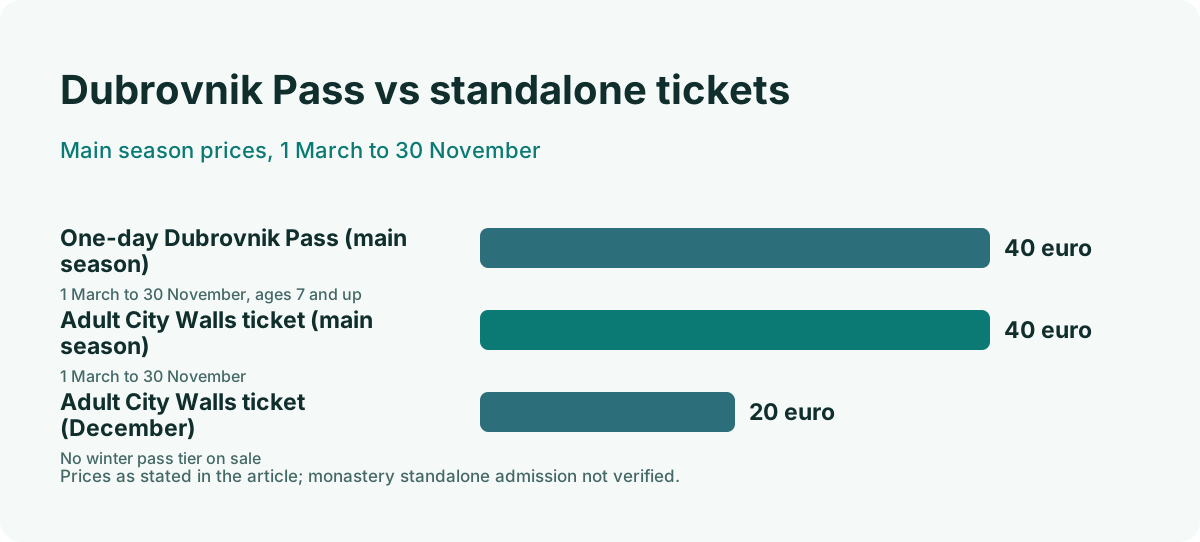
The pass question I get most often is whether to buy in advance, and the honest answer is that it depends on your dates. The checkout currently sells one season only, labelled as running 1 March to 30 November, in a single ticket type, the adult pass for ages 7 and up. There is no child pass tier and no winter tier, so December visitors should simply buy the cheaper 20 euro walls ticket and pay the monastery museum separately at the door. For a fuller treatment of the whole decision, the Dubrovnik Pass guide works through the arithmetic sight by sight.
What Not to Do in Dubrovnik?
The mistakes that cost visitors the most are walking the walls at midday in high summer, arriving at the Old Town between 09:00 and 11:00 when the counters peak, expecting the walls ticket to be walls-only, and treating the Stradun as the destination rather than the corridor it is. The busiest cruise months are September and October, not July and August, so the timing mistakes are not the ones people expect.
That last point deserves emphasis because it runs against every instinct. Port Authority data shows 2025 cruise passengers peaked in September at 101,246 and October at 100,132, above July's 96,072 and August's 87,385. The full-year 2025 total was 625,257 passengers against 582,499 in 2024, and 461 cruise calls are scheduled for 2026. So the visitor who books "September to avoid the crowds" is booking the single busiest cruise month of the year. The Port Authority's statistics page publishes the monthly figures directly.
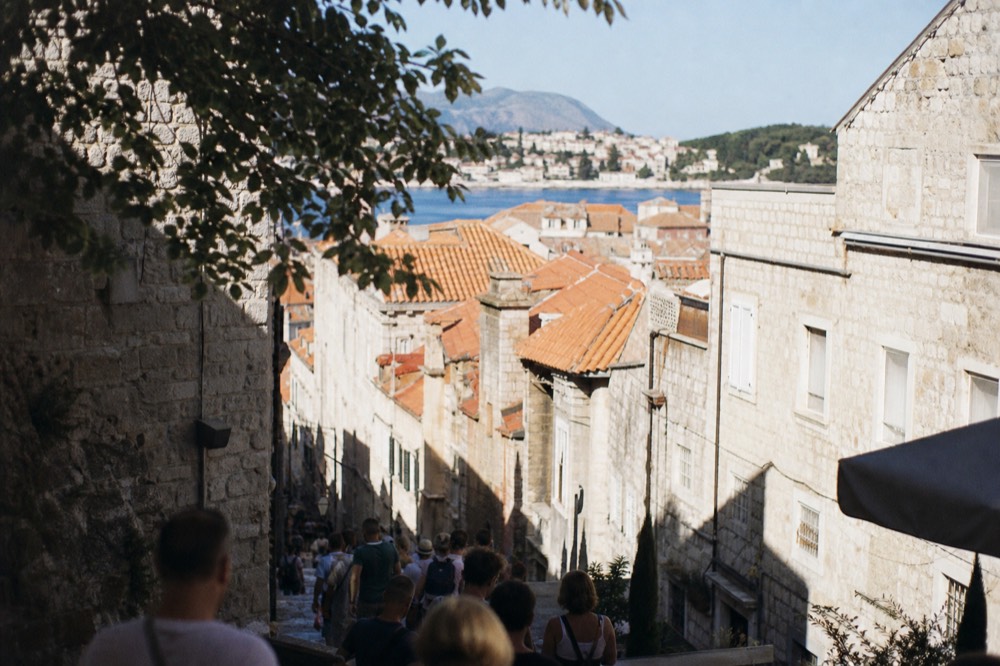
The counting system is worth understanding too. Six counters at every Old Town entrance update a headcount every 15 minutes, and the official carrying capacity, from the UNESCO carrying-capacity assessment, is 11,275 people. A real half-hourly curve read on 8 September 2026 showed 5,419 people at 08:00, 7,297 at 09:00, a 7,739 peak at 10:00, then 7,205 at 11:00. Read that curve as a routing instruction: be inside the walls before 08:30 and the city is a different place. Note also that cruise passenger figures are ship capacity, not the number of people who actually walk ashore, so "up to X scheduled" is the honest phrasing.
The other classic mistakes, briefly. Do not buy a "family ticket" for the walls, because the operator sells exactly two paid article types, adult and child 7 to 18, with under 6 free. Do not plan a walls walk in December expecting the Western Outer Wall, which closes December through February. Do not show up at the monastery expecting the library. And do not skip the northern streets: the lanes off the Stradun hold most of what people actually remember about this city, and the hidden gems guide maps the ones worth the detour.
| Mistake | Why It Costs You | Do This Instead |
|---|---|---|
| Walking the walls at midday in summer | No shade on the circuit, heat on stone | Start at opening, the stated hours begin at 08:00 |
| Arriving in the Old Town 09:00 to 11:00 | Headcount peaks at 10:00 | Enter before 08:30, sightsee early, rest at midday |
| Booking September to dodge crowds | It is the busiest cruise month, 101,246 passengers in 2025 | Try late April, May or October weekdays |
| Assuming the walls ticket is walls-only | It already includes Fort Lovrijenac | Use the fortress the same day, it is on the same ticket |
| Skipping the monastery for the big names | It is pass-included and rarely crowded | Give it 30 to 45 minutes on the way in from Pile |
Where in Europe Can You Fly Direct From Dubrovnik?
Dubrovnik Airport is a seasonal gateway with the densest direct network in summer and a much thinner one in winter, and the routes change every year as airlines publish their seasonal schedules. Because no verified route list is in this site's research record, I will not print specific cities as fact; the airport's own arrivals and departures pages are the only source worth trusting for a given week.
That is a deliberately restrained answer, and it is the honest one. Route networks to and from seasonal Mediterranean airports shift with each airline's summer and winter programmes, and a list copied from a blog post is usually a year or more stale. What I can say from planning work is structural: the summer schedule concentrates on the big European hub and leisure markets, connections thin sharply from late October, and the winter programme is a fraction of the summer one. If your trip depends on a specific route, check the airport's own site for the week you are flying, and build your dates around the schedule rather than the reverse.

The practical planning points matter more than any route list. Flight prices into Dubrovnik are notoriously seasonal, and the cheapest months to fly are consistently the shoulder ones, which aligns neatly with the crowd data above: May and October give you the best intersection of flights, weather and thinner streets. Getting from the airport to the Old Town is a solved problem with several options, and the airport to Old Town guide compares them by cost and time. If you are still choosing between Croatia's two coastal gateways, the Dubrovnik versus Split comparison covers which airport serves which kind of trip better.
| Season | Direct Network | Planning Implication |
|---|---|---|
| Summer, roughly May to October | Densest, most leisure routes operating | Widest choice, highest fares at peak |
| Shoulder, April and late October | Most routes still running, fewer frequencies | Best fare and crowd balance |
| Winter, November to March | Much thinner programme | Expect connections via hubs; check the week you fly |
What Cities in Europe Have Direct Flights to Dubrovnik?
The same honesty applies here: no verified city list exists in this site's research record, so I will not name specific cities as current facts. The pattern is reliable even where the list is not: summer brings direct service from major European hubs and leisure markets, and the network is published airline by airline on the airport's own schedule pages. Treat any specific city list you read online as last year's schedule until you confirm it.
Why does this question belong on a monastery page? Because it is one of the two questions that dominate every planning conversation I have, alongside "how many days do I need", and because the answer shapes everything else on this page. A direct seasonal flight means you can justify a short three-day trip built around the Old Town's core sights, monastery included. A connecting itinerary pushes you toward a longer stay, and the how many days guide works through exactly that trade-off.
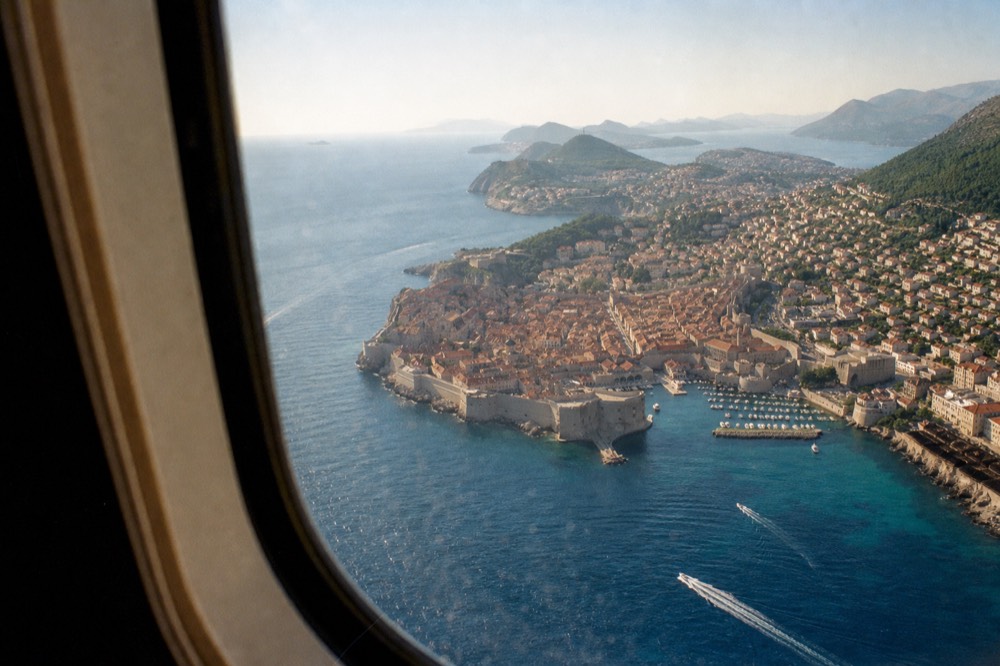
The arrival experience is worth one paragraph of its own. Dubrovnik Airport sits well south of the city, and the transfer decision, bus, taxi, private transfer or rental car, is a real fork with real cost differences rather than a formality. Once you are in, though, everything on this page is walking distance of everything else: the monastery, the walls entrances, the cable car's lower station and the Old City Port where the Lokrum boats leave at 09:00, then every 15 minutes from 10:00 to 18:00. A Lokrum ticket is 30 euro per person and covers both the reserve entry and the return boat transfer, which makes it one of the cleanest day-trip values on the coast.
For travellers who prefer structure over self-routing on a short visit, a guided walk is the efficient first evening or first morning. You can Check availability alongside the guided walking tours overview, which compares the formats side by side.
How to Fit the Monastery Into Your Day?
Enter at Pile Gate before 08:30, visit the monastery first while the headcount is still climbing, walk the walls in the morning while your legs are fresh, then spend the afternoon on the museums the pass already covers. The monastery needs only 30 to 45 minutes, which makes it the ideal opener rather than the main event, and its Pile-end location means you finish exactly where the walls entrance is.
The early start is not a stylistic preference, it is arithmetic. The counters showed 5,419 people at 08:00 and a 7,739 peak at 10:00 on the measured September day, so every hour before ten is progressively calmer. The monastery opens into that quiet window better than any other major sight, because its courtyard swallows sound and its visitor flow is a trickle compared with the Stradun. From the cloister, the walls entrance is minutes away on foot, and the Rector's Palace and the other pass sights sit at the far end of the same street.
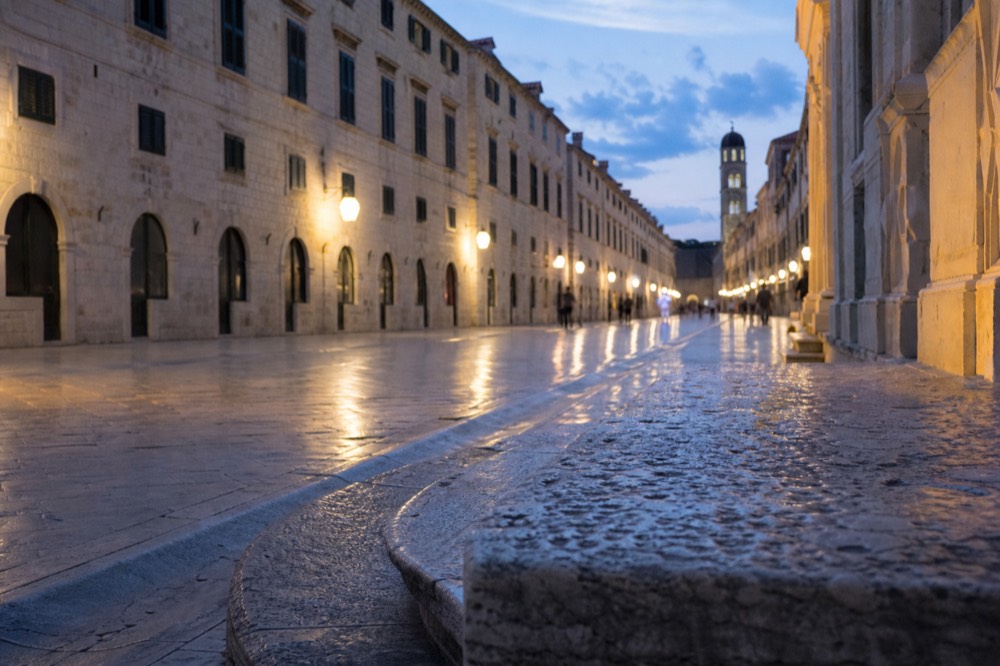
Afternoon options depend on your energy. The cable car is the classic reward: the ride covers 778.2 metres of track, a 367.0-metre rise from the lower terminal at 38.0 metres above sea level to the upper station at 405.0 metres, in 3 minutes 30 seconds at 6.5 metres per second. Adult round trip is 30 euro, one way 17 euro, child 4 to 12 round trip 8 euro, under 4 free, and the operator states a clear-day view range of up to 60 km. It closes January to March, which matters for winter planners. The cable car operator's price page carries the full timetable.
| Time | Where to Be | Why |
|---|---|---|
| Before 08:30 | Pile Gate and the monastery | Headcount still below the 10:00 peak of 7,739 |
| 09:00 to 11:30 | City Walls circuit | Shade on parts of the route, fresh legs |
| 11:30 to 13:30 | Lunch off the Stradun | Midday heat, tour groups at maximum |
| 14:00 to 17:00 | Rector's Palace and pass museums | Indoors, and the pass already covers them |
| Sunset | Cable car or a sunset cruise | Evening light over the Old Town and the islands |
For the evening, two options stand out on value. The Cavtat Sunset Cruise runs about 1 hour from $23.66 per person with a cold platter and drinks, rated 4.9 across 203 reviews, and the panoramic Karaka sunset cruise runs 1.5 hours from $59 per person, rated 4.8 across 833 reviews. Both sit in the sunset spots guide alongside the free viewpoints, if you would rather keep the budget for dinner.
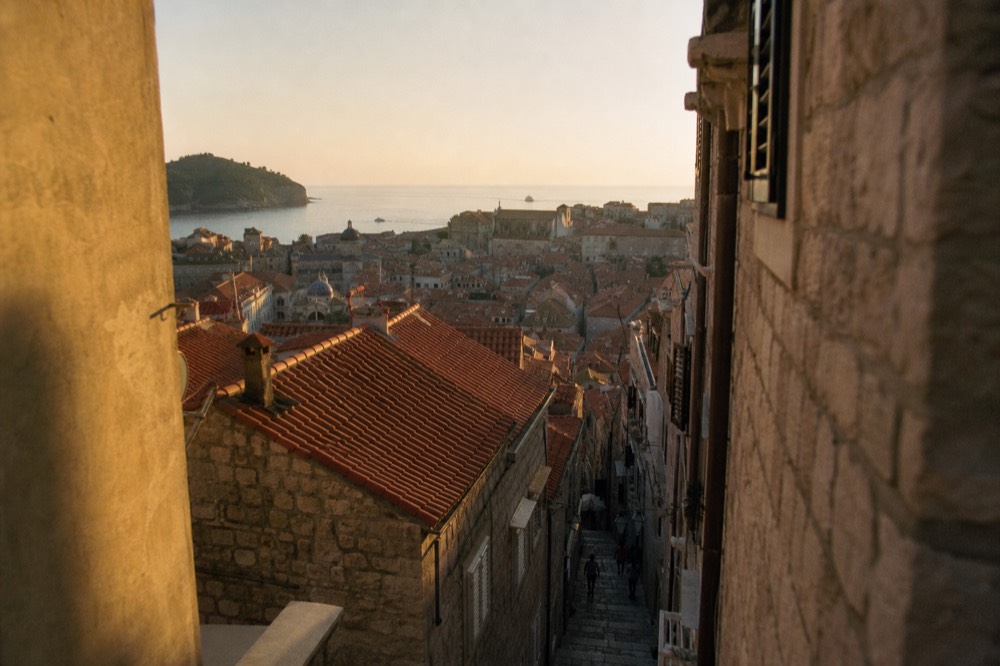
Between the monastery, the walls and the museums, the pass route gives you a genuinely full day for the same 40 euro the walls alone would cost in main season, and that is the sentence I would keep from this whole page if you kept only one. For everything the city offers beyond this single block, the homepage's Things to Do in Dubrovnik collection is the wider map.
Common Questions About the Franciscan Monastery in Dubrovnik
How much does it cost to go to the franciscan monastery in dubrovnik?
The standalone admission price is not in this site's verified research record, so check the entrance or the live listing. The verified route is the Dubrovnik Pass: the monastery museum is on the inclusion list, and the one-day pass costs 40 euro in main season, 1 March to 30 November, the same as the standalone walls ticket.
Is the Franciscan Monastery Included in the Dubrovnik Pass?
Yes, the Friars Minor Franciscan Monastery Museum is on every pass tier's inclusion list, alongside the City Walls, Lovrijenac Fortress and the Rector's Palace. Each sight allows a one-time visit per pass.
How Long Should I Spend at the Monastery?
Plan on 30 to 45 minutes for the cloister, the museum rooms and the pharmacy. It pairs naturally with the walls entrance nearby, so most visitors slot it in as the first stop of the day.
Can I Visit the Monastery Pharmacy?
Yes, the pharmacy is part of the visitor route and is fitted out as it would have looked in its working life. It is described as one of the oldest pharmacies in Europe, though this site does not print a founding year because no primary source has been verified for one.
When Is the Best Time of Day to Visit?
Before 08:30, together with the rest of the Old Town. The official counters showed a headcount peak of 7,739 at 10:00 on a measured September day, so the earlier you enter, the calmer every sight, this one included, will feel.
Is the Monastery Accessible for Visitors With Limited Mobility?
The complex is a historic stone building with level changes, so check ahead if step-free access matters to your visit. The wider question is covered in the site's accessibility guide, which treats the Old Town's stairs and surfaces in detail.