Red History Museum Dubrovnik: What to Expect and How to Plan Around It
The Red History Museum is Dubrovnik's museum of the 1990s siege, and it is the one sight in the city that explains why so many roof tiles in the Old Town look newer than the buildings under them.
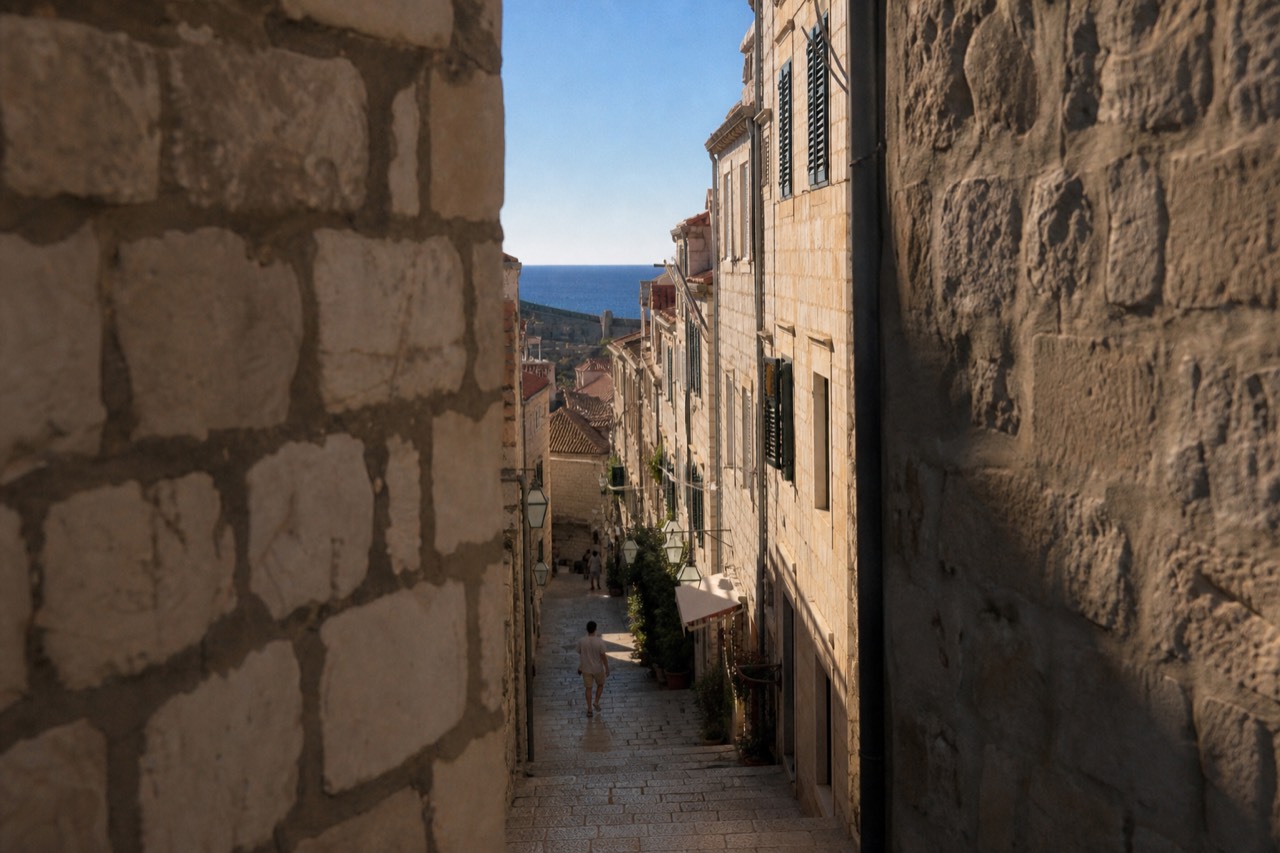
Short answer
The Red History Museum covers the siege of Dubrovnik of the early 1990s through everyday objects, photographs and personal accounts. It sits outside the main sightseeing circuit, works well on a rainy day, and pairs naturally with the walls, whose 40 euro main-season ticket and the 40 euro one-day Dubrovnik Pass cover the city's other headline sights.
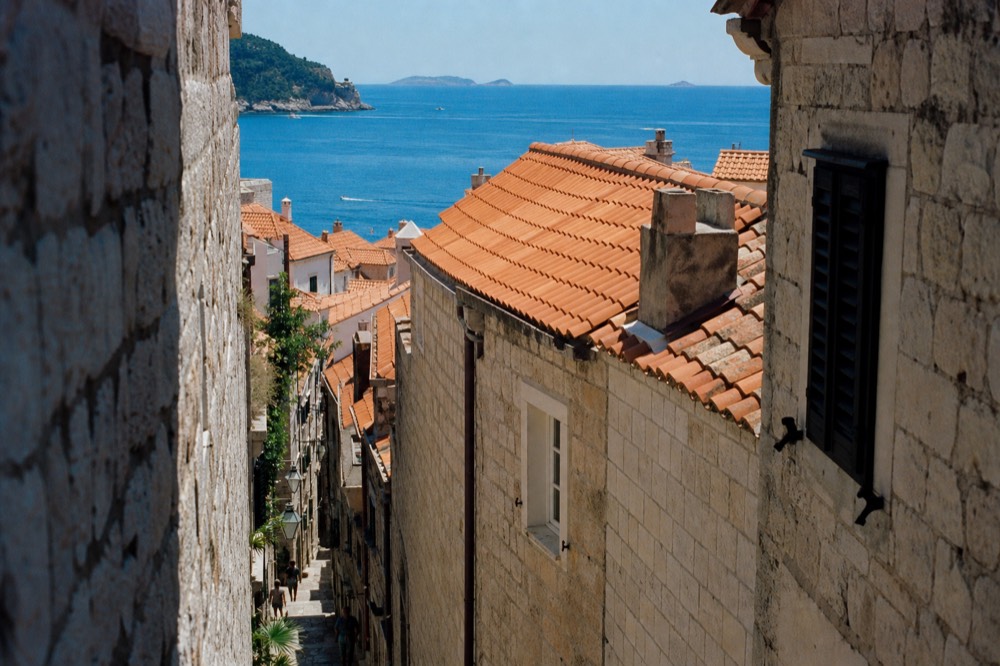
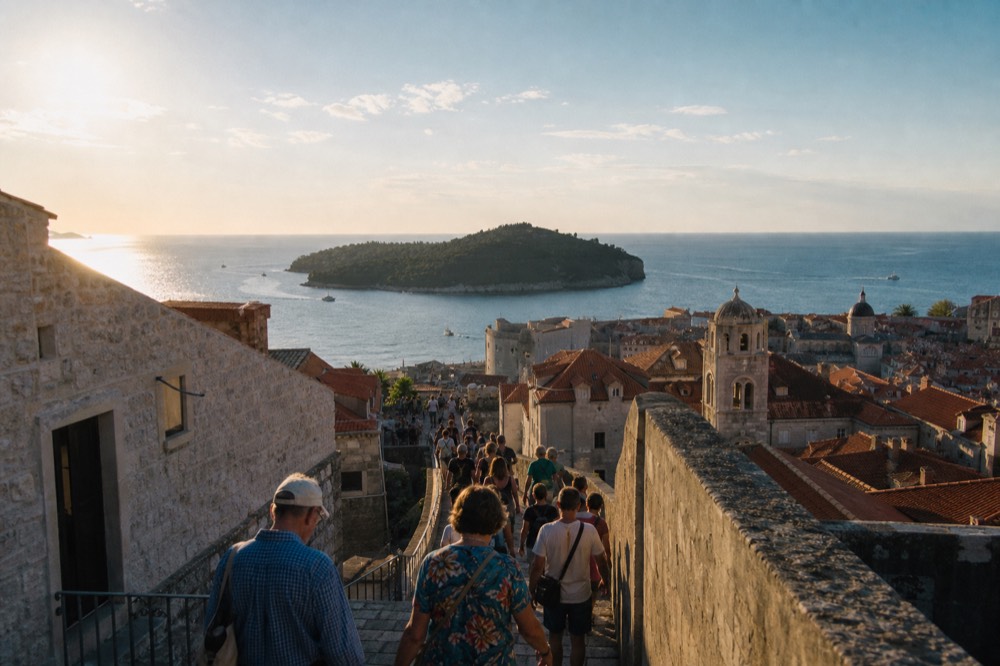
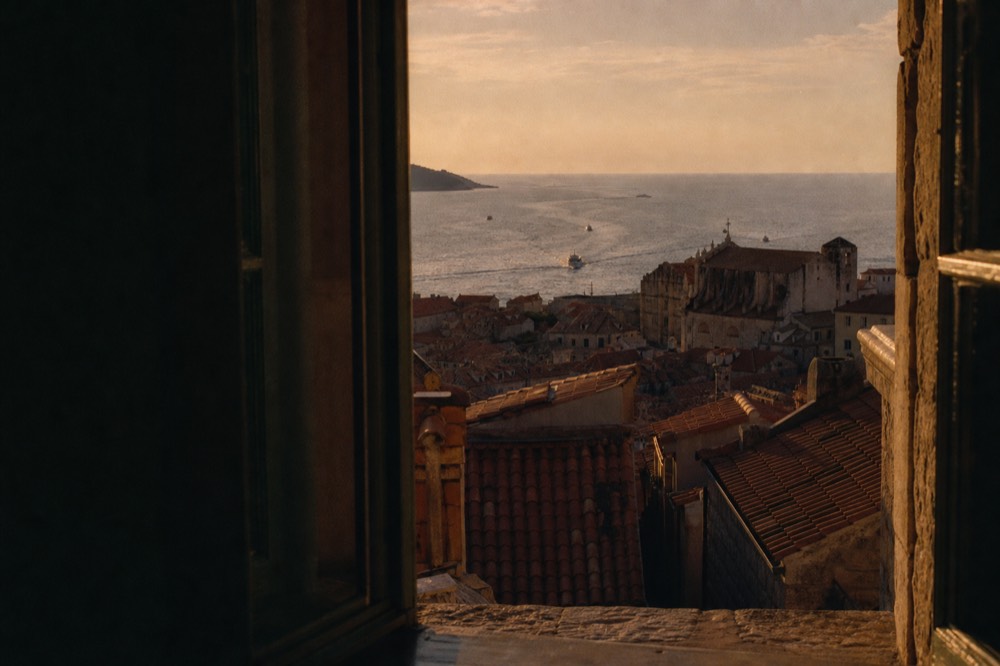
Dubrovnik sells itself on medieval stone, terracotta roofs and blue water, and most visitors spend their whole trip inside that postcard. But look closely at the Old Town skyline and you will notice something the postcard hides: a patchwork of roof tiles in noticeably fresher shades of orange. Those tiles are replacements. The originals were destroyed in the siege of the early 1990s, when the city that UNESCO had inscribed on the World Heritage List in 1979 ended up on the List of World Heritage in Danger from 1991 to 1998.
The Red History Museum is where that story lives. It is small, personal and completely different in mood from the Rector's Palace or the Maritime Museum, and it answers the question most visitors quietly form somewhere around day two: what happened here, and why does this city feel both ancient and recently rebuilt? This guide covers the museum itself, then the practical planning questions that cluster around it, from what not to do in Dubrovnik to when to avoid the city and whether its beaches justify the hype.
What Is the Siege of Dubrovnik Museum?
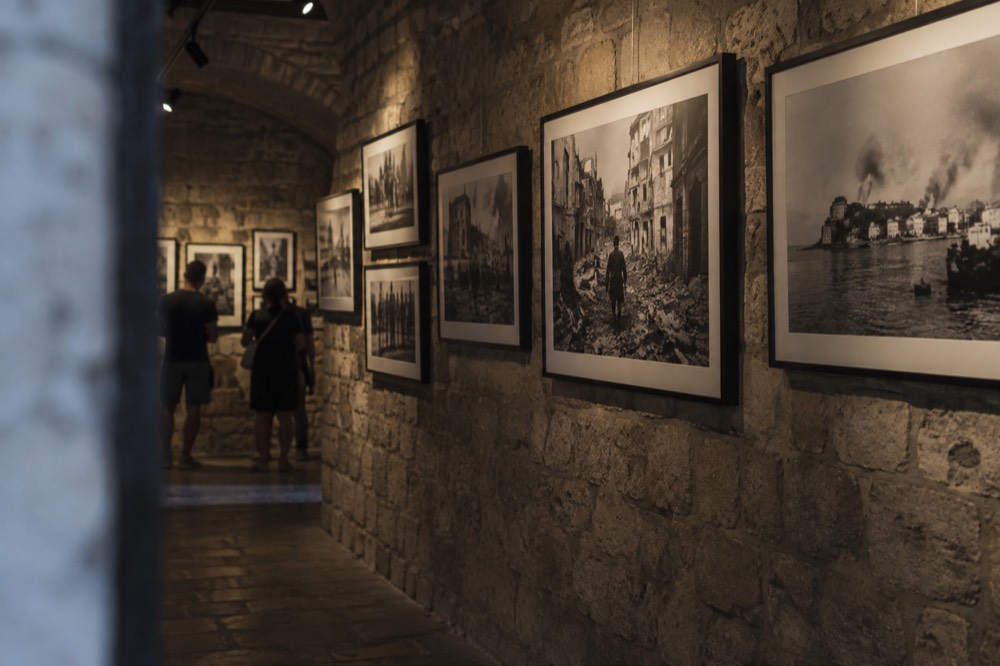
The Red History Museum is Dubrovnik's museum of the siege and of daily life in the city during the Homeland War, built around everyday objects, photographs, documents and personal testimony rather than weapons and hardware. It explains how a UNESCO-listed baroque city came under bombardment in 1991, how residents lived through it, and why the Old Town you walk today is substantially restored.
The museum's approach is deliberately intimate. Where the city's grander institutions display gilded regalia and ship models, this one leans on the material culture of a city under fire: ration books, homemade stoves, shelter signage, patched furniture, photographs of streets you will recognise an hour later with your own eyes. That recognition is the point. You read about the Stradun, all 298 metres of it, in a wartime photograph, then you stand on it and the two images overlay each other.
For context, the numbers from the walls operator and UNESCO frame the stakes. The Old City was inscribed in 1979 under criteria (i), (iii) and (iv), reference C 95bis, on a property area of 24.7 hectares with an 1,188.6-hectare buffer zone. The walls themselves, 1,940 metres long, up to 25 metres high, and 4 to 6 metres thick on the land side, took their basic shape in the 13th century and were finished in 1660 with the Bastion of St Stephen. None of that stopped modern artillery, which is exactly the uncomfortable lesson the museum asks you to sit with.
If you want the full military and political narrative before or after your visit, our longer siege of Dubrovnik history guide walks through it in detail, and the Homeland War Museum guide covers the other siege-era institution on Srd, up by the cable car. The two museums make a natural pair: one tells the story from inside the city, the other from the hill above it.
Plan roughly an hour to ninety minutes for the visit. It is not a place you rush, and because it is indoors and compact, it is the single best sight in the city for a rainy afternoon, a heat-of-the-day escape, or a morning when the cruise counters are flashing red.
Why the Museum Is Dubrovnik's Best Rainy-Day Sight
Rain in Dubrovnik usually arrives in short, heavy bursts rather than all-day drizzle, and the city's indoor options are thinner than its outdoor ones, which makes a compact, emotionally substantial museum more valuable than its size suggests. The Red History Museum fills exactly the gap that a washed-out walls walk or a cancelled kayak tour leaves behind, and it does so without needing a reservation months ahead.
This matters more than first-time visitors expect. The headline sights here are outdoor: the walls, the beaches, Lokrum, the boat trips. When the weather turns, the competition for indoor space gets sharp. The Rector's Palace, the Maritime Museum and the Franciscan Monastery Museum all take cruise-day crowds, and the walls themselves, whose operator's stated hours at the time of check run 08:00 to 19:30, are miserable in rain, with polished stone steps that become genuinely hazardous.
A sensible rainy-day stack is the museum plus one or two of the pass-covered institutions. The one-day Dubrovnik Pass costs 40 euro in main season, 1 March to 30 November, and lists City Walls + Lovrjenac Fortress as its first inclusion, plus the Rector's Palace, the Maritime Museum, the Ethnographic Museum, Marin Držić House, the Natural History Museum, the Franciscan Monastery Museum, the Museum of Modern Art and more, along with a 24-hour bus ticket. Three-day and seven-day tiers at 50 and 60 euro add suburban bus coupons and House Bukovac in Cavtat.
| Dubrovnik Pass tier | Price | Sights | Transport included |
|---|---|---|---|
| 1 day | 40 euro | City Walls + Lovrjenac plus ten further sights | 24-hour city bus ticket |
| 3 days | 50 euro | Same list plus House Bukovac in Cavtat | 72-hour bus ticket, suburban coupons |
| 7 days | 60 euro | Same list plus House Bukovac in Cavtat | 168-hour bus ticket, suburban coupons |
Note the season boundary on that comparison. The 40 euro one-day pass equals the standalone walls ticket only in main season; in December the adult walls ticket drops to 20 euro and no winter pass tier is on sale at all, so the arithmetic changes completely.
If you would rather have someone else sequence the indoor stops, a guided walk keeps you moving between covered cloisters, halls and lanes even when the sky opens. Both are easy to rebook if a storm shifts by a day.
What Not to Do in Dubrovnik?
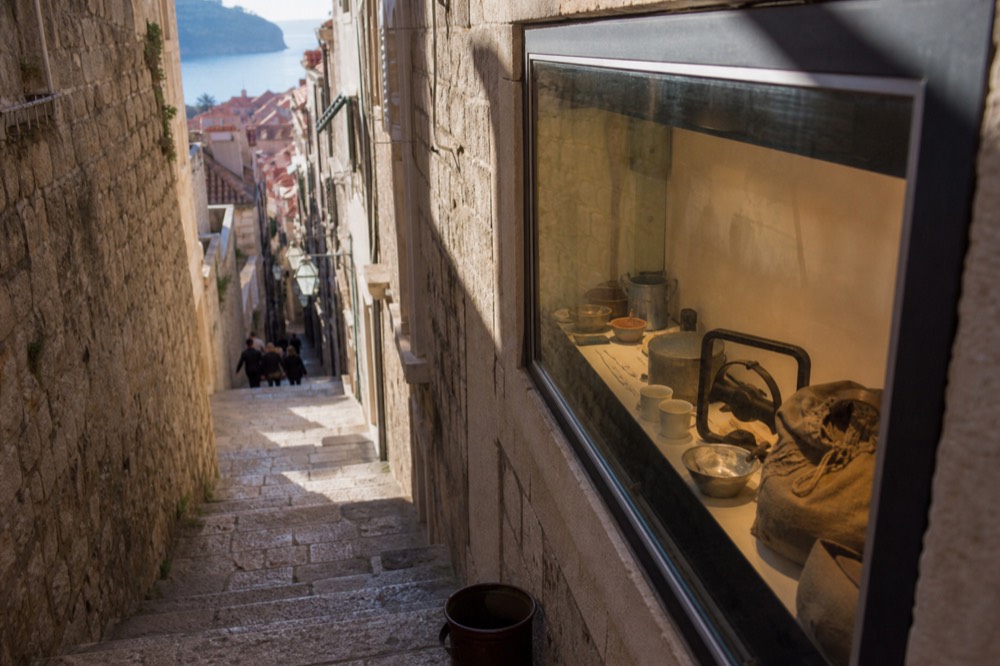
The mistakes that cost visitors the most are walking the walls at midday in high summer, expecting to find parking near the Old Town, treating the Stradun as the whole city, buying only a walls ticket when a same-price pass adds ten sights, and underestimating how early the cruise-day crowds build. Each of these is avoidable with a half-hour of planning, and the museum visit itself slots neatly into the gaps that remain.
Start with the walls timing, because it is the one people get wrong most often. The circuit is almost entirely unshaded, and in July and August the stone radiates heat back at you from below. Walk it at 08:00 or after 17:00, never between 12:00 and 15:00. The same logic applies to the Stradun: at midday it is a heat trap and a crowd channel, while at 07:00 it is close to empty, which is the Dubrovnik most photographs promise.
Parking is the second trap. The Old Town is fully pedestrianised and the streets around it are a maze of resident-permit zones. Use the garage at the bus station in Gruž or the lot at Igralište, both linked in our parking in Dubrovnik guide, and accept a short walk or a bus ride in.
The third mistake is financial. In main season the adult walls ticket is 40 euro, child 7 to 18 is 15 euro, and under 6 goes free, with no family ticket sold. That 40 euro ticket is actually the walls plus Fort Lovrijenac combination, and it also covers the Western Outer Wall and the Collection of Coins of the Republic of Ragusa. Since the one-day pass costs the same 40 euro and adds ten more sights plus buses, buying the bare walls ticket in March through November is usually leaving value on the table.
| Ticket | Main season (1 Mar to 30 Nov) | December |
|---|---|---|
| Adult walls + Lovrijenac | 40 euro | 20 euro |
| Child 7 to 18 | 15 euro | 5 euro |
| Child 6 and under | free | free |
| Lovrijenac alone | 15 euro | 15 euro |
| One-day Dubrovnik Pass | 40 euro | not on sale |
The fourth mistake is crowd-blindness, and here the museum is your friend. Dubrovnik counts its visitors with six counters at every Old Town entrance, updating a headcount every 15 minutes, against an official carrying capacity of 11,275 people. On a real September morning the curve ran 1,200 people at 04:00, 5,419 at 08:00, a 7,739 peak at 10:00, then 7,205 at 11:00. The lesson is simple: the Old Town is at its emptiest before 09:00 and again in the evening, and mid-morning is when every tour group converges. An indoor museum at 11:00 is not a consolation prize, it is the correct move.
Finally, do not skip the city beyond the walls. Lapad's beaches, Gruž's market and Cavtat's waterfront are where locals actually spend their days, and they cost a fraction of the effort the Old Town demands. For a broader look at what the city offers beyond the postcard, start with our best things to do in Dubrovnik overview.
When to Avoid Dubrovnik?
Avoid Dubrovnik in the middle of the day in July and August, on the handful of cruise days when four ships are scheduled, and during the late-September and October cruise peak, when passenger numbers actually exceed the summer months: September 2025 brought 101,246 cruise passengers and October 100,132, ahead of July's 96,072 and August's 87,385. Mornings, evenings and shoulder months flip the experience completely.
That September and October peak surprises almost everyone, and it is worth internalising because it inverts the usual Mediterranean travel logic. Port Authority data shows the full-year 2025 total reached 625,257 cruise passengers, up from 582,499 in 2024, with 461 calls scheduled for 2026. The busiest months are not the hottest ones. If you are choosing between an August week and an early-October week and hate crowds, neither is quiet, but October carries more ship capacity than July does.

The Port Authority limits cruise passengers to 8,000 a day in most cases, with a 2+1 berthing arrangement, and out of 243 cruise days a year only 18 exceed 8,000 and only 4 exceed roughly 10,000. About forty call requests were refused in a single season. So the city is actively managed, but on the heaviest days the Old Town still approaches its 11,275 carrying capacity, and the walls stairs become a queue.
| Month 2025 | Cruise passengers | What it means for you |
|---|---|---|
| July | 96,072 | Heat plus crowds, walk walls early |
| August | 87,385 | Hottest sea, peak family travel |
| September | 101,246 | Busiest cruise month, warm sea |
| October | 100,132 | Still very busy, softer light |
Within any given day, the pattern from the counting system holds year-round: build before 10:00, plateau through midday, ease in late afternoon. Cruise passengers are also ship capacity, not people who actually walk ashore, so a scary scheduled number does not translate one-to-one into bodies on the Stradun. Still, the practical advice stands. Do outdoor sights before 09:00, put the Red History Museum or another indoor stop in the 11:00 to 15:00 window, and reclaim the lanes after 18:00 when the day-trippers have sailed.
Is Dubrovnik Good for Beaches?
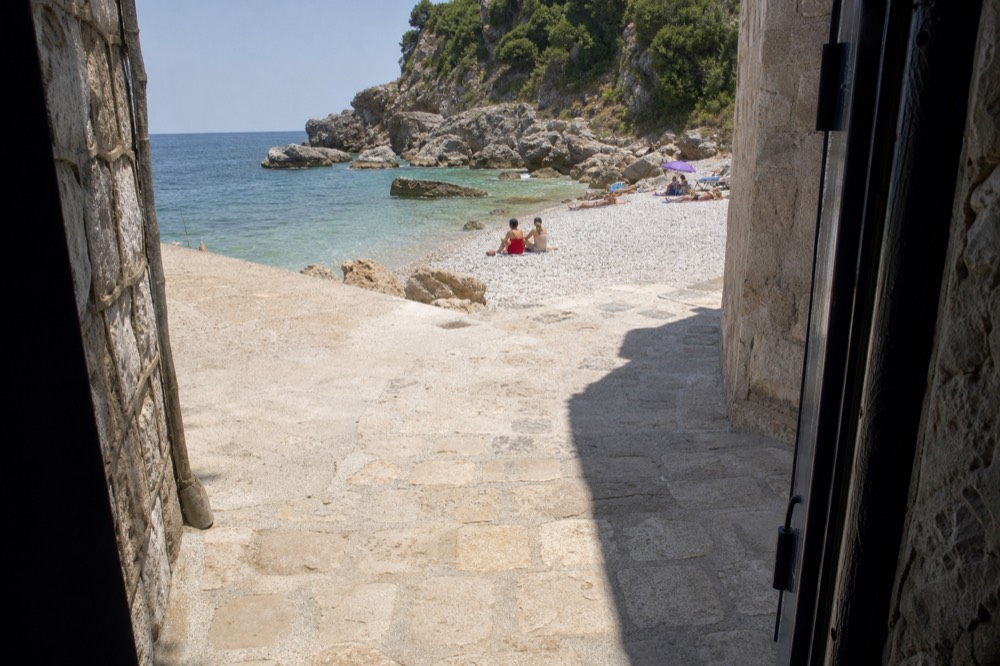
Yes, but not in the wide, sandy, resort sense: Dubrovnik's beaches are mostly small, pebbly or rocky coves backed directly by steep terrain, with famously clear water and sea temperatures that peak at a 25.8 degree August long-run average. They are swimming and viewpoint beaches rather than lounging beaches, and they are best treated as a daily ritual, not a base.
The honest framing first. The headline sea figures come from the NOAA OISST v2.1 long-run average for 1991 to 2020, an open-water grid-cell figure rather than a beach thermometer, and EMODnet corroborates it within about a degree, with August at 24.90 and September at 23.15. Sheltered bays run warmer: the Croatian met service's Dubrovnik buoy read 27.0 to 27.4 degrees on 8 September 2026 against a 23.6 September mean. So the water is genuinely warm from June through September, and swimmable into October.
| Month | Long-run average sea temperature | Swimming verdict |
|---|---|---|
| June | 22.5 degrees | Comfortable |
| July | 24.9 degrees | Excellent |
| August | 25.8 degrees | Peak warmth |
| September | 23.6 degrees | Still excellent |
| October | 21.0 degrees | Fresh but fine for many |
The beach geography sorts into three clusters. Banje, just outside Ploče Gate, is the postcard beach with the Old Town walls as a backdrop, and it gets crowded by mid-morning. The Lapad peninsula holds the most family-friendly options, shallow and serviced, a bus ride or a pleasant walk from the Old Town. Then there are the rock-and-cliff spots, including the swimming from the rocks below Buža bar, where you trade sand for drama.
Lokrum deserves a special mention as a beach-plus-nature combination. The 30 euro Lokrum ticket covers reserve entry and a return boat transfer, boats leave the City Harbour at 09:00 and then every 15 minutes from 10:00 to 18:00, and a ticket stays usable for three days. The island's rocky swimming coves are a short walk from the landing. Our Lokrum Island guide covers the full picture, and the swimming season guide helps you time the water.
Where does the museum fit a beach day? Easily, because the best beach hours are late morning through mid-afternoon, which is exactly when the Old Town is at its most congested. Swim early, visit the museum in the afternoon heat, walk the walls at 17:30. That sequence beats the default plan of walls-at-noon, beach-at-four by a wide margin.
How the Museum Fits a One-Day Plan
A one-day Dubrovnik plan that includes the Red History Museum works best in this order: walls at 08:00 sharp, a mid-morning walk of the Stradun and Rector's Palace, the museum over lunchtime when the streets are fullest, the cable car or a beach in the late afternoon, and the Old Town lanes again after dinner. The museum costs you 60 to 90 minutes and converts your worst crowd window into your most memorable hour.
The logic is entirely about the daily crowd curve. At 08:00 the Old Town holds a fraction of its mid-morning population, the walls stairs are passable, and the light over Fort Lovrijenac, standing on its 37-metre sea rock, is at its best. By 10:00 or 11:00 the counters peak, and that is when you want to be indoors. The Red History Museum, the Rector's Palace and the Maritime Museum, all reachable on foot within minutes of each other, absorb the worst of the midday perfectly.
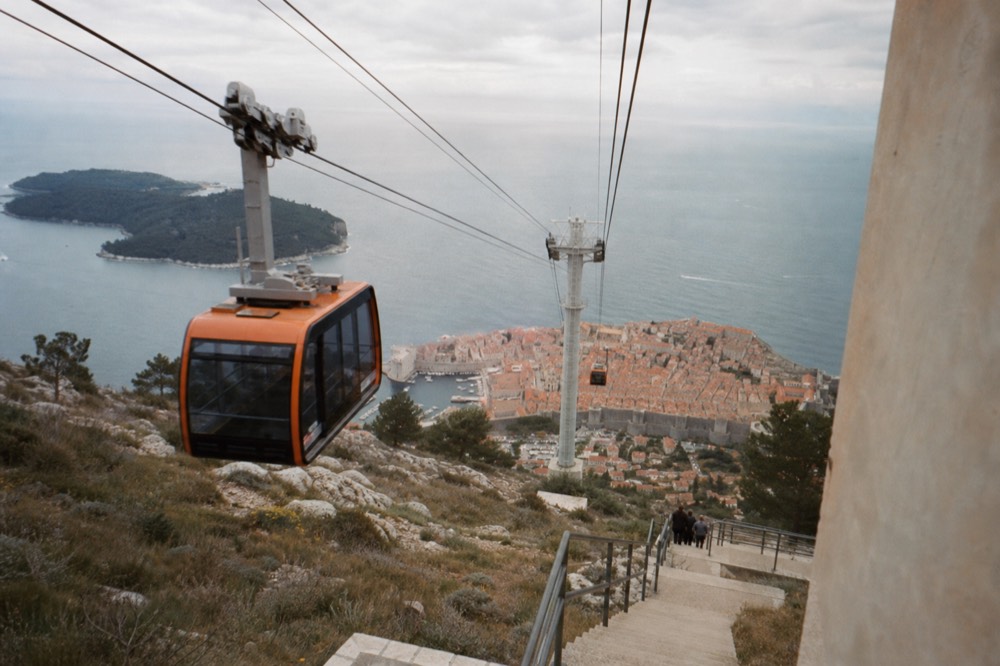
Late afternoon is for altitude or water. The cable car lifts you from the lower terminal at 38.0 metres to the upper station at 405.0 metres on Mount Srd, a 367.0-metre rise over a 778.2-metre track in 3 minutes 30 seconds, with the operator quoting a view range of up to 60 km on a clear day. Adult round trip is 30 euro in 2026, one way 17 euro, child 4 to 12 round trip 8 euro, and under 4 free. Up top, the Homeland War Museum in the old fort gives you the siege story from the hill, which is why pairing it with the Red History Museum down below makes such a coherent day.
| Cable car ticket | 2026 price |
|---|---|
| Adult round trip | 30 euro |
| Adult one way | 17 euro |
| Child 4 to 12 round trip | 8 euro |
| Child 4 to 12 one way | 5 euro |
| Under 4 | free |
One warning on timing: the cable car closes January to March and runs reduced hours from October, so in the shoulder and winter months check the day's timetable before you promise anyone a sunset ride. In June through mid-September it runs until midnight, which makes it one of the few attractions that improves as the day ends.
If your day is tight and you would rather bundle the indoor sights with the ride up the hill, the multipass product that combines cable car travel with museum entry is the efficient route. It runs from $24 per person and is rated 4 across 101 reviews, with the duration depending entirely on how long you linger at each stop. You can compare it against a cable car and museums multipass tour page, or check the operator's live listing for current availability.
Can You See the Walls and Museums on One Ticket?
In main season, yes, and it is one of the better deals in the city: the 40 euro one-day Dubrovnik Pass equals the standalone 40 euro walls plus Lovrijenac ticket and adds roughly ten more sights plus a 24-hour bus ticket, with every tier allowing a one-time visit to each institution. In December the walls ticket alone falls to 20 euro and no winter pass is on sale, so the bundle argument is a main-season argument.
The mechanics matter. Every pass tier lists City Walls + Lovrjenac Fortress as its first inclusion, and the checkout is explicit that you are entitled to a one-time visit to the walls and each cultural institution, whatever tier you buy. So the pass is not a discount on the walls, it is the walls at the same price with the rest of the list effectively attached. The included institutions run from the Rector's Palace and the Maritime Museum to the Ethnographic Museum, Marin Držić House, the Natural History Museum, the Franciscan Monastery Museum, the Museum of Modern Art, the Dulčić-Masle-Pulitika Gallery, Pulitika Studio and the archaeological exhibitions.
What the pass does not cover is the Red History Museum or the cable car, both of which are separate operators with their own pricing. That is where a bundled product earns its keep on a short visit, since it stitches together the cable car ride and museum entries that the city pass leaves out. Whether that bundle beats buying pieces separately depends on how many stops you actually complete, so price it against your real plan rather than your aspirational one.
For the walls themselves, a guided circuit adds a layer the stones cannot supply on their own. The Ancient City Walls and Wars walking tour runs about two hours from $29.58 per person and is rated 4.8 across 1,387 reviews, and reviewers consistently single out the guides. One recent guest wrote:
This well organized tour helped put Dubrovnik's past (and present) into perspective. It's incredible that the city walls have withstood the test of time. Antun was a wonderful guide.
linda_a
That "past and present" framing is exactly what the Red History Museum completes. A walls walk tells you how the defences were built; the museum tells you what happened when they were finally tested. Doing both, in either order, is the fullest version of a Dubrovnik visit.
Pairing the Museum With the Rest of Your Trip
Treat the Red History Museum as the anchor of your indoor window, roughly 11:00 to 15:00, and build everything outdoors around it: walls at opening, beaches or the cable car in the afternoon, and the Old Town lanes after dark. Visitors with two or more days should give the museum a dedicated half-day alongside Gruž, Lapad or Cavtat, leaving the pass-covered sights for the cruise-heavy midday hours.
On a two-day stay, day one is the classic circuit: walls at 08:00, Stradun and the pass sights through the morning, museum over midday, cable car for sunset. Day two leaves the Old Town entirely: the Elaphiti islands by boat, or Lokrum for a half-day, or the Lapad beaches with dinner away from the tourist core. Our how many days in Dubrovnik guide breaks down the trade-offs by trip length if you are still deciding.
Longer stays open up the day-trip layer, and the museum's story connects to it more than you might expect. The region's recent history does not stop at the city boundary, and a trip into Bosnia and Herzegovina or Montenegro puts Dubrovnik's position on a historic fault line into physical perspective. The Mostar and Kravica waterfall day trip runs from $35 per person and is rated 4.6 across 10,019 reviews, and the Montenegro day trip runs from $58 per person at 4.4 across 5,611 reviews. Both are long days with border crossings, so book them on the day of your trip you most want a break from walking.
It pairs well with a museum hour before it, since the walk gives you the medieval city and the museum gives you the modern one.
However you assemble the days, keep one principle from this whole guide: in Dubrovnik the clock matters more than the calendar. A well-timed August day beats a badly timed October one, because the crowds and the heat run on daily curves you can dodge, not just monthly averages you cannot. The city counted 41,562 residents at the 2021 census and about 4.2 million overnight stays in 2025, and every one of those visitors faces the same two kilometres of wall and the same narrow lanes. Timing is how you get them to yourself, and Things to Do in Dubrovnik exists to help you do exactly that.
Common Questions About the Red History Museum in Dubrovnik
What Is the Siege of Dubrovnik Museum?
The Red History Museum is Dubrovnik's museum of the 1990s siege, presenting everyday objects, photographs, documents and personal testimony from the bombardment of the city and the years around it. It explains why so much of the UNESCO-listed Old Town, inscribed in 1979 and placed on the List of World Heritage in Danger from 1991 to 1998, had to be restored.
what is the siege of dubrovnik museum?
It is the Red History Museum, a small institution covering the siege of Dubrovnik through the daily-life material culture of the period rather than military hardware. Plan 60 to 90 minutes and treat it as your midday indoor stop on a crowded or rainy day.
What Not to Do in Dubrovnik?
Do not walk the walls at midday in summer, do not try to park beside the Old Town, do not buy a bare walls ticket in main season when the same-price one-day Dubrovnik Pass adds ten sights and buses, and do not plan your whole day around the 10:00 to 14:00 window when the Old Town is at its most crowded.
When to Avoid Dubrovnik?
Avoid midday in July and August and the heaviest cruise days. Note that cruise passengers actually peak in September, 101,246 in 2025, and October, 100,132, above July and August, so early autumn is busier than most people assume. Mornings before 09:00 and evenings after 18:00 are the quiet windows on any day.
Is Dubrovnik Good for Beaches?
Yes, in the Adriatic sense: small pebble and rock coves with very clear water rather than wide sandy stretches. The long-run average sea temperature is 25.8 degrees in August and 23.6 in September, with sheltered bays running warmer, so the swimming season runs comfortably from June into October.
Does the Dubrovnik Pass Include the Red History Museum?
No. The pass covers the City Walls, Lovrijenac Fortress and roughly ten cultural institutions plus buses, but the Red History Museum and the cable car are separate operators. In main season the 40 euro one-day pass equals the standalone walls ticket, so it usually makes sense to buy the pass and pay the museum separately.