Dubrovnik Shopping: What to Buy, Where to Buy It, and What It Costs
Dubrovnik shopping is better than its souvenir-stall reputation suggests, if you know which streets to walk and which stalls to skip. Here is what is actually worth carrying home.
Short answer
Dubrovnik is good for focused shopping, not mall shopping: local salt, olive oil, Plavac Mali wine, silk-inspired ties, limestone souvenirs and market produce are the genuine buys. The Old Town holds most of it along 298 metres of Stradun and the lanes off it, and the 40 euro one-day Dubrovnik Pass can pay for itself on a sightseeing-plus-shopping day.
Shopping in Dubrovnik divides sharply into two experiences. There is the one most visitors get: a gauntlet of near-identical stalls near Pile Gate selling mass-produced magnets and printed T-shirts. And there is the one I send friends to find: a salt shop that still packs flakes the way the region has for generations, a market square where Dalmatian farmers sell figs and honey before the cruise crowds arrive, and small workshops producing things you cannot buy in the same form anywhere else. The difference between the two is about three streets of walking and a little timing.
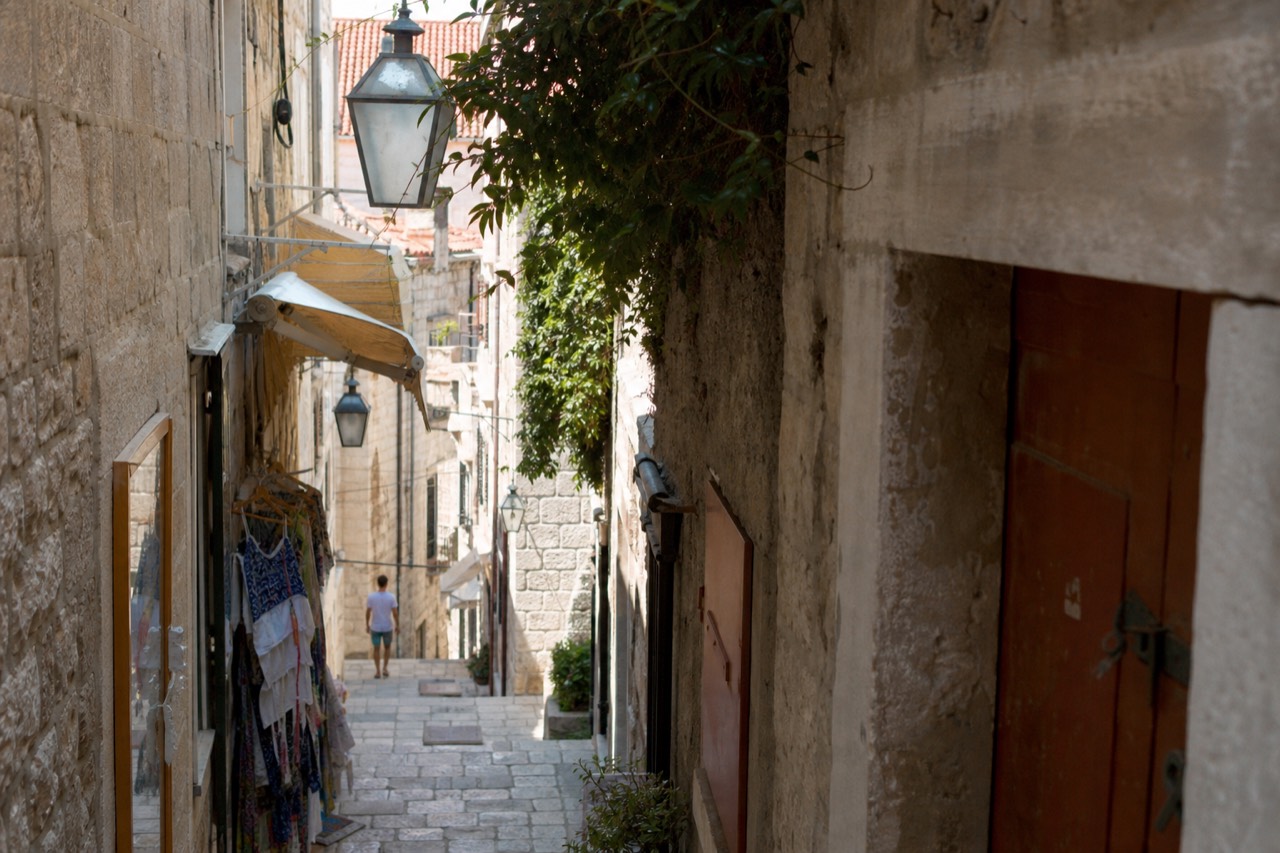
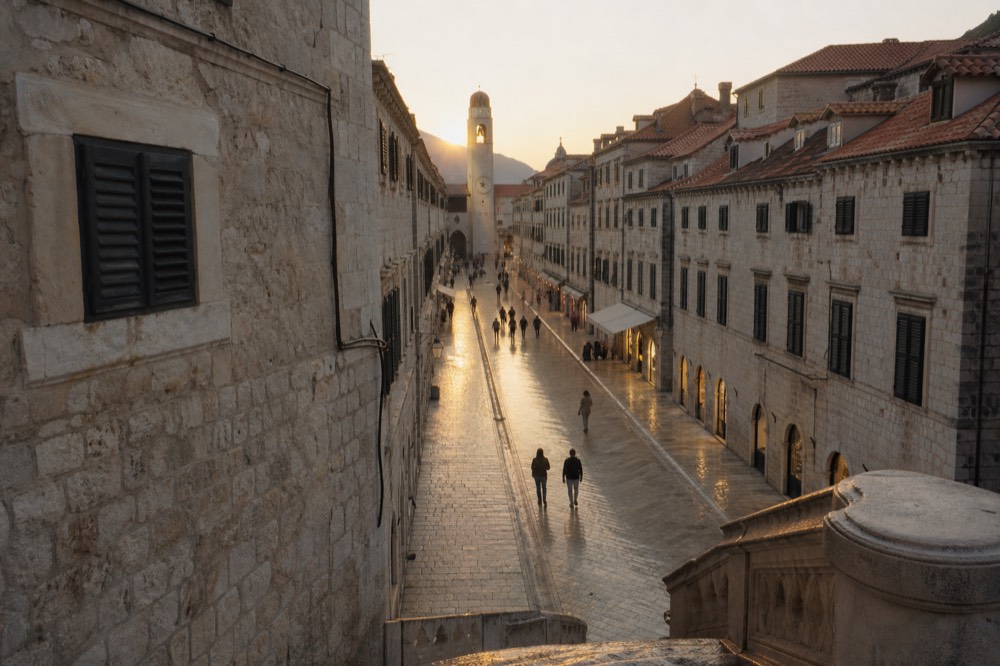
The city itself shapes the shopping. The walled Old Town covers just 24.7 hectares, inscribed by UNESCO in 1979, and its main street, the Stradun, runs 298 metres from Pile Gate to the clock tower. The 1272 Statute fixed the final plan of both the city and that street, which means almost every shop worth visiting sits inside a compact, walkable rectangle. You never need transport to shop here. You need a plan.
What Is Worth Buying in Dubrovnik?
The genuinely local buys are salt, olive oil, Plavac Mali and Pošip wine, dried figs and lavender products, silk-inspired ties, and small hand-cut limestone souvenirs. Everything else on the Stradun's souvenir racks is imported and available in any Adriatic resort town, so spend your money on the things that actually come from this coast.
Start with the salt. Ston, up the Pelješac peninsula, has been a salt-producing town for centuries, and its pans still yield the flaky finishing salt that appears in better Dubrovnik shops. It travels well, it is cheap relative to its quality, and it is the single most useful edible souvenir you can carry home. Olive oil from the Konavle valley and the Pelješac hills is the same story: small producers, honest oil, and bottles you will actually finish.
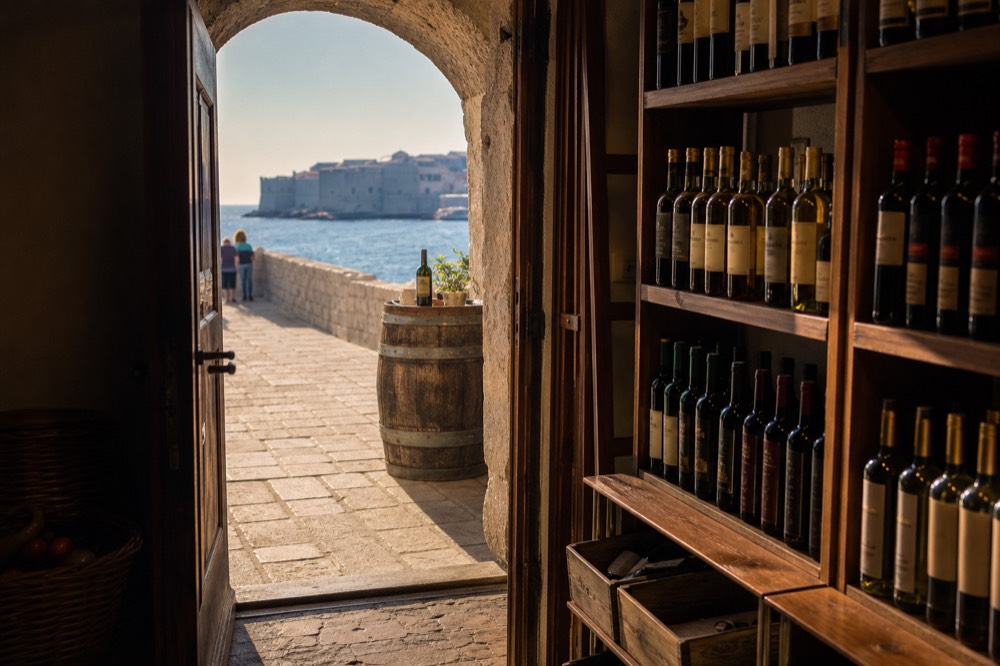
Wine is the buy I would push hardest. Plavac Mali, the red grape of the Pelješac and Dingač slopes, and Pošip, a white from Korčula, are the region's signatures, and both are dramatically cheaper bought here than imported at home. If your trip includes a wine region, buy there, where the producer sells direct. If not, the Old Town has serious wine shops that pack bottles for flights.
Then there are the objects. Croatia claims the necktie's ancestry in the cravat of the light cavalry, and several Old Town shops sell ties and scarves on that story. Limestone, the very stone of the city's pavements and facades, is cut into small souvenirs. Lavender oil and sachets come from the islands. All of these are defensible, personal purchases, and none of them need a suitcase of their own.
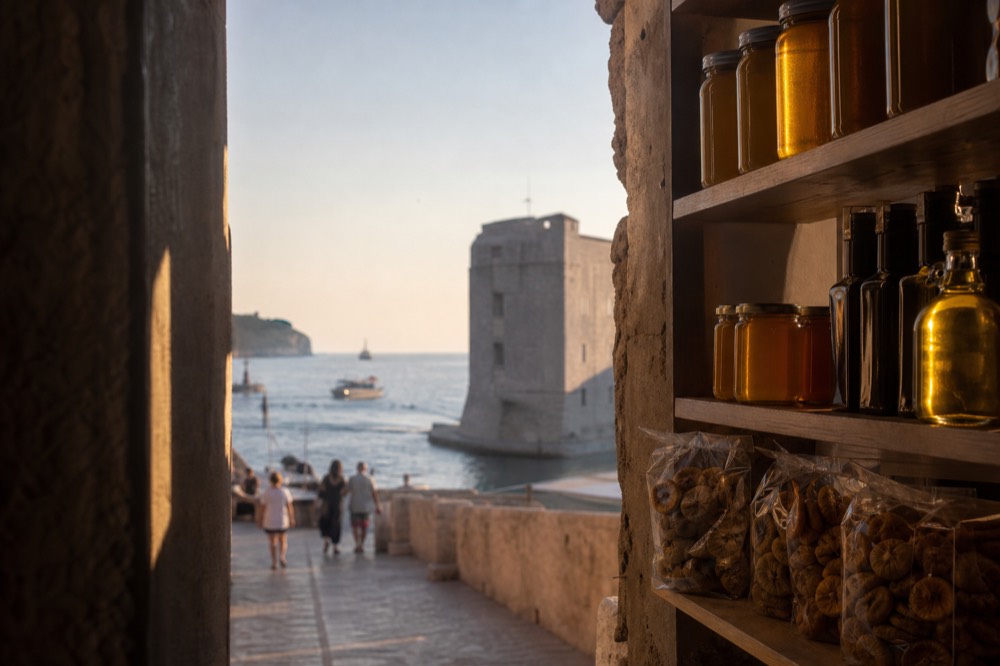
The practical rule: if a product names a place within an hour of Dubrovnik, it is probably the real thing. If it names nothing, assume it was shipped in for the season. The stalls near the gates turn over the fastest stock, so the further you walk from Pile Gate into the side lanes, the better the shops get.
| Product | Where It Comes From | Why It Is Worth It |
|---|---|---|
| Finishing salt | Ston salt pans, Pelješac | Local, light to carry, usable every day at home |
| Olive oil | Konavle valley, Pelješac | Small producers, honest quality, fair price |
| Plavac Mali red wine | Pelješac and Dingač slopes | The region's signature red, far cheaper than imported |
| Pošip white wine | Korčula island | A distinctive local white that rarely travels |
| Dried figs and honey | Dalmatian smallholdings | Market-bought, seasonal, genuinely local |
| Ties and silk scarves | Sold on the cravat tradition | A wearable souvenir with a Croatian story |
| Limestone souvenirs | Cut from the region's stone | Literally a piece of the coast |
| Lavender oil and sachets | Dalmatian islands | Light, fragrant, easy to pack |
Is Dubrovnik Good for Shopping?
Yes, for a specific kind of shopping: food, wine, small crafts and one or two quality souvenirs, all inside a walkable medieval core. No, if you expect department stores, outlet malls or a full day of retail therapy. Dubrovnik is a two-to-three-hour shopping city, best combined with sightseeing, and prices run high because everything is sold inside a UNESCO site.
The honest framing matters. The Old Town is a protected monument with 24.7 hectares of floor space and no room for large retail, so what you get is small, dense and specialised. A city of 41,562 residents at the 2021 census, hosting roughly 4.2 million overnight stays in 2025, simply cannot support ordinary shops inside the walls. The shops that survive there survive on visitors, and their pricing reflects that.
That is not a reason to skip shopping here. It is a reason to shop deliberately. A morning that pairs the market at Gundulić Square with a wine shop and a salt purchase is a better use of two hours than any mall, and it produces better gifts. If your shopping instinct is bigger than that, plan a separate day: the Ston and Pelješac region sells oysters and wine at source, and Korčula day trips put you in Pošip country.
The other thing worth buying in Dubrovnik is context. A guided walk at the start of your stay tells you which lanes hold the real workshops, and the food tour in particular doubles as a moving tasting menu of everything you might later buy. The cheapest paid Old Town walk starts at $20 per person, rated 4.8 across 5,826 reviews, and the food and drink walk, from $165.64 per person and rated 5 across 704 reviews, is effectively a shopping trip you get to eat along the way.
One more honest note on the free option. Several pay-what-you-want walks run on GuruWalk, including a 1 hour 45 minute Old City walk rated 4.87 across 2,242 reviews. They cost nothing up front, you tip what the walk was worth to you, and they cover the same geography. If your budget is tight, that is a legitimate way to get your bearings before you spend money on anything else.
| Guided Option | Length | Price | Rating |
|---|---|---|---|
| Old Town walk, local guide | about 2 hours | from $20 per person | 4.8 across 5,826 reviews |
| Food and drink walk | about 3 hours | from $165.64 per person | 5 across 704 reviews |
| Old City walk on GuruWalk | 1 hour 45 minutes | free, pay what you want | 4.87 across 2,242 reviews |
Is It Worth Buying a Dubrovnik Pass?
In main season, 1 March to 30 November, the one-day Dubrovnik Pass costs 40 euro, exactly the price of the standalone City Walls ticket, and adds ten more sights plus a 24-hour bus ticket, so it is worth buying for almost anyone shopping-and-sightseeing in one day. In December the walls ticket drops to 20 euro and no pass tier is on sale at all.
This is the clearest value equation in the city, and it matters to shoppers because a shopping day in the Old Town is almost always also a walls day. The adult walls ticket is 40 euro in main season, 20 euro in December, with children 7 to 18 at 15 euro then 5 euro, and under 6 free. There is no family ticket; the operator sells exactly adult and child. That 40 euro ticket is actually the walls plus Fort Lovrijenac combination, and it also covers the Western Outer Wall, closed December through February, and the Collection of Coins of the Republic of Ragusa. Lovrijenac alone, standing on its 37-metre sea rock, is 15 euro if bought separately.
The pass, sold as "SUMMER 2026, 01.03.2026 to 30.11.2026" in one ADULT PASS (7+) ticket type, lists City Walls + Lovrjenac Fortress as its first inclusion on every tier. The one catch: each institution, the walls included, allows a one-time visit. Full details are on the official Dubrovnik Pass site, and we break the whole decision down in our Dubrovnik Pass guide.
| Pass Tier | Price | Bus Ticket | Sights |
|---|---|---|---|
| One day | 40 euro | 24 hours | nine sights, walls included |
| Three days | 50 euro | 72 hours | ten sights plus suburban coupons |
| Seven days | 60 euro | 168 hours | ten sights plus suburban coupons |
The walls pricing itself comes straight from the operator, the Society of Friends of Dubrovnik Antiquities, whose stated hours at time of check are 08:00 to 19:30. If you buy the pass, buy it for a day you will actually walk the walls, because that one-time visit is where the value lives.
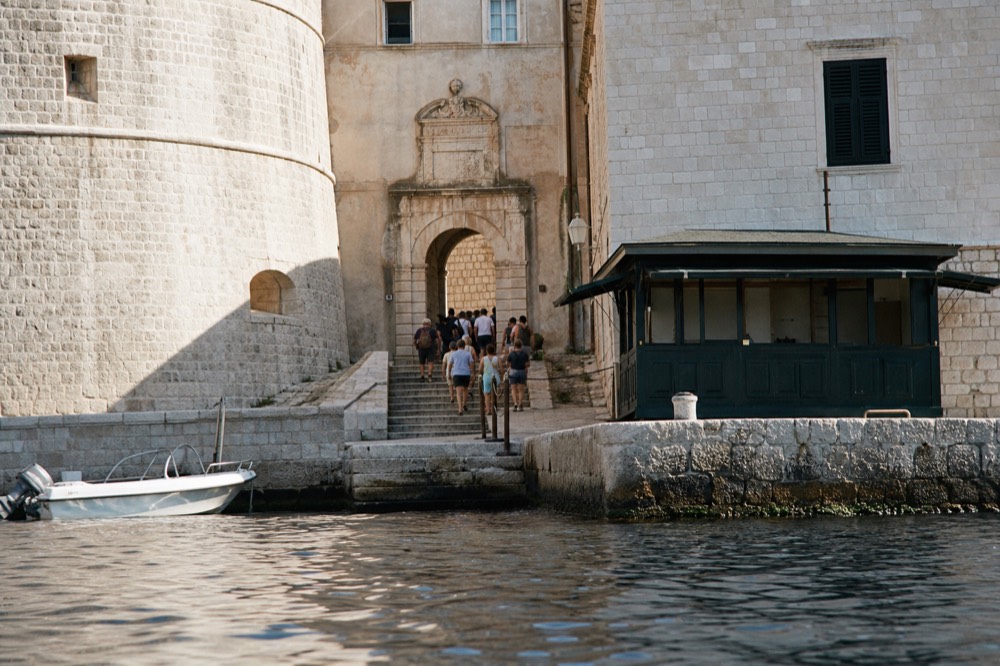
For shoppers specifically, the pass has a second, quieter benefit: the included museums sit on the same lanes as the good shops. The Rector's Palace, the Maritime Museum and the Franciscan Monastery Museum all break up a shopping loop perfectly, so you spend the day alternating between spending and seeing rather than trudging.
What Is Dubrovnik Famous For Shopping?
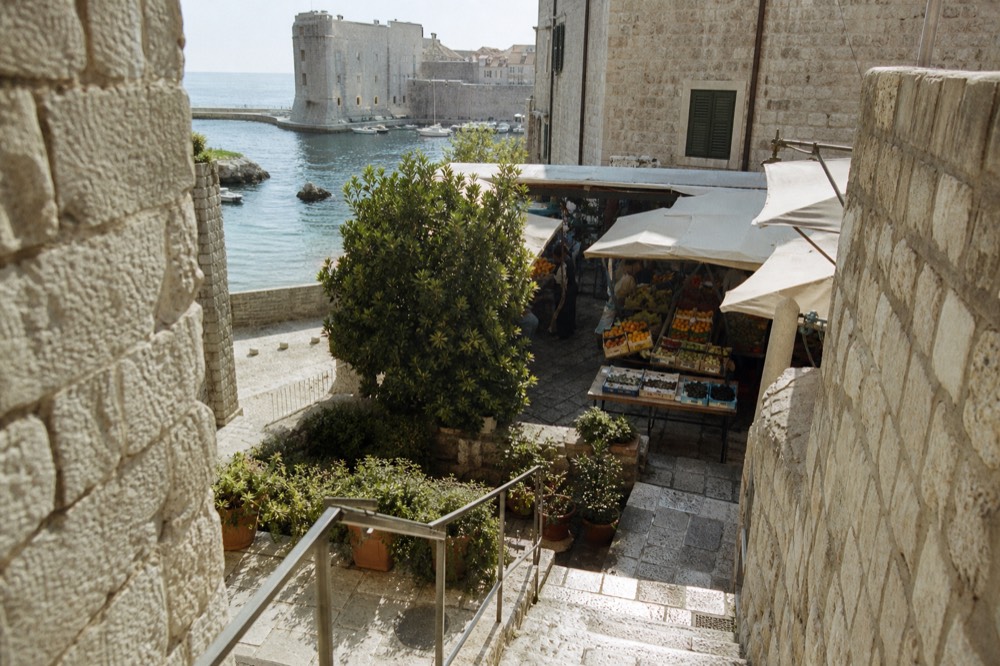
Dubrovnik is famous for three shopping things: the Gundulić Square morning market, the salt and Ston oyster products of the Pelješac region, and the Stradun's jewellery and souvenir strip. The market and the regional food products are the famous buys that deserve the fame; the Stradun strip is famous mostly for being unavoidable.
The morning market at Gundulić Square is the real thing. Farmers from the surrounding villages bring figs, pomegranates, herbs, honey, rakija and seasonal greens, and the square fills early. By late morning the best produce is gone and the balance of the square has tipped toward visitors. If the market is on your list, put it first, before the walls, before coffee on the Stradun, before everything.
Regional food is the second fame. Ston oysters, harvested just up the coast, appear in shops and on tours alike; the oyster and mussel tasting tour in Ston, from $157 per person and rated 4.9 across 111 reviews, is essentially a shopping trip with lunch included. Salt, wine, olive oil and dried figs round out the edible fame, and all of it packs into a carry-on if you plan around liquid limits.
The third fame, the Stradun itself, deserves honesty. The 298-metre street is beautiful and its shops are convenient, but it is the highest-rent retail in the city and the stock reflects that. Buy your jewellery or your one nice souvenir there if something genuinely catches your eye. Buy your food and your gifts in the lanes and the market.
Where Do Locals Shop in Dubrovnik?
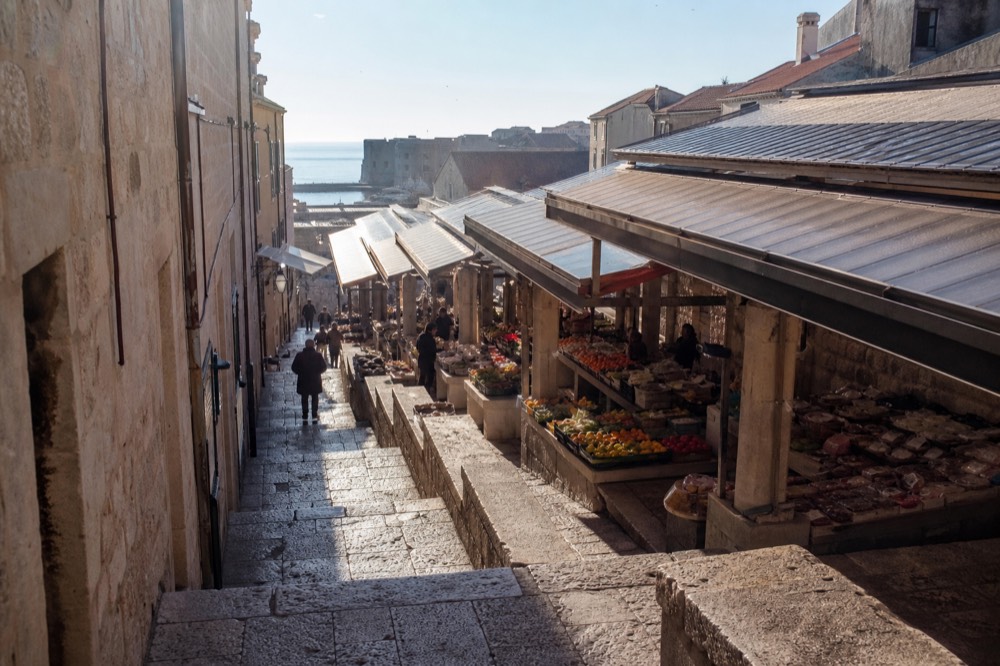
Locals shop at the Gruž market and the supermarkets around the port and in Lapad, outside the walls, where prices reflect residents rather than visitors. The Gundulić Square market in the Old Town serves both crowds in the morning, but by afternoon it is a visitor attraction. For a shopper, Gruž is the authentic half-day alternative.
I walk through Gruž most weeks, and the difference from the Old Town is immediate. The Gruž market sits beside the cruise and ferry port, and its stalls sell to people who cook dinner that night. Prices are lower, the produce is the same or better, and the experience is unperformed. The number 6 bus from the Old Town side gets you there in minutes, and the same trip puts you near the port itself if a cruise day shapes your schedule.
For gifts, Gruž is where you buy the edible things: honey, rakija, dried herbs, oil, wine at non-Old-Town prices. For anything with a workshop behind it, the crafts are still inside the walls, so a two-stop day, Gruž in the morning for food and the Old Town lanes after lunch for objects, covers everything honestly.
The food and drink walking tour is the bridge between the two worlds, since a local guide walks you through exactly the producers and stalls worth returning to. One guest review captures why that matters on a shopping trip:
Amazing food tour! Marija was a great guide, full of stories and facts that really brought Dubrovnik to life. The food was delicious, and generous. Wines at every stop. Would highly recommend this tour to anyone visiting Dubrovnik, especially to help get your bearings of the city and know where to go for dinner!
Bryan_M
When Is the Best Time to Shop in Dubrovnik?
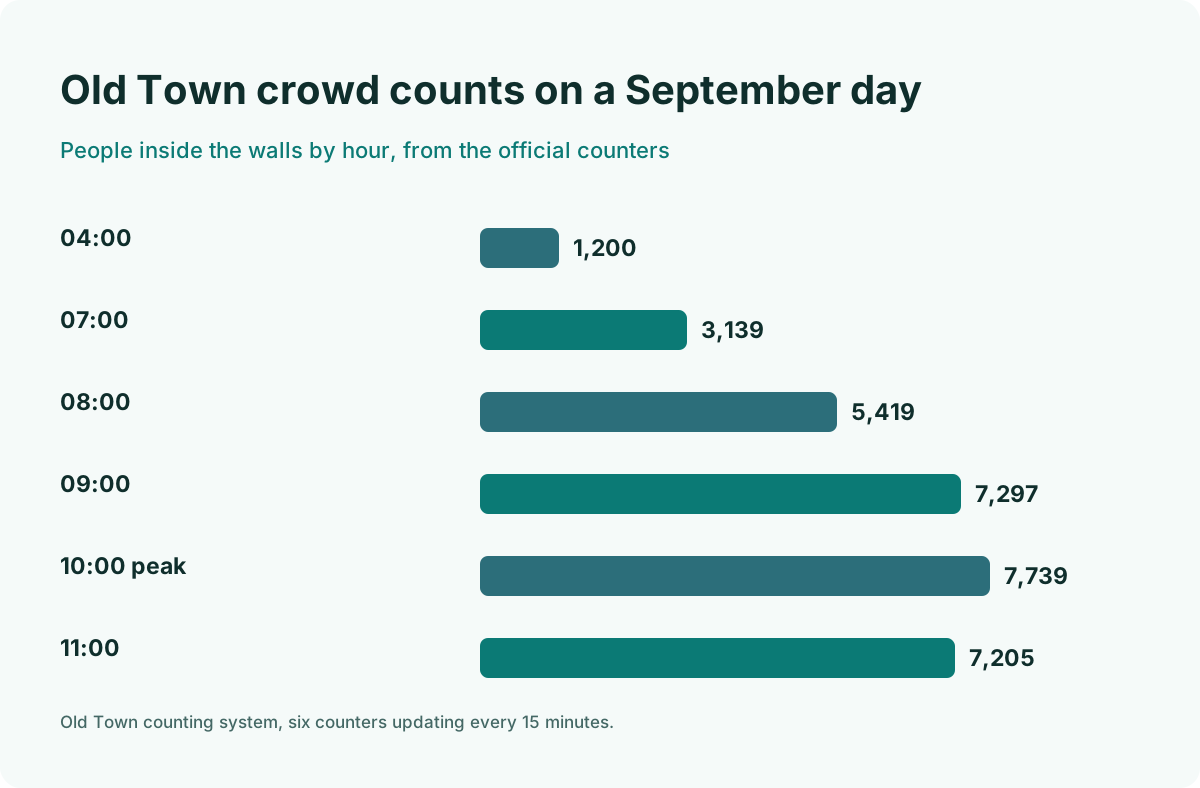
Shop before 10:00 or after 17:00. The Old Town's own counting system, six counters at every entrance updating every 15 minutes, recorded 5,419 people at 08:00 on a September day, a 7,739 peak at 10:00, and 7,205 by 11:00, so the two-hour morning window is dramatically calmer than everything after it.
That curve is worth internalising, because it applies to shops as much as to the walls. The counters feed the official visitor platform, and the numbers from one real September day tell the story: 1,200 people inside the walls at 04:00, 3,139 at 07:00, 5,419 at 08:00, 7,297 at 09:00, the 7,739 peak at 10:00, then 7,205 at 11:00. The official carrying capacity from the UNESCO assessment is 11,275 people, and on the busiest cruise days the town pushes toward it.
The shopping translation is simple. Morning, before the peak, you get shopkeepers with time to talk, market produce at its best, and lanes you can actually walk through. Midday you get queues. Late afternoon, after 17:00, the day-trippers thin out again and the lanes return to something walkable, which is also the moment the light turns the limestone gold and the shopping becomes a pleasure rather than an obstacle course.
| Month, 2025 | Cruise Passengers | What It Means for Shopping |
|---|---|---|
| July | 96,072 | Crowded, hot, peak-season prices everywhere |
| August | 87,385 | Hot and busy, thinnest market produce of summer |
| September | 101,246 | The busiest cruise month of the year, shop early |
| October | 100,132 | Nearly as busy as September, softer light, figs and grapes |
How Much Should You Budget for Shopping in Dubrovnik?
Budget the sightseeing numbers first, because they are fixed and verified: 40 euro for the walls in main season or the one-day pass, 30 euro for a Lokrum ticket that includes the return boat, and 15 euro for Lovrijenac alone. Beyond that, a modest souvenir budget of a few tens of euro covers salt, oil and figs, while wine and quality crafts scale upward with your taste.
The fixed costs are the easy part, and they are the ones people get wrong by not planning. The walls at 40 euro adult, 15 euro child 7 to 18 in main season, dropping to 20 euro and 5 euro in December, is the anchor. Lokrum, if a reserve day tempts you, is 30 euro per person covering entry and the return boat, with departures from the City Harbour at 09:00, then every 15 minutes from 10:00 to 18:00, and the ticket stays usable for three days. The combined Dubrovnik, Trsteno and Lokrum ticket at 42 euro adds the arboretum and an air-conditioned boat.
| Fixed Cost | Main Season (1 Mar to 30 Nov) | December |
|---|---|---|
| City Walls adult (includes Lovrijenac) | 40 euro | 20 euro |
| City Walls child 7 to 18 | 15 euro | 5 euro |
| Child 6 and under | free | free |
| Lovrijenac alone | 15 euro | 15 euro |
| One-day Dubrovnik Pass | 40 euro | not on sale |
| Lokrum ticket with return boat | 30 euro | 30 euro |
The shopping budget is softer. Salt and dried figs are small change. A bottle of Plavac Mali from a good shop costs more than it does at the winery gate but far less than it will at home. Olive oil sits in between. The advice I give friends is to decide the edible budget first, because food is where the value is, then let one object, a tie, a limestone piece, a piece of jewellery, absorb whatever remains.
A Sensible Shopping Day in the Old Town
Walk this order: Gundulić Square market before 09:00, the walls or your pass sights in the morning while the shops are quiet, the lane shops and a wine shop after lunch, and the Stradun in the late afternoon when the crowds thin. One day covers Dubrovnik shopping completely, and two hours of it can be a guided walk that shows you where everything is.
I have walked visitors through this loop for years, and the sequence matters more than any single stop. The market first, because produce does not wait. Then the walls or the pass museums through the late morning, when shopping is at its worst and sightseeing at its best. Lunch, ideally somewhere a guide or a local has pointed you to, then the afternoon in the lanes: the salt and oil shops, the tie shops, the workshops off Prijeko and in the streets behind the cathedral. Finish on the Stradun as the light turns, when the street is at its most beautiful and the shops are at their calmest.
If it is your first day in the city, put the guided walk at the very start. The Old Town walk with a local guide, from $20 per person and rated 4.8 across 5,826 reviews, is the cheapest way to turn an anonymous maze into a map of places to return to, and reviewers consistently mention exactly that effect:
Alex was a fantastic guide, she explained the complex history of Dubrovnik to give a lasting impression of the history of the area. Really appreciated that she aimed for shaded areas on a boiling September day. The food recommendations for after were much appreciated too! Great tour for a first experience of the old town!
Sophie
For everything else worth doing between purchases, the site's own Things to Do in Dubrovnik collection covers the walls, the islands, the beaches and the day trips, and a shopping day slots neatly between them. Buy the salt, buy the wine, walk the lanes early, and Dubrovnik will send you home with a suitcase that actually smells like the coast.
Common Questions About Shopping in Dubrovnik
What Is Worth Buying in Dubrovnik?
Local finishing salt, olive oil from Konavle or Pelješac, Plavac Mali and Pošip wine, dried figs, honey, lavender products, silk-inspired ties on the cravat tradition, and small hand-cut limestone souvenirs. These are the products with a genuine regional origin, and they are the ones worth the suitcase space.
what is worth buying in dubrovnik?
Salt, olive oil, Plavac Mali wine, dried figs, honey, lavender, ties and limestone souvenirs. Everything that names a place within an hour of the city is the real thing; everything anonymous on a stall near the gates was almost certainly shipped in for the season.
Is Dubrovnik Good for Shopping?
Good for a focused two or three hours of food, wine and small crafts inside the Old Town, and excellent if you pair it with the morning market or a food tour. Not good for mall-style retail therapy; the walled core is a protected UNESCO site with small, specialised shops and visitor-level prices.
Is It Worth Buying a Dubrovnik Pass?
In main season, 1 March to 30 November, yes for most visitors: the one-day pass costs the same 40 euro as the standalone walls ticket and adds ten more sights plus a 24-hour bus ticket. In December the walls ticket drops to 20 euro and no pass tier is on sale at all, so the comparison only works in the main season.
When Should I Shop to Avoid the Crowds?
Before 10:00 or after 17:00. The Old Town's counting system recorded a 7,739-person peak at 10:00 on a September day against 5,419 at 08:00, and cruise passengers actually peak in September and October rather than July and August, so the morning market window is the calmest shopping time in every month that matters.
Where Do Locals Shop in Dubrovnik?
At the Gruž market and the shops around the port and in Lapad, outside the walls, where prices are set for residents. The Gundulić Square market serves both locals and visitors in the early morning, but by midday it belongs to the tourists.