Ston Walls Day Trip from Dubrovnik
The Ston walls are the Balkans' most underrated fortification walk, an hour or so up the coast from Dubrovnik, and they pair naturally with oysters and Peljesac wine. Here is how to plan the day.
Short answer
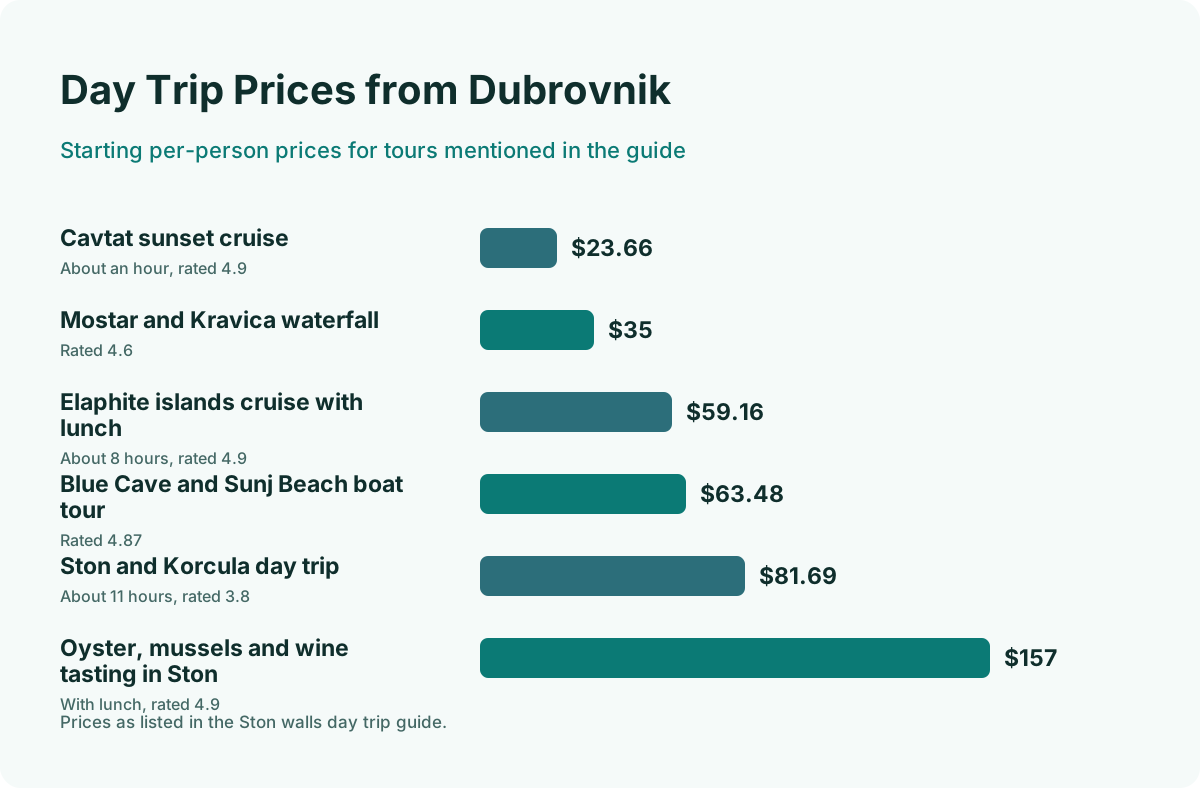
The Ston walls sit on the Peljesac peninsula, reached from Dubrovnik by road, and a guided day trip that pairs them with Korcula starts from $81.69 per person. The walls climb the hill above Ston in a long loop, the oysters below are famous, and the drive makes it a full but rewarding day out.
Dubrovnik recorded about 4.2 million overnight stays in 2025, sharing first place among Croatian destinations with Rovinj, and most of those visitors never leave sight of the Stradun. That is a mistake, because an hour or so up the Adriatic coast the Peljesac peninsula offers something the walled city cannot: a fortress circuit you can often have nearly to yourself, plus oysters farmed in the channel below it. The Ston walls are the reason to go, the oysters are the reason to stay for lunch, and the drive itself, hugging the coastline past quiet bays, is better than any transfer you will take all week.
I have walked the Dubrovnik walls in every month of the year and planned this coast for travellers since 2015, and Ston is the day trip I push hardest on people who think they have "done" Dubrovnik. This guide covers what the walls actually are, how to get there, which guided options are worth the money, and two questions that come up constantly when planning a day out of the city: the boat ride to Cavtat, and whether Plitvice is realistic.
Why Visit the Ston Walls on a Dubrovnik Trip?
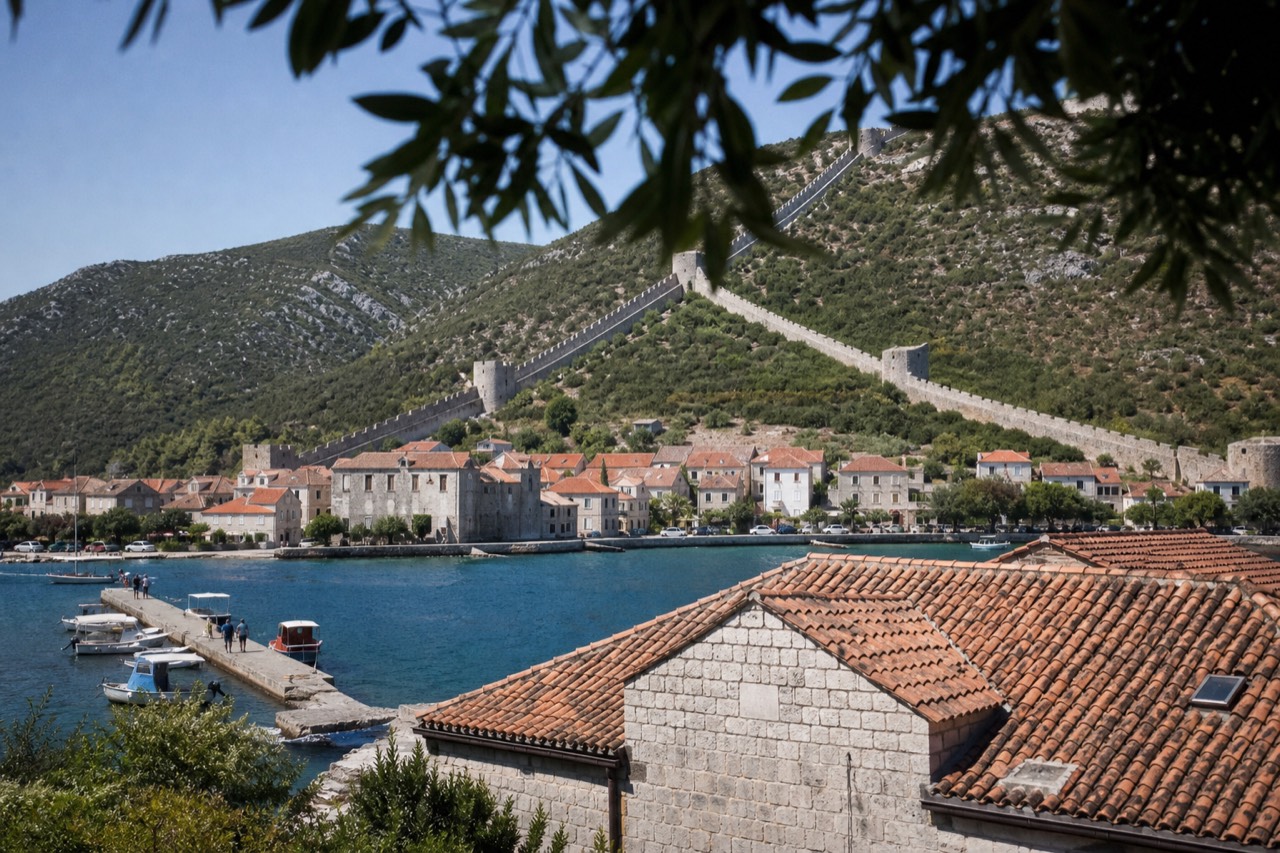
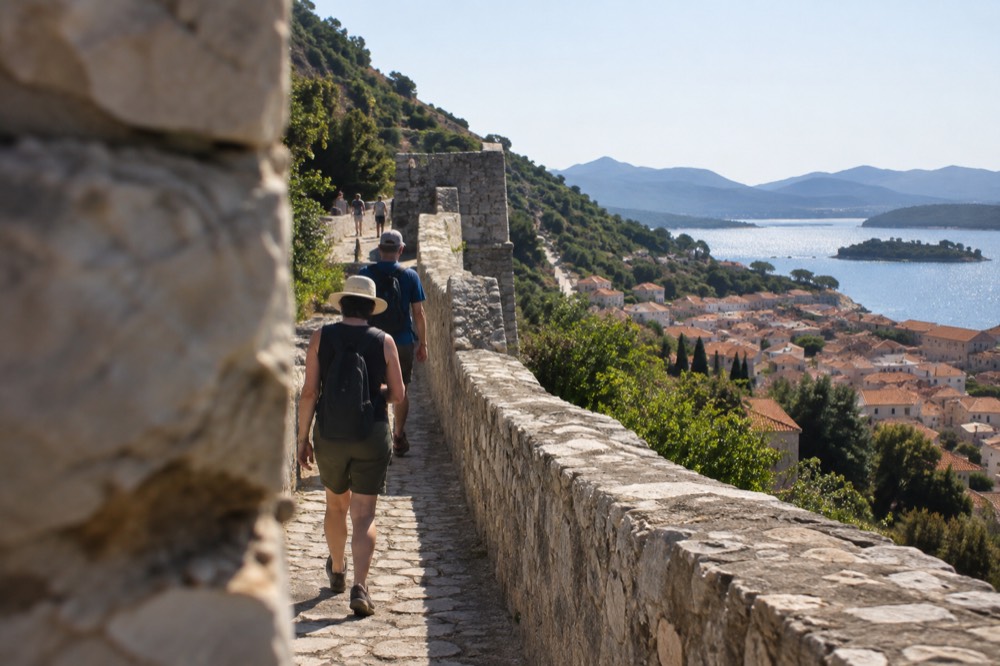
The Ston walls are a complete medieval fortress system wrapped around a small town on the Peljesac peninsula, and they offer the long, quiet, climb-and-view walk that Dubrovnik's walls cannot, because Dubrovnik's circuit is famously crowded and Ston's rarely is. Where Dubrovnik gives you 1,940 metres of wall above a living city, Ston gives you a wall marching up a bare hillside between two towns, with the salt pans and the oyster beds laid out below. The two experiences complement each other rather than compete.
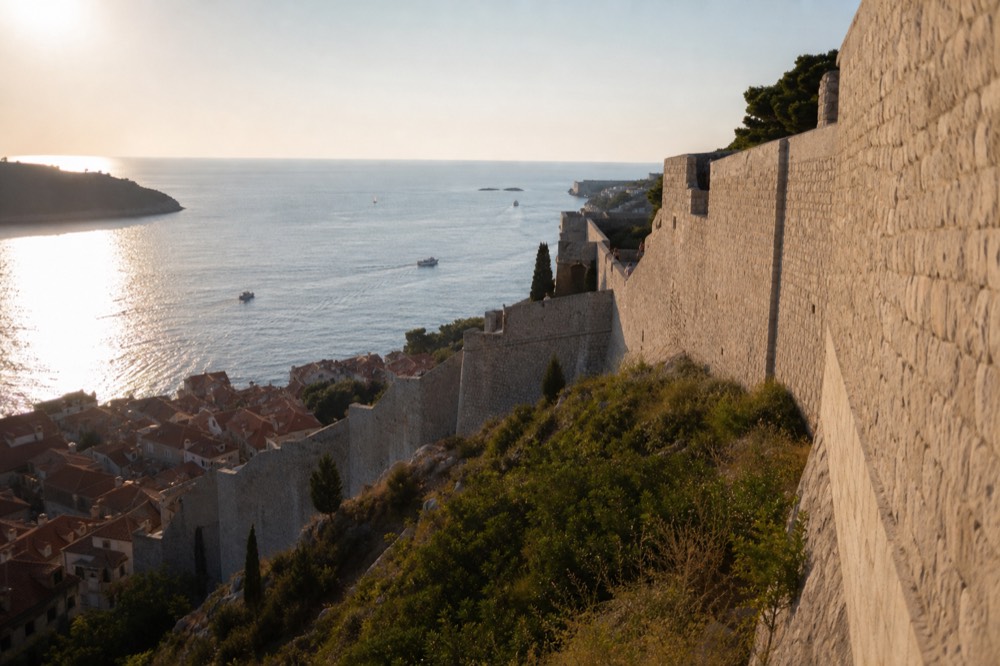
The walls were built to guard the approach to Peljesac, the peninsula that was once the republic's precious territory, and the salt works at Ston paid for a good part of the Ragusan state's budget. Salt and stone, in other words, are not decoration here, they are the reason the place exists. What you see today is a restored circuit that runs up and over the hill between Ston and Mali Ston, the small settlement at the channel end where the oyster farms sit.
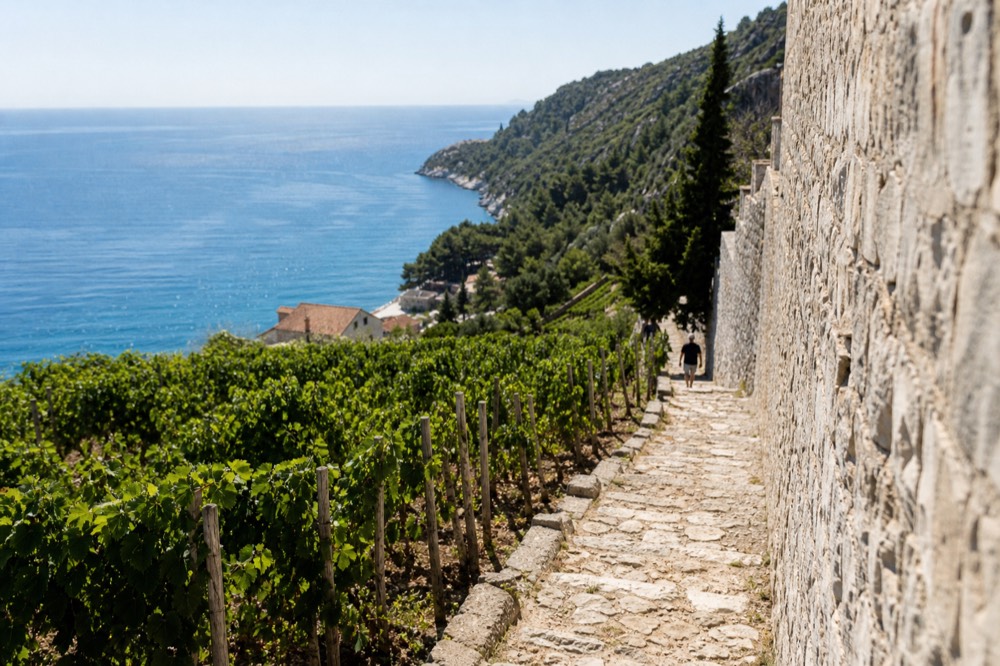
The walk itself is the draw. You climb steps, you follow the wall along the ridge, and you look back at the coast the whole way. It is steeper in stretches than anything on the Dubrovnik circuit, so bring water and real shoes, and go early in summer. There is very little shade on the upper sections, and the Dalmatian sun in July and August is not a joke. If you want a fuller picture of what to expect from the region's bigger walls, the Dubrovnik city walls guide covers that circuit in detail.
One honest note on planning: Ston is a half-day experience on its own, but almost nobody visits it on its own. The standard move is to combine it with oysters in Mali Ston, wine tasting on Peljesac, or the ferry across to Korcula, which turns it into a proper full-day loop. That combination logic is exactly what the guided tours below are built around.
How Do You Get from Dubrovnik to Ston?
Ston is reached by road along the coast of the Peljesac peninsula, and the practical choices are a rental car, a private driver, or a guided day trip, with the guided option the least stressful because it bundles the drive with the oyster stop and the wine. There is no direct ferry and no useful public bus for a day trip, so the road is the only realistic answer, and the drive is genuinely scenic rather than a chore.
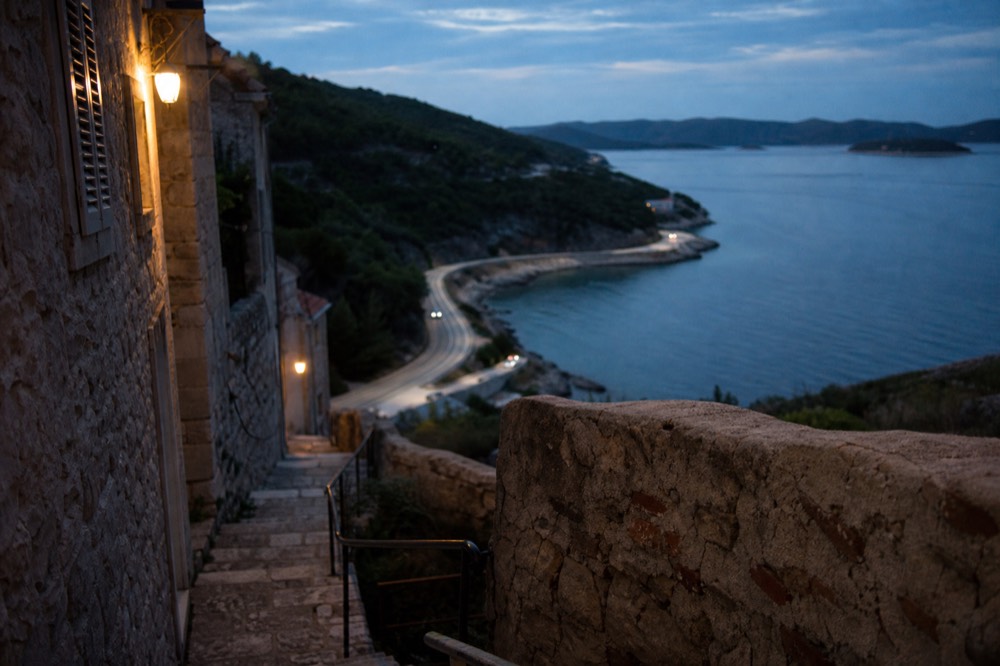
Driving yourself gives you total freedom, and the Peljesac road is one of the nicer drives on this coast, passing Cavtat-side bays on the way out of the Dubrovnik area and then opening onto the peninsula. The trade-off is parking in Ston in high season and the fact that nobody in your party gets to enjoy the wine. That last point matters more than people expect: Peljesac is a serious wine region, and the whole point of the day, for many travellers, is a long lunch with a glass or three of local red.
The guided alternative removes all of that friction. The roster's Ston and Korcula day trip runs about 11 hours, from $81.69 per person, and pairs the walls region with the island of Korcula plus a wine tasting. It is rated 3.8 across 131 reviews, which is a middling score worth being honest about: travellers generally like the itinerary and flag the length. If you want a deeper dive on the island half, the Korcula day trip guide covers what to expect there.
For the self-drive crowd, the practical plan is simple: leave Dubrovnik in the morning, walk the walls before the heat, eat oysters in Mali Ston at lunch, then either head back or push on into the Peljesac wine country for the afternoon. The Ston and Peljesac guide maps the wine side of that day in detail, including which villages are worth the detour.
If you would rather not plan any of it, the oyster-focused tour is the other strong option. The oyster, mussels and wine tasting tour in Ston with lunch starts from $157 per person and is rated 4.9 across 111 reviews, and it builds the whole day around the seafood rather than treating it as a stop. It is the pricier route, but it is the one food-motivated travellers tend to rate highest.
How Long Is the Boat Ride from Dubrovnik to Cavtat?
There is no scheduled public boat that runs the Dubrovnik to Cavtat route as a dependable transport link, so the honest answer is that most travellers reach Cavtat by bus, taxi or a short drive, and the boat options that do exist are tourist cruises rather than ferries. Cavtat sits just down the coast from Dubrovnik, and while the two towns face each other across the water, the regular connection is by land, not sea.
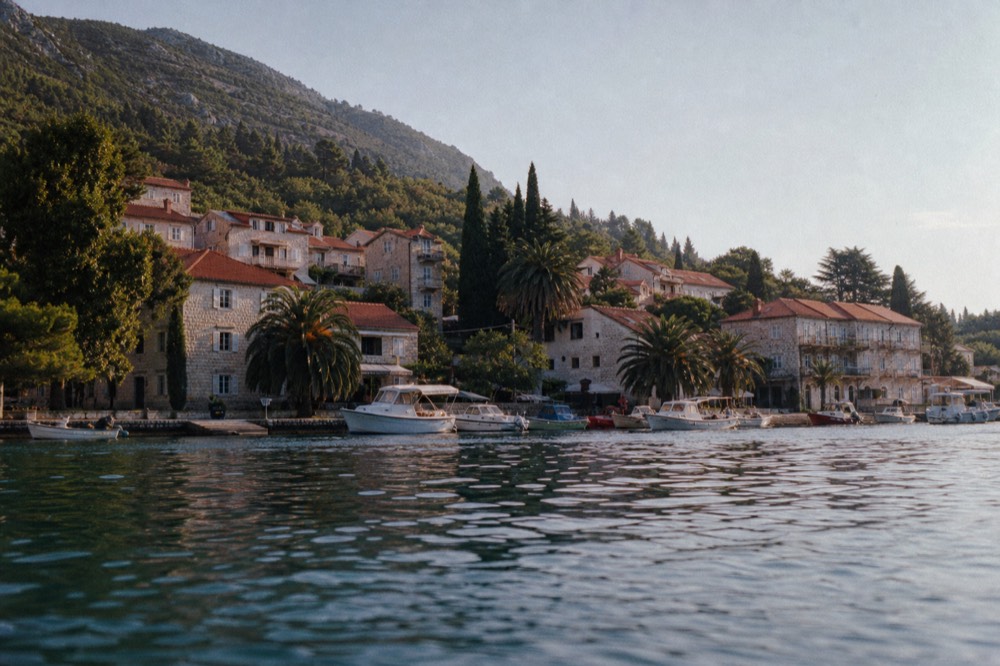
The tourist-boat answer is real, though, and pleasant. The Cavtat sunset cruise with cold platter and drinks runs about an hour, from $23.66 per person, rated 4.9 across 203 reviews, and it is a lovely way to see both coastlines late in the day. It is an experience, not a commute. If your actual question is "can I use a boat to get to Cavtat and back on a schedule," plan on the road instead, and save the water for the evening cruise.
Cavtat is worth the excursion in its own right: a calm waterfront, a pine-shaded promenade, and none of the cruise-day pressure the Old Town absorbs. The Port Authority's own data explains some of that pressure, 2025 cruise passengers peaked in September at 101,246 and October at 100,132, above July's 96,072 and August's 87,385, so the shoulder season is actually the busier one in central Dubrovnik. On a heavy day, Cavtat is the escape valve, and it is a short, cheap hop. The Cavtat guide covers the town itself.
One more planning note: if you are assembling a multi-stop day, Cavtat, the airport area and the road toward Peljesac all sit on the same southeastern side of Dubrovnik, so a morning in Cavtat and an afternoon heading toward Ston is a workable, if ambitious, combination.
Can You Do a Day Trip from Dubrovnik to Plitvice Lakes?
No, Plitvice Lakes is not a realistic day trip from Dubrovnik, because it sits far to the north of Croatia and the journey each way swallows the entire day, so the honest advice is to save Plitvice for a trip based in Zagreb, Zadar or Split. Travellers ask this constantly, seduced by the photos, and the geography simply does not cooperate. Dubrovnik to Plitvice is one of the longest domestic journeys in Croatia.
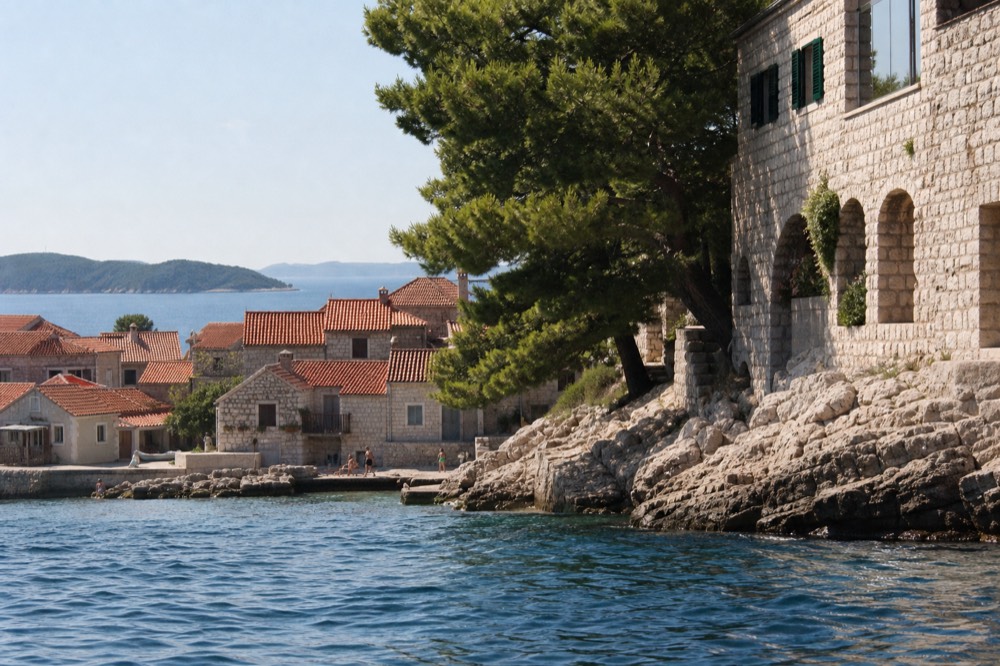
What you should do instead depends on what drew you to Plitvice in the first place. If it is the water, the answer is the Elaphiti islands or the Blue Cave: the full-day Elaphite islands cruise with lunch runs about 8 hours from $59.16 per person, rated 4.9 across 10,312 reviews, and the Blue Cave and Sunj Beach boat tour is from $63.48, rated 4.87 across 3,105 reviews. If it is the walking and the scenery, Ston is your answer, and it is the one big walk you can genuinely pair with a same-day return to Dubrovnik.
If it is the "somewhere completely different" itch, the border-crossing day trips deliver that better than anything domestic. The Mostar and Kravica waterfall day trip starts from $35 per person and is rated 4.6 across 10,019 reviews, one of the most-reviewed products on this entire coast.
Either way you get a border crossing, a waterfall swim and a Bosnian old town in a single day, which is a far better use of a long day out than a Plitvice marathon. The Bosnia day trip guide compares the Mostar options in full.
How Long Is the Boat Ride from Cavtat to Dubrovnik?
The return leg, Cavtat back to Dubrovnik, mirrors the outbound reality: there is no scheduled ferry, so you come back by road, bus or taxi, unless you are on one of the evening tourist cruises that finishes in Dubrovnik harbour after dark. The sunset cruise above is exactly that shape, an hour on the water with a platter and drinks, ending where it began.
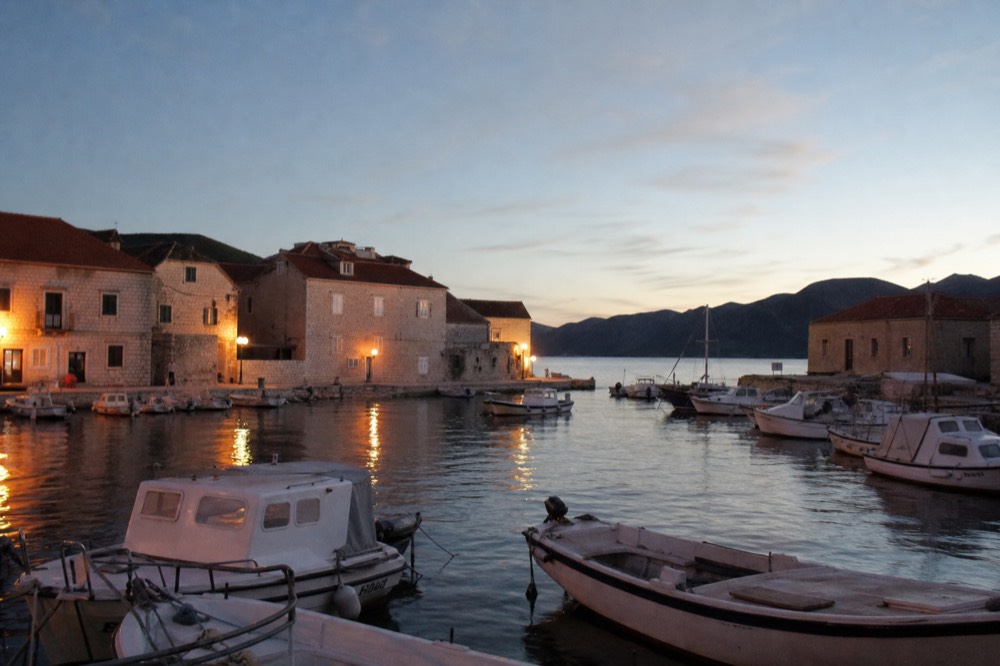
For day-trip logistics this matters mostly in one direction: if you plan a Cavtat morning before heading to Ston, do not budget for a boat to bring you back in time. Budget for the road. Buses between the two towns run regularly through the day, taxis and rideshares are easy to find, and the journey is short enough that it never becomes the day's obstacle. The practical failure mode is travellers assuming a ferry exists, arriving at Cavtat's waterfront, and discovering the only boats are private charters and tour departures.
It is also worth saying that Cavtat's harbour is the departure point for some of the quieter boat experiences on this coast, and the sunset cruise is the pick of them for value. An hour on the water for from $23.66, with food and unlimited drinks included, is about as gentle as an evening gets here, and it pairs beautifully with a day that was otherwise all walking.
What Does a Guided Ston Day Trip Actually Include?
The guided Ston options bundle transport, the walls region, and either Korcula island or a serious seafood lunch, running roughly 11 hours and starting from $81.69 for the Korcula pairing or $157 for the oyster-focused day, and the main thing you are buying is a driver who handles the Peljesac roads while you drink the wine. That last clause is not a joke, it is the entire value proposition.
Here is how the realistic options compare on the live listings:
| Day trip | Shape of the day | From (per person) | Rating |
|---|---|---|---|
| Ston & Korcula with wine tasting | About 11 hours, walls region, Korcula island, tasting | $81.69 | 3.8 across 131 reviews |
| Oyster, mussel and wine tasting in Ston, with lunch | Seafood-led day built around Mali Ston | $157 | 4.9 across 111 reviews |
| Mostar & Kravica waterfalls | About 11 hours, border crossing, waterfall, Bosnian old town | $35 | 4.6 across 10,019 reviews |
| Montenegro day trip | About 11 to 12 hours, Kotor and Budva region | $58 | 4.4 across 5,611 reviews |
The Ston and Korcula itinerary is the classic: you get the walls, the oyster stop, the ferry-adjacent island town and a tasting, all in one loop. The 3.8 rating is the number to weigh honestly. Reviews tend to praise the scenery and flag the pace, so if you are a slow traveller who hates a schedule, self-driving beats the bus.
The oyster tour is the connoisseur's version, and its 4.9 across 111 reviews reflects a smaller, more self-selecting crowd. You spend the day in the Ston area rather than racing to an island, and lunch is the centrepiece rather than a stop. For a food-first traveller, that is the better product, full stop.
What neither tour does is walk you up the walls with a guide explaining the fortification history in depth. The walls visit on these trips is typically your own time. If you want the fortification story properly told, read up beforehand, or better, take a guided walls walk in Dubrovnik itself where the interpretive tours are excellent, and treat Ston as your self-guided scramble.
Ston Oysters and Peljesac Wine: The Lunch That Justifies the Drive
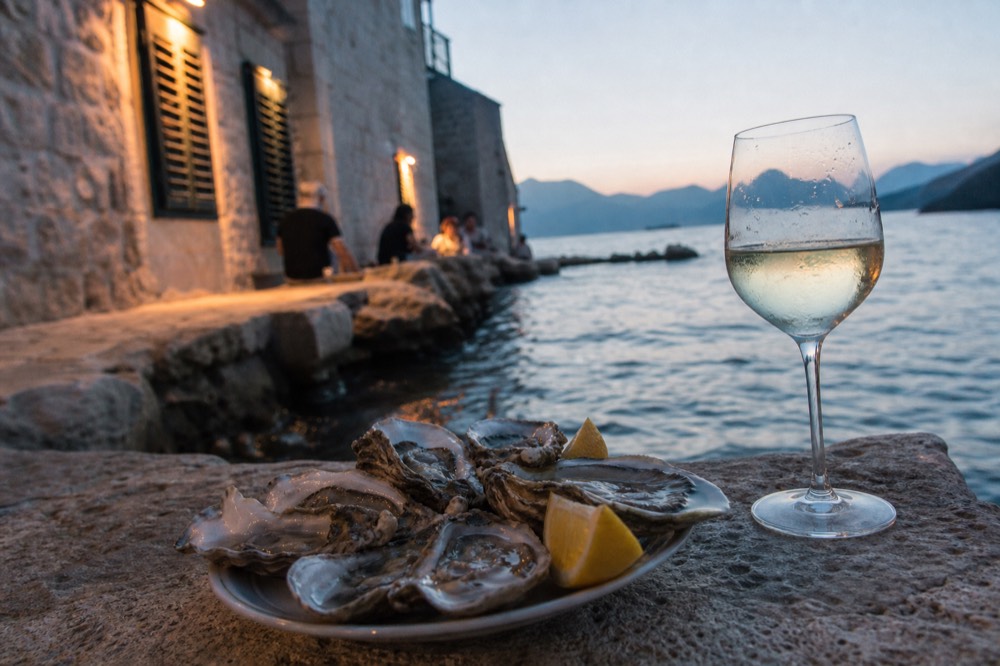
Mali Ston's oysters are farmed in the channel directly below the walls, served within sight of the farms, and they pair with the Plavac Mali reds grown on the Peljesac hillsides, which makes lunch the true centrepiece of a Ston day rather than an afterthought. You can walk the walls hungry and be glad of it.
The oyster story is geographical. The channel between Mali Ston and the mainland is shallow, fed by freshwater springs and flushed by the tide, and oysters have been farmed in it for a very long time. They are served minutes out of the water, usually with lemon, sometimes with a splash of local wine, and always with a view of the beds they came from. If you want the full food background, the Ston oysters guide goes deep on how to order and what to expect.
The wine half of the equation is Peljesac's Plavac Mali, the great red grape of this stretch of coast, grown on steep, stony terraces where the sea reflects light back up into the vines. The Plavac Mali guide explains the grape, and the wine tasting guide covers the cellar experiences you can build into a self-drive day. Tasting fees vary by cellar and by pour, so check with each room rather than budgeting a fixed figure.
A practical lunch plan for the self-driving day: walk the walls first, in the relative cool of the morning, then descend to Mali Ston for oysters around midday, then drive into the hills for a tasting in the early afternoon. Doing it in that order means the climbing is done before the sun is at its peak and the wine comes after the driving on the wall path is finished, though of course the person driving home must stay off the pours.
Pairing Ston With the Dubrovnik Walls: One Trip, Two Circuits
If fortifications are your thing, the smart play is to walk the Dubrovnik city walls with a guide early in your trip and the Ston walls under your own steam later in the week, because the two circuits teach you completely different things about how this coast was defended. Dubrovnik's walls are the dense urban masterpiece, 1,940 metres long, up to 25 metres high, 4 to 6 metres thick on the land side and 1.5 to 3 metres on the sea side, per the operator's own official site. Ston is the rural counterpart, a wall running over open hilltops.
The Dubrovnik side has a numbers story worth knowing before you buy anything. The adult walls ticket is 40 euro in main season, 1 March to 30 November, and 20 euro in December, and that 40-euro ticket is actually the walls plus Fort Lovrijenac combination, with Lovrijenac alone at 15 euro. The one-day Dubrovnik Pass costs the same 40 euro in main season and adds ten more sights plus a 24-hour bus ticket, per the official pass site. That equivalence is a main-season fact only: in December the walls ticket halves and no pass tier is on sale at all.
| Ticket or pass | Main season (1 Mar to 30 Nov) | December |
|---|---|---|
| City Walls adult (walls + Lovrijenac) | 40 euro | 20 euro |
| City Walls child 7 to 18 | 15 euro | 5 euro |
| Child 6 and under | free | free |
| Fort Lovrijenac alone | 15 euro | 15 euro |
| Dubrovnik Pass, one day | 40 euro | not on sale |
| Dubrovnik Pass, three days | 50 euro | not on sale |
| Dubrovnik Pass, seven days | 60 euro | not on sale |
If you would rather have the Dubrovnik circuit explained than merely walked, the combo tour is the strongest product for it: Old Town and the city walls in one outing of about 3 hours 30 minutes, from $50.94 per person, rated 4.8 across 1,183 reviews. It is the tour this site points first-timers at, and it pairs neatly with a later Ston day, since one fills in the history and the other gives you the quiet climb.
There is also a free tier worth knowing about if your budget is stretched after the walls tickets. Three pay-what-you-want walks run on GuruWalk, and they cost nothing up front, you tip what you think the walk was worth:
| Free walk on GuruWalk | Length | Rating |
|---|---|---|
| Ancient Old City, Finest Tour of Dubrovnik | 1 hour 45 minutes | 4.87 across 2,242 reviews |
| Free Game of Thrones & History of Dubrovnik | 1 hour 30 minutes | 4.74 across 444 reviews |
| Magical Dubrovnik Nights: History and Legends | 1 hour 45 minutes | 4.9 across 288 reviews |
When to Walk the Ston Walls: Timing, Season and Crowds
Walk the Ston walls in the morning, in the shoulder months if you can, because the upper wall is exposed stone with almost no shade, and because Dubrovnik's own crowd data shows September and October are now busier than July and August, so the "quiet after summer" assumption no longer holds. Morning light is also the best light for the photographs, coming in over the channel.
That curve is worth internalising wherever you walk on this coast. Six counters at every Old Town entrance update a headcount every 15 minutes, the official carrying capacity is 11,275 people, and a real September morning read 5,419 people at 08:00, 7,297 at 09:00, a 7,739 peak at 10:00, then 7,205 at 11:00. The lesson transfers directly to Ston: the quiet hours are the early hours, and by late morning every viewpoint on this coast is at its busiest. The Port Authority's statistics page carries the underlying cruise numbers, including the counter-intuitive September and October peaks.
Seasonally, May, June, late September and October are the sweet spots for Ston: warm enough for an oyster lunch on the water, not so hot that the wall climb punishes you. The sea itself is part of the appeal on a hot day, and the September average for this coast is about 23.6 degrees, a long-run open-water average rather than a beach thermometer, so sheltered bays near Ston often read warmer. If a swim is part of your plan, the swimming season guide breaks down the months properly.
Practical closing notes for the walk itself: carry more water than you think you need, wear shoes with grip because the stone is polished in places, and do not attempt the full circuit in the midday heat of July or August. There is no shame in turning around at the top of the first ridge, the view from there already earns the drive, and the oysters will still be waiting below.
For everything else worth building into a week here, the best things to do in Dubrovnik roundup is the natural next stop, and Things to Do in Dubrovnik covers the whole coast from one index.
Common Questions About the Ston Walls
How Long Is the Boat Ride from Dubrovnik to Cavtat?
There is no scheduled public boat between the two towns, so most travellers go by bus, taxi or a short drive. The boat options that do exist are tourist cruises, such as the Cavtat sunset cruise, which runs about an hour with a cold platter and drinks from $23.66 per person.
Can You Do a Day Trip from Dubrovnik to Plitvice Lakes?
No. Plitvice is far to the north of Croatia and the journey each way takes most of a day, so it belongs on a trip based in Zagreb, Zadar or Split. From Dubrovnik, the better full-day alternatives are the Elaphiti islands, the Blue Cave, Ston and Peljesac, or the Mostar border crossing.
How Long Is the Boat Ride from Cavtat to Dubrovnik?
The return leg mirrors the outbound one: no scheduled ferry, so you come back by road. The evening tourist cruises finish back in Dubrovnik harbour after dark, but they are experiences rather than transport.
Is the Ston Walls Walk Hard?
It is steeper in stretches than the Dubrovnik circuit and almost entirely exposed, so it is a moderate walk rather than a stroll. Go early, carry water, wear grippy shoes, and in the height of summer treat the upper ridge as optional.
Can You Combine the Ston Walls With Wine Tasting?
Yes, and it is the standard pairing. The Ston and Korcula day trip from $81.69 includes a tasting, or you can self-drive and build your own route through the Peljesac cellars after an oyster lunch in Mali Ston.
Should You Visit Ston on a Tour or Independently?
Take a tour if anyone in your party wants to drink the wine, since the guided options from $81.69 include a driver. Self-drive if you want to linger, set your own pace on the walls, and stop wherever the road suggests.