Vegetarian Dubrovnik: Where to Eat, What to Avoid, and the Best Food Tours
Dubrovnik's historic streets hide a growing number of vegetarian-friendly kitchens, from traditional konobas serving meat-free peka to modern plant-based cafes. This guide covers where to find the best vegetarian meals, what local dishes are naturally meat-free, and the food tours that welcome vegetarians.
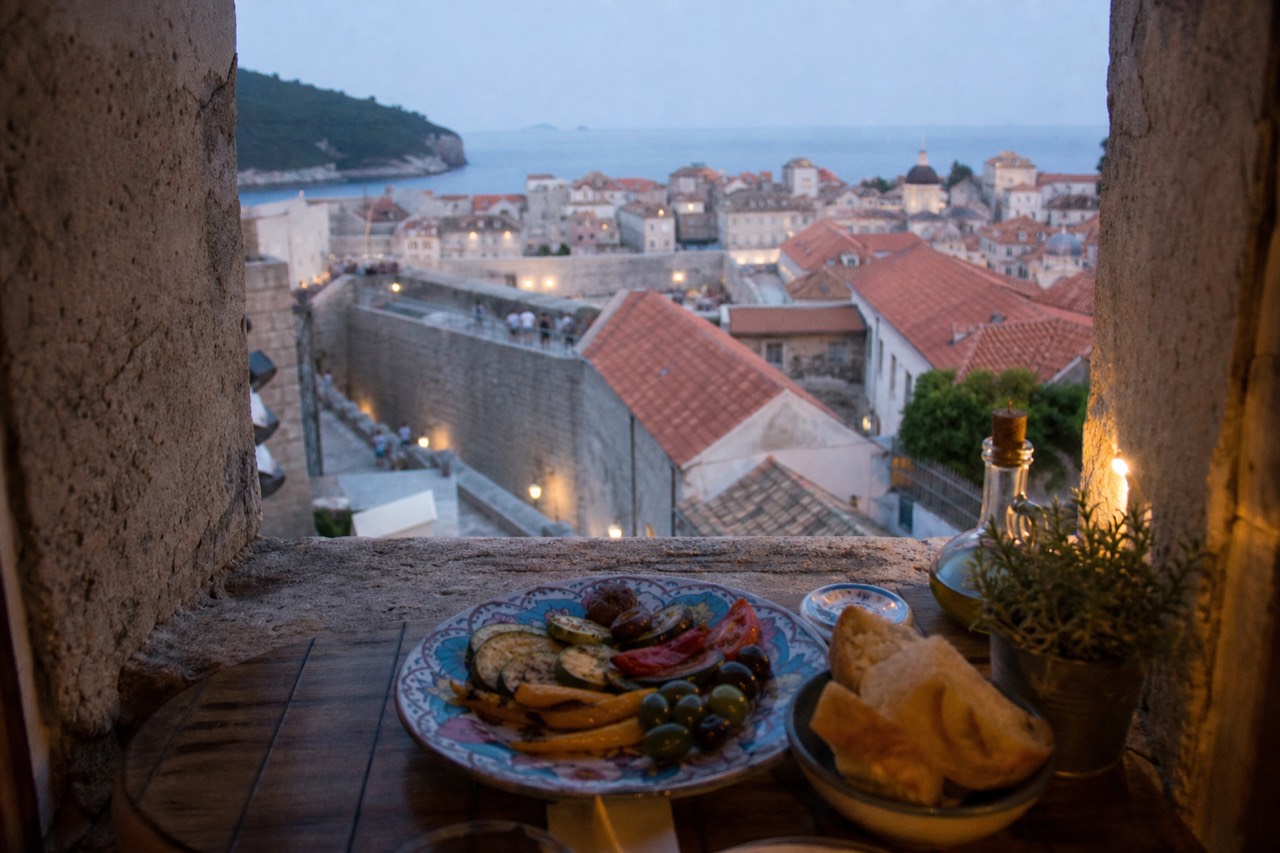
Short answer
Dubrovnik is increasingly vegetarian friendly, with dedicated plant-based restaurants, naturally meat-free Croatian staples like blitva and soparnik, and food tours that adapt their menus. Avoid peak cruise days in September and October for a more relaxed culinary experience, and skip the overpriced tourist traps on the Stradun for hidden gems in the side streets.
In this guide from Things to Do in Dubrovnik, we map out the vegetarian landscape of the Old Town and beyond. Twenty years ago a vegetarian visitor might have survived on bread, cheese, and blitva. Today, a dedicated plant-based restaurant like Nishta sits a few steps from the Stradun, and even the most traditional konoba will happily grill a plate of vegetables with a little notice. The city still revolves around seafood and grilled meat, but the shift is real, and the numbers back it up. The Port Authority recorded 625,257 cruise passengers in 2025, and the demand for dietary variety has pushed the restaurant scene to adapt. You will not struggle to find a good meal, but you do need to know where to look and what to avoid. This guide covers the naturally vegetarian Croatian dishes, the dedicated vegan and vegetarian restaurants, the food tours that cater to plant-based diets, and the common mistakes that can ruin a meal.
Is Dubrovnik Vegetarian Friendly?
Absolutely. Dubrovnik has evolved from a city of grilled fish and meat platters to one with a growing number of dedicated vegetarian and vegan restaurants, plus a host of traditional dishes that are naturally plant-based. From the hearty Swiss chard and potato side dish blitva to the spinach-filled pastry soparnik, you will find plenty to eat without compromise, and the best food tours are now fully equipped to handle plant-based diets.
The rise of vegetarianism in Dubrovnik is not a sudden revolution. It is a slow accommodation, driven by the sheer volume of tourists who arrive every year. The Croatian Bureau of Statistics recorded about 4.2 million overnight stays in Dubrovnik in 2025, and a significant share of those visitors come from Western Europe and North America, where vegetarian and vegan diets are mainstream. The restaurant industry has responded, and now you can find dedicated vegetarian menus at several spots. The city's Dubrovnik food tours have also adapted, with most operators now offering vegetarian alternatives on their tasting routes.
The backbone of vegetarian eating in Dubrovnik, however, is the traditional Croatian kitchen. Many classic dishes are vegetarian by default, or can be made so with a simple ask. The table below covers the staples you will encounter, and if you want to explore further, our guide to local food in Dubrovnik covers the full culinary landscape.
| Dish | Description | Vegetarian Notes |
|---|---|---|
| Blitva | Swiss chard with potatoes, garlic, and olive oil | Naturally vegan; served as a side but can be a main |
| Soparnik | Spinach and onion filling between two layers of thin dough, baked | Vegan; a UNESCO-protected dish from the Poljica region |
| Štrukli | Baked or boiled cheese strudel, often with a sour cream topping | Vegetarian; rich and filling |
| Maneštra | Thick bean and vegetable soup, sometimes with corn or potato | Vegan; a hearty winter staple |
| Fritule | Small fried dough balls, often with raisins and a dusting of powdered sugar | Vegetarian; a festive dessert |
| Pašticada (vegan version) | Slow-cooked stew traditionally made with beef, but Nishta offers a seitan version | Vegan if ordered at Nishta; otherwise it is a meat dish |
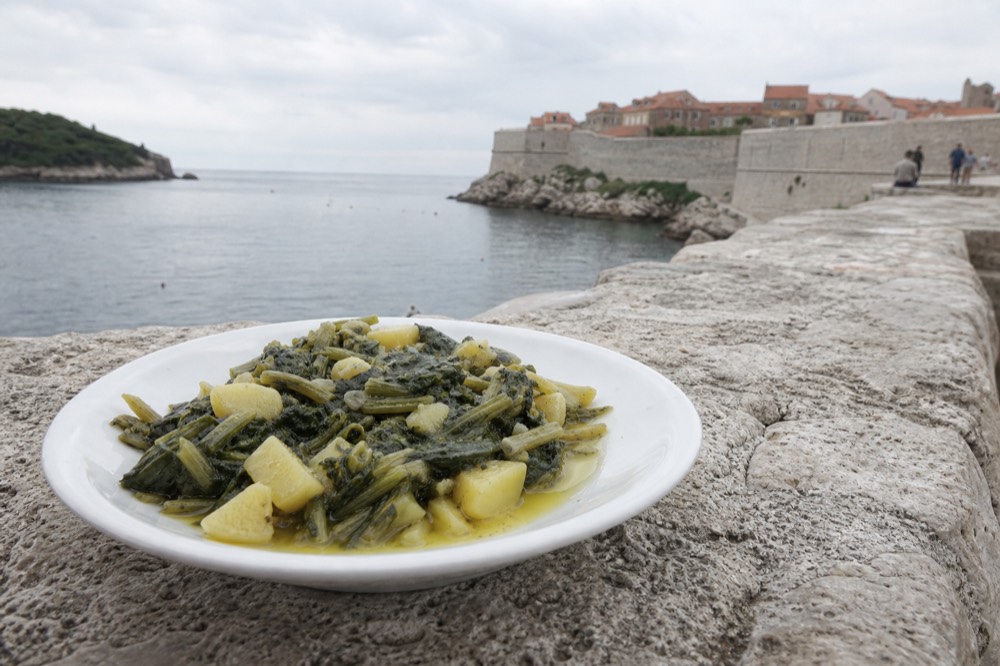
For a deeper dive into the city's edible side, the Dubrovnik Food and Drink Walking Tour with a Local Guide is one of the best ways to sample vegetarian-friendly bites while learning about the city's culinary history. The tour visits several stops, including a konoba, a bakery, and a wine bar, and the guide can point out the best vegetarian options on every menu. The tour is rated 5.0 across 704 reviews, and the menu can be adapted for vegetarians with advance notice. One recent review on the live listing captures the experience well:
Amazing food tour! Marija was a great guide, full of stories and facts that really brought Dubrovnik to life. The food was delicious, and generous. Wines at every stop. Would highly recommend this tour to anyone visiting Dubrovnik, especially to help get your bearings of the city and know where to go for dinner!
Bryan_M
Beyond the traditional dishes, the modern vegetarian scene is anchored by a handful of dedicated restaurants. Nishta, on Prijeko Street, is fully vegan and serves globally inspired plates like seitan pašticada and raw zucchini spaghetti. Urban & Veggie, a smaller cafe near the Pile Gate, offers smoothie bowls, wraps, and cold-pressed juices. Even the pizzerias are getting in on it: Pizzeria Castro, on Od Puča, has a vegetarian pizza with grilled vegetables and a separate vegan cheese option. The city's best restaurants in Dubrovnik now include several that prominently feature vegetarian and vegan sections on their menus, a shift that would have been unthinkable a decade ago.
You do not need to confine yourself to these dedicated spots. Almost every konoba will serve a plate of grilled vegetables, a cheese platter, or a risotto with seasonal mushrooms. The key is to ask. Croatian hospitality is generous, and a chef who is told you do not eat meat will often go out of their way to prepare something off-menu. The worst they can say is no, and in Dubrovnik, that is rare. A simple "Ja sam vegetarijanac" (I am vegetarian) or "Ja sam vegan" (I am vegan) goes a long way, and most servers speak enough English to understand your needs without the Croatian phrase.
What Not to Do in Dubrovnik?
Avoid the tourist trap restaurants on the Stradun with laminated menus and pushy waiters, skip the overpriced gelato that is nothing special, and do not expect every konoba to have a written vegetarian menu. But also do not be afraid to ask, because many will happily prepare an off-menu plate of grilled vegetables and cheese, and a good walking tour guide can point you to the hidden gems.
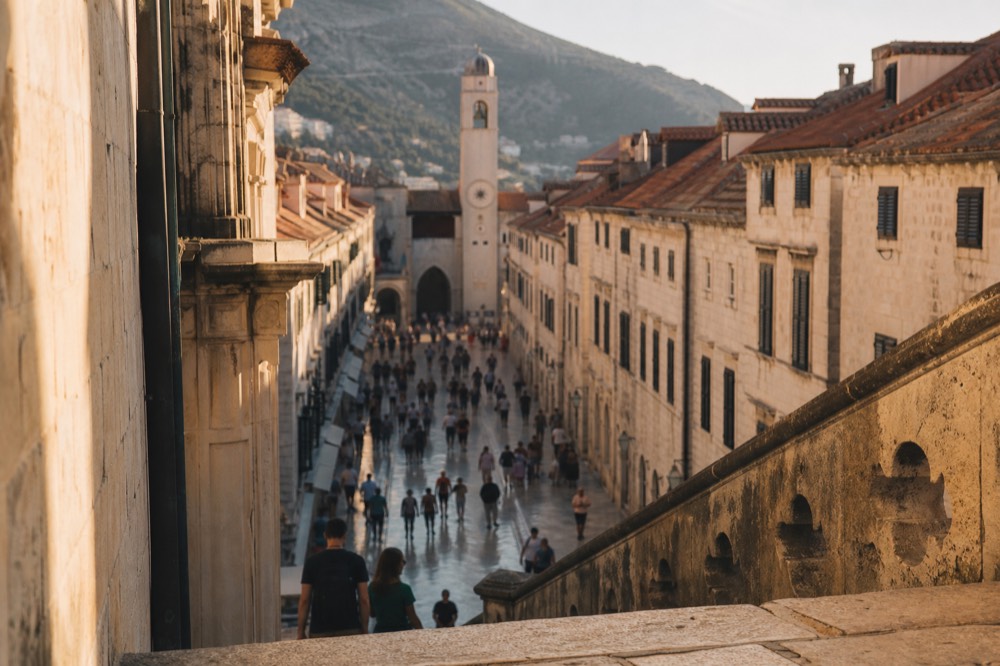
The single biggest mistake a vegetarian visitor can make is to sit down at the first restaurant they see on the Stradun. The main street is lined with places that thrive on one-time cruise passenger trade, and the quality is often mediocre. A plate of blitva on the Stradun might cost twice as much as one in a side street and taste half as good. The side streets like Ulica od Puča, Prijeko, and the area around the Jesuit Stairs are full of small konobas where the food is cooked with care and the prices are fair. The Stradun itself is 298 metres long, and every metre of it is prime real estate, which is exactly why the restaurants there charge a premium for a product that is rarely worth the price.
The second mistake is to assume that a restaurant with no vegetarian menu has nothing for you. Many traditional Croatian dishes are vegetables, beans, or cheese, and every kitchen has olive oil, garlic, and fresh produce. The table below lists the most common pitfalls and how to avoid them.
| Mistake | Why It Is a Problem | Better Alternative |
|---|---|---|
| Eating on the Stradun | Overpriced, mediocre food aimed at cruise passengers | Venture into side streets like Prijeko or Od Puča |
| Not researching vegetarian options | Many konobas have hidden vegetarian dishes | Use HappyCow, ask your accommodation host, or simply ask the waiter |
| Booking a food tour without specifying dietary needs | You might end up with a plate of prosciutto and cheese | State your dietary requirements at the time of booking |
| Ignoring the cruise schedule | Crowds can make even a simple lunch stressful | Check the Port Authority's schedule and avoid the busiest days |
| Assuming all gelato is vegetarian | Some gelato uses animal-based stabilizers or non-vegetarian colorings | Ask the vendor; the best gelato is at Gianni's on Od Puča |
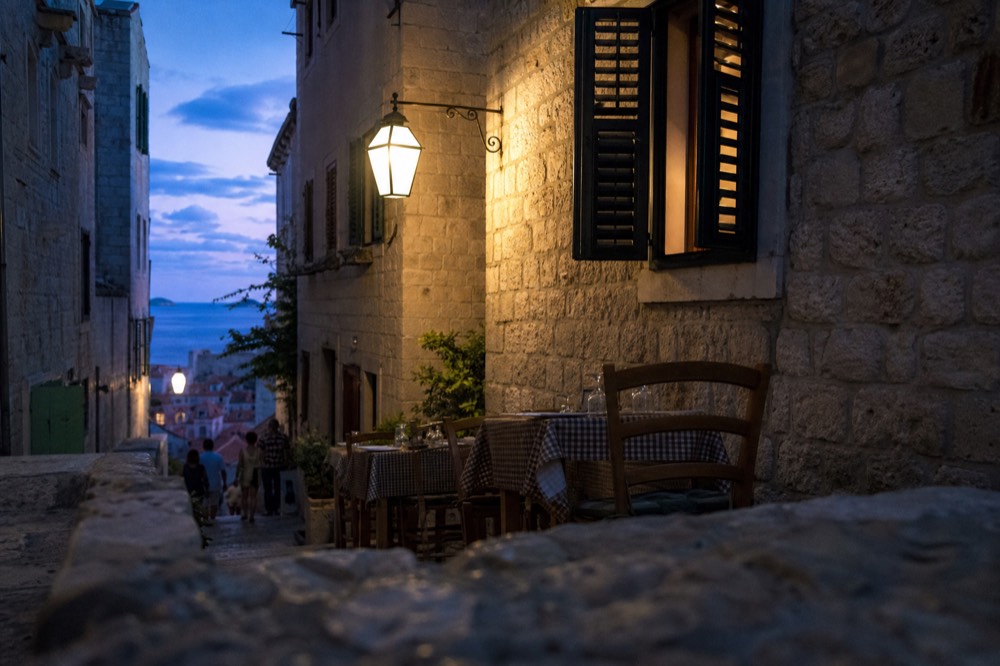
The city walls are a must, and they also build an appetite. The 2-hour Ancient City Walls & Wars walking tour not only gives you the history of the 1,940-metre fortifications but also a local guide who can recommend the best vegetarian-friendly spots afterward. The tour is rated 4.8 across 1,387 reviews, and the guides are typically Dubrovnik locals who know the restaurant scene intimately. After climbing the walls and hearing about the city's defensive history, you will be ready for a meal, and a guide who knows which konoba does the best grilled vegetables is worth the price of the tour alone.
This well organized tour helped put Dubrovnik's past (and present) into perspective. It's incredible that the city walls have withstood the test of time. Antun was a wonderful guide.
linda_a
To make the most of your vegetarian trip, consider booking one of these top-rated tours. Each offers a unique way to experience Dubrovnik's food and history, and all can accommodate dietary preferences if you notify them in advance. The Dubrovnik Pass is also worth considering if you plan to visit the walls and several museums, as the one-day pass costs 40 euro in main season and includes the walls entry plus ten other sights.
When to Avoid Dubrovnik?
The worst time for a vegetarian food lover to visit is during the peak of the cruise season in September and October, when the Old Town's narrow streets become a human traffic jam and even the best restaurants can feel rushed and overcrowded. The heat of July and August is also punishing, making outdoor dining uncomfortable and heavy vegetarian dishes like štrukli feel far too rich.
The Port Authority's own data tells a story that surprises most visitors. In 2025, cruise passengers peaked in September at 101,246 and October at 100,132, well above July's 96,072 and August's 87,385. That means the late summer and early autumn, when the weather is still warm and the sea is pleasant, are actually the busiest months for cruise ship arrivals. The city's carrying capacity, as assessed by the UNESCO carrying-capacity study, is 11,275 people inside the Old Town at any one time, and on a heavy cruise day that number is often exceeded.
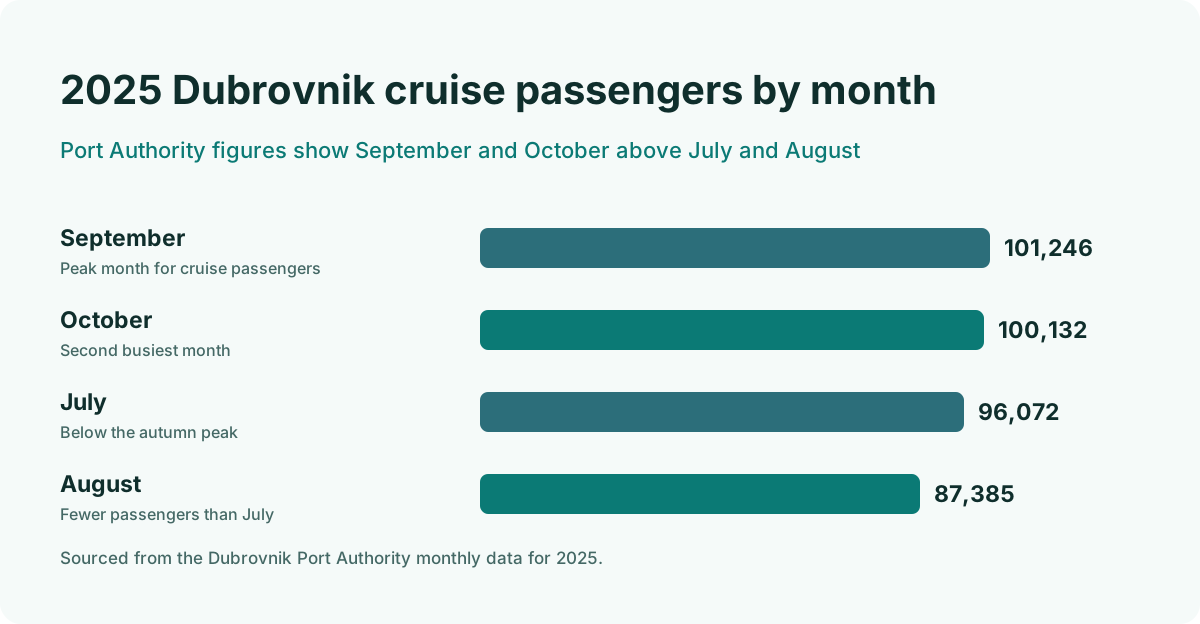
The table below shows the full monthly breakdown for 2025, sourced from the Port Authority.
| Month | Passengers |
|---|---|
| January | 3,137 |
| February | 46 |
| March | 3,346 |
| April | 36,206 |
| May | 84,107 |
| June | 82,642 |
| July | 96,072 |
| August | 87,385 |
| September | 101,246 |
| October | 100,132 |
| November | 28,480 |
| December | 2,458 |
The heat is another factor. July and August see average high temperatures above 30°C, and the sea temperature hovers around 25°C, making the city feel like an oven. A heavy vegetarian meal of štrukli and fritule can be too much, and many of the best vegetarian dishes are better suited to cooler weather. The spring months of April and May, or the late autumn after the cruise rush subsides in November, are far more pleasant for a food-focused visit. The September average sea temperature for this coast is about 23.6 degrees Celsius, a long-run NOAA average for 1991 to 2020, and while it is still warm enough for swimming, the midday heat on shore can be intense.
Escape the crowds by heading inland to a traditional Croatian home for a peka cooking lesson. This four-hour class teaches you to prepare a vegetarian peka with seasonal vegetables, and you will enjoy the meal with local wine. It is a perfect way to beat the rush and learn a new skill that you can take home. The class is held in a family kitchen, and the instructor will walk you through the entire process, from selecting the vegetables at the market to placing the bell-shaped lid over the coals.
The class runs for about four hours and wraps up with the meal you have cooked, paired with a local wine. It is one of the most memorable vegetarian experiences in the region, and the hands-on nature of the cooking makes it far more engaging than simply ordering a plate at a restaurant. The instructor is happy to adapt the menu to fully vegetarian, and the slow-cooked vegetables that emerge from under the peka lid are unlike anything you will find on a standard menu.
If you do visit in September or October, plan your meals for the early afternoon or late evening, when the cruise passengers have either not yet arrived or have already left. The lunch rush from noon to 2 p.m. is the worst, and even a quick slice of pizza can take half an hour. The Dubrovnik Pass, which includes a 24-hour bus ticket, can help you escape to the Lapad peninsula or Babin Kuk, where the restaurants are quieter and the vegetarian options are just as good.
Is Dubrovnik Good for Beaches?
Yes, Dubrovnik has several excellent beaches, and many are within walking distance of vegetarian-friendly cafes and bars. Banje Beach, just outside the Ploče Gate, is the most popular, but for a quieter swim with a vegetarian picnic, head to Sveti Jakov or the rocky coves of Lapad, where you can spread out a towel and enjoy a meal away from the crowds.
The beach scene in Dubrovnik is not the vast sandy stretches you might find in Greece or Spain. It is a mix of pebbly coves and concrete platforms, but the water is crystal clear and the views are spectacular. For a vegetarian, Dubrovnik's beaches also serve as convenient picnic spots. The Green Market in Gruž, a short bus ride from the Old Town, sells fresh fruit, vegetables, cheese, and bread, and you can assemble a perfect meat-free lunch to take to the shore. The market is open every morning, and the produce is local and inexpensive.
The table below compares the main beaches and their nearby vegetarian food options.
| Beach | Distance from Old Town | Nearby Vegetarian Eats |
|---|---|---|
| Banje Beach | 5-minute walk | Beach bar with salads and fruit smoothies; Nishta is a 10-minute walk |
| Sveti Jakov | 20-minute walk | Small cafe with grilled vegetables and pizza; bring your own from the bakery |
| Lapad Beach | 30-minute bus ride | Several konobas with vegetarian risotto and pasta; Copacabana Beach has a beach bar |
| Lokrum Island | 15-minute ferry | The island's restaurant offers salads and grilled vegetables; bring snacks |
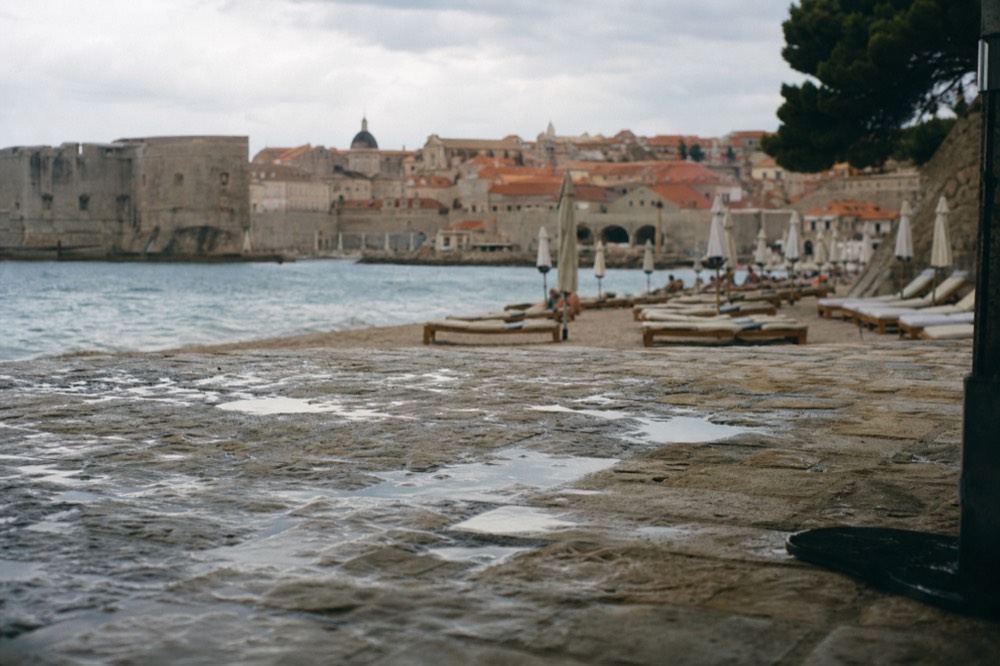
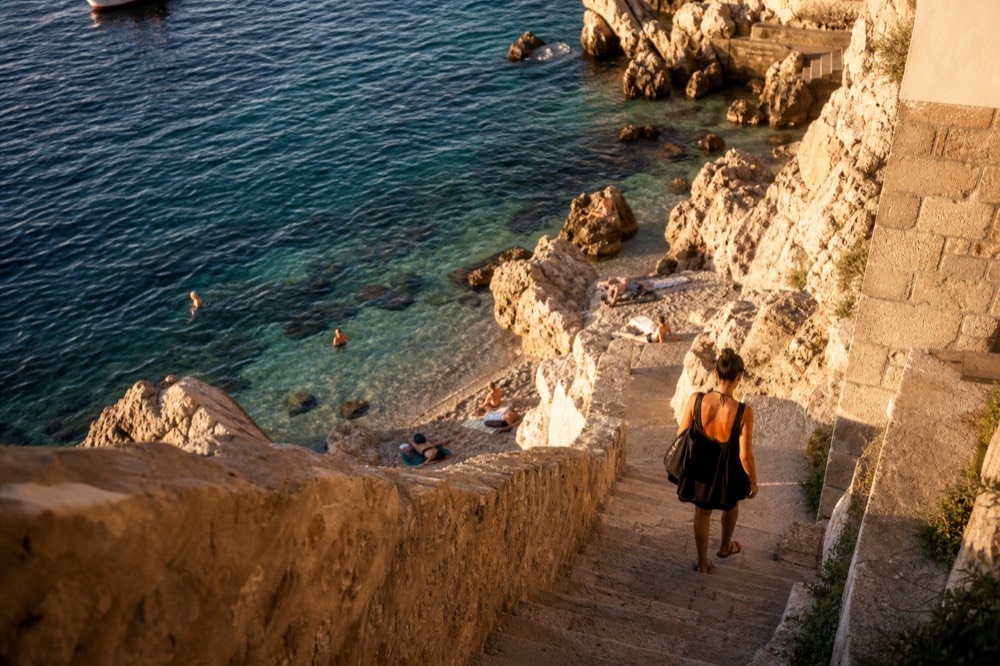
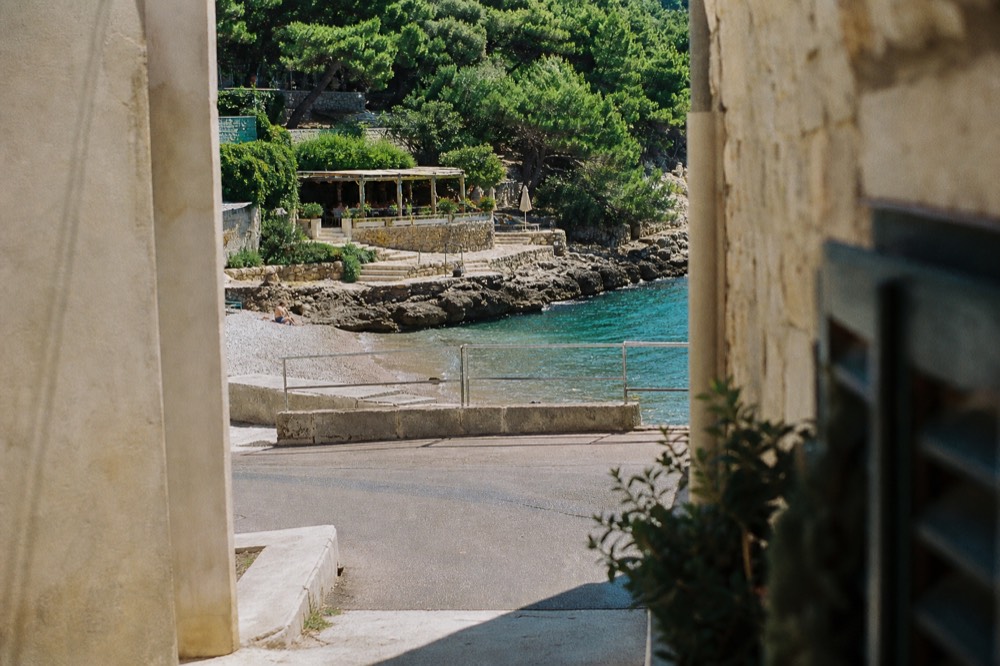
Lokrum Island deserves a special mention. The ferry departs from the Old City Harbour at 09:00, then every 15 minutes from 10:00 to 18:00, and the ticket costs 30 euro per person, which includes the reserve entry and the return boat transfer. The Lokrum Reserve is a protected nature area, and its restaurant serves a decent plate of grilled vegetables, a fresh salad, and a fruit platter, making it a viable lunch spot for vegetarians. The island also has rocky swimming spots and a Benedictine monastery to explore, so you can easily spend a half-day there. Our full guide to Lokrum Island covers the ferry schedule, the walking trails, and the best spots for a swim.
Back on the mainland, the beaches are rarely more than a few minutes from a bakery or a cafe. The Dubrovnik Pass, which costs 40 euro for a one-day pass in main season and includes a 24-hour bus ticket, is a good investment if you plan to beach-hop between Lapad, Babin Kuk, and the Old Town. The pass also grants entry to the City Walls and several museums, so you can combine a morning of culture with an afternoon of swimming. The three-day pass at 50 euro adds suburban bus coupons, which makes reaching the quieter beaches on the Lapad peninsula even easier.
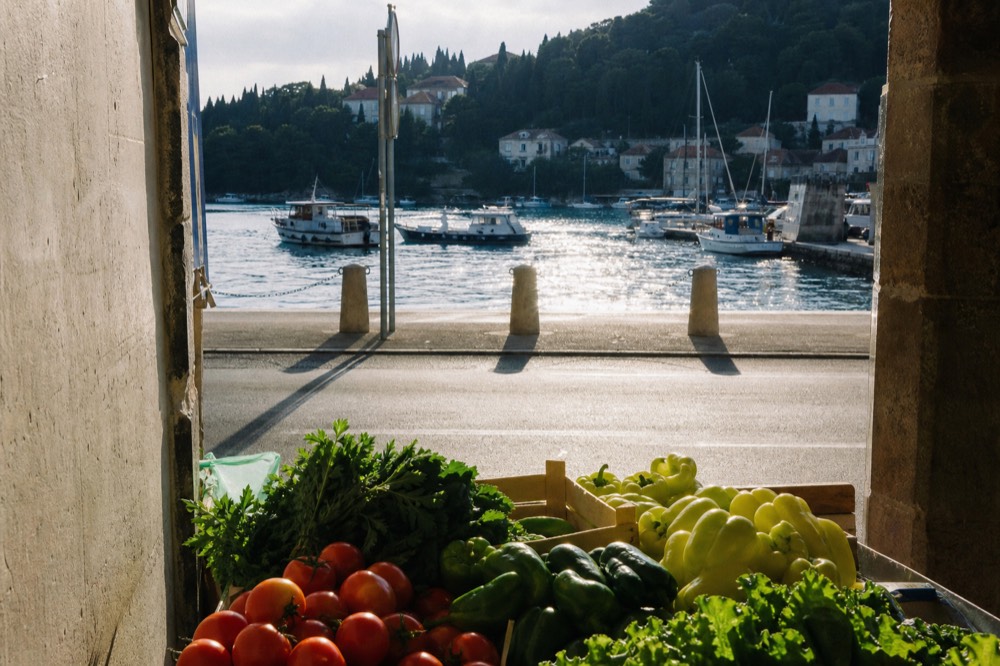
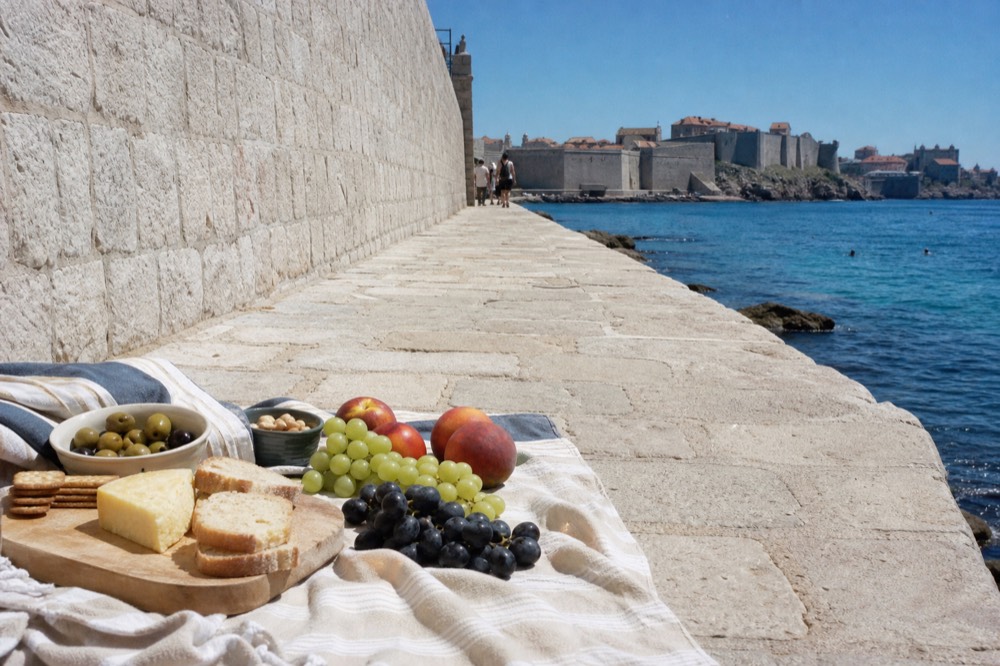
No matter which beach you choose, a vegetarian meal is never far away. And if you want to combine your beach day with a food experience, the Elaphite Islands cruise includes a lunch that can be adapted for vegetarians if you notify the operator in advance. The Zrinka boat, for example, serves a fish picnic lunch, but the crew can prepare a vegetarian plate with grilled vegetables, rice, and salad on request. Pair the day with a visit to one of the wine tasting experiences in Dubrovnik for a full day of food and drink that works entirely for a plant-based diet.
Common Questions About Vegetarian Dubrovnik
What Local Food Should I Try in Dubrovnik?
Start with blitva, a simple side of Swiss chard, potatoes, and garlic that appears on almost every menu. Soparnik, a spinach-filled pastry, is a vegan dish with a UNESCO-protected heritage. Štrukli, a baked cheese strudel, is a rich vegetarian comfort food, and fritule, small fried dough balls, are a sweet treat. For a modern twist, the vegan pašticada at Nishta uses seitan in place of beef and is a must-try.
Are There Vegetarian Options on Food Tours?
Yes, but you must specify your dietary needs when you book. The Dubrovnik Food and Drink Walking Tour, for example, can accommodate vegetarians if you notify the operator in advance. The same goes for the peka cooking class, which can be adapted to a fully vegetarian menu. Always confirm directly with the tour operator before the day.
What Is Dubrovnik's Famous Food?
Dubrovnik is best known for seafood and meat dishes like black risotto and pašticada, but the vegetarian side dishes are a highlight. Blitva, soparnik, and štrukli are all traditional and naturally vegetarian. The city's modern plant-based scene, led by Nishta, is also gaining recognition.
Is Dubrovnik Good for Children?
Yes, the city walls, the cable car, and the beaches are all child-friendly, and most restaurants are happy to prepare simple vegetarian meals like pasta with tomato sauce, pizza, or grilled vegetables. The food tours are also suitable for older children who are curious about local cuisine.
How Many Days Do I Need to See Dubrovnik?
Three days is ideal for exploring the Old Town, taking a day trip to the Elaphiti Islands, and relaxing on the beaches. That gives you enough time to sample the vegetarian restaurants, take a food tour, and even fit in a cooking class without feeling rushed.
Is Dubrovnik Too Hot in July?
Yes, July and August can be extremely hot, with temperatures often above 30°C. The heavy, cheese-based vegetarian dishes can feel too rich, so opt for lighter meals like salads, grilled vegetables, and cold soups. The sea temperature is warm, averaging around 25°C, but the heat can make outdoor dining uncomfortable during the midday hours.