What to Eat in Dubrovnik: A Local's Dish-by-Dish Guide
Dubrovnik's food story is bigger than its postcard. Here is what to order, where locals actually eat it, and what a meal really costs.
Short answer
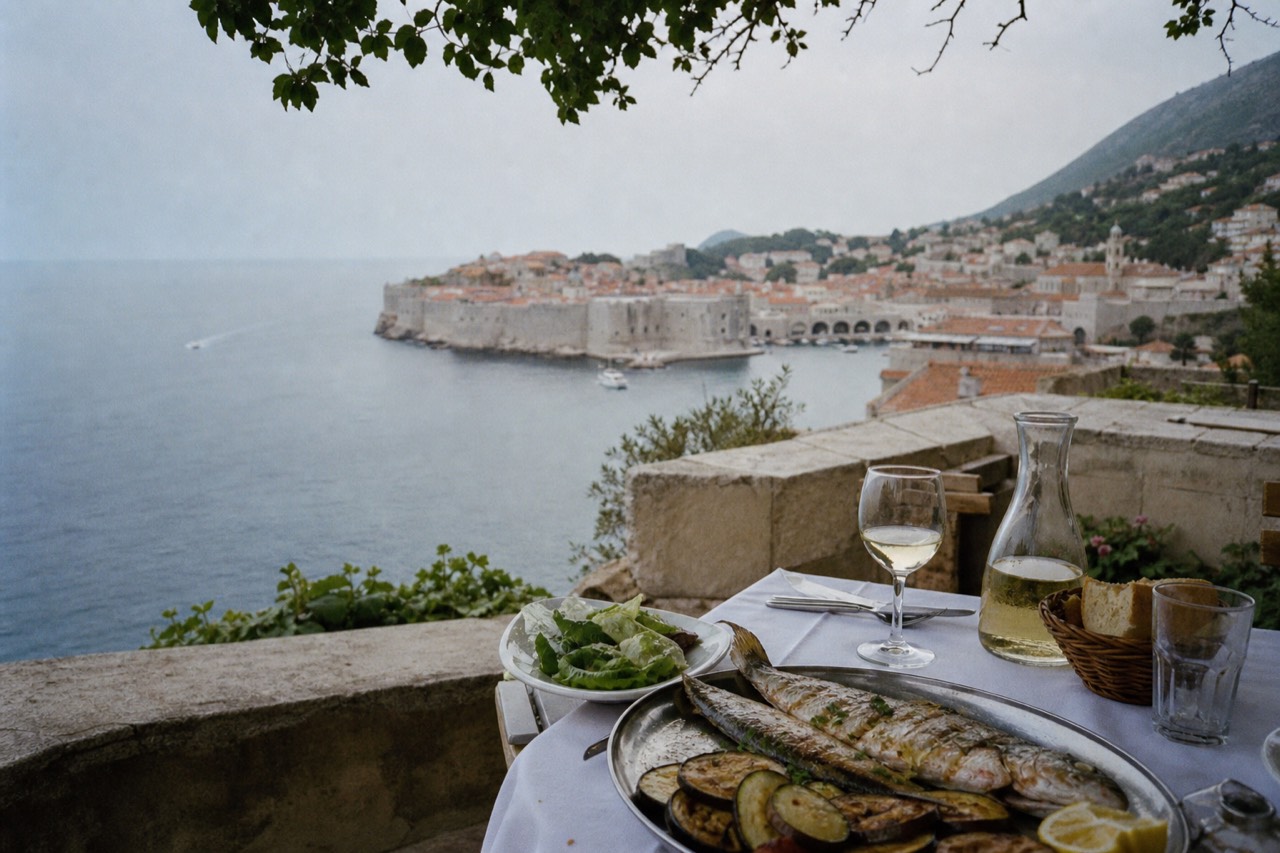
Order black cuttlefish risotto, peka under a bell, fresh grilled fish, Ston oysters and rožata for dessert. Eat in konobas away from the Stradun, expect main-season restaurant prices to sit at the top of Croatia's range, and consider a food walk or a peka cooking lesson to taste the whole story in one sitting.
Every visitor asks me the same question within a day of arriving, and it is never about the walls. It is about dinner. Dubrovnik eats well, but it eats expensively in the wrong places and brilliantly in the right ones, and the difference between the two is a matter of about four hundred metres and a little vocabulary. This guide is the vocabulary: the dishes that define the city, the neighbourhoods where locals actually sit down, the honest answer on prices, and the cooking lesson worth planning a day around. I have walked these streets with travellers since 2015, and the advice below is what I give friends, condensed.
What Do Locals Eat in Dubrovnik?
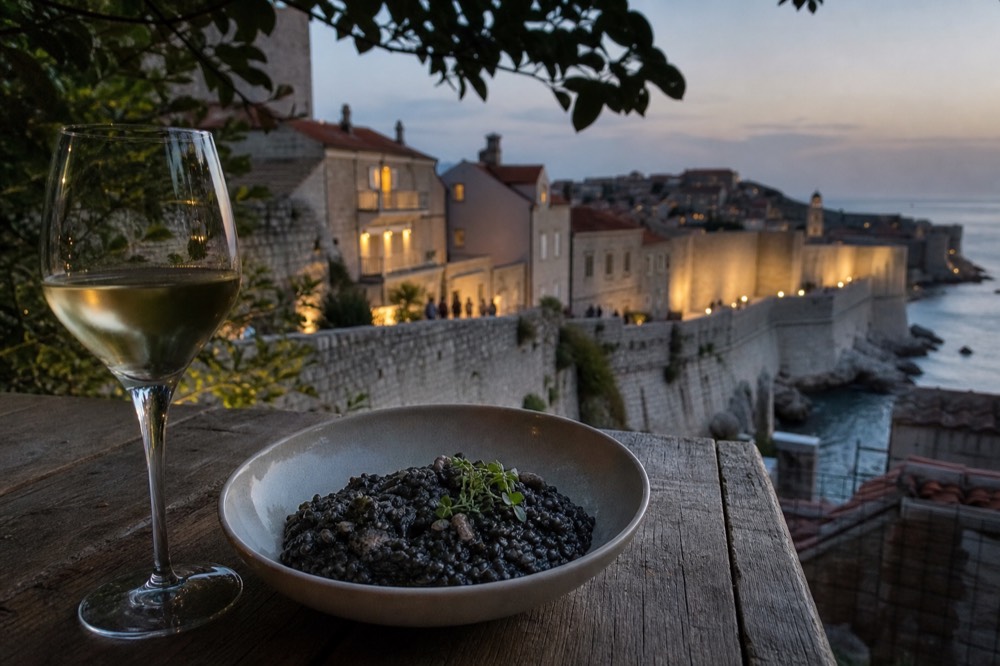
The local table runs on the sea and the fire behind it: black cuttlefish risotto, whole grilled fish, peka cooked under a steel bell, Ston oysters, Dalmatian prosciutto and cheese openers, and rožata, a caramel custard, for dessert. Green pasta with scampi, brudet fish stew and grilled squid fill the gaps, all of it built on olive oil and almost nothing imported. Order even half of that list and you have eaten Dubrovnik properly, because this is a cuisine of ingredients rather than technique, and the ingredient list has barely changed in generations.
Start with the black risotto, crni rižot, because it is the single most local plate in the city. Cuttlefish is stewed slowly with its own ink until the rice turns a deep purple-black, and a squeeze of lemon lifts it at the table. It stains your lips, which locals treat as the proof you ordered the right thing. Squid comes back again grilled, filled with cheese and prosciutto, or simply charred whole with chard and potatoes boiled in the same water.
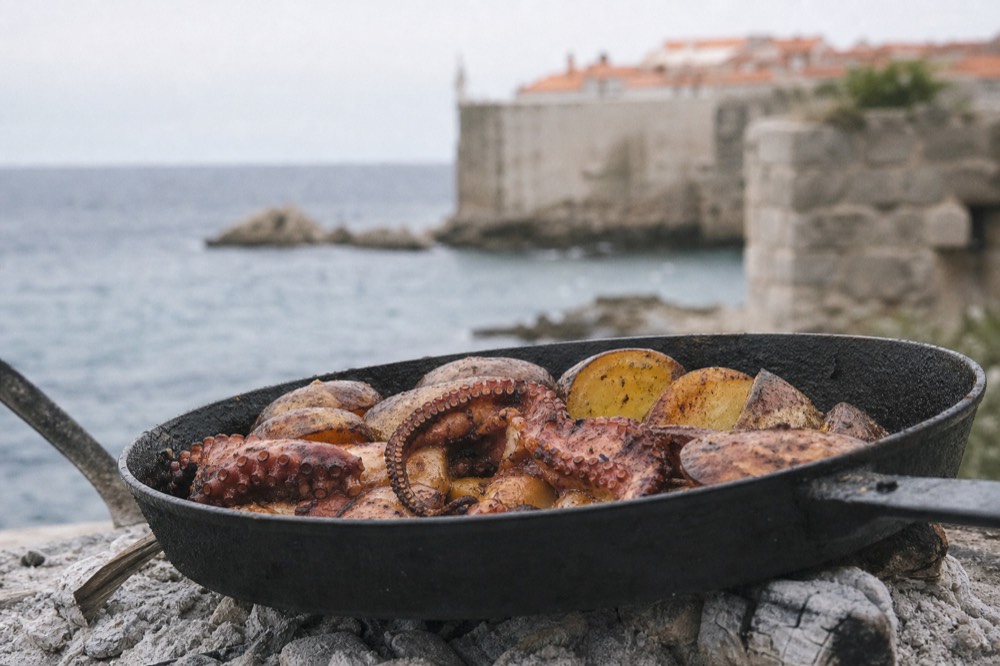
Peka is the dish worth planning around. Meat or octopus is laid in a shallow pan with potatoes and vegetables, covered with a domed steel bell, then buried in embers for hours so it braises and roasts at once. Very few restaurants in the Old Town cook it for walk-ins because it cannot be rushed, which is exactly why the cooking lesson later in this guide exists. Octopus peka is the classic, and the tender, almost sweet result is unlike anything a standard kitchen produces.
Around those anchors sit the supporting cast. Ston oysters arrive on ice with nothing but lemon; they come from the Mali Ston bay up the Pelješac peninsula, whose sea farms have supplied this coast for as long as anyone here can trace. Dalmatian prosciutto, sheep cheese and olives open a meal. Rožata, the local caramel custard scented with rose liqueur, closes it. If you want the deeper background on the plates, our piece on local dishes worth trying goes dish by dish.
| Dish | What It Is | When to Order It |
|---|---|---|
| Crni rižot | Black cuttlefish risotto, stained with ink, finished with lemon | Lunch or dinner, anywhere along the coast |
| Octopus peka | Octopus and potatoes slow-cooked under a steel bell in embers | Booked ahead, or cooked yourself at a lesson |
| Whole grilled fish | Local catch, grilled over olive wood, priced by weight | Dinner, with chard and potatoes on the side |
| Ston oysters | Farmed oysters from Mali Ston bay, served on ice with lemon | A starter, ideally with a local white |
| Brudet | Fish stew with tomato, onion and vinegar, mopped with bread | Cooler months, when the pot is on the stove |
| Rožata | Caramel custard scented with rose liqueur | Dessert, always |
One habit worth copying from locals: order the fish whole and let the waiter fillet it at the table. It looks theatrical, but it is really a quality check, and the price per kilogram is weighed and confirmed before cooking so nothing on the bill surprises you. Ask what came in that morning rather than pointing at the menu, and you will eat better than any printed list can promise.
Where Do Locals Eat in Dubrovnik?
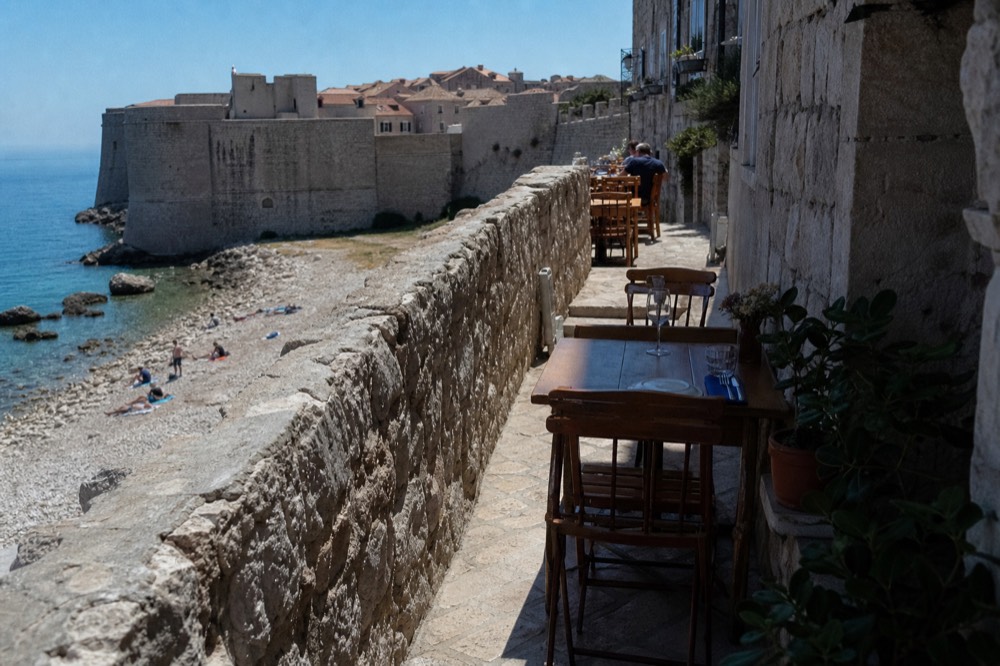
Locals eat in konobas, the family tavernas of the coast, and almost none of them sit on the Stradun: they cluster in Gruž around the market and marina, up the side streets of the Old Town away from the main square, and across the bay in Lapad and the suburbs where rents are sane. The rule of thumb is simple and it has served every traveller I have sent out to dinner: the further your table sits from a view of the Stradun, the better and cheaper the plate in front of you. The main street is 298 metres long, per the Dubrovnik Tourist Board, and every metre of it costs a restaurant money, which lands on your bill.
Gruž is where the city actually lives, and the market there is the honest heart of its food culture. Stalls sell figs, pomegranates, herbs and whatever the boats brought in, and the konobas within a few streets cook from that same supply. You will share the room with market vendors finishing their day, harbour workers and families, and the menus will be shorter and cheaper than anything inside the walls. Our guide to the Gruž market covers the stalls and the timing.
Inside the walls, the play is the side street. Step off the Stradun into any of the lanes running toward the north walls and prices drop while the cooking improves, because those kitchens serve a mix of locals and informed visitors rather than pure foot traffic. Look for handwritten daily lists, a short menu, and a room that feels slightly too small to be a business plan. If you want a fuller map of the neighbourhood logic, our answer on where locals eat lists the streets and the thinking behind them.
| Area | Character | Best For |
|---|---|---|
| Gruž | Market and marina quarter, working harbour, local prices | Fish lunch, market mornings, honest konoba dinners |
| Old Town side streets | Stone lanes off the Stradun, short menus, mixed crowd | Dinner without the main-street markup |
| Lapad | Residential peninsula with a bay and a promenade | Relaxed family meals, long seafood dinners |
| The Stradun itself | The 298-metre main street, postcard setting | A drink and people-watching, not the main meal |
Two practical notes from walking people into these quarters for years. First, konobas fill late: locals sit down to dinner from around eight, so a table at seven is easy and a table at nine may need a booking even in a back street. Second, Sunday lunch is the week's real food event, and the family-run rooms that serve it often close entirely on Mondays to recover, so check days before you build an itinerary around one specific taverna.
If you would rather have the neighbourhoods decoded while you taste them, a guided walk does in three hours what would otherwise take you three evenings of trial and error, and the selection below is built around exactly that trade.
Is Dubrovnik Expensive to Eat?
Yes, Dubrovnik is expensive to eat by Croatian standards, and prices climb highest inside the walls during main season. The city shares first place among Croatian destinations with Rovinj, at about 4.2 million overnight stays in 2025, and that sheer demand lands directly on restaurant prices, pushing meals well above what you would pay elsewhere in the country. The Croatian Bureau of Statistics records those 4.2 million nights for the destination, and a city of 41,562 residents feeding that volume charges accordingly. But the premium is concentrated, not uniform, and Gruž, Lapad and the side streets soften it considerably for anyone willing to walk a few lanes.
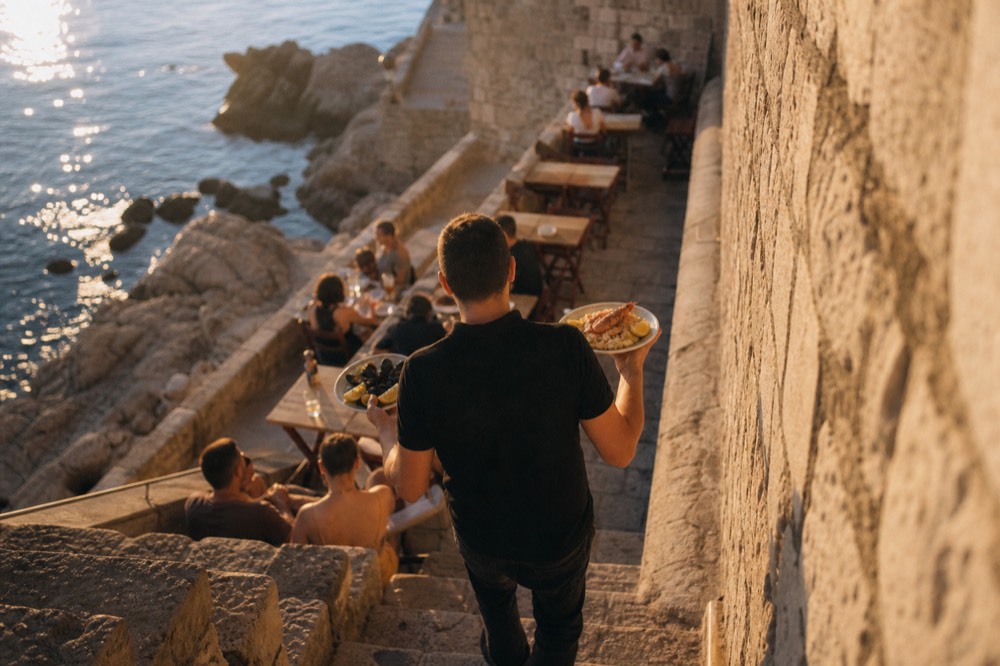
The honest framing is that you are paying for two different things at once. On the Stradun and the terrace rows, a large share of what you pay is the view and the rent, and the same kitchen logic applies anywhere with a postcard panorama. A street back, you are paying mostly for the food, and the difference is immediate. Fish priced by the kilogram is the item to watch: always confirm the weight and the per-kilogram price before it goes on the grill, because a whole fish for two is the fastest way to a surprising bill in any Dalmatian town, not just this one.
Season matters as much as address. The peak months of July through October are the most crowded window on the calendar, and not only from land travellers: Port Authority data shows cruise passengers in 2025 peaked in September at 101,246 and October at 100,132, above July's 96,072 and August's 87,385. Demand for tables follows the same curve. Eating in May, June or late autumn buys you noticeably more room and often better value, while September dinner reservations are worth making in the morning rather than the evening.
| Cost Factor | What to Expect | How to Soften It |
|---|---|---|
| Location premium | Stradun and view terraces carry the highest markups in the city | Move two streets north or south of the main square |
| Fish by weight | Whole fish is priced per kilogram and weighed before cooking | Confirm weight and price before it hits the grill |
| Seasonal demand | July to October is the busiest stretch, with September the cruise peak | Book mornings for evening tables, or eat in shoulder months |
| Cover and bread | Many konobas add a small per-person cover for bread and olives | It is normal practice, not a scam, so budget a euro or two |
| Drinks | House wine by the decilitre is far kinder than bottled imports | Order local whites and Plavac Mali reds by the carafe |
For a fuller breakdown of plate-level costs, our answer on meal prices works through the arithmetic, and the budget guide covers the whole trip. One more local habit worth adopting: lunch, not dinner, is the cheap seat. Set menus and simpler grilled plates at midday cost a fraction of the evening equivalent, and the market quarter does its best cooking before three.
There is also a third answer to the cost question that people rarely consider: cook it yourself. A peka lesson costs about the same as a serious dinner for two in the Old Town, and you leave with the method, not just the memory. That is the trade the next section makes.
Where Do Celebrities Eat in Dubrovnik?
The places people mean when they ask this are the cliffside Buža bars cut into the walls above the sea, the panorama restaurants around the upper cable car station on Mount Srđ, and a handful of Old Town hotel dining rooms, all of them trading on setting first and kitchen second. I will not pretend to a guest list I do not have, and honest food writing should not. What I can tell you is which rooms have the setting, the prices and the discretion that a famous face would actually choose, and they are the same rooms you can book.
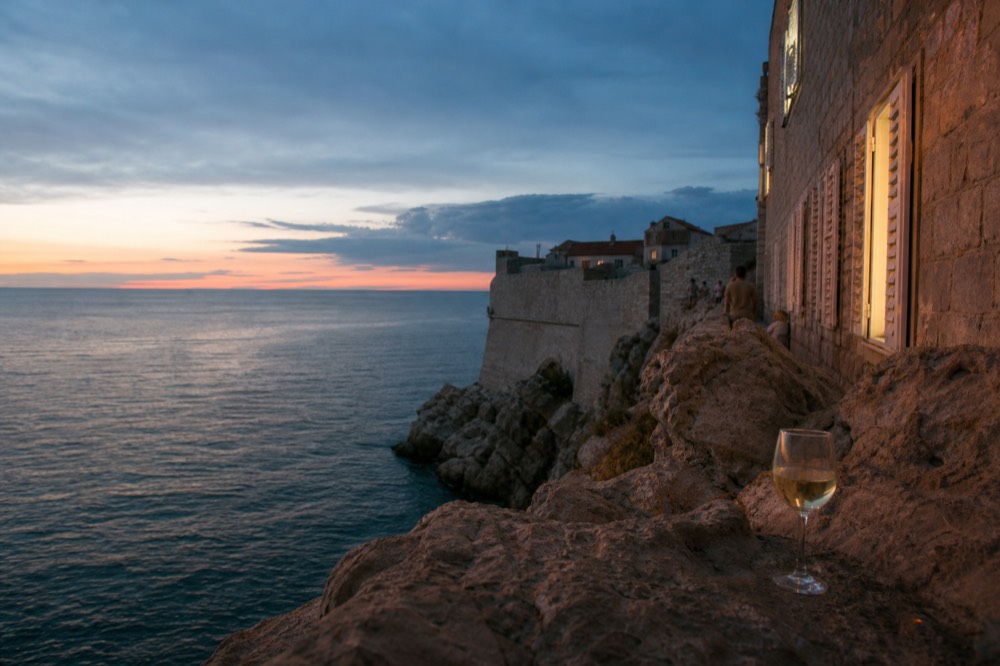
The Buža bars are the first stop. They hang on the southern cliff face outside the walls, reached through an unmarked doorway, and the tables sit on bare rock above open water. Nobody comes for an ambitious menu; people come for the fact that there is nothing between their chair and the horizon. Our guide to Buža bar covers how to find the door and when the light is best. The panorama restaurants near the top of the cable car, at 405 metres above sea level per the operator's own technical page, play the same card from above, and our piece on restaurants with a view lines them up.
Inside the walls, the celebrity-adjacent rooms are the hotel dining rooms and the long-established fine-dining spots near the Stradun, the kind of place where a table can be screened and a kitchen can flex. Dubrovnik's Michelin recognition is real, and our Michelin restaurants guide names the rooms that earned it. The practical advice, whether or not anyone famous is in town: book these tables days ahead in season, because their capacity is small and their calendars fill with people who booked before you.
The local inversion of the whole question is worth hearing. When Dubrovnik families want a meal that feels special, they do not chase a view; they drive out of the city to a konoba in the Konavle valley or up the Pelješac peninsula, where the cooking is the attraction and the sea is a backdrop rather than the product. That is the genuinely local version of eating well here, and it costs less than the postcard rooms. If your trip has a spare half day, the Things to Do in Dubrovnik homepage lists the experiences that get you out to those tables.
How Do You Learn to Cook It Yourself?
The peka cooking lesson is the deepest food experience in the roster: four hours, from $159.83 per person, in which you build and fire the bell dish yourself, and it is the only way to eat octopus peka without booking a restaurant days ahead. The listing carries only a handful of reviews, too few to quote a rating honestly, so judge it on format instead: it is a lesson, not a tasting, and it suits travellers who want the method rather than another seated dinner.
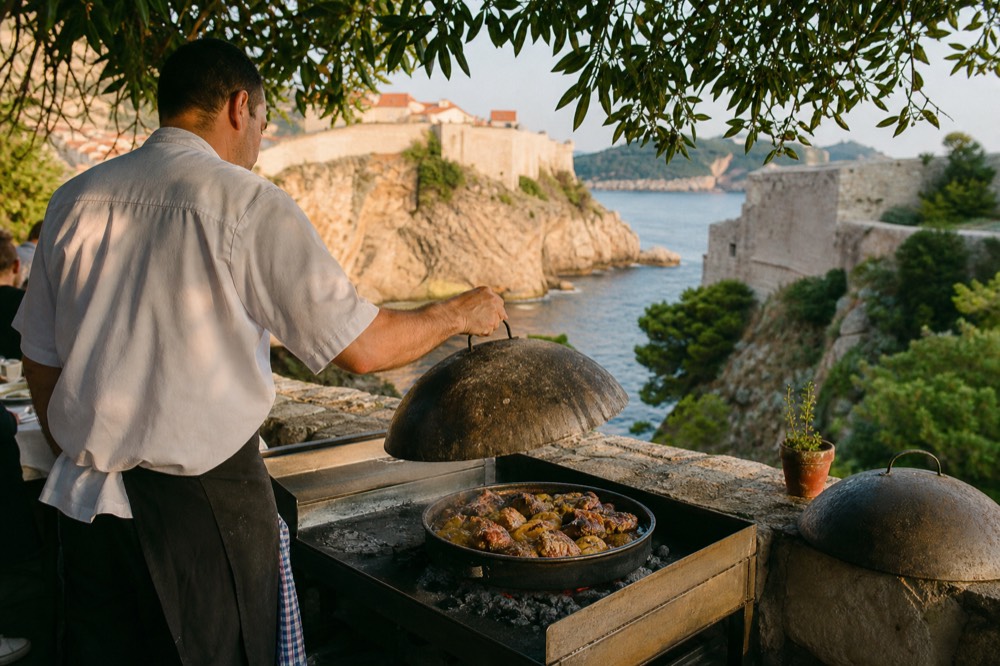
The format matters because peka is the one landmark dish the Old Town kitchens cannot really serve you on demand. The bell goes into embers for hours, so a restaurant either commits to a fixed number of pans that morning or does not offer it at all. A lesson removes that problem entirely: you lay the octopus and potatoes in the pan, cover it, feed the fire, and wait the way the coast has always waited, then eat the result. Four hours is roughly the shape of that afternoon.
If tasting beats cooking for you, the food and drink walking tour is the other pillar. It runs about three hours from $165.64 per person, is rated 5 across 704 reviews, and strings together the city's food stops with a local guide who explains what you are eating and where to return for dinner. For a first visit it doubles as an orientation: you finish knowing the streets, the dishes and the wine list.
Amazing food tour! Marija was a great guide, full of stories and facts that really brought Dubrovnik to life. The food was delicious, and generous. Wines at every stop. Would highly recommend this tour to anyone visiting Dubrovnik, especially to help get your bearings of the city and know where to go for dinner!
Bryan_M
That last point in the review is the one I would underline. A food walk early in your stay quietly solves the "is this restaurant a trap" problem for the rest of the week, because you have seen which lanes the guide walked through and which doors the locals used. Pair it with the food tour guide if you are weighing options.
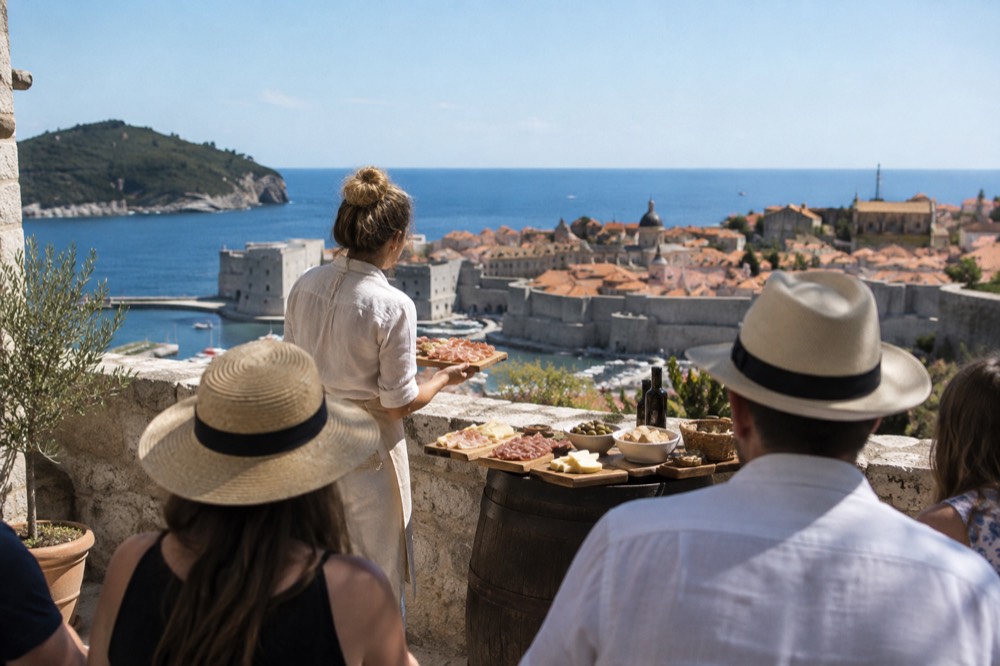
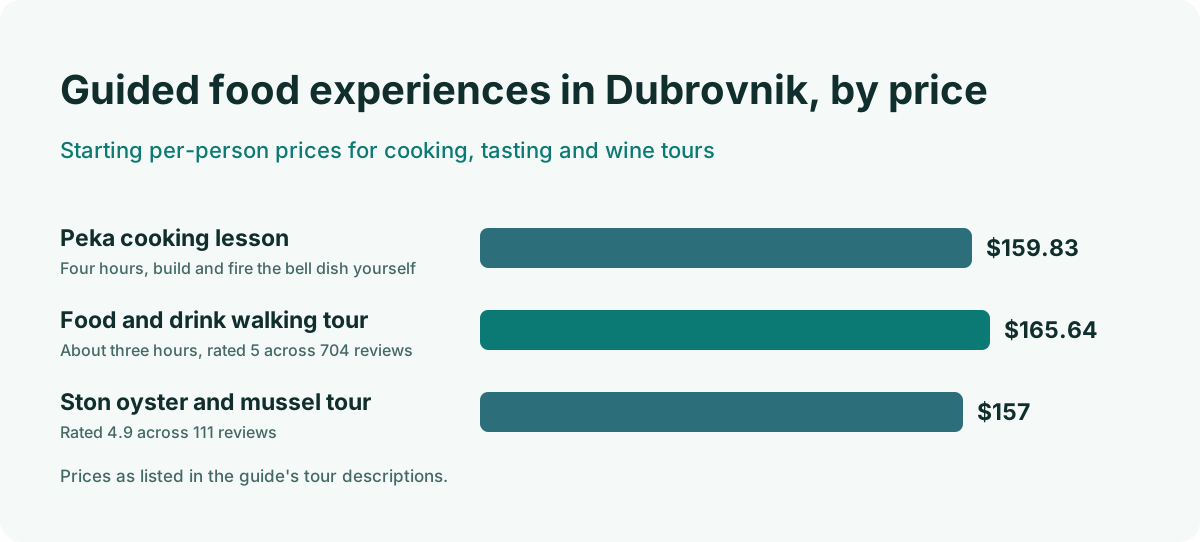
The third option reaches past the city. The Ston oyster and mussel tour, from $157 per person and rated 4.9 across 111 reviews, rides up the Pelješac peninsula to the oyster farms themselves, which is as close as you can get to the source of the shellfish on every menu in town.
What Should Your Food Day in Dubrovnik Look Like?
Build it as a curve: market fruit and coffee in the morning, a simple grilled lunch in Gruž or a side street, a food walk or a cooking lesson as the afternoon's anchor, and a booked konoba dinner at eight or later, with the Stradun reserved for a drink rather than a meal. That shape keeps the expensive seats to a minimum, puts you inside the local rhythm, and guarantees you meet the city's food at every altitude, from the market stall to the ember fire.
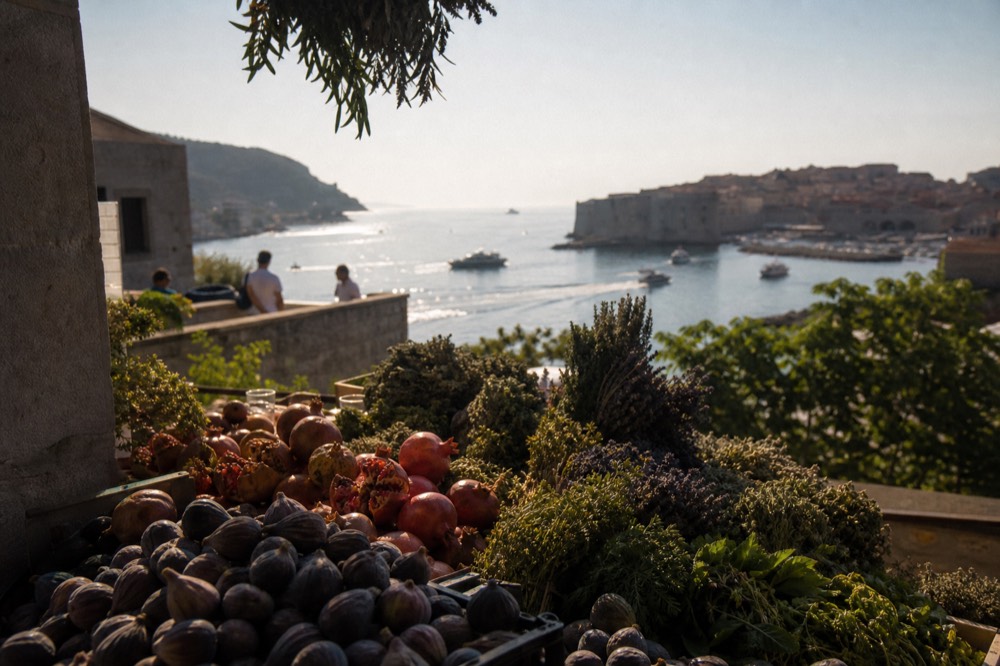
Morning is the market's hour. Gruž market does its best trade early, and figs, herb bunches and the day's catch are all on display before the heat arrives. Coffee follows, standing at a bar the way locals do rather than sitting at a terrace table, and the price difference between those two ways of drinking the same espresso is a fair introduction to Dubrovnik economics in miniature. If your food day falls on a Sunday, flip the plan: the long family lunch is the event, and the evening can be light.
The afternoon anchor is where the guided options earn their keep, and the Konavole wine tasting is the choice if the day is about the countryside rather than the kitchen.
Dinner closes the curve. Book in the morning for a September or October table, order the fish whole, ask what came in that day, and finish with rožata. If you have done the food walk earlier in the week, this is the evening you spend it: you already know the lane, the door and the daily list. And if the walls are on tomorrow's plan, the combo walking tour below pairs the Old Town and the walls in one three-and-a-half-hour outing, which leaves your food day intact and your legs earning their dinner.
Common Questions About What to Eat in Dubrovnik
What Do Locals Eat in Dubrovnik?
Black cuttlefish risotto, whole grilled fish, octopus peka, Ston oysters, Dalmatian prosciutto and sheep cheese, brudet fish stew, and rožata custard for dessert. The cuisine is built on the day's catch, olive oil and slow fire, with almost nothing imported, so ordering the local list rather than international staples is the whole trick.
what do locals eat in dubrovnik?
Same answer, lowercase: crni rižot, peka, grilled fish, Ston oysters, brudet and rožata. Ask for the daily list rather than the printed menu and you will be eating exactly what the households around you are eating.
Where Do Locals Eat in Dubrovnik?
In konobas in Gruž around the market and marina, in the Old Town side streets a lane or two off the Stradun, and across the bay in Lapad. Almost nobody who lives here eats a full meal on the main street; it is for a drink and the view, while the cooking happens a few streets away.
Is Dubrovnik Expensive to Eat?
Yes by Croatian standards, especially inside the walls in July through October, when demand peaks; the city recorded about 4.2 million overnight stays in 2025. The premium is concentrated in the postcard locations, so moving two streets off the Stradun, eating your main meal at lunch, and ordering house wine by the decilitre bring the bill down sharply.
Where Do Celebrities Eat in Dubrovnik?
The cliffside Buža bars outside the walls, the panorama restaurants at the top of the cable car, and a small set of hotel and fine-dining rooms around the Old Town. Those are the settings with the price, the view and the discretion such guests pay for, and every one of them is bookable by anyone.
Can You Learn to Cook Peka in Dubrovnik?
Yes. A four-hour peka cooking lesson runs from $159.83 per person and takes you through laying the pan, covering it with the steel bell and cooking it over embers, then eating the result. It is also the reliable way to eat octopus peka, since most Old Town kitchens cannot serve it to walk-ins.