How Many Days Do I Need to See Dubrovnik?
How many days do you need in Dubrovnik? A day-by-day breakdown of the Old Town, the city walls, Lokrum and the island day trips, with real ticket prices and crowd timing.
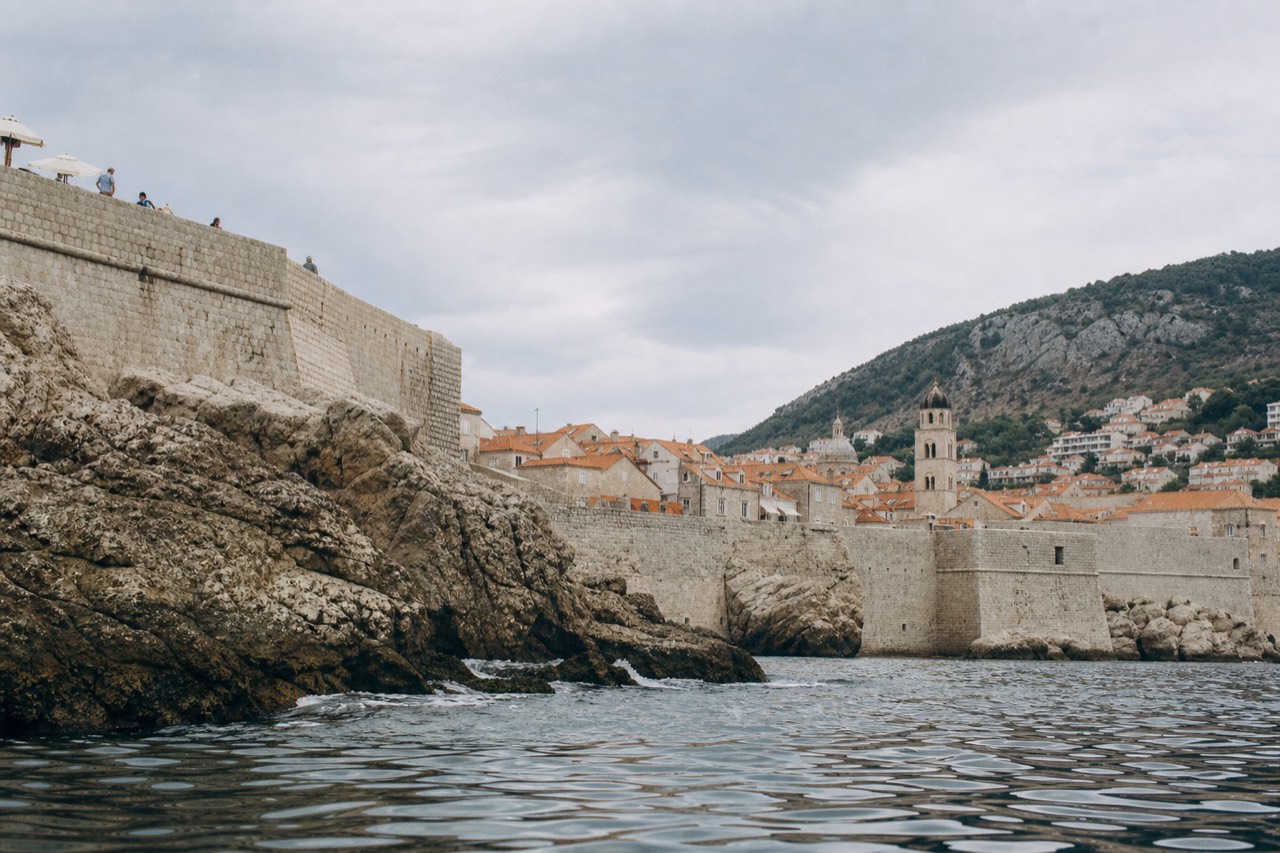
How Many Days Do I Need to See Dubrovnik?
Two full days is the honest minimum for Dubrovnik: one for the Old Town and the 1,940-metre city walls, one for the cable car, a swim and a slower wander. Three days is the sweet spot, because it adds Lokrum Island or a beach afternoon. Four days or more only pays off if you plan to leave the city for the Elaphiti Islands, Mostar or Montenegro.
I get this question more than any other, and the answer depends on what "see" means to you. If it means standing on the Stradun, walking the walls and riding the cable car to the top of Mount Srđ, one very long day technically covers it, and cruise passengers do exactly that every morning of the season. If it means understanding the city, swimming off its rocks and eating a long dinner without checking your watch, two days is where Dubrovnik stops feeling like a checklist.
The math that usually decides it is the walls ticket. The adult ticket is 40 euro in main season, 1 March to 30 November, and 20 euro in December, and it is actually a combination ticket covering the walls, Fort Lovrijenac, the Western Outer Wall and the Collection of Coins of the Republic of Ragusa. There is no family ticket, only adult and child 7 to 18 at 15 euro, with under 6 free. The operator's stated hours at time of check are 08:00 to 19:30, and the circuit itself, with photo stops and the stair climbs between towers, eats the better part of a morning. Squeeze that into a single day alongside everything else and you will be walking the walls at noon heat.
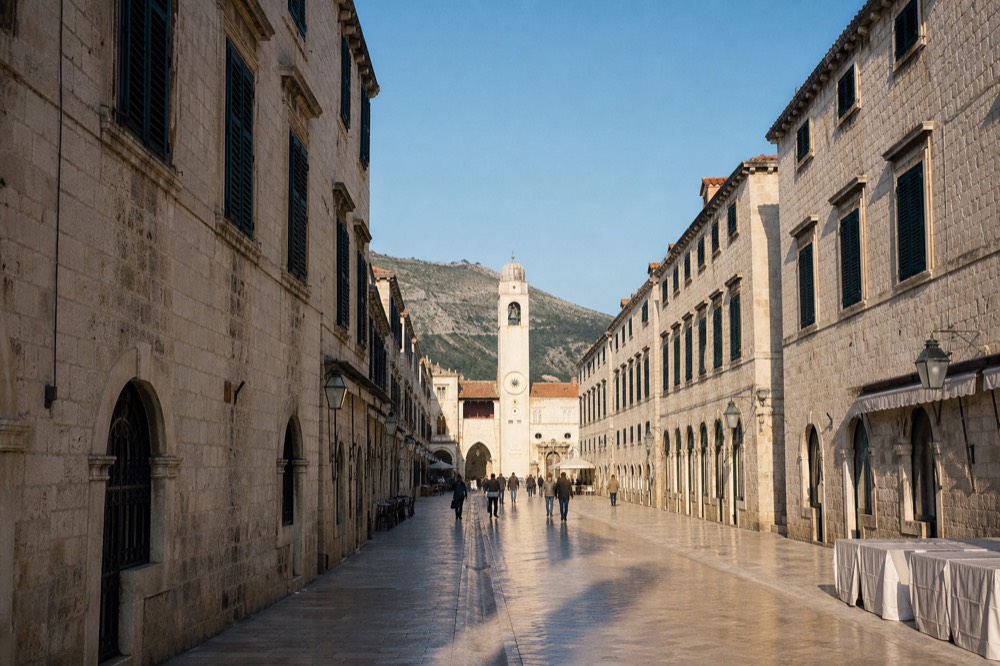
Here is the short version, day by day:
| Days | What fits comfortably | What you skip |
|---|---|---|
| 1 day | Old Town loop, city walls, cable car at sunset | Lokrum, beaches, museums, every day trip |
| 2 days | Walls at opening, Lokrum or a beach, dinner in the Old Town | Elaphiti Islands, Mostar, Montenegro |
| 3 days | Everything above plus a relaxed museum morning or kayaking | Border-crossing day trips |
| 4 to 5 days | One or two day trips: islands, Ston, Mostar or Kotor | Very little |
| 6 to 7 days | Slow pace, Cavtat, Trsteno, second swims | Nothing, though some days repeat |
The walls walk is the single activity most visitors regret rushing, and it is also the one where a guide changes what you are looking at. Stone towers and bastions blur together unless someone tells you which siege they faced. The circuit is 1,940 metres long, up to 25 metres high, 4 to 6 metres thick on the land side and 1.5 to 3 metres on the sea side, and it packs in 16 towers, 3 fortresses, 6 bastions and 2 drawbridges along the way. That is a lot of unnamed stone to walk past in two hours. If you want that context without giving up half a day, these are the three formats I would compare first:
The first is a focused two-hour walls walk, the second bundles the Old Town and the walls into one three-and-a-half-hour route, and the third is the day trip that fills a fourth day if you have one. For a deeper look at how the whole visit can be paced, the day count planning guide breaks each option into hour-by-hour blocks.
Timing matters as much as day count. July and August bring the largest crowds and the highest temperatures, so if your dates are flexible, May, June, September and October offer kinder conditions for the walls walk, the swim stops and the ferry rides. Whenever you come, build your days around the early morning: the walls at opening, the Old Town before the midday tour groups, and the rocks and beaches in the afternoon heat.
If you are adding a fourth day for a trip outside the city, a valid passport matters more than you might expect. Montenegro and Bosnia and Herzegovina are separate countries with separate border controls, so even though both sit within easy reach of Dubrovnik, crossing back into Croatia can add real waiting time to the return leg. The Elaphiti Islands avoid this entirely because they are Croatian territory, reached by boat from the Old Town harbour, which is why they are the safest day trip to plan on a tight schedule.
One last practical note on the walls themselves: there is little shade on the circuit and almost no seating, so water, sunscreen and comfortable shoes are not optional. The stair climbs between towers are the slowest stretches, and in high summer the stone radiates heat well into the afternoon. That is another quiet argument for the two-day version of the trip, because it lets you do the walls at opening, recover with a swim, and still have the evening for dinner without rushing either.
How Many Days in Dubrovnik Do You Need?
One day is enough to see the postcard Dubrovnik: the Stradun, the walls, the Rector's Palace courtyard and a cable car sunset. Two days is what most travellers actually need, because it separates the walking-heavy morning of the walls from the slower pleasures, swimming, Lokrum, a long dinner. Anything less than a full day and you will see the city through crowds and nothing else.
The one-day version works, but only with discipline. Be at the walls entrance at 08:00, when the operator opens, because the cruise day-trippers arrive in waves from mid-morning onward. Walk the circuit in two to two and a half hours, come down into the Old Town for lunch, spend the afternoon on the Stradun, the Sponza Palace and the cathedral, then take the cable car up Mount Srđ for the last light. The cable car costs 30 euro round trip for an adult, 17 euro one way, with children 4 to 12 at 8 euro round trip, and the ride covers 778.2 metres of track in three and a half minutes. It closes from January to March, so the one-day winter plan swaps that sunset for a walk to Fort Lovrijenac.
Two days changes the character of the visit completely. Day one becomes the walls and the Old Town at a human pace, with time for the Franciscan Monastery museum and a coffee on a side street instead of a grab-and-go. Day two becomes the water: Lokrum Island in the morning, whose 30-euro ticket covers both the reserve entry and the return boat transfer, or a kayak session around the walls and Betina Cave in the late afternoon when the light turns gold. The official Lokrum boats leave the City Harbour at 09:00, then every 15 minutes from 10:00 to 18:00, so there is no scheduling stress. The ticket office at Luža works 08:00 to 18:00, and a ticket stays usable for three days, which gives you a small buffer if the weather turns.
What two days still cannot hold is the Elaphiti Islands. The full-day cruises run about 8 hours, leaving the harbour mid-morning and returning in the early evening, so bolting one onto a two-day trip means sacrificing either the walls or Lokrum. That is the real reason the answer jumps from two days to four when people ask about the islands: the boat day is a full day, and the border day trips to Mostar or Montenegro run 11 hours or more.
There is also a stamina factor nobody mentions when they ask the question. The Old Town is a car-free grid of polished limestone and stairs, and even fit walkers feel the third consecutive day of climbing. Building in a beach afternoon or a boat day is not laziness, it is what keeps the final evening from becoming a shuffle. If your knees or your travel companions argue for a gentler pace, treat the two-day plan as a three-day plan and lose nothing but fatigue.
How Many Days Is Enough to See Dubrovnik?
Three days is enough to see Dubrovnik properly, and it is the number I give most people. Day one: the walls and the Old Town. Day two: Lokrum and the cable car. Day three: a morning swim or kayak, the museums you actually care about, and a final unhurried dinner. After three days the city itself stops adding new sights, and the fourth day is better spent outside it.
The third day is where the Dubrovnik Pass starts earning its keep if you are museum-inclined. The one-day pass costs 40 euro, exactly the same as the standalone walls ticket in main season, 1 March to 30 November, and it adds the Rector's Palace, the Maritime Museum, the Museum of Modern Art, the Natural History Museum and more, plus a 24-hour bus ticket. Every tier lists the City Walls and Lovrijenac Fortress as its first inclusion, and each sight can be visited once. The three-day pass at 50 euro and the seven-day at 60 euro add suburban bus coupons and House Bukovac in Cavtat. In December the standalone walls ticket drops to 20 euro and no pass tier is on sale at all, so the equivalence is a main-season comparison only. The official pass site carries the full inclusion list. The wider set of guides lives on Things to Do in Dubrovnik.
The walls themselves deserve the guided treatment on a three-day trip, because you finally have the spare hours. The two-hour walls walk that covers the wars and the sieges is the one I point people toward, and it pairs naturally with a free morning:
One guest review of that walk captures why the guide matters more than the stairs: "This well organized tour helped put Dubrovnik's past (and present) into perspective. It's incredible that the city walls have withstood the test of time. Antun was a wonderful guide."
This well organized tour helped put Dubrovnik's past (and present) into perspective. It's incredible that the city walls have withstood the test of time. Antun was a wonderful guide.
linda_a
If you would rather fold the Old Town orientation and the walls into a single guided block and keep day two and three entirely free, the combo tour does both in three and a half hours:
The combo route makes particular sense on a three-day stay, because it front-loads all the heavy walking into one morning and leaves you two full days where nothing is scheduled before noon. Travellers with children, or anyone visiting in the July and August heat, tend to get more out of that structure than out of two separate walks on two separate mornings. Whichever format you choose, book the walls for your first full day rather than your last: if a storm closes the circuit, and the operator does close it in bad weather, you still have days in hand to retry.
For readers planning around a tight window, the two day itinerary and the three day itinerary walk through these schedules stop by stop, and the one day itinerary shows what a disciplined single day can realistically hold.
What Do Four Days or More Add?
Four days adds the water and the borders. Day four is an Elaphiti Islands cruise with lunch, about 8 hours on the sea, or a Montenegro day trip of 11 to 12 hours. Five days lets you do both. Beyond five, you are no longer seeing more of Dubrovnik, you are living in it, and the rewards shift to Cavtat, Trsteno Arboretum and repeat swims at beaches you have already picked as favourites.
The island day is the easiest fourth day to justify. The Elaphiti cruises visit three islands, typically Koločep, Lopud and Šipan, with a fish-picnic lunch on board and swimming stops, and the most-reviewed version carries 10,312 reviews at 4.9. The pirate-ship version on the Karaka, a replica galleon, is the most atmospheric of the lot and a favourite with families. Whichever boat you pick, book it early in your stay rather than the last day, because if the bora wind blows and the sailings cancel, you want a spare day to rebook.
The border day trips are a different animal. Mostar and the Kravica waterfalls run about 11 hours door to door, Montenegro with the optional boat trip on the Bay of Kotor runs 11 to 12 hours, and both involve border crossings whose queues vary wildly with the season. They are superb days, but they are long, and stacking one on the final day of a short trip means arriving home at 21:00 with a flight the next morning. Give the border trips a full free day after them if you can.
A five-day pattern I often suggest looks like this:
| Day | Morning | Afternoon | Evening |
|---|---|---|---|
| 1 | City walls at 08:00 | Old Town, Rector's Palace | Dinner off the Stradun |
| 2 | Lokrum Island boat | Beach or Buža bar rocks | Sunset kayak or cable car |
| 3 | Guided walls or combo walk | Museums on the pass | Slow dinner, Lapad stroll |
| 4 | Elaphiti Islands cruise | On the boat, swimming stops | Early night |
| 5 | Mostar or Montenegro trip | On the road | Final Old Town wander |
Beyond five days, the honest answer is that Dubrovnik rewards depth rather than novelty. Cavtat is a short bus or boat ride away and pairs well with the House Bukovac gallery if you hold a three-day or seven-day pass. Trsteno Arboretum can be folded into the combined Dubrovnik, Trsteno, Lokrum ticket at 42 euro, which includes the arboretum admission and an air-conditioned boat. And some of the best fifth and sixth days I have watched people have involved nothing more than a repeat swim at a beach they had already declared their favourite, followed by a long lunch. If your interests run that way, the Elaphiti Islands guide and the island hopping guide map out how to stretch the sea days even further.
How Does the Season Change the Day Count?
The season changes the day count more than the itinerary does. In July and August, midday heat and peak crowds stretch every activity by an hour or two, so a two-day plan behaves like a three-day plan. In September and October, cruise traffic peaks but the sea is still warm, and in winter the city compresses into two comfortable days because the cable car closes and the boats stop.
The crowd pattern surprises people. Cruise passengers at the Port of Dubrovnik peaked in September 2025 at 101,246 and October at 100,132, both above July's 96,072 and August's 87,385, according to Port Authority data, so the old advice to dodge crowds by waiting past summer is half wrong: the ships thin out in November, not September. The full 2025 total was 625,257 passengers, and 461 cruise calls are scheduled for 2026. The Port Authority limits cruise passengers to 8,000 a day in most cases, and only 4 days a year run slightly above 10,000.
The practical translation: whatever your day count, put the walls at 08:00. The counting system shows the Old Town climbing from 3,139 people at 07:00 to a 7,739 peak at 10:00 on a busy September morning, and the wall walk itself has almost no shade. In high summer, the September average sea temperature of about 23.6 degrees, a long-run open-water average rather than a beach reading, is actually at its August peak of 25.8 in the weeks most people visit, so plan a midday swim as crowd avoidance, not as a luxury.
Winter flips the calculation. The cable car closes January to March, the walls ticket drops to 20 euro in December, and the island cruises stop running, so the city itself becomes a two-day destination with museum time to spare. The Dubrovnik in winter guide covers that version of the trip in detail.
Common Questions About How Many Days You Need in Dubrovnik
How many days do I need to see Dubrovnik?
Two days for the core city, three if you want a relaxed pace with Lokrum and a beach afternoon, four or more only if you are adding island or border day trips. One long day works for cruise passengers willing to start at 08:00.
Is one day in Dubrovnik enough?
One day is enough to walk the walls, see the Stradun and ride the cable car at sunset, but you will skip Lokrum, the beaches and the museums. Start at the walls entrance at 08:00 to stay ahead of the crowds.
Are three days in Dubrovnik too many?
No. Three days is the comfortable fit: walls and Old Town on day one, Lokrum and the cable car on day two, and a swim, museums and a slow dinner on day three. Only beyond five days does the city start repeating itself.
Can you do a day trip from Dubrovnik on a short stay?
Only from a base of four days or more. The Elaphiti cruises take about 8 hours and the Mostar and Montenegro trips run 11 hours or more, so they need a full free day plus a buffer day in case of cancellations.
What is the best month for a short visit?
May, June and late September balance warm sea against thinner crowds, though note that September and October are actually the peak cruise months. July and August are the hottest and busiest, and the cable car closes January to March.