What Drink Is Dubrovnik Known For?
Dubrovnik has no single official drink, but local wine, rakija and cold rosé define how the city drinks. Here is what to order, what to eat alongside it and which dessert finishes the meal.
What Drink Is Dubrovnik Known For?
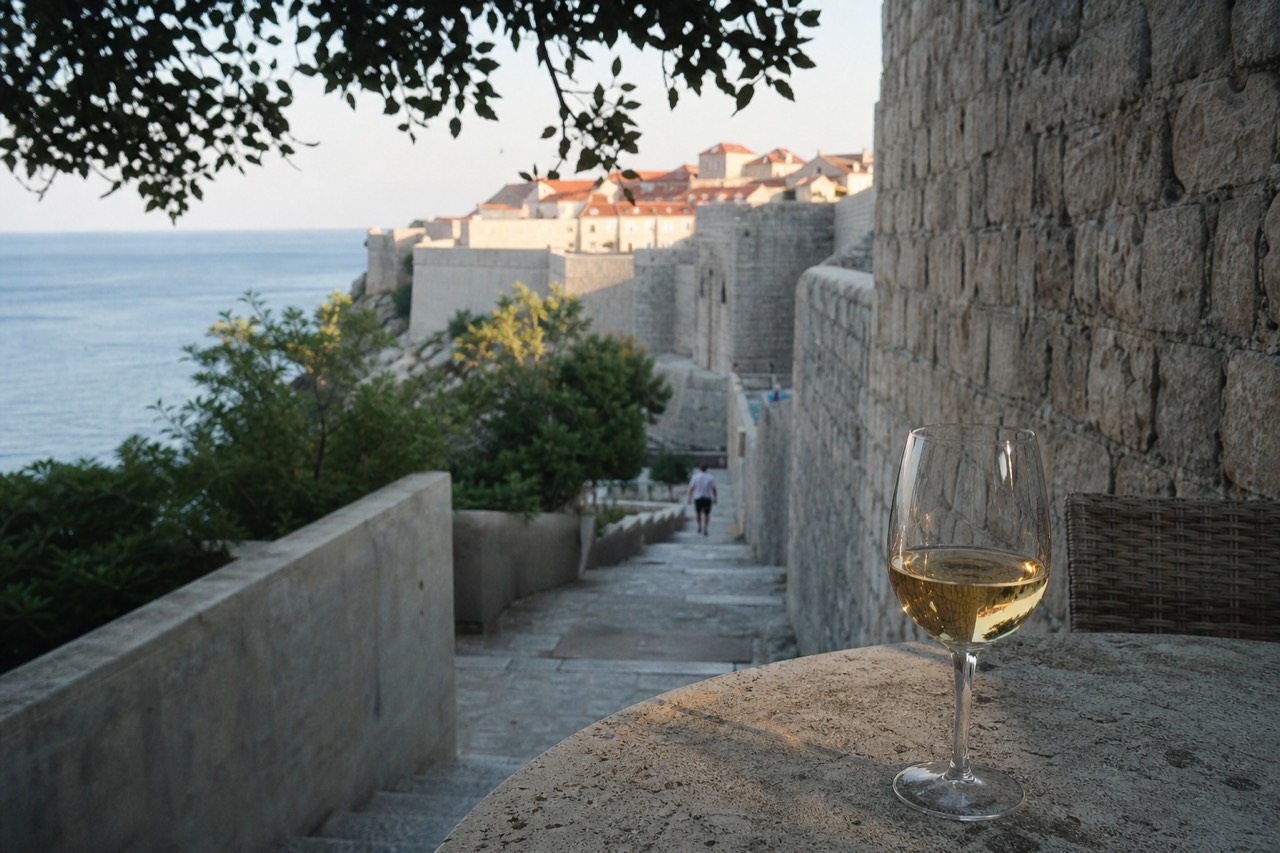
Dubrovnik is known above all for its wine. The city sits an hour from the Pelješac peninsula, home to Plavac Mali and Dingač, and local reds, whites and dry rosé appear on nearly every konoba table in town. Rakija, the fruit brandy of the eastern Adriatic, is the traditional opener, and a cold glass of rosé has become the default summer pour.
There is no official municipal drink, no protected designation the way some regions guard a liqueur recipe. What Dubrovnik has instead is a drinking culture shaped by geography: a walled city on a narrow coast, with vineyards on the same stretch of land since long before anyone wrote a travel blog about it. Wine is the honest answer, and the deeper answer is that the wine worth knowing here comes from the immediate neighbourhood, not from a famous region far away. A visitor who orders a bottle from the other end of Croatia is technically drinking Croatian wine, but they are missing the point of drinking wine in this particular city.
The practical version of that answer plays out in the konobas, the small family taverns of the Old Town and the surrounding bays. A meal there usually starts with rakija, moves to a carafe of house wine, and ends the way most Dalmatian meals end, with something sweet and a small espresso. Visitors who order a local red by the glass are rarely disappointed, and the ones who ask what the house pours are usually pointed toward Pelješac. Asking is half the pleasure: the answer often comes with a story about an uncle's vineyard, a slope you can see from the terrace, or a bottle that never leaves the family.
It is also worth saying what Dubrovnik is not known for, because the negative space is instructive. This is not a beer city in the way northern European capitals are. Beer is available everywhere and the local lagers are perfectly good on a hot afternoon, but nobody travels here for the beer. Cocktails exist, mostly around the beach clubs and the late-night venues, and the nightclub inside the old fortress has its own scene, which our Dubrovnik nightlife guide covers in full. But the centre of gravity, the thing the city actually pours with pride, sits in the wine glass.
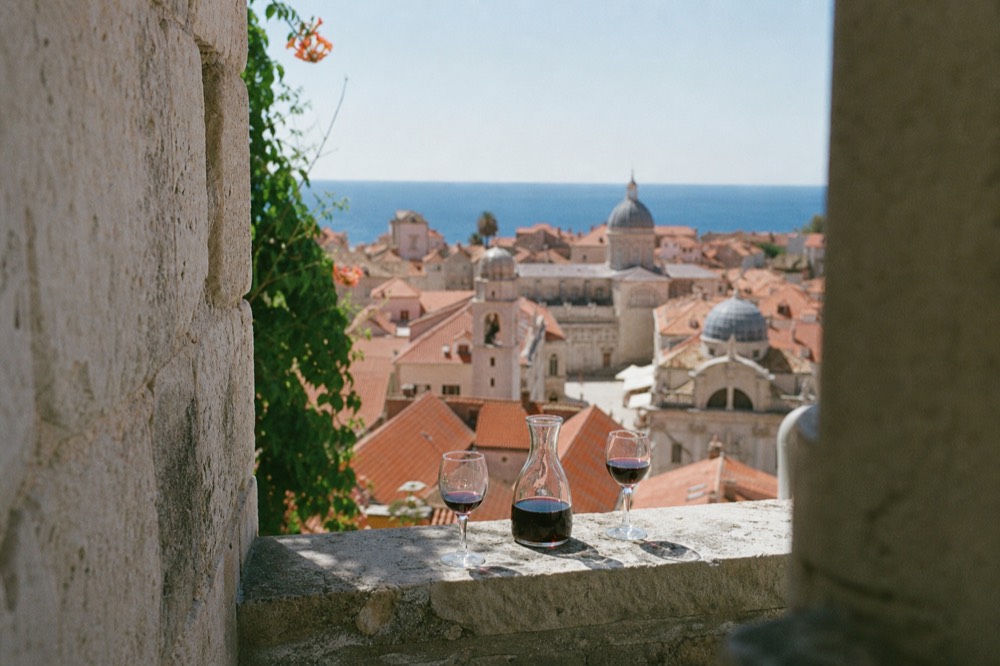
If you want to taste that culture rather than just read about it, a guided food and drink walk is the fastest route, and a cooking lesson goes one step further. These three options cover the spread, from a full peka cooking class to a walking food tour to the walls ticket you will want anyway.
For planning purposes, here is the short version of what to order and when. The rhythm of a Dalmatian table is fairly rigid, and knowing it in advance makes the whole meal feel less like a guessing game and more like a script you are happy to follow.
| Drink | What it is | When it is poured |
|---|---|---|
| Local red wine | Mostly Plavac Mali from Pelješac and nearby slopes | With grilled fish and meat, lunch and dinner |
| Dry rosé | The default warm-weather pour along the coast | Afternoon heat, terraces, beach days |
| Rakija | Fruit brandy, often offered by the house | Before a meal, or as a welcome gesture |
| Espresso | Short, strong, always after dessert | End of the meal, never rushed |
What Is Dubrovnik Best Known For?
Dubrovnik is best known for its walled Old Town, a UNESCO World Heritage Site inscribed in 1979 covering 24.7 hectares. The city walls run 1,940 metres, reach up to 25 metres high and are 4 to 6 metres thick on the land side. The Stradun, the limestone main street, stretches 298 metres through the centre. Around it all sits the Adriatic.
That is the postcard, and the postcard is accurate. The walls are the single most famous thing in the city, and the reason so many visitors build their whole day around them. The operator's stated hours at the time of check were 08:00 to 19:30, and the adult ticket is 40 euro in main season, 1 March to 30 November, which is the walls plus Fort Lovrijenac combination. In December that same adult ticket drops to 20 euro. You can read the full measurements on the walls operator's own page.
Beyond the walls, the city is known for its setting. Fort Lovrijenac stands on a 37-metre-high sea rock just outside the western wall, the cable car lifts you 367 metres to the upper terminal on Mount Srđ, and the whole protected core sits inside a 1,188.6-hectare buffer zone. The Old City was on the World Heritage in Danger list from 1991 to 1998, which is part of why the preservation you see today is so deliberate. Walking through the Pile Gate and onto the polished limestone, you are moving through a core that was rebuilt and guarded with an unusual level of care, and the UNESCO inscription in 1979 under criteria (i), (iii) and (iv) was the formal recognition of that.
The Stradun itself is worth a sentence of its own. The 1272 Statute fixed the final plan of both the city and its main street, and the Tourist Board's own page on the Placa records its 298-metre length. Walking it end to end takes minutes; the reason to linger is the side alleys, where the drinking and eating of the city actually happens. The main street is for seeing, the alleys are for sitting, and every good evening in Dubrovnik eventually migrates from one to the other.
The city is also known, whether it likes it or not, for crowds, and the numbers behind them are more interesting than the complaints suggest. The Port Authority limits cruise passengers to 8,000 a day in most cases, out of 243 cruise days a year only 18 exceed that number, and about forty call requests were refused in a single season to keep the balance. Six counters at every Old Town entrance update a headcount every 15 minutes against an official carrying capacity of 11,275 people. None of this stops you enjoying a glass of wine; it just tells you when to have it, and our best time to visit Dubrovnik guide works through the timing in detail.
If you are planning a first visit, the Things to Do in Dubrovnik homepage pulls the whole city into one list, and our first-timers guide to Dubrovnik covers the practical sequencing. The short version: walls early, swim in the afternoon, konoba and a carafe of local red in the evening. That sequence has survived every change in fashion the city has seen, and it will survive your trip too.
| What it is known for | The figure | Why it matters |
|---|---|---|
| City walls | 1,940 m long, up to 25 m high | The defining walk and the main ticketed sight |
| Old Town UNESCO site | Inscribed 1979, 24.7 ha | One of the great preserved cores of the Mediterranean |
| Stradun | 298 m long | The limestone spine every visitor walks |
| Mount Srđ cable car | 367 m rise, 778.2 m track | The classic panorama over the red roofs |
What Is the Famous Drink in Dubrovnik?
The closest thing to a single famous drink in Dubrovnik is a glass of Plavac Mali red from Pelješac, poured by the carafe in the konobas. Rakija is the famous opener, a fruit brandy offered as a welcome. In summer, dry rosé is the pour most associated with the terraces and the beach clubs. None of the three has an official title.
The honest framing matters here, because plenty of destinations invent a signature drink for marketing. Dubrovnik never needed to. The drinking culture grew out of what the coast produces: grapes on the neighbouring peninsula, fruit in the hinterland for brandy, and a climate where a cold glass of something pale at four in the afternoon is less a choice than a reflex. When a city has been drinking the same things for centuries, the question of which one is famous answers itself differently depending on the season, the hour and the table.
Rakija deserves its own paragraph, because visitors meet it before they expect to. It arrives as a small clear glass, often unasked, sometimes with figs that have been sitting in the bottle for a season. Loša is the grape version, travarica the herb-infused one, and refusing the first pour is harder than drinking it. It is a gesture of welcome more than a beverage, and treating it that way gets you a long way with a konoba owner. The strength catches people out: this is not a sip-all-evening drink, it is a two-mouthful punctuation mark at the start of a meal, and the locals who pour it for you will expect you to treat it the same way.
Wine is where the region gets serious. The nearby Pelješac peninsula grows Plavac Mali, and the steep southern slopes around the village of Dingač produce the most prized bottles. Our Pelješac wine guide covers the route in detail, and the Plavac Mali grape explained page is the place to learn the difference between a table red and a Dingač before you order one. The one-line version: if the label says Dingač, expect structure and price to rise together. The grape is a relative of zinfandel, which makes for good table conversation, but the comparison only goes so far; a good Plavac Mali is darker, drier and more firmly tied to its soil than most of its Californian cousins.
Rosé deserves a fair hearing too, because in high summer it quietly outsells everything. The September average sea temperature on this coast is about 23.6 degrees as a long-run average, and August runs warmer still, which is the kind of climate where a heavy red at lunch feels like a mistake. House rosé, served cold and cheap by the carafe, is the correct answer to a Dubrovnik afternoon, and no sommelier in the city will judge you for ordering it. The locals certainly do not.
If you would rather have someone walk you through the glasses and the stories behind them, the food and drink walking tour with a local guide is the strongest option on the roster, from $165.64 per person and rated 5 across 704 reviews. It pairs the pours with the food that goes with them, which is really the only way this city makes sense.
What Food Is Dubrovnik Known For?
Dubrovnik is known for grilled fish and seafood, black cuttlefish risotto, peka cooked under a bell of embers, and the simple konoba trinity of olive oil, salt and whatever the boat brought in. The food is Dalmatian at its core, shaped by the sea and by the narrow coastal strip, with Italian influence visible in the pasta and the risotti.
Black risotto, crni rižot, is the dish that surprises people, stained dark with cuttlefish ink and served in nearly every konoba in the Old Town. It looks like a kitchen accident and tastes like the reason people come back to this coast. Grilled fish is the other constant, priced by the kilo and usually simply done over charcoal with lemon and olive oil. The ritual of choosing the fish matters: the waiter brings the tray, you point, the kitchen weighs it, and the price per kilo is on the board. It is a system that rewards curiosity and punishes nobody.
Shellfish from the nearby Ston oysters, mussels and the salt pans of the peninsula show up everywhere, and our Ston oysters guide explains why the short trip up the coast is worth it for them alone. The oysters there are flat, mineral and served with nothing but lemon, and the salt works that surround the town have been shaping both the economy and the flavour of the region for a very long time. Oysters with a glass of local white is arguably the single best food-and-drink pairing available within an hour of the city.
Peka is the ceremonial one. Meat or octopus slow-cooked under a domed metal lid buried in embers, it needs hours and usually needs ordering ahead. That is exactly what the Croatian Traditional Cuisine: Peka Cooking Lesson offers, a four-hour hands-on class built around the dish. It carries too few reviews for a star rating to be meaningful, so judge it on format rather than a score, and the format is about as close as a visitor gets to cooking with a local family. You are not watching a demonstration behind a rope; you are part of the process that turns raw ingredients and a pile of coals into the centrepiece of a Dalmatian table.
For a broader sweep of the plates, the food and drink walking tour with a local guide remains the best-value introduction, from $165.64 per person and rated 5 across 704 reviews, with stops chosen by a guide who lives here. One recent guest called it out plainly:
Amazing food tour! Marija was a great guide, full of stories and facts that really brought Dubrovnik to life. The food was delicious, and generous. Wines at every stop. Would highly recommend this tour to anyone visiting Dubrovnik, especially to help get your bearings of the city and know where to go for dinner!
Bryan_M
The fuller answer to the food question lives on our what to eat in Dubrovnik page, which goes plate by plate, and our where locals eat in Dubrovnik answer covers the tables away from the main drag. The table below is the short version, the four dishes that between them account for most of what visitors remember eating here.
| Dish | What it is | Where to expect it |
|---|---|---|
| Grilled fish | Whole fish over charcoal, lemon and oil | Every konoba, priced by the kilo |
| Black risotto | Cuttlefish risotto stained with ink | Old Town taverns, a Dalmatian standard |
| Peka | Meat or octopus slow-cooked under a bell | Order hours ahead, or take a class |
| Ston oysters | Flat oysters from the nearby peninsula | Raw, with lemon, often by the half dozen |
What Dessert Is Dubrovnik Known For?
Dubrovnik is known for rožata, a caramel custard that is the city's signature dessert, followed closely by dried figs, sugared almonds and the simple pairing of seasonal fruit with a sweet dessert wine. Rožata is the one to name if you have to name one, a silky baked custard with a dark caramel top, served cold across the Old Town.
Rožata is to Dubrovnik what crème brûlée is to France, except almost nobody outside the region has heard of it, which is part of the charm. The caramel is cooked dark, the custard beneath it is soft and barely set, and the whole thing arrives chilled. Konobas and pastry shops both carry it, and it pairs naturally with the sweet local dessert wines that end a long Dalmatian lunch. If a menu lists it, order it; if two menus list it, order it at the one with fewer tables.
Around it sits a quieter dessert culture. Dried figs, often pressed together with nuts, almonds in every sugared form, and the fritule and rožule family of small fried doughs that appear when the season turns. None of these are performance desserts; they are the things a household has in the cupboard, which is exactly why they have survived every wave of restaurant fashion that reached the coast. In December the Christmas market takes over, and our Dubrovnik in winter guide covers what the city pours and plates when the cruise crowds thin out.
The pattern worth noticing is that dessert here is rarely heavy. After a fish meal and a carafe of red, the city reaches for custard, fruit or nuts rather than cake, and then an espresso, and then the evening. The espresso is not optional in the local mind; it is the full stop at the end of the sentence, and asking for a cappuccino after the custard will mark you as a visitor faster than any camera strap. If you build your own evening the same way, walls at some point, a swim, a konoba, rožata to finish, you have essentially understood the place.
Before you go, here are the three picks again, the cooking lesson, the food walk and the walls admission, in one place.
Common Questions About Drinks and Food in Dubrovnik
What drink is Dubrovnik known for?
Wine, above all. Local reds from Plavac Mali grapes grown on the nearby Pelješac peninsula, dry rosé in summer, and rakija as the traditional welcome. There is no single official drink, but a carafe of house red in a konoba is the most Dubrovnik pour there is.
What Is the Famous Drink in Dubrovnik?
The closest to a famous single drink is a glass of Plavac Mali red from Pelješac, followed by rakija, the fruit brandy offered as a greeting in family taverns. Dry rosé is the default afternoon pour on terraces in warm months.
What Food Is Dubrovnik Known For?
Grilled fish, black cuttlefish risotto, Ston oysters and peka, the meat or octopus dish slow-cooked under a bed of embers. The style is Dalmatian, built on olive oil, salt, charcoal and whatever the boats brought in that morning.
What Dessert Is Dubrovnik Known For?
Rožata, a cold caramel custard that is the city's signature sweet. Dried figs, sugared almonds and seasonal fruit with a dessert wine round out the list, and an espresso always closes the meal.
Can You Visit a Winery From Dubrovnik?
Yes. A half-day tasting trip is enough to try Plavac Mali and the Dingač bottlings in one afternoon.