What Is the Best Way to Get from Dubrovnik to Kotor?
The honest answer for getting from Dubrovnik to Kotor: guided day trip, private transfer, rental car or bus, compared, with what a boat can and cannot do.
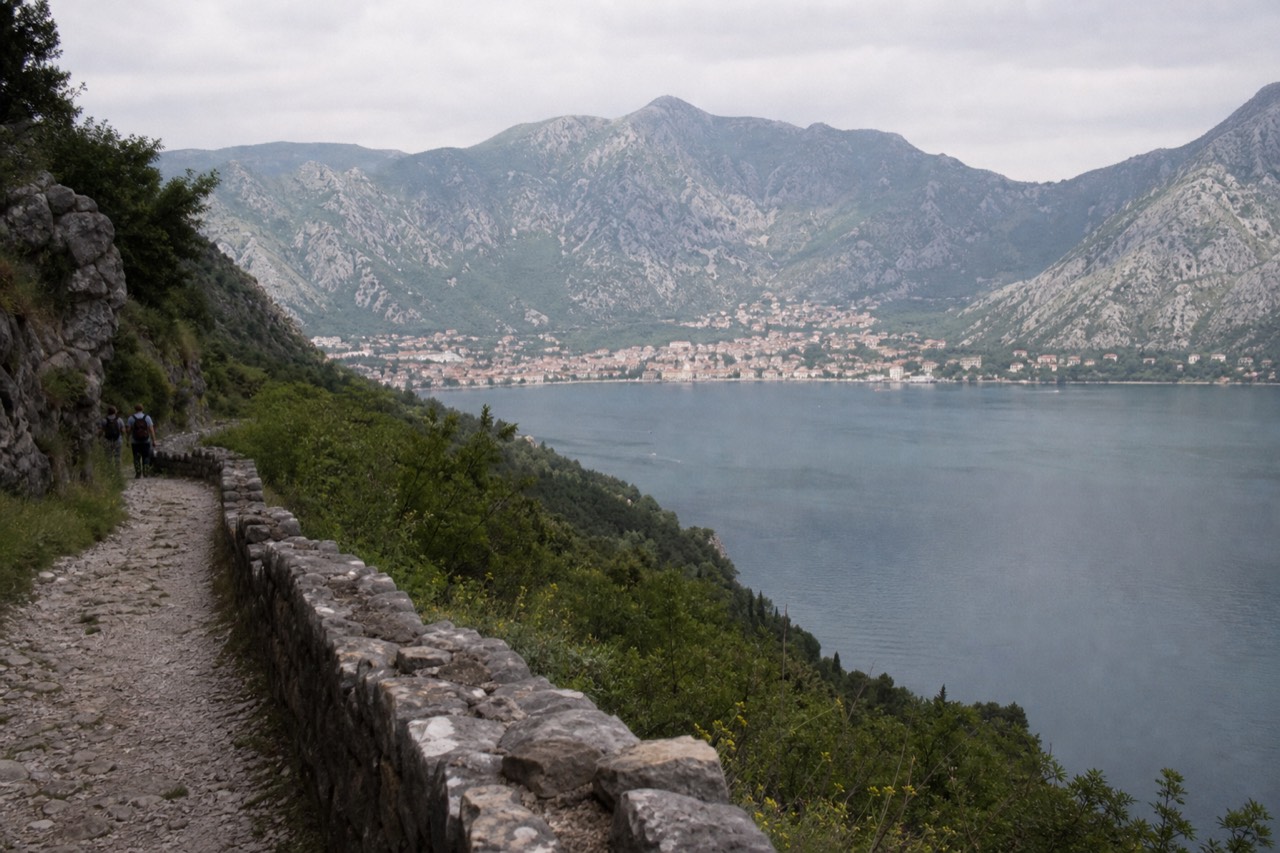
What Is the Best Way to Get from Dubrovnik to Kotor?
For most travellers the best way is a guided day trip: the border crossing and the mountain roads are handled for you, the timing is planned around the queues, and the two strongest options run from $58 and $70.99 per person. Driving yourself is the flexible alternative if you hold a valid licence and accept two border checks. There is no direct passenger boat, and the bus trades price for schedule risk.
I get this question constantly, and the answer surprises people: the hard part of Kotor is not the distance, it is the border. You leave Croatia, cross a short stretch of Bosnia and Herzegovina around Neum, then enter Montenegro, and on a busy summer day each of those crossings can move at walking pace. A day trip that starts badly at the border rarely recovers, because Kotor's old town deserves unhurried hours, not a sprint.
That is why the guided option wins for a first visit. The Montenegro Day Trip from Dubrovnik with Optional Boat Trip runs 11 to 12 hours, costs from $70.99 per person, and is rated 4.4 across 3,829 reviews. Its stablemate, From Dubrovnik: Montenegro Day Trip, starts at $58 per person with a 4.4 rating across 5,611 reviews. Both exist almost entirely because the border makes self-driving stressful for people who do not know the rhythm of the queues.
In July the same crossing can consume the better part of an hour, which is exactly the kind of swing a professional driver plans around and a first-time visitor does not.
We booked the semi-private tour. 6 people total. Robert was fantastic! He was so knowledgeable and enthusiastic about everything. The tour was well organized and we had just the right time at the spots. Extremely satisfied with this tour and would certainly recommend to anyone. Also the border in September only took us 15 minutes.
Nithya
If you would rather compare the three most-booked ways people actually structure this day, here they are side by side.
| Option | Price | Rating | Length |
|---|---|---|---|
| Montenegro Day Trip (Super Tours Travel Agency) | From $58 per person | 4.4 across 5,611 reviews | Day trip, guided |
| Montenegro Day Trip with Optional Boat Trip (Super Tours) | From $70.99 per person | 4.4 across 3,829 reviews | 11 to 12 hours approx |
| Rental car, self-driven | Car hire varies by season | No rating applies | Your own schedule |
The self-driving option deserves a fair hearing before you dismiss it. The route is genuinely beautiful, the roads are in decent condition on the main corridor, and having your own car means you can stop wherever the view grabs you, which on this coast is roughly every ten minutes. The costs are the two border checks, parking in Kotor's tight old-town approaches, and the fact that you cannot relax on the drive back after a long day. If two of you are travelling, the per-person economics of a rental car can beat the guided price, but only if nothing goes wrong at the border.
The bus is the budget fallback. Services run along the coastal corridor toward Herceg Novi and on to Kotor, and they are cheap, but they stop at the same borders you would drive through, without any priority. A delayed bus on the return leg can mean arriving in Dubrovnik after midnight, which is a real cost that never appears in the ticket price. For a solo traveller with a flexible next morning, it works; for anyone on a tight schedule, it is a gamble.
Before the details, one framing thought. This site exists to help you plan Things to Do in Dubrovnik, and Kotor is the single most popular add-on to a Dubrovnik stay. Treat it as a full-day commitment, not a quick hop, and the day pays you back.
What Is the Best Way to Get to Dubrovnik?
Most visitors fly into Dubrovnik Airport, which serves direct routes from across Europe and seasonal long-haul connections, then transfer to the city by airport bus, shared transfer or taxi. Cruise passengers arrive at the Port of Dubrovnik in Gruž, with 461 cruise calls scheduled for 2026. Overland travellers come by bus, car or ferry, since the city has no train station.
Your arrival shapes your Kotor day more than you might expect. If you are flying in, the airport sits well south of the city, and a shared departure transfer starts at $20 per person, rated 4.5 across 57 reviews. Build in a buffer: an evening arrival plus a dawn Kotor departure is a recipe for a miserable day, and I say that as someone who has watched travellers do it for years. The smarter pattern is to give Dubrovnik at least one full day before you commit to an 11-hour excursion, both to recover from travel and to learn the town's rhythm before you leave it.
Cruise visitors face a different calculation. If Kotor is on your itinerary, check whether your ship already calls there: many Adriatic itineraries include both Dubrovnik and Kotor, which makes an independent day trip from Dubrovnik redundant. The Port Authority's own statistics pages publish the call schedule, and the numbers are worth knowing: 625,257 cruise passengers passed through in 2025, and 461 calls are scheduled for 2026. The port limits cruise passengers to 8,000 a day in most cases, per the Port Authority's cruise destination page. If your ship overnights in Dubrovnik, a Montenegro day trip is one of the few excursions that genuinely fits the window; if you are in port for a single day, stay in the city, because the border risk can cost you your sailing.
For everyone else, the practical answer is that Dubrovnik is a terminus, not a crossroads. There is no train station, buses run along the coastal corridor, and the ferry network connects you up the Adriatic rather than around the bay. Once you are in the city, you walk: the walled Old Town is 24.7 hectares of pedestrian stone, and its carrying capacity, from the UNESCO assessment, is 11,275 people. The Old Town was inscribed on the World Heritage List in 1979 under criteria (i), (iii) and (iv), and it spent 1991 to 1998 on the List of World Heritage in Danger, a reminder that the town you are visiting was fought over within living memory.
One more arrival note worth its weight: the city counted 41,562 inhabitants at the 2021 census, and about 4.2 million overnight stays in 2025. That ratio explains almost everything about how Dubrovnik feels in season, and it explains why timing, which I keep returning to, matters more here than in most destinations.
Is It Worth Going to Kotor From Dubrovnik?
Yes, for most travellers with three or more nights in Dubrovnik. Kotor's fjord-like bay and walled old town are genuinely distinct from anything on the Croatian side, and a guided day trip from $58 to $70.99 per person buys the experience without burning a hotel night. With only one or two nights, skip it: the border and the driving make it a long, thin day.
The honest case for going is the Bay of Kotor itself. The road down the Croatian and Montenegrin coast, then around the bay, is one of the great drives of the Adriatic, and Kotor's old town, tucked under the mountains, has a mood that Dubrovnik's polished limestone does not. Climbing Kotor's own fortress walls is a different experience from Dubrovnik's: steeper, rougher, and rewarding you with the bay laid out below. If that sentence appeals to you, the trip is worth it.
The honest case against is arithmetic. This is a day built around two border crossings and a lot of road time. The guided trips run 11 to 12 hours, which tells you plainly what you are signing up for. Travellers who love Kotor tend to be travellers who enjoy the transit as scenery; travellers who regret it tend to have expected a relaxed half-day. Set expectations correctly and the day almost always lands well.
There is a middle path worth naming: overnight in Kotor. If you can spare two days, taking a bus or a rental car down, sleeping in the old town, and returning the next afternoon transforms the experience. You get Kotor in the evening, when the day-trippers have gone and the walls are lit, and the morning light on the bay before anyone else arrives. The trade is a hotel night and a border crossing you pay twice, but for slow travellers it beats the compressed day trip comfortably.
This is where the related tour earns its place. The Montenegro Day Trip from Dubrovnik with Optional Boat Trip adds a boat ride on the bay to the standard itinerary, which is the single best upgrade available on this route: seeing Kotor's walls from the water reframes the whole town. It runs 11 to 12 hours, from $70.99 per person, rated 4.4 across 3,829 reviews, and the operator handles the border paperwork and timing entirely.
If you are weighing guided versus independent, the deciding factors are your tolerance for queues and your appetite for improvisation. A driver who crosses this border weekly knows which lane moves and when the convoy of tour buses hits; a first-timer does not. Against that, independence lets you stop in Perast or Herceg Novi on a whim, and those stops are lovely. Perast in particular, the baroque town two-thirds of the way down the bay, is the stop most guided trips include and most independent drivers are glad they made.
For a deeper dive into the destination itself, our Kotor day trip planning guide breaks down the town, the bay and the fortress climb in detail. And if you are still deciding whether Montenegro is the right add-on at all, the question is a day trip from Dubrovnik to Montenegro worth it runs the numbers on time versus reward.
What Is the Best Way to Get Around in Dubrovnik?
On foot, full stop. The Old Town is pedestrian-only stone, the Stradun runs 298 metres end to end, and everything inside the walls is a walk. For anything beyond the centre, use the local buses: a one-day Dubrovnik Pass at 40 euro in main season includes the walls, ten more sights and a 24-hour bus ticket, making it the transport answer for most visitors.
I walk these streets for a living, and I can tell you the single biggest mistake new arrivals make is planning to drive inside the city. You cannot, and you should not want to. Park outside, or better, book accommodation where a car is unnecessary, and let your legs do the work. The terrain is steep in places, the staircases between levels of the town are unrelenting in the summer heat, and water bottles are not optional.
The walls themselves are the city's signature walk: 1,940 metres of circuit, up to 25 metres high, 4 to 6 metres thick on the land side. The adult ticket is 40 euro in main season, 1 March to 30 November, and 20 euro in December, and that ticket is actually a combination covering Fort Lovrijenac, the Western Outer Wall and the coin collection too. The operator's stated hours at time of check were 08:00 to 19:30, and going early matters: on a real September morning the counters logged 5,419 people inside by 08:00 and a 7,739 peak at 10:00.
| Ticket | Main season (1 Mar to 30 Nov) | December |
|---|---|---|
| Adult, walls and Lovrijenac | 40 euro | 20 euro |
| Child 7 to 18 | 15 euro | 5 euro |
| Child 6 and under | free | free |
| One-day Dubrovnik Pass | 40 euro | not on sale |
The pass comparison is worth a beat. In main season the one-day pass costs the same 40 euro as the standalone walls ticket and adds ten more sights plus the 24-hour bus ticket, which is why I steer most first-timers toward it; the full structure is on the official pass site. In December the standalone walls ticket drops to 20 euro and no pass tier is on sale at all, so the comparison flips with the season. If buses are your lifeline to Lapad or Gruž, that bundled ticket is the quiet win.
Beyond the centre, the practical network is the local bus fleet, running between the Old Town, Lapad, Babin Kuk and Gruž. Taxis and ride-hailing exist and are useful for airport runs, but for daily movement the buses are frequent, cheap and perfectly adequate. For a full treatment, our getting around Dubrovnik guide covers buses, taxis and parking in one place.
One practical note that connects back to the Kotor question: if you are driving to Montenegro, do not plan to park near the Old Town on your return. Summer parking around Pile and Ploče fills early and is expensive; the wiser pattern is to leave the car wherever your accommodation sits and finish the day on foot or by bus. Tired drivers hunting stone-side parking spaces at 21:00 is a scene I have watched a thousand times, and it never ends well.
Is There a Boat From Dubrovnik to Kotor?
No. There is no scheduled passenger ferry or boat service between Dubrovnik and Kotor, despite what some forum threads imply. The bay is reached by road, and the boats you can take from Dubrovnik go elsewhere: to Lokrum, the Elaphiti islands, Cavtat and the Blue Cave. The boat component of Montenegro day trips runs on the Bay of Kotor itself, after you arrive by road.
This is the most common misconception on the route, so let me be plain about it. People see Dubrovnik's busy Old City Port, see boats leaving constantly, and reasonably assume one of them heads down the coast to Montenegro. They do not. The scheduled departures you are watching serve Lokrum: boats leave the City Harbour at 09:00, then every 15 minutes from 10:00 to 18:00, per the Lokrum Reserve's official schedule. A Lokrum ticket is 30 euro per person and covers both the reserve entry and the return boat transfer, and the ticket office at Luža works 08:00 to 18:00. A ticket stays usable for three days, which gives you flexibility if the weather turns.
Why no ferry, when the two towns look so close on a map? The coastline between them is long, winding and border-cut, the road hugs cliffs for much of the way, and the commercial logic of a scheduled fast ferry has never pencilled out for operators. Private boat charters can technically make the run, but they price as luxury experiences, not transport, and the sea state on the open stretch south of Dubrovnik makes it a commitment rather than a commute. For every traveller who asks me, the answer stays the same: road it is.
If a day on the water is what you actually want, there are excellent options, they just are not Kotor. The Lokrum Island and Betina Cave Boat Tour runs from $39.42 per person, rated 4.6 across 1,154 reviews, and combines the island with the cave beach that kayakers love. Further afield, the full-day Elaphite islands cruise with lunch starts at $59.16 per person and carries the most reviews of anything on this route, 10,312 of them at 4.9.
| Boat product from Dubrovnik | From (per person) | Rating |
|---|---|---|
| Lokrum Island (optional) and Betina Cave Boat Tour | $39.42 | 4.6 across 1,154 reviews |
| Full-Day Elaphite Islands Cruise with Lunch | $59.16 | 4.9 across 10,312 reviews |
| Blue Cave and Sunj Beach Boat Tour with Drinks | $63.48 | 4.87 across 3,105 reviews |
So the shape of the decision is simple. If Kotor is the goal, you go by road, and the boat element, if you want one, is the optional bay ride inside a guided Montenegro day trip. If the water is the goal, spend the day on the Adriatic side instead and save Montenegro for a second visit or an overnight. Trying to force both into one day is how people end up seeing two towns through a bus window.
For anyone still weighing the sea option from the other direction, our piece on the ferry ride from Kotor to Dubrovnik covers the same truth from the Montenegrin side, and the Lokrum ferry guide explains the one boat schedule that genuinely matters to a Dubrovnik stay.
Whichever way you structure it, book the guided option early in peak weeks: the September and October cruise numbers mean the town fills from the port as well as the road, and the best-reviewed departures sell out first.
Common Questions About Getting from Dubrovnik to Kotor
What is the best way to get from Dubrovnik to Kotor?
A guided day trip, for most travellers. The two strongest options run from $58 and $70.99 per person, both rated 4.4, and both handle the two border crossings and the mountain roads. Driving yourself is the flexible alternative if you accept the queues; there is no direct boat.
Is It Worth Going to Kotor From Dubrovnik?
Yes, with three or more nights in Dubrovnik. The bay and the old town are genuinely distinct from the Croatian coast, and a guided trip buys the experience without a hotel night. With one or two nights, the 11 to 12 hour day is too thin a slice of your stay.
Is There a Boat From Dubrovnik to Kotor?
No. No scheduled passenger service connects the two. The boats leaving Dubrovnik's harbour serve Lokrum, the Elaphiti islands, Cavtat and the Blue Cave. The boat element in Montenegro trips runs on the Bay of Kotor after you arrive by road.
What Is the Best Way to Get Around in Dubrovnik?
On foot inside the walls, and by local bus beyond them. The one-day Dubrovnik Pass at 40 euro in main season bundles the walls, ten more sights and a 24-hour bus ticket, which covers transport for most visitors in one purchase.
How Long Does a Kotor Day Trip Take?
The guided tours run 11 to 12 hours approx, door to door. Border queues are the main variable: one September traveller reported a 15-minute crossing, while summer weekends can stretch the same crossing past an hour.
When Is the Quietest Time to Do This Trip?
May, June and late September balance weather and crowds. Note that September and October are actually the peak cruise months in Dubrovnik, with 101,246 and 100,132 cruise passengers in 2025 against July's 96,072, so autumn is scenic but not empty.