Dubrovnik All-Inclusive Resorts: What Actually Exists and What to Book Instead
Travellers searching for a dubrovnik all inclusive holiday often arrive at a surprise: the walled city itself has almost nothing of the kind. Here is what actually exists, what a Croatian package is really worth, and how to build the same effort-free trip from a ordinary hotel base.
Short answer
Dubrovnik has no classic all-inclusive resort inside the Old Town, and only a handful of hotel-plus-board options on the Lapad and Babin Kuk peninsula. Most visitors do better with a hotel plus half board and a paid day trip or two. The adult walls ticket is 40 euro in main season, and the one-day Dubrovnik Pass costs the same 40 euro while adding ten more sights.
Dubrovnik sells itself as a complete destination, which is exactly why so many searches for a dubrovnik all inclusive holiday end in mild confusion. The city that appears in every brochure, the walled Old Town, contains almost no hotels of the package kind and no resort of the eat-and-drink-all-day variety at all. What exists instead sits on the Lapad peninsula and the Babin Kuk headland a bus ride away, and even there the product is closer to a full-board city hotel than to a Caribbean-style compound. This page sets out, honestly, what you can book, what it costs, and whether the package route is even the right one for this coast. I have walked these streets with travellers since 2015, and the pattern is remarkably consistent: the people who enjoy Dubrovnik most are the ones who leave their hotel for half of every day.
Are There All-Inclusive Resorts in Dubrovnik?
No true all-inclusive resort exists inside the walled Old Town, and the closest equivalents sit on the Lapad peninsula and at Babin Kuk, two to four kilometres from Pile Gate. What is sold as all-inclusive in Croatia is usually a full-board city hotel: three meals a day, sometimes drinks with dinner, rarely the unlimited bar culture of a Turkish or Caribbean compound. Expect a 15 to 25 minute bus ride between your breakfast table and the Stradun.
The geography explains the shortage better than any business plan could. The Old Town is a UNESCO property of just 24.7 hectares, inscribed in 1979 under criteria (i), (iii) and (iv), and its carrying capacity has been formally assessed at 11,275 people. You cannot drop a sprawling resort with a swim-up bar into that footprint, and nobody is going to be allowed to try. The city counted 41,562 residents at the 2021 census, and the historic core is a living neighbourhood of stone staircases rather than a resort zone.
What the market offers instead clusters in three places. Lapad bay holds the biggest concentration of mid and upper-mid hotels, several with their own beach clubs and half-board dining. Babin Kuk, the peninsula at the north-west end, holds larger resort-style properties with pools, sports facilities and sea access, aimed squarely at the package market. Ploče, east of the Old Town, holds the luxury end: small, expensive hotels with views across the Old Town and the island of Lokrum, sold almost never as all-inclusive.
| Area | Distance to Old Town | Style of stay | Board typically sold |
|---|---|---|---|
| Old Town | On the spot | Small historic hotels, apartments | Room only, breakfast |
| Ploče | 5 to 10 minutes on foot | Luxury hotels with sea views | Breakfast, half board |
| Lapad | Bus or 40 minute walk | Mid-range hotels, beach clubs | Breakfast, half board, occasional full board |
| Babin Kuk | Bus, 15 to 25 minutes | Larger resort-style hotels, pools | Half board, full board, rare all-inclusive |
If your heart is set on the phrase all-inclusive appearing on your booking confirmation, Babin Kuk is where to look first. If what you actually want is a stress-free holiday with meals handled, half board anywhere on Lapad delivers most of that benefit at a lower price and a better location, a trade I would make myself without hesitating.
Does Dubrovnik Have All-Inclusive Resorts Worth Booking?
A small number of Babin Kuk and Lapad hotels sell a genuine all-inclusive package, but the value case is weak for Dubrovnik specifically. The city's restaurant scene, from konoba grills to the food-and-drink walking tours, is a headline attraction rather than an inconvenience, and eating every meal in one hotel dining room means skipping it. Package rates also rarely include the two things everyone comes for: the 40 euro walls ticket and the boat trips.
The honest arithmetic runs like this. An all-inclusive uplift over half board at a Croatian hotel typically buys you lunch, afternoon snacks and local drinks. In Dubrovnik, lunch is the meal you will most want to eat in town anyway, between the walls and the beach, and a plate of pasta or a grilled fish lunch in a simple konoba is one of the best-value hours of the day. Paying twice for that meal, once in the package uplift and once at the table, is the definition of a bad deal.
The drinks question matters too. Croatian house wine, a glass of Plavac Mali or Pošip, is inexpensive in town relative to what a drinks-included uplift costs per night. And the biggest spend of a Dubrovnik week is not food at all: it is the paid experiences. The walls and Lovrijenac combination is 40 euro per adult in main season, 1 March to 30 November, and the Lokrum ticket is 30 euro including the return boat. No package I have ever seen read covers those.
That said, three situations do justify booking the package. Families with small children, who value the pool and the predictable buffet over restaurant hunting. Visitors staying seven nights or more who want four or five genuinely lazy days. And anyone visiting in the shoulder months of October or April, when package rates drop hard and the hotel pool is still pleasant. For a three-night city break, all-inclusive in Dubrovnik makes almost no sense at any price.
The single best use of a resort base is a first guided morning. The Old Town Walk with Local Guide runs from $20 per person and is rated 4.8 across 5,826 reviews, and it solves the orientation problem in one stroke: after it, every restaurant recommendation, every shortcut and every viewpoint falls into place.
Is It Worth Going All-Inclusive in Croatia?
As a national question, yes in a few places: large resort zones on islands and long-beach stretches north of Split genuinely suit the model. For Dubrovnik, usually no. Croatia's visitor economy is built on konoba dining, island boats and walled towns, all outside any hotel perimeter, and Dubrovnik recorded about 4.2 million overnight stays in 2025 on the strength of exactly that day-out culture.
Croatia has never been an all-inclusive country in the Turkish or Egyptian sense, and the reason is structural rather than accidental. The coast's product is a chain of small historic towns and islands, each worth a day, connected by boats and buses. A holiday here is a sequence of outings. The full-day Elaphite Islands cruise with lunch, from $59.16 per person and rated 4.9 across 10,312 reviews, is the single most booked paid experience from the city, and no hotel dining room competes with it. An all-inclusive package quietly pulls against the grain of the whole destination.
There is also a seasonal argument. The busiest cruise months are not July and August but September, with 101,246 cruise passengers, and October, with 100,132, both ahead of July's 96,072, according to Port Authority data. In those months the town is busy all day but the evening is calm and still warm, with a September sea-surface average of about 23.6 degrees on the long-run NOAA 1991 to 2020 climatology. That is precisely the weather for dinners in town, not trays in a dining room.
Where does that leave the hotel choice? With three honest tiers, and the middle one is the sweet spot for most people. In Lapad, the Hotel Komodor is the budget anchor, a three-star rated 7.8 out of 10 across 822 Expedia reviews, about a 29-minute walk from the Gruž cruise and ferry port and best paired with the number 6 bus to Pile Gate rather than a walk. The Hotel Lapad is the mid-range pick in the same bay, and in Ploče the Hotel Excelsior is the luxury option with the Old Town at its feet. All three sell breakfast-based and half-board rates rather than packages, which is exactly the point.
Where Should You Stay Instead of a Resort?
For a first visit, stay in or beside the Old Town if the budget allows, on the Lapad peninsula for the best balance of price, beach and food, and at Babin Kuk only if a pool and package pricing matter more than walkability. Ploče suits luxury travellers, Gruž suits ferry and cruise passengers, and every one of these areas connects to the Old Town by a bus that runs late into the evening.
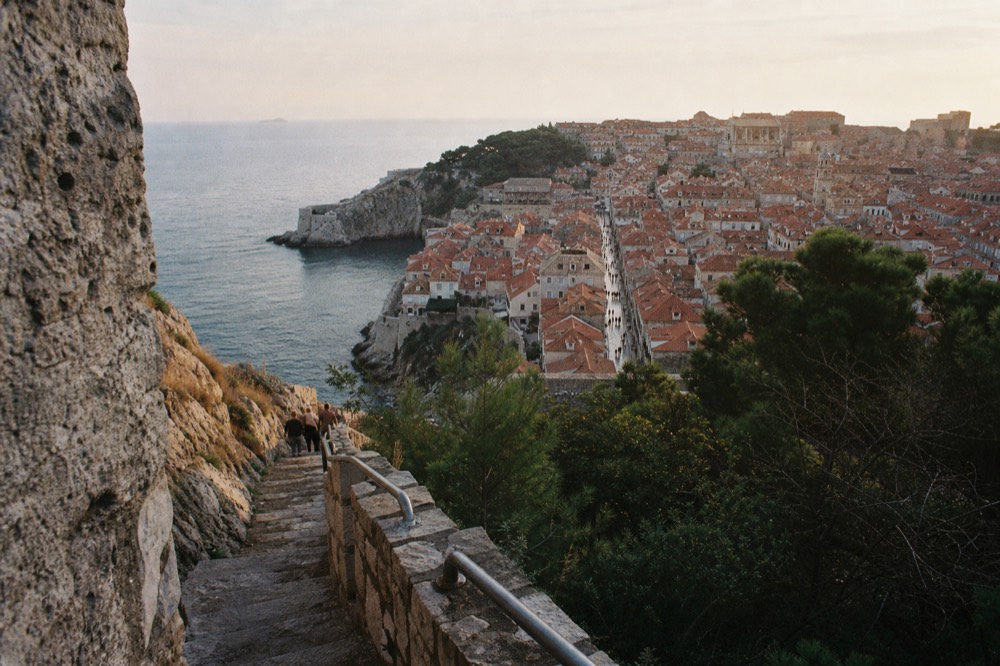
The choice is really between atmosphere and amenity. Inside the walls you wake up in the monument itself, at the cost of steps, crowds and higher prices; the deeper guide to that trade-off is our Old Town area guide. On Lapad you get beaches, a palm-lined bay, dozens of restaurants and a 15-minute bus ride, which is why most repeat visitors end up there; the details are in where to stay in Lapad. The full first-timer decision tree, including Gruž and Ploče, is in where to stay in Dubrovnik for first-timers.
| Stay style | Typical nightly feel | Meals | Best for |
|---|---|---|---|
| Old Town apartment | Atmospheric, stepped, pricey | Self-catering plus restaurants | Short city breaks |
| Lapad half-board hotel | Relaxed, beach-side | Breakfast and dinner included | Most first-time visitors |
| Babin Kuk full board | Resort-style, pool-focused | All meals in-house | Families, lazy weeks |
| Ploče luxury hotel | Quiet, view-driven | Breakfast, a la carte | Special occasions |
One planning note that saves real money: December is the anomaly month. The standalone adult walls ticket drops to 20 euro, child 7 to 18 to 5 euro, and no winter Dubrovnik Pass tier is on sale at all, so the usual pass-versus-ticket arithmetic changes completely. If a cheap package tempts you into a winter week, plan on paying for far less inside the walls, and check the Dubrovnik in winter guide before committing.
What Is the Best Way to Get Around in Dubrovnik?
On foot inside the walls, and by the number 6 and number 4 buses between the peninsula and Pile Gate; a 24-hour bus ticket comes free with the one-day Dubrovnik Pass, which costs 40 euro, the same as the walls ticket alone in main season. Taxis and ride-hailing exist but are unnecessary for the peninsula-to-Old-Town run, and the cable car, closed January to March, covers the one climb worth paying for.
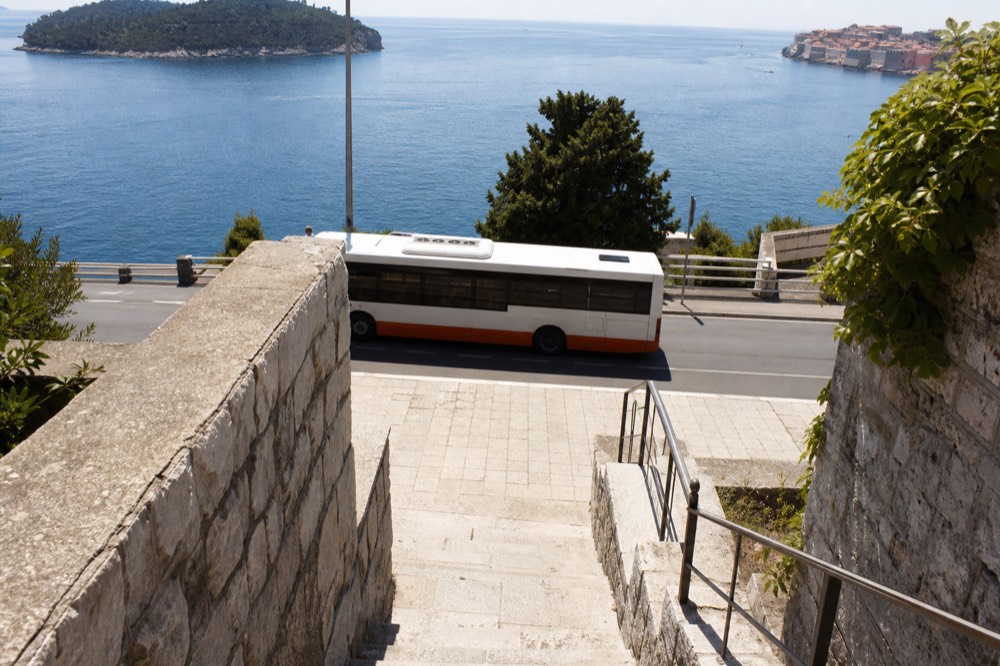
The city is small in the way that matters. The Stradun is 298 metres long and the Statute of 1272 fixed the plan of the city and its main street, so everything inside the walls is a ten-minute walk from everything else, up a lot of stairs. From Lapad bay the buses run every few minutes in season and drop you at Pile, the western gate described in our Pile Gate guide. From Babin Kuk allow a little longer. This is the one place where a resort location costs you something every single day, and it is worth pricing the bus fare or the taxi habit into any package comparison.
| Method | Best for | Watch out for |
|---|---|---|
| Walking | Everything inside the walls | Steps and heat in July and August |
| City buses 4 and 6 | Lapad and Babin Kuk to Pile Gate | Buy tickets in advance or pay more on board |
| Taxi or ride-hail | Airport runs, late nights | Costs add up fast on a daily habit |
| Cable car | Mount Srd panorama, 3 minutes 30 seconds each way | Closed January to March; adult round trip 30 euro |
For orientation without the legwork, the E-Tuk Tuk panorama ride covers the viewpoints in 1 hour 45 minutes from $59.24 per person, rated a perfect 5 across 1,799 reviews, and it doubles as a useful first-afternoon reconnaissance of the whole city bowl. The hop-on hop-off yellow bus with audio guide, from $35.46 per person, is the other lazy option and pairs well with a resort week.
What Day Trips Work From a Resort Base?
The Elaphite Islands cruise with lunch is the flagship day out, from $59.16 per person and rated 4.9 across 10,312 reviews, followed by the Mostar and Kravica waterfall trip from $35 per person and the Montenegro day trip from $58. All three leave from points a short walk or bus ride from any Lapad or Babin Kuk hotel, and all three are the kind of day a resort package cannot replicate.
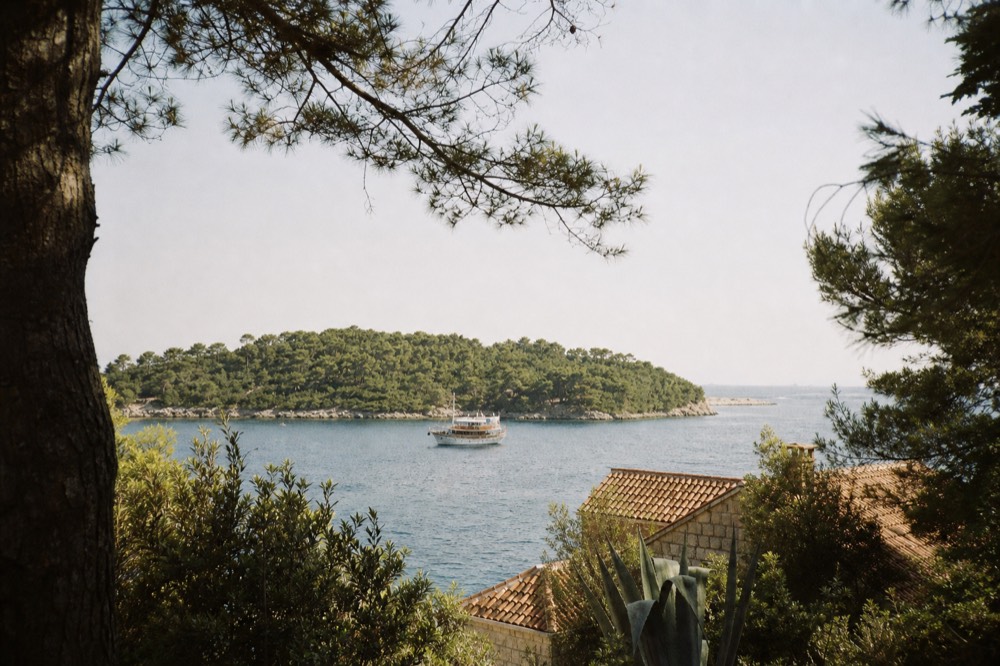
This is the real answer to the all-inclusive question. A package holiday in Dubrovnik is only as good as the days you spend leaving it, and the leaving is easy. The Elaphite cruise runs about 8 hours with a fish-picnic lunch and swims off Kolocep, Lopud and Šipan, the three islands covered in our Elaphiti Islands guide. One recent review of the trip captures the appeal: "This was a wonderful day. Nice and shaded on the boat as we cruised on the cool adriatic. Loved seeing the neat Elphiti Islands and a wonderful way to get out the the heat and large crowds for a bit. They kept the drinks flowing and lunch was phenomenal and a generous portion. This is the way to cruise the Adriatic."
This was a wonderful day. Nice and shaded on the boat as we cruised on the cool adriatic. Loved seeing the neat Elphiti Islands and a wonderful way to get out the the heat and large crowds for a bit. They kept the drinks flowing and lunch was phenomenal and a generous portion. This is the way to cruise the Adriatic.
Shelby_S
| Day trip | Length | From (per person) | Rating |
|---|---|---|---|
| Elaphite Islands cruise with lunch | 8 hours | $59.16 | 4.9 across 10,312 reviews |
| Mostar and Kravica waterfalls | About 11 hours | $35 | 4.6 across 10,019 reviews |
| Montenegro day trip | About 11 hours | $58 | 4.4 across 5,611 reviews |
| Ston and Korcula with wine tasting | About 11 hours | $81.69 | 3.8 across 131 reviews |
Border trips deserve one honest caveat: the Montenegro and Mostar runs cross out of the European Union, so carry your passport and expect queues in peak weeks, though one recent traveller reported the September border took only 15 minutes. The full decision guide, including the wine-country alternatives, is in the best day trips from Dubrovnik.
How Much Does a Non-All-Inclusive Day Actually Cost?
Counting honestly, an independent day costs the 40 euro walls ticket, a 30 euro Lokrum boat-and-entry ticket if you go, and lunch for two at roughly what one all-inclusive nightly uplift would have cost. The one-day Dubrovnik Pass at 40 euro matches the standalone walls ticket in main season and adds ten more sights plus the 24-hour bus ticket, which is the single best value move available to a resort-based visitor.
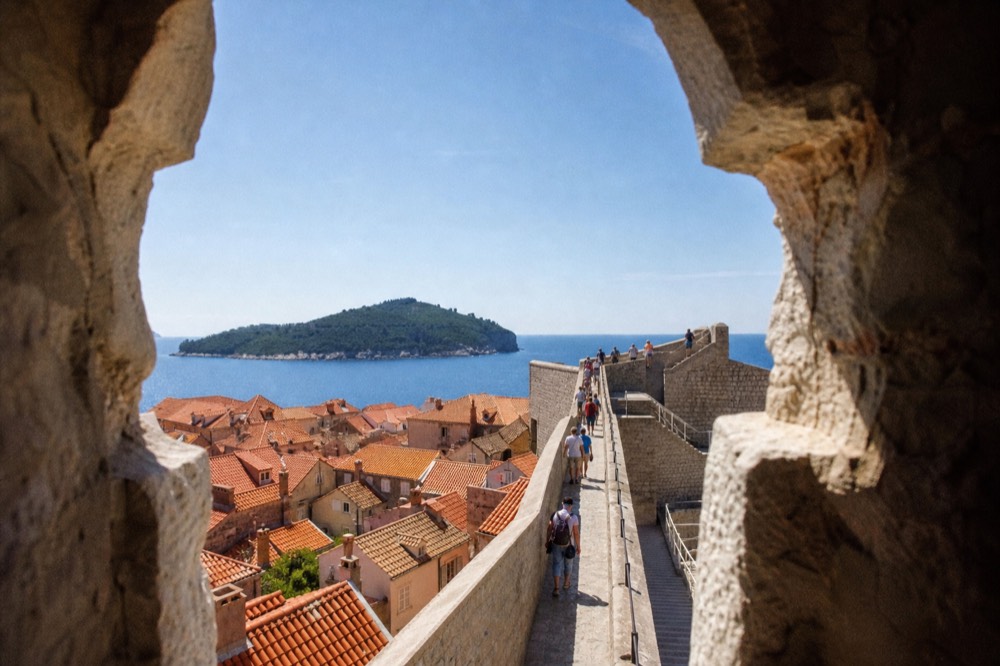
Let me put a realistic day on paper, because the package sales pitch never does. The walls circuit is 1,940 metres long, up to 25 metres high, and the operator's stated hours are 08:00 to 19:30, so an early start beats both the heat and the cruise crowds, which the city's six Old Town counters track every 15 minutes; on one September morning the count climbed from 5,419 people at 08:00 to a 7,739 peak at 10:00. Walk the walls at opening, swim at a beach by noon, eat lunch in a konoba, and take the Lokrum boat at 09:00 or any of the quarter-hourly departures from 10:00 to 18:00. That is a better day than any buffet, and it costs less than most travellers assume.
| Item | Main season price | Notes |
|---|---|---|
| City Walls and Lovrijenac, adult | 40 euro | 1 March to 30 November; also covers the Western Outer Wall and the coin collection |
| City Walls, child 7 to 18 | 15 euro | Under 6 free; no family ticket exists |
| One-day Dubrovnik Pass, adult | 40 euro | Walls plus ten sights plus 24-hour bus |
| Lokrum ticket with return boat | 30 euro | Boats from the City Harbour, 09:00 then every 15 minutes to 18:00 |
| Cable car, adult round trip | 30 euro | 3 minutes 30 seconds; closed January to March |
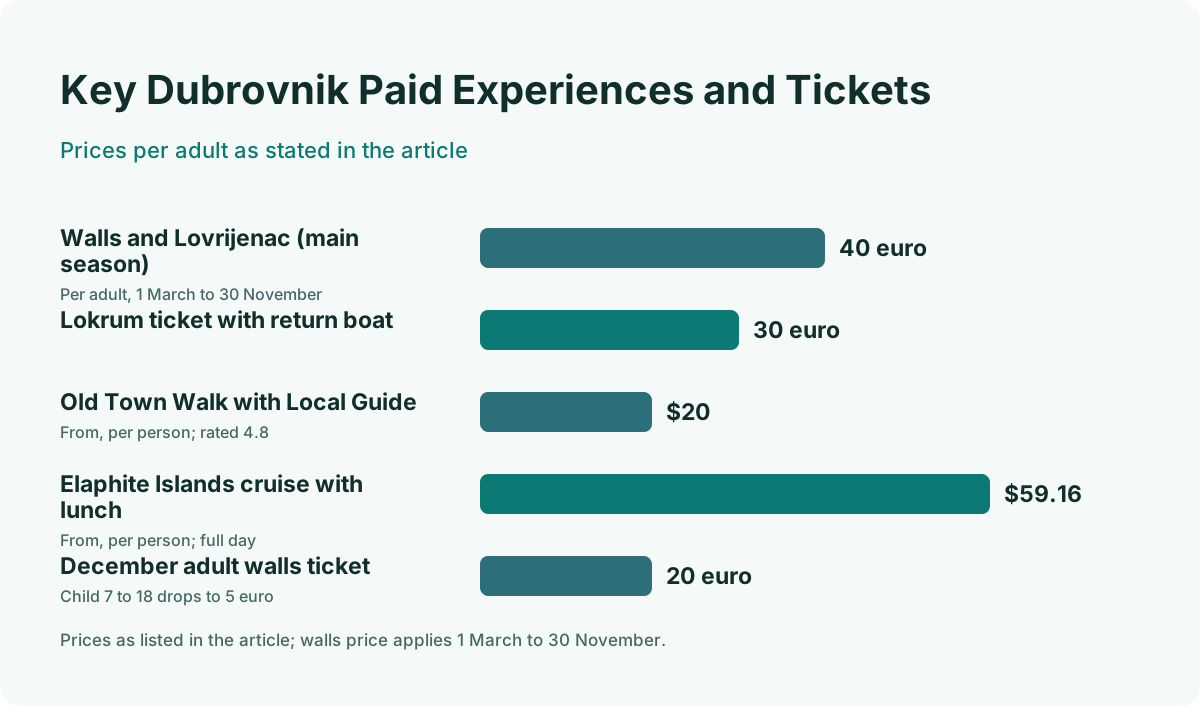
The pass deserves its reputation, with one seasonal warning attached. In main season the 40 euro one-day pass equals the walls ticket and adds the Rector's Palace, the Maritime Museum, the Franciscan Monastery museum and more, one visit each, plus the bus ticket; the three-day pass at 50 euro and the seven-day at 60 euro add suburban bus coupons and House Bukovac in Cavtat. In December the walls ticket alone falls to 20 euro and no pass tier is on sale, so the comparison flips. The full inclusion list is on the Dubrovnik Pass guide, and the official pass site is dubrovnikpass.com.
How Do You Build the Effort-Free Week Without a Package?
Book a half-board Lapad hotel, add a guided Old Town walk on day one, one big boat day, one border day trip, and pay-as-you-go for the walls with either the ticket or the pass. That structure delivers everything an all-inclusive promises, meals and activities decided in advance, with none of what it costs you in Dubrovnik: the restaurants, the islands and the evenings in town.
The pattern I recommend to resort-curious visitors is deliberately simple.
Day two, the walls at opening with the pass or ticket, then the beach. Day three, the Elaphite boat. Day four, a border day, Mostar or Montenegro, or a slower wine day in the Konavle valley or at Ston, where the oyster and mussel lunch tour from $157 per person is the most indulgent version. Day five, Lokrum and the cable car, or a kayak morning around Betina Cave, from $35.49 per person and rated 4.9 across 1,518 reviews. Fill the evenings with restaurants, because dinner in Dubrovnik, eaten at the local hour, is not an expense to be bundled away; it is the product, and the Port Authority's own cruise figures, 625,257 passengers in 2025 on 461 scheduled calls for 2026, are on its public statistics page if you want to time your week against the ship schedule.
For anyone weighing this against a classic package, the comparison is not close. The same week, self-assembled from a half-board base, gives you the meals you actually want, the sights the packages exclude, and the flexibility to follow the weather. The site's full best things to do in Dubrovnik rundown and the one-day itinerary are the natural next reads, and Things to Do in Dubrovnik exists precisely to help you build this kind of week. For the official view of the city's carrying capacity and visitor counting, the Dubrovnik Visitors platform publishes the live detail.
Common Questions About Dubrovnik All-Inclusive
Are there all-inclusive resorts in Dubrovnik?
Not inside the Old Town, and only a handful of true packages on the Babin Kuk peninsula and parts of Lapad, all a 15 to 25 minute bus ride from Pile Gate. What most listings call all-inclusive in Dubrovnik is closer to full board at a resort-style city hotel.
Does Dubrovnik have all-inclusive resorts worth the money?
For a short city break, rarely. The restaurant scene and the paid experiences, the 40 euro walls ticket, the 30 euro Lokrum boat and the island cruises, are the reason people come, and packages cover none of them. Families staying a week or more with pool days in mind get the best value from them.
Is it worth going all-inclusive in Croatia?
In a few resort zones, yes. Around Dubrovnik, usually not: the destination runs on konoba dining, island boats and walled towns, all outside any hotel perimeter. A half-board hotel plus a couple of booked day trips delivers the same effort-free feel at lower cost.
What Is the Best Way to Get Around in Dubrovnik?
Walk inside the walls and take the number 4 or 6 bus between the peninsula and Pile Gate. The one-day Dubrovnik Pass at 40 euro includes a 24-hour bus ticket alongside the walls, and the cable car, 30 euro round trip and closed January to March, handles the one climb worth paying for.
Where should you stay if not at a resort?
Lapad for most first-timers, balancing price, beaches and restaurants; the Old Town or Ploče for atmosphere and luxury respectively; Gruž if you arrive by ferry. Hotel Komodor in Lapad, rated 7.8 out of 10 across 822 Expedia reviews, is the reliable budget anchor.
Is the Dubrovnik Pass better value than an all-inclusive add-on?
In main season, 1 March to 30 November, the one-day pass costs the same 40 euro as the standalone walls ticket and adds ten more sights plus the bus ticket, so yes. In December the walls ticket drops to 20 euro and no pass tier is on sale, so the comparison changes.