Pile Dubrovnik: Your Guide to the Old Town's Front Door
Pile is the strip of coast and parkland that sits directly outside Pile Gate, the western entrance to Dubrovnik's walled Old Town. It is where the buses stop, where the walls circuit begins, where nearly every walking tour gathers its group, and where a surprising amount of greenery survives between the sea and the stones.
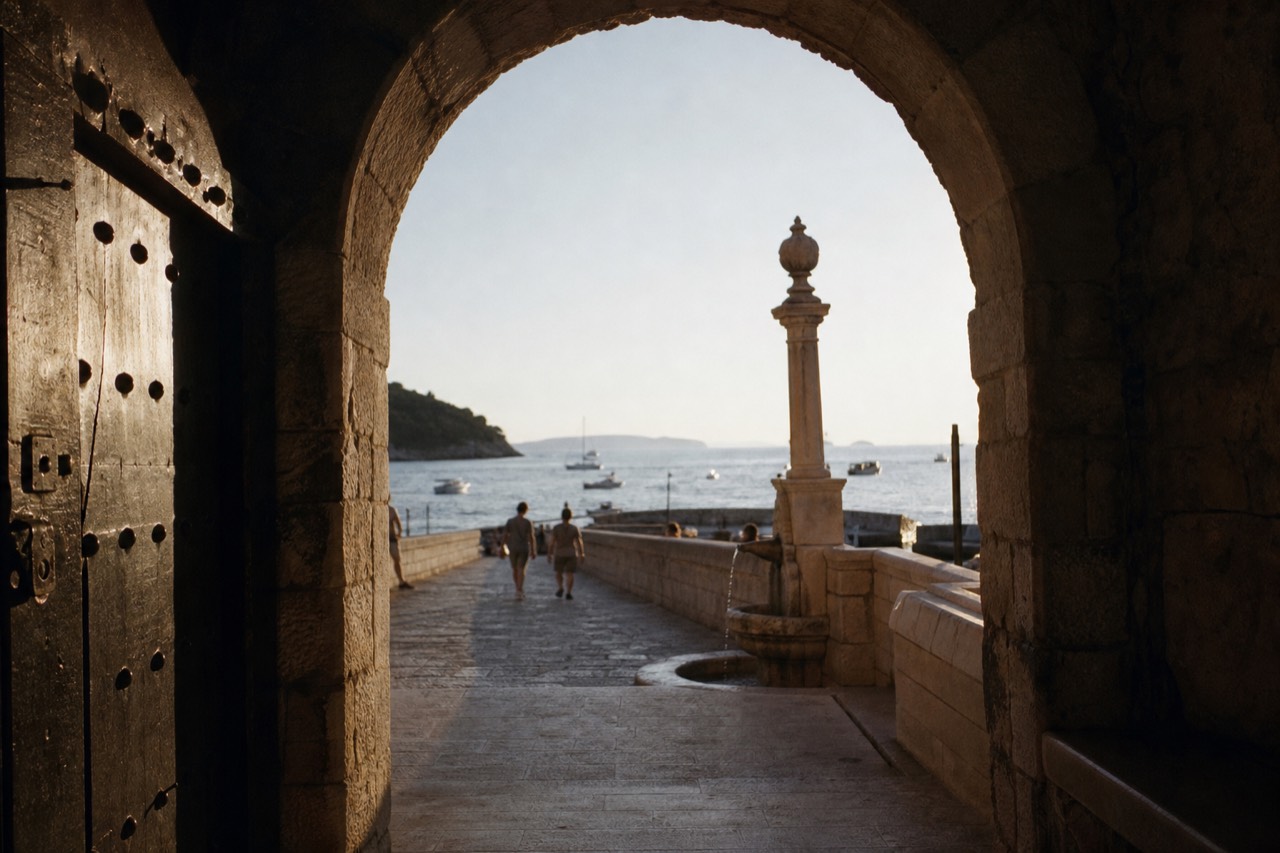
Short answer
Pile is the practical front door of Dubrovnik: the main bus terminus sits here, the City Walls entrance is here, and tours rated from $20 per person meet at Pile Gate. The adult walls ticket is 40 euro in main season, 1 March to 30 November, and the one-day Dubrovnik Pass costs the same 40 euro with ten more sights included.
What Is Pile in Dubrovnik?
Pile is the small neighbourhood wedged between the western wall of Dubrovnik's Old Town and the open sea, and nearly every visitor passes through it whether they intend to or not. The name covers the bus terminus, the stone bridge over a former moat, the fountain at Pile Gate, the parkland climbing toward Mount Srđ, and the rocky swimming spots just west, making it less a district than the city's threshold.
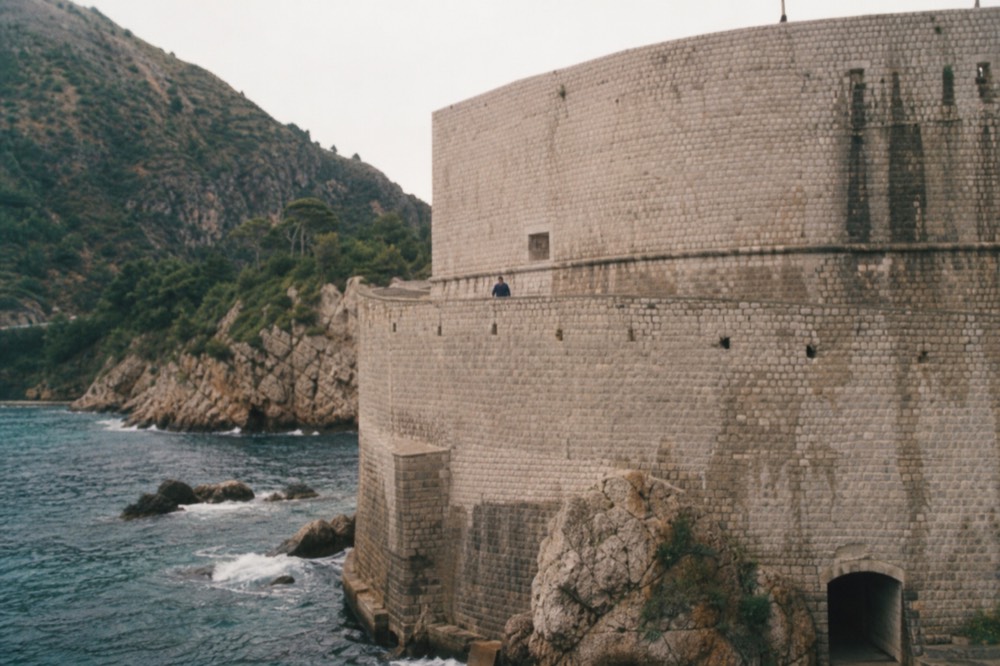
I walk through Pile most weeks, and the thing that still strikes me is how quickly the noise drops. The bus loop at Pile is one of the loudest places in the city, horns and diesel and luggage wheels on stone, yet two minutes up the path toward the park you are under pines with nothing but cicadas. Few visitors take that two-minute detour, which is exactly why it is worth describing here.
The area's role is older than the tourists. The bridge you cross at Pile Gate is one of two drawbridges counted in the walls' official inventory, which lists 16 towers, 3 fortresses, 6 bastions, 2 corner fortifications, 3 bulwarks with rows of turrets, 3 moats, 2 flank fortresses, 1 breakwater and those 2 drawbridges across its 1,940 metres. The circuit reached its basic shape in the 13th century and was finished in 1660 with the Bastion of St Stephen, per the walls operator's own history page. Pile was the defended land approach, and the moat under the bridge is now a quiet garden.
For trip planning, treat Pile as three zones. First, the transport zone: the bus terminus, taxi rank and the start of the road toward Lapad. Second, the monument zone: Pile Gate itself, Onofrio's Fountain, the Franciscan Monastery just inside the walls, and the City Walls entrance. Third, the recreation zone: the park, the rocky beaches below the Bokar bastion, and the path that leads west to the beach neighbourhoods. Each zone answers a different question, and the rest of this guide works through them in the order a visitor meets them.
Is Dubrovnik Old Town Worth Visiting?
Yes, unambiguously, and the reasons are measurable rather than sentimental: the Old City of Dubrovnik was inscribed by UNESCO in 1979 under criteria (i), (iii) and (iv), covering a 24.7-hectare property with an 1,188.6-hectare buffer zone. The Stradun, its main street, runs 298 metres, and the 1272 Statute fixed the final plan of both the city and that street. Very few places on the Mediterranean carry that density of intact medieval and Baroque fabric, and none carry it with the sea on three sides.**
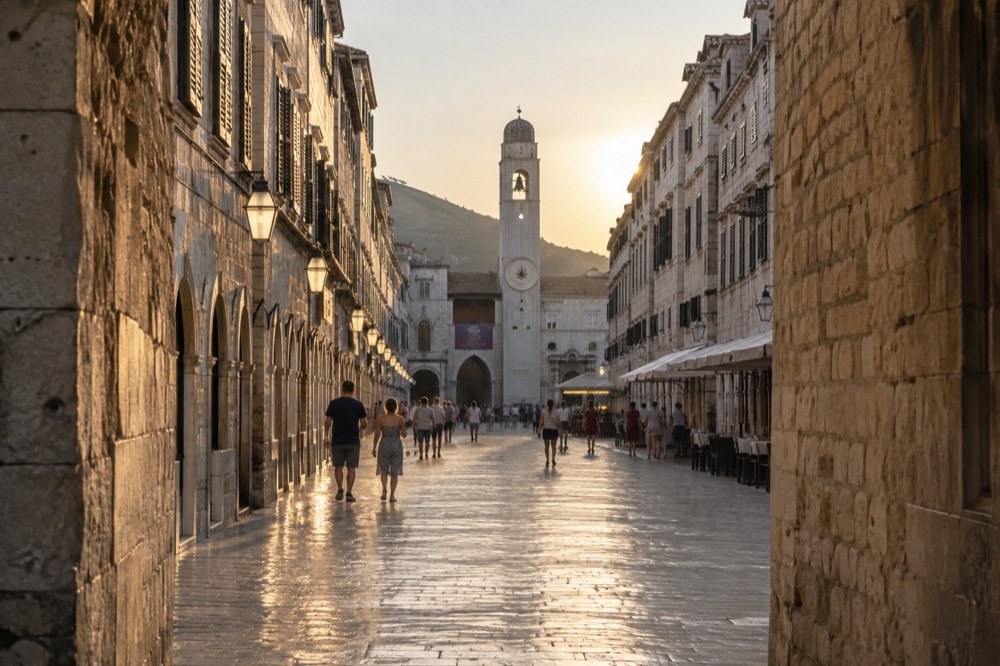
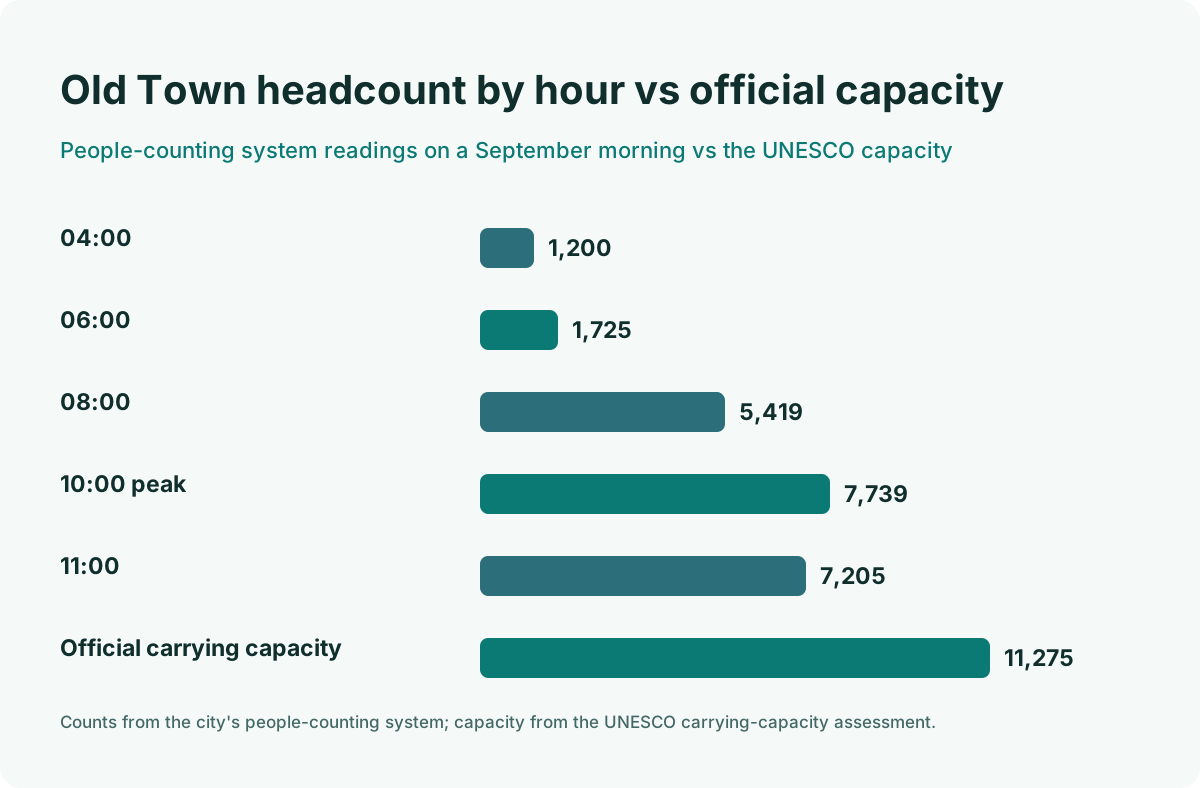
The honest caveat is crowds, and the honest answer to it is timing. Dubrovnik runs a people-counting system with six counters installed at every Old Town entrance, updating a headcount every 15 minutes. The official carrying capacity, from the UNESCO carrying-capacity assessment, is 11,275 people. On a real September morning the curve read 1,200 people at 04:00, 5,419 at 08:00, a 7,739 peak at 10:00, then 7,205 at 11:00. Read that again: the Old Town was more crowded at 10:00 than at 11:00, and both were busier than 08:00 by thousands. Arrive early and you share the stones with a fraction of the day's visitors.
The other caveat is cost, which is real but transparent. The adult City Walls ticket is 40 euro in main season, 1 March to 30 November, and 20 euro in December; a child aged 7 to 18 pays 15 euro, then 5 euro, and under 6 is free. There is no family ticket, only those two paid article types. That 40-euro ticket is actually the walls plus Fort Lovrijenac combination, and it also covers the Western Outer Wall, closed December through February, and the Collection of Coins of the Republic of Ragusa. Fort Lovrijenac, standing on its 37-metre-high sea rock across the bay, bought alone is 15 euro.
| Ticket | Main season (1 Mar to 30 Nov) | December |
|---|---|---|
| Adult walls + Lovrijenac | 40 euro | 20 euro |
| Child 7 to 18 | 15 euro | 5 euro |
| Child 6 and under | free | free |
| Lovrijenac bought alone | 15 euro | 15 euro |
So is it worth it? I would say the walls are worth 40 euro for a first visit in good weather, and the Old Town itself costs nothing to enter. What you should not do is arrive at 11:00, queue in heat, and form your judgment of a 24.7-hectare World Heritage Site from the most congested stretch of the Stradun. The tourists who leave disappointed mostly did that. The ones who crossed Pile's bridge at 08:00 rarely do.
If you want the Old Town explained rather than merely walked, a guided tour from Pile Gate is the efficient route. These three are the strongest fits for a Pile-based visit:
The first of those, the Old Town Walk with a Local Guide, runs from $20 per person and is rated 4.8 across 5,826 reviews, the cheapest paid Old Town walk on this site's roster. One recent guest review captures what a good local guide adds at this exact threshold: "Alex was a fantastic guide, she explained the complex history of Dubrovnik to give a lasting impression of the history of the area. Really appreciated that she aimed for shaded areas on a boiling September day. The food recommendations for after were much appreciated too! Great tour for a first experience of the old town!" That is Sophie's review, and the shaded-areas detail matters more than it sounds in a city where the walls offer almost none.
Should You Stay in the Old Town or New Town in Dubrovnik?
Stay in the Old Town if your trip is short and you want the stones at dawn and midnight; stay outside, in areas like Pile or Lapad, if your trip is longer, your budget is real, or you value sleep, luggage ease and swimming. The Old Town has no cars and a lot of stairs, and everything you buy inside the walls is carried in by hand, which shapes both its charm and its prices. The new town around it trades atmosphere for practicality.**
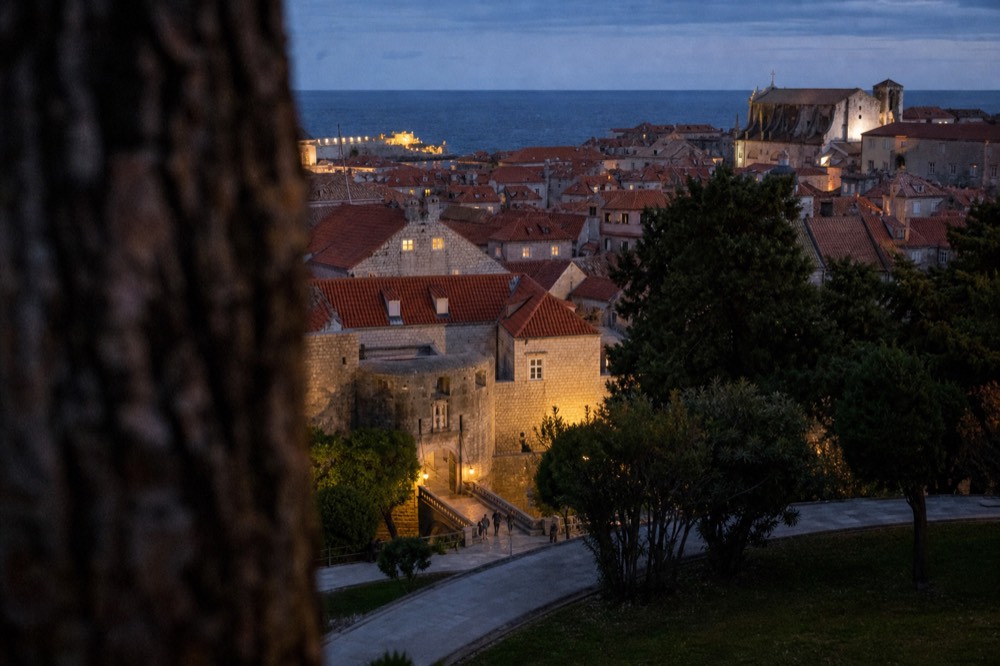
Pile sits in the interesting middle of that choice. It is technically outside the walls, so you get buses, taxis and normal shop logistics, but it is a two-minute walk from Pile Gate, closer to the Stradun than half the addresses inside the walls are. I mention this because the question people actually ask is rarely Old Town versus new town in the abstract; it is "how far will I be carrying my suitcase, and what will I hear at 02:00." At Pile the answers are "not far" and "seagulls, mostly."
The lodging reality is that the immediate Pile strip has limited hotel stock, so most visitors who want this position book either inside the walls or a short bus ride west in Lapad. In Lapad, Hotel Komodor is the budget anchor, a three-star rated 7.8 out of 10 across 822 Expedia reviews, about a 29-minute walk to the Gruž cruise and ferry port, with the number 6 bus doing the work to Pile Gate. At the other end, Hotel Excelsior sits in Ploče on the eastern side of the Old Town, a five-minute stroll from the other gate and the beach at the same time. Between them, Hotel Lapad covers the mid-range in Lapad.
| Base | Position | Trade-offs |
|---|---|---|
| Inside the walls | Zero commute to the sights | Stairs, suitcase drag, higher prices, noise in high season |
| Pile and Ploče, just outside | 2 to 10 minutes to a gate | Limited hotel stock near Pile itself |
| Lapad | Bus or 40-minute walk to Pile | Beaches and restaurants on your doorstep, cheaper beds |
| Gruž | Port and market area | Least atmospheric, best value, ferry convenience |
One more planning fact worth folding in: Dubrovnik recorded about 4.2 million overnight stays in 2025, sharing first place among Croatian destinations with Rovinj, per the Croatian Bureau of Statistics. Beds are scarce in the peak weeks regardless of which side of the walls you choose, and the scarcity is worst inside the walls, where the building stock is fixed by heritage rules. Book earlier than feels reasonable for July and August, and slightly less frantically for the shoulder months, which, as the cruise numbers below show, are not as quiet as everyone assumes.
Is It Best to Stay in Old Town in Dubrovnik?
Yes, for a first visit of one to three nights, staying in or beside the Old Town is genuinely the best choice, and Pile is the most practical doorstep to do it from. For a week or more, or with children, or in the hottest weeks of July and August, basing yourself in Lapad and commuting in by bus usually produces a better trip, so the honest answer depends on trip length more than on taste.
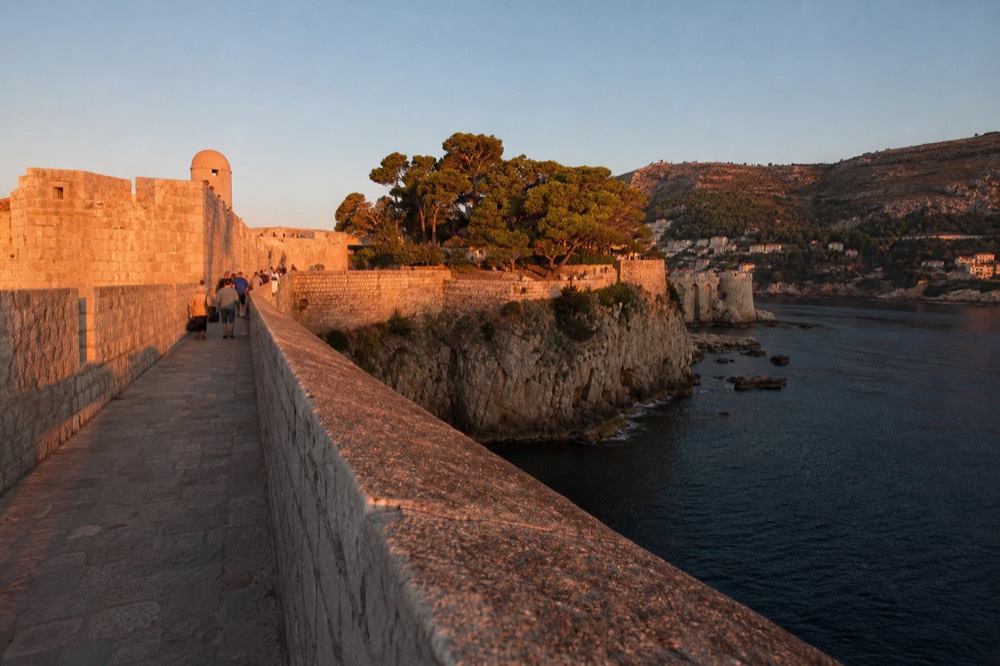
The case for the Old Town is strongest at the edges of the day, which is precisely when outside-based visitors are not there. At 06:00 the Stradun belongs to sweepers and cats; at 23:00 in summer it belongs to whoever is still wandering. If you are sleeping inside the walls, those hours cost you nothing. The counting system's own numbers make the point: 1,725 people at 06:00 against a 7,739 peak at 10:00. The same city, at a fraction of the crowd. The rest of the planning pages sit on Things to Do in Dubrovnik.
The case against is equally concrete. Luggage: the gates and lanes mean wheels are a burden, and some guesthouses are genuinely steep. Heat: the Old Town is stone on stone, and the walls walk offers almost no shade. Price: everything inside carries it. And quiet: in high season the Old Town never fully sleeps, because 4.2 million nights a year have to happen somewhere. For a longer stay, the calculus flips, and the bus from Lapad to Pile runs often enough that the commute stops being a consideration.
A reasonable compromise many visitors land on is two nights in or beside the Old Town at the start of the trip, then a move west. If that appeals, the planning pages worth reading next are our first-timers guide to Dubrovnik and our full where to stay in Dubrovnik breakdown, which compares every base area in detail.
Which Walking Tours Meet at Pile Gate?
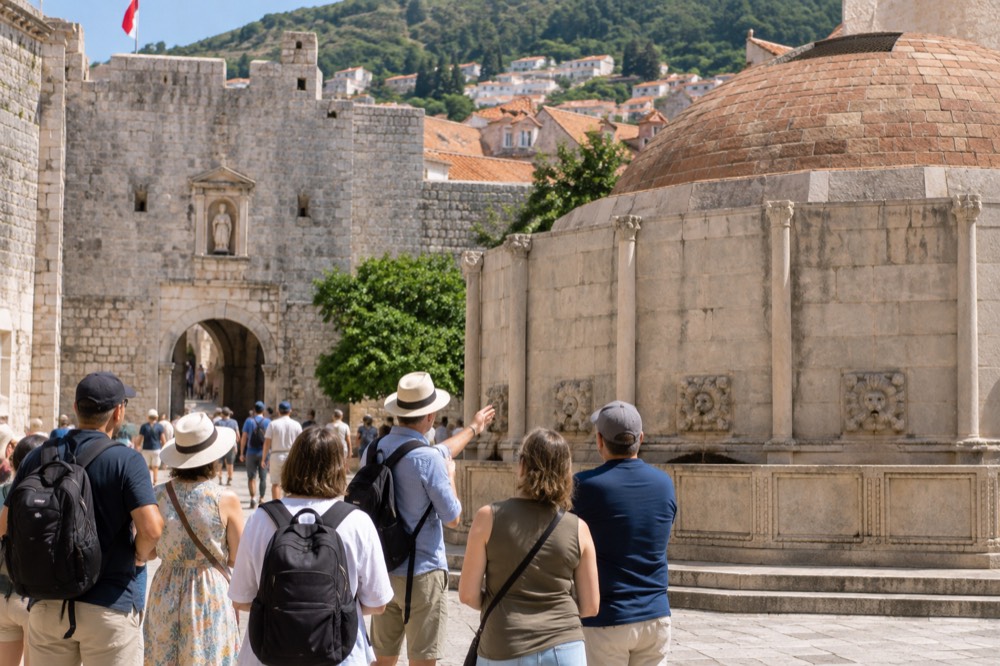
**More walking tours meet at Pile Gate than at any other point in Dubrovnik, because it is the one landmark every visitor can find: the fountain, the bridge, the gate.
| Tour | Length | From (per person) | Rating |
|---|---|---|---|
| Old Town Walk, Local Guide | varies by option | $20 | 4.8 across 5,826 reviews |
| 2-Hour City Walls Walk | 2 hours approx | $29.58 | 4.8 across 1,387 reviews |
| Old Town & Walls Combo Walk | 3 hours 30 minutes approx | $50.94 | 4.8 across 1,183 reviews |
| Free GoT & History Walk (GuruWalk) | 1 hour 30 minutes | free, pay what you want | 4.74 across 444 reviews |
The Old Town Walk with a Local Guide is the one I would point a first-time visitor toward, and it is this page's featured tour: from $20 per person, rated 4.8 across 5,826 reviews, operated by Dubrovnik Walks & Sea Kayaking. You can Check availability on the live listing before you travel, and the free-cancellation terms make it safe to book ahead of firm plans.
It suits a cruise morning or a hot afternoon when three hours of walking sounds like punishment. The walls-focused tours, from $29.58, are a different animal: they include the circuit's stairs and heat, so book the earliest slot you can manage, and read our city walls walking guide for the full picture before choosing.
The free walks deserve a straight answer too. Three of them run on GuruWalk, and the model is pay-what-you-think-it-was-worth at the end, no price at all: the Ancient Old City walk, rated 4.87 across 2,242 reviews, over 1 hour 45 minutes; the Free Game of Thrones and History walk, rated 4.74 across 444 reviews; and the night-time Magical Dubrovnik Nights history and legends walk, rated 4.9 across 288 reviews. Naming GuruWalk here is the honest way to describe them, because that is the platform the free model runs on. Our longer free walking tour comparison works through all three.
How Do You Get to Pile?
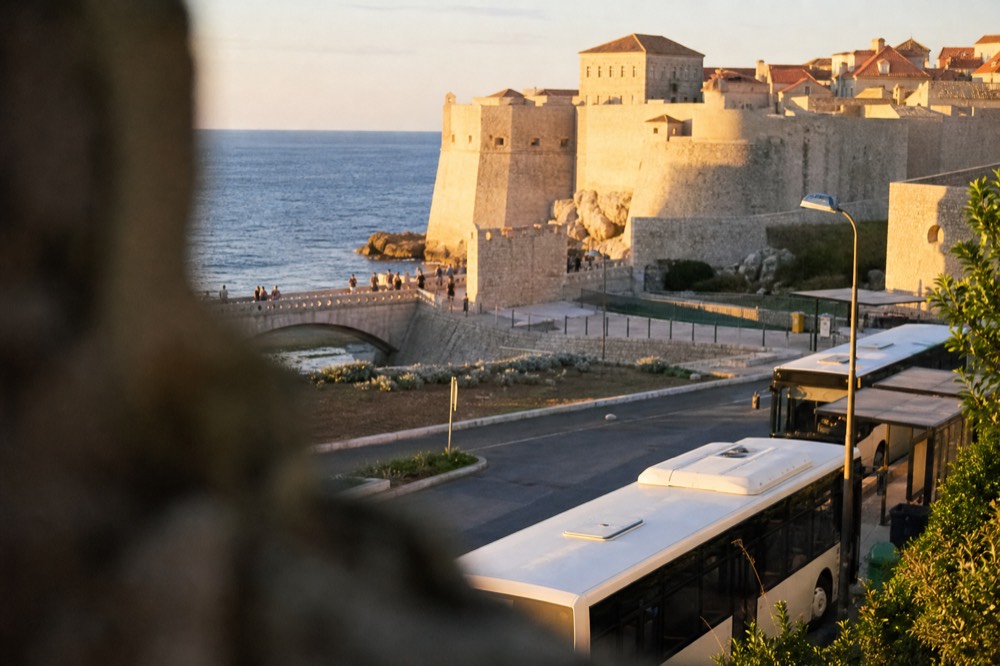
Pile is the public transport hub of Dubrovnik: the main city bus terminus sits here, roughly 20 minutes on foot from the cruise and ferry port at Gruž, and every local bus line that serves the Old Town terminates at the Pile loop. From the airport, a taxi covers the run in about half an hour depending on traffic. In a city with no trains and almost no cars inside the walls, Pile is where every land journey ends.**
| From | Best option | Notes |
|---|---|---|
| Gruž port and bus station | Local bus or 20-minute walk | Flat coastal walk past the marina |
| Lapad beaches | Number 6 bus | Frequent in season, terminates at Pile |
| Cruise terminal | Bus, taxi or walk | See our cruise port to Old Town guide for timings |
The walking distances are manageable more often than visitors expect. The whole walled core is 24.7 hectares, and the Stradun is 298 metres end to end, so once you are inside the gate nothing is far. Pile to the other side of the Old Town, Ploče Gate, is a ten-minute stroll without crowds. Our Dubrovnik walkability guide covers the gradients honestly, including which streets to avoid with a stroller.
Cruise visitors should note one counter-intuitive scheduling fact. Cruise passengers at the Port of Dubrovnik peaked in September 2025 at 101,246 and October at 100,132, above July's 96,072 and August's 87,385, per Port Authority data. The Port Authority limits cruise passengers to 8,000 a day in most cases, with 461 cruise calls scheduled for 2026, and of 243 cruise days a year only 18 exceed 8,000. If you assume September is "after the season," the ship schedule disagrees with you. Plan your Pile arrival for before 09:00 on any day, and doubly so in autumn.
Where to Eat and Drink Around Pile?
The eating around Pile splits into two rings: quick, tourist-facing spots clustered at the gate, and better-value konobas and bakeries a few streets west and north, where the prices drop and the menus stop being translated into six languages. Inside the walls near Pile, the Franciscan Monastery side of the Stradun carries the premium you would expect one minute from the main gate. The rule of thumb is simple: the further you walk from Pile Gate, the more the prices fall.**
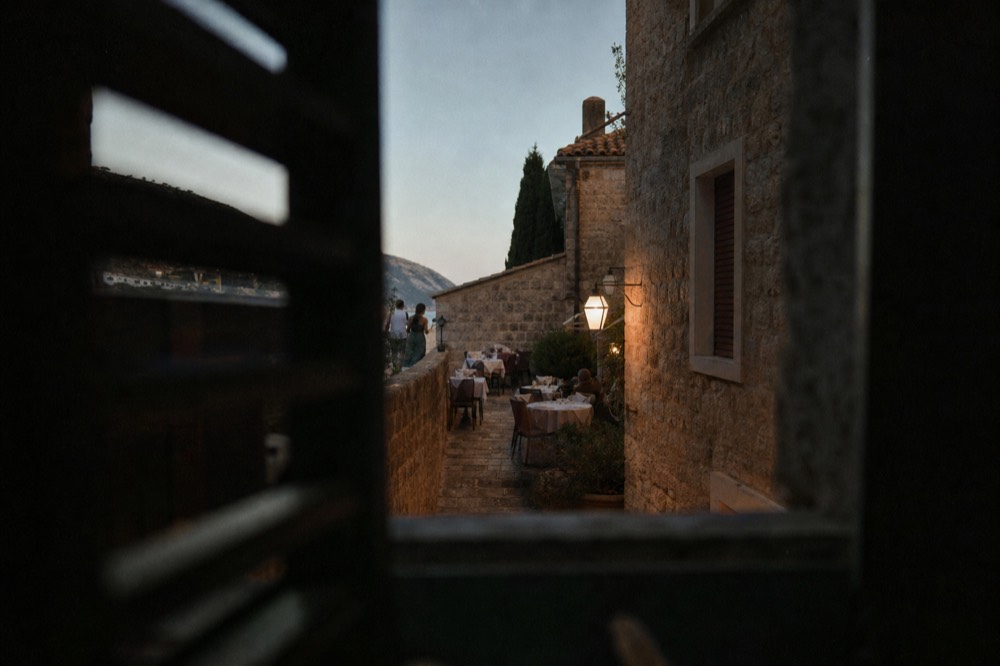
For a first morning, the classic Pile ritual is coffee and a pastry outside the walls, then Onofrio's Fountain just inside the gate, then whatever the bakery counter has warm. The fountain has marked the entrance since the city's aqueduct era, and it remains the meeting point the tours use for a reason: it is visible, audible and impossible to confuse with anything else. Our what to eat in Dubrovnik guide covers the dishes worth ordering once you are seated, and our cheap eats guide covers the version of the city that locals' budgets allow.
The drinking question at Pile has one famous answer: Buža Bar, the cliff-side bar through a hole in the walls a short walk south of the gate, where drinks are carried down to the rocks and the sunset does the rest. It is genuinely worth the search for the doorway, and our Buža Bar guide explains how to find it and when to go. Closer to the gate, hotel terraces and the park kiosks cover the ordinary needs, and the park itself is the underrated picnic spot: shade, benches, and the walls for a backdrop.
What Is the Best Time of Day at Pile Gate?
Before 09:00, without qualification. The official counters recorded 5,419 people in the Old Town at 08:00, a 7,739 peak at 10:00 and 7,205 at 11:00 on a representative September morning, against a carrying capacity of 11,275. The difference between 08:00 and 10:00 is the biggest crowd swing of the morning, spread across a 24.7-hectare core, and you feel it on the walls stairs and at Onofrio's Fountain.**
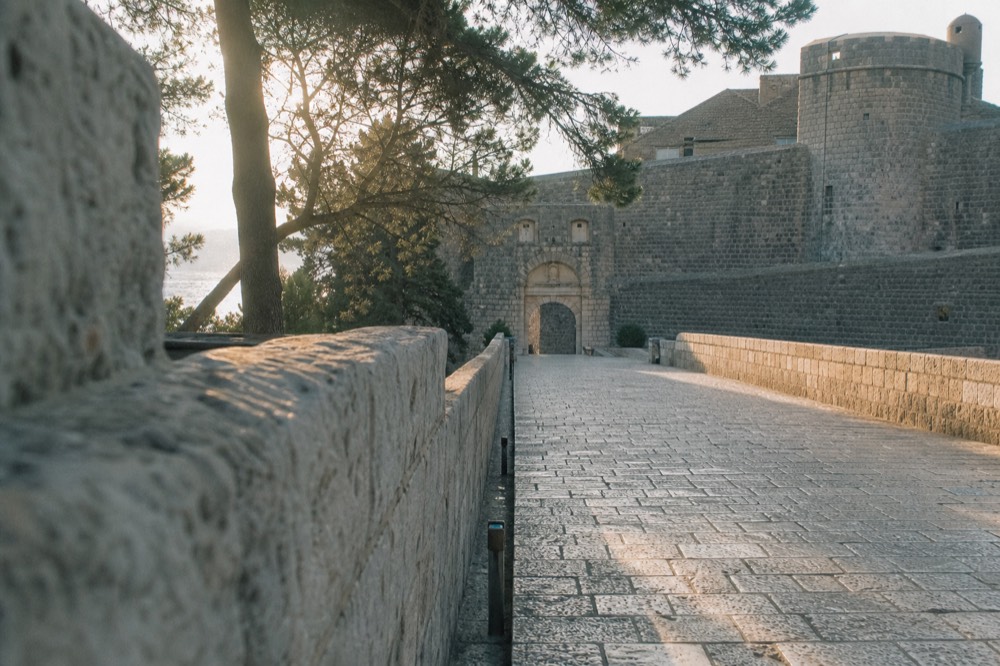
The walls operator's stated working hours at time of check were 08:00 to 19:30, which lines up exactly with the crowd curve: the serious walkers start at 08:00, the tour groups pile in from 09:30, and by 11:00 the circuit's narrow sections move at group speed. If your plan is the walls, be at the Pile entrance at opening. If your plan is photographs, the same hour gives you the bridge and the fountain almost alone, and the light comes low over the sea, which is the angle every postcard uses.
Late afternoon is the second-best window. Cruise passengers tend to be back aboard by late afternoon, and the September and October ship numbers, 101,246 and 100,132 in 2025, mean the autumn afternoons clear out faster than the mornings fill. Sunset from the Pile side, with Fort Lovrijenac catching the last light on its 37-metre sea rock, is the free spectacle that ends most days here well.
If you would rather someone else handle the timing, the cable car option in the trio below bundles the ride with an Old Town tour from $92.04 per person, rated 4.4 across 118 reviews, with the ticket included. The cable car itself climbs 367.0 metres over a 778.2-metre track in 3 minutes 30 seconds, from a lower terminal at 38.0 metres above sea level to the Mount Srđ station at 405.0 metres, and the operator claims a view range of up to 60 km on a clear day.
However you plan the days, the position is the gift Pile gives you: this whole page of advice, the timing, the tours, the walls entrance, the buses, collapses into one address. Cross the bridge early, come back for coffee at 11:00 when everyone else is fighting the crowd you skipped, and the Old Town will feel like it belongs to you. These three picks cover the Pile-based visit from three angles:
Common Questions About Pile and Staying in Dubrovnik
Is Dubrovnik Old Town Worth Visiting?
Yes. It is a UNESCO World Heritage Site inscribed in 1979, a 24.7-hectare walled core whose main street, the Stradun, was fixed in its final plan by the 1272 Statute. The adult walls ticket is 40 euro in main season and the Old Town streets themselves are free to enter. Go before 09:00 and the crowds stay manageable.
Should I Stay in the Old Town or New Town in Dubrovnik?
Stay in or beside the Old Town for short trips of one to three nights; stay outside, in Lapad or Gruž, for longer stays, tighter budgets or family trips. Pile sits in the useful middle: outside the walls with buses and taxis, but a two-minute walk from Pile Gate.
Is It Best to Stay in Old Town in Dubrovnik?
For a first visit it usually is, because the Old Town is at its best at dawn and late evening, exactly when outside-based visitors are not there. For a week or more, the stairs, heat and price premium argue for basing yourself in Lapad and commuting in by bus.
How Much Does the City Walls Ticket Cost?
The adult ticket is 40 euro in main season, 1 March to 30 November, and 20 euro in December. A child aged 7 to 18 pays 15 euro, then 5 euro, and under 6 is free. There is no family ticket. The 40-euro ticket includes Fort Lovrijenac, the Western Outer Wall and the coin collection.
Does the Dubrovnik Pass Cover the Walls?
Yes. Every tier lists City Walls + Lovrjenac Fortress as its first inclusion, with a one-time visit to each. The one-day pass is 40 euro, the same as the standalone walls ticket in main season, and adds ten more sights plus a 24-hour bus ticket. The three-day pass is 50 euro and the seven-day pass 60 euro.
When Is Pile Gate Least Crowded?
Before 09:00. The Old Town's counters recorded 5,419 people at 08:00 against a 7,739 peak at 10:00 on a September morning, within an official carrying capacity of 11,275. Late afternoon is the second-best window as cruise passengers return to their ships.