Konoba Dining in Dubrovnik: Where the Local Table Really Is
The konoba is the beating heart of Dalmatian eating, and finding a real one in Dubrovnik takes local knowledge. Here is what a konoba actually is, where the city's own residents eat, what belongs on your table, and what it all costs.
Short answer
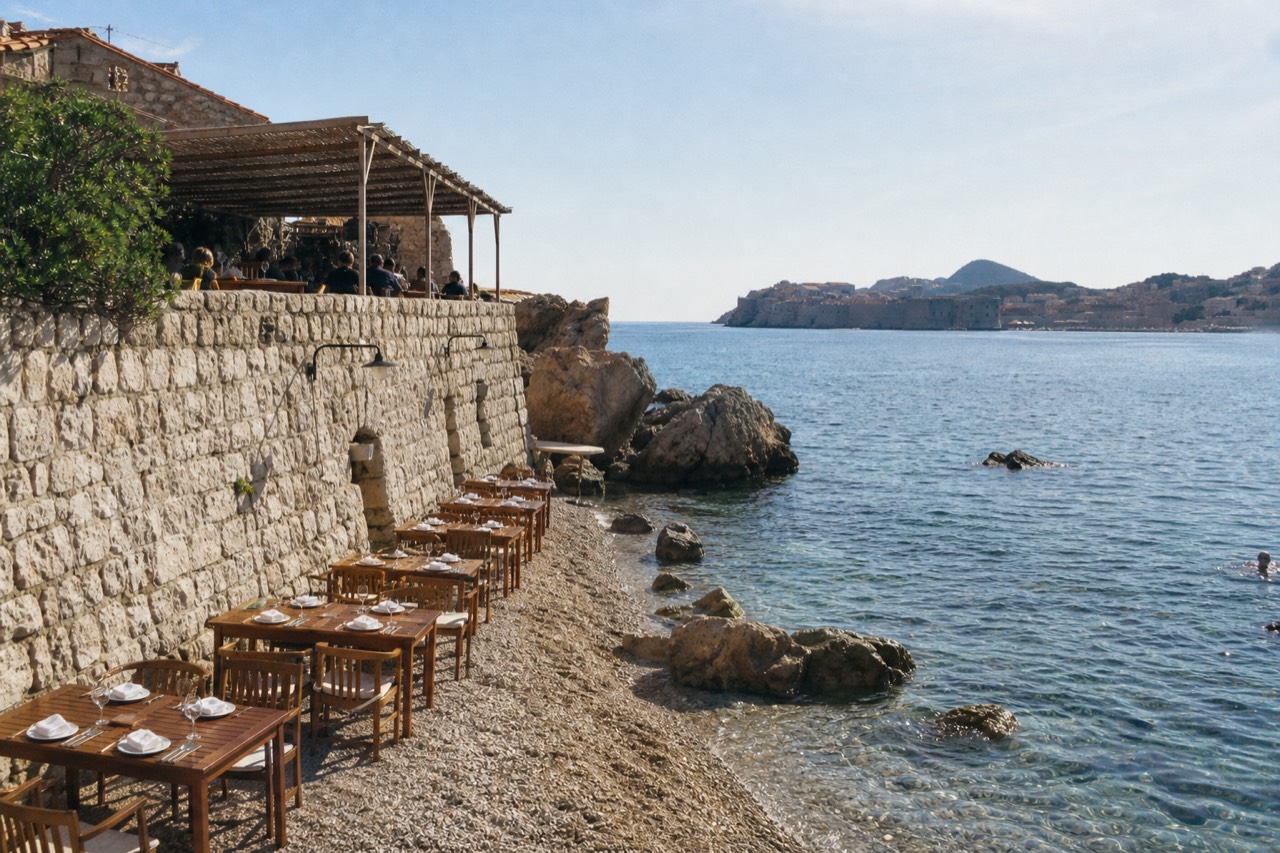
A konoba is a family-run Dalmatian tavern serving grilled fish, peka and local wine, and the genuine ones sit mostly outside the walled city. Expect to pay Old Town premiums inside the walls; the Ston oyster and wine tasting tour runs from $157 per person and a peka cooking lesson from $159.83, both firm anchors for what regional food experiences cost.
Walk down the Stradun at eight in the evening and every second doorway promises dinner. Most of those doorways are not where Dubrovnik eats. The city's own residents, all 41,562 of them at the last census, largely live and dine outside the walled core, in Gruž, Lapad and the surrounding villages, and the place they look for is a konoba. I have walked these streets with visitors since 2015, and the single most common request I hear is a simple one: take us where you would eat yourself.
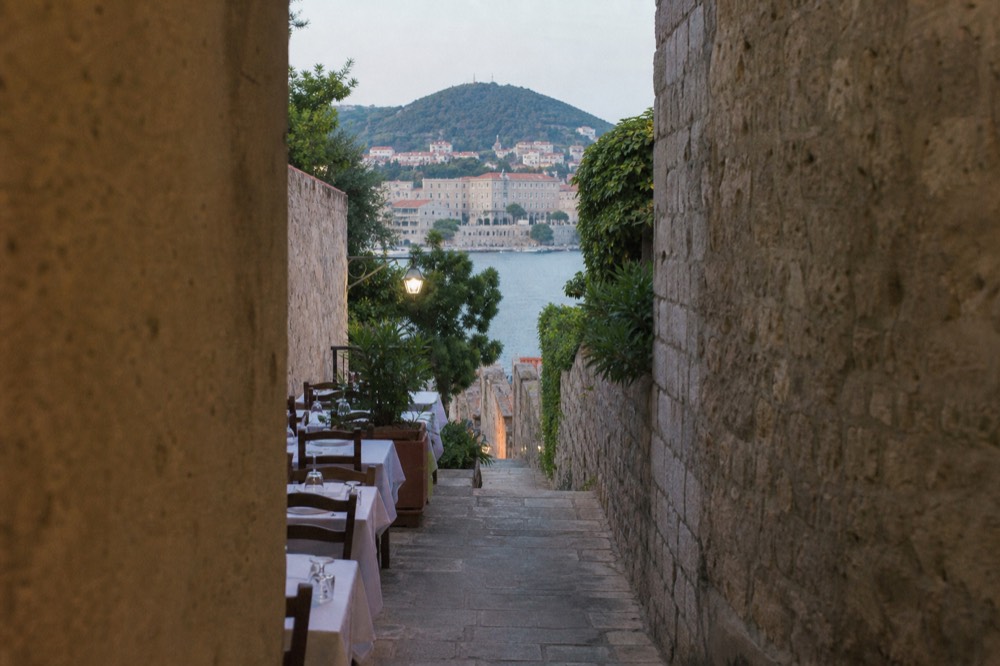
That request is harder to satisfy inside the Old Town than most visitors expect. The walled city covers just 24.7 hectares and absorbed a share of the roughly 4.2 million overnight stays Dubrovnik recorded in 2025, a figure that ties it with Rovinj for first place among Croatian destinations. Demand that heavy reshapes the dining scene toward turnover. The konoba survives it, but mostly a bus ride away.
What Is a Konoba, and Why Does It Matter in Dubrovnik?
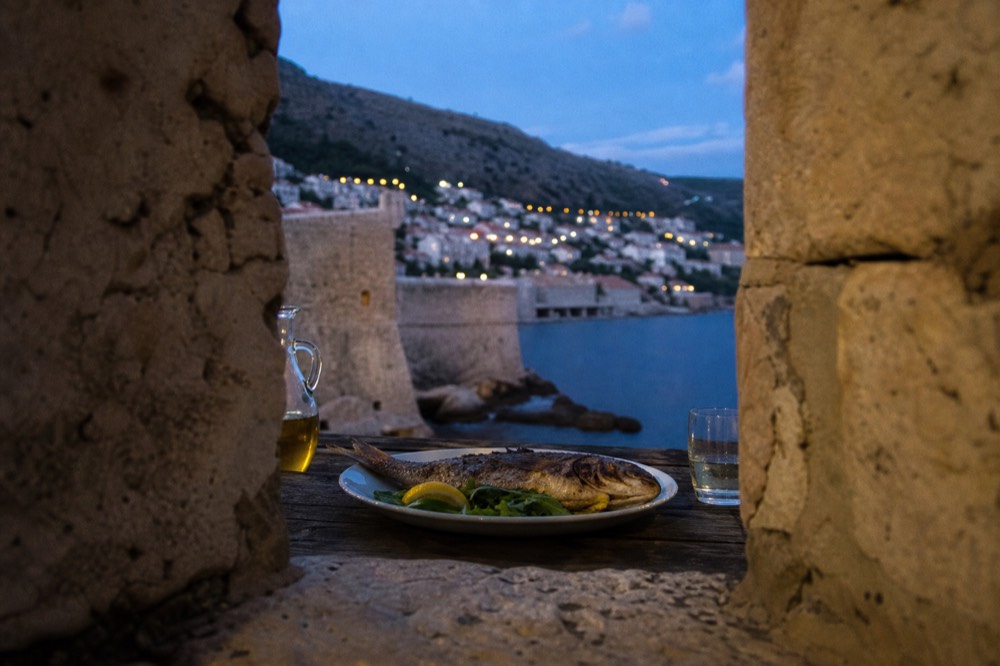
A konoba is a family-run Dalmatian tavern, historically a cellar or boat shed, serving whatever the grill, the garden and the sea offered that day. The word matters because it signals an entire cooking tradition: slow peka under a bell of embers, whole grilled fish priced by the kilo, house wine from a plastic jug, and a host who will tell you what not to order. It is the opposite of a menu designed by a marketing team.
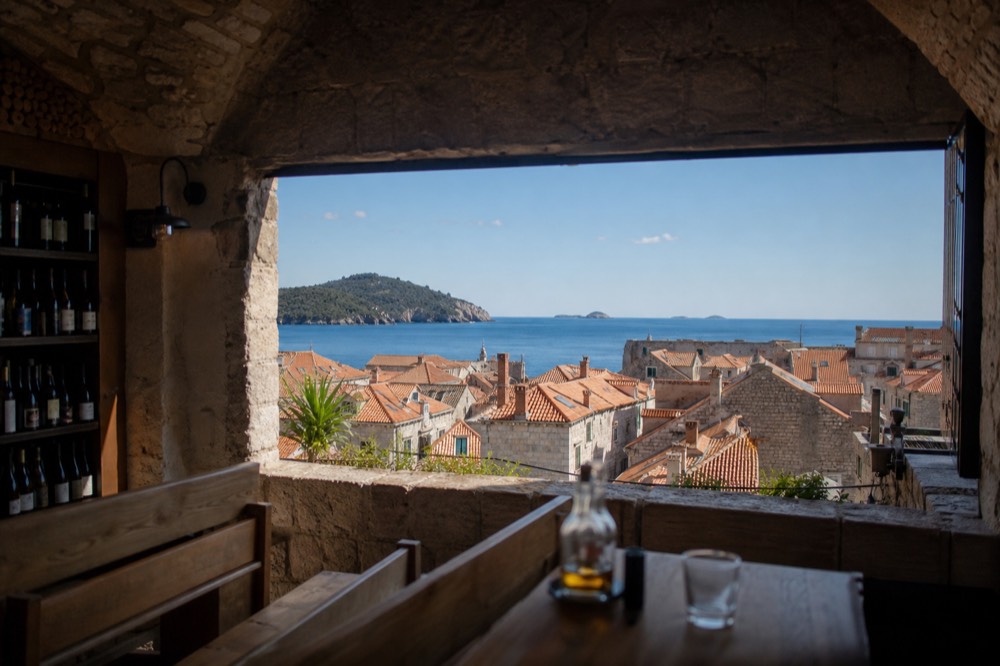
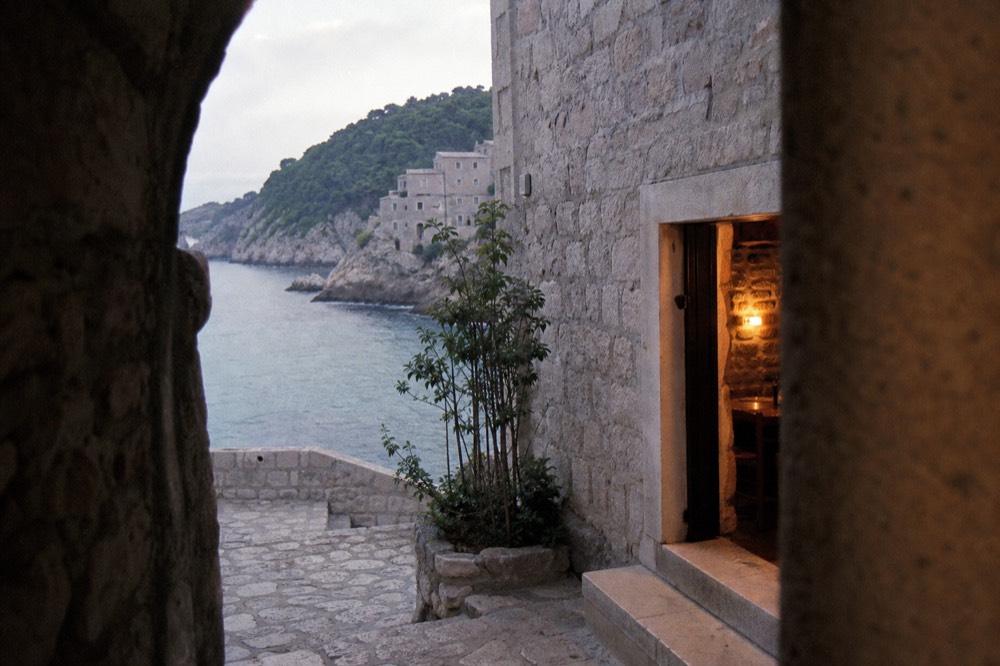
The word itself is old Dalmatian and originally described a cellar or storeroom, the cool ground-floor space where fishing families kept wine, oil and salted fish. Over generations the storage room became the serving room. That lineage still shows in the architecture you will recognise instantly: vaulted stone, bare wooden tables, drying lavender or a bundle of rosemary, and a grill somewhere near the door.
What separates a konoba from an ordinary restaurant is not the decor, it is the sourcing logic. A konoba's menu is short because it is honest. Fish arrives from the morning catch at Gruž market, vegetables from a relative's garden in Konavle, wine from the family's own cooperative or a neighbour's vineyard on the Pelješac peninsula. If the menu runs to eight pages with photographs of every dish and a host beckoning from the doorway, you are looking at a restaurant built for visitors, whatever the sign says.
| Feature | True konoba | Tourist-oriented restaurant |
|---|---|---|
| Menu length | Short, often handwritten, changes with the catch | Long, laminated, with photos |
| Fish pricing | By the kilo, from the day's board | Fixed plates, rarely by weight |
| Wine | House wine, often local, poured by the carafe | Bottled international list |
| Peka | Ordered hours in advance, cooked under embers | Not offered, or reheated |
| Location | Mostly outside the walls: Gruž, Lapad, villages | On or just off the Stradun |
Where Do Locals Eat in Dubrovnik?
Locals eat mostly outside the walled city, in Gruž around the market and marina, along the Lapad bay promenade, and in the villages of Konavle and the Župa coast to the south. Inside the walls, a handful of long-established konoba-style rooms survive, but the city's own residents treat the Old Town as a place they show to guests, not where they take their Sunday lunch.
Start in Gruž, because that is where the food itself starts. The market there feeds the city's kitchens, and the small konobas within a few streets cook for the people who work the stalls and the marina. This is the district I send people to when they want a plate of grilled sardines and a glass of house white at a price that does not sting. Our guide to the Gruž market and neighbourhood covers the morning rhythm, and the wider Gruž area guide explains how the district fits into a stay.
Lapad is the second answer. The bay promenade holds a run of family dining rooms that mix local families with staying visitors, and the walk after dinner along the sea is part of the point. For a sense of the district, read our Lapad neighbourhood guide.
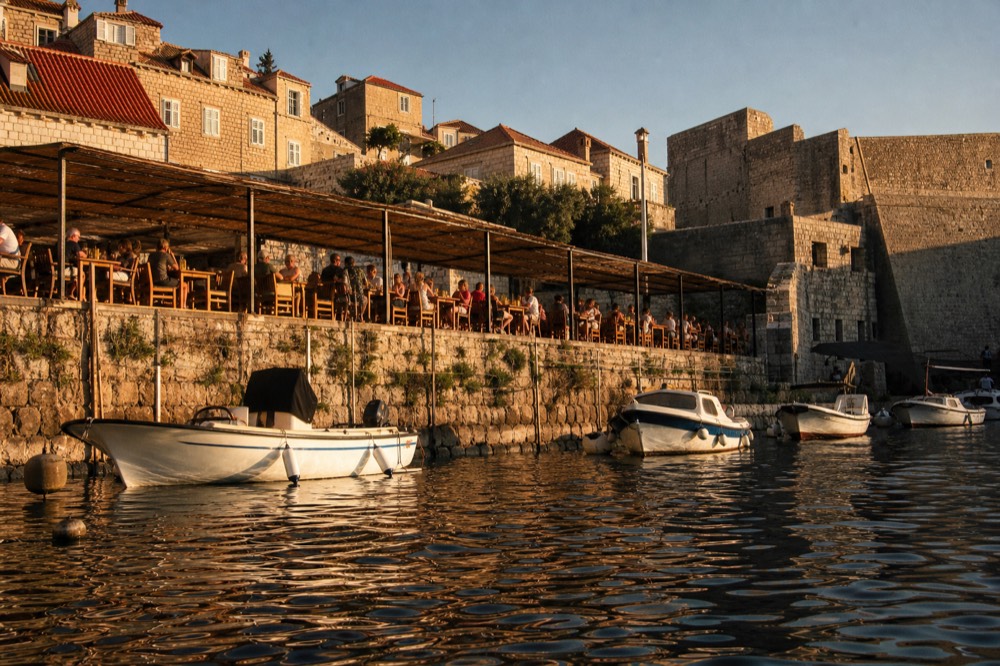
The third answer is the countryside. Konavle, the fertile valley behind the airport, and the oyster and wine country around Ston on Pelješac are where the Old Town's better kitchens source their ingredients anyway. Going to the source is cheaper and better, and it is exactly the logic behind the region's most popular food day trips.
If you would rather have the coastal table driven to you as an experience, three food-focused options stand out on the live listings, and all three can be reserved with free cancellation before your plans harden.
One honest note on the Old Town itself. It is not a dining desert, and I would never tell a visitor to avoid it entirely; some of the city's most atmospheric rooms are inside the walls. But the economics are unforgiving. Rents inside a UNESCO property that hosted 625,257 cruise passengers in 2025 push prices up and push locals out, so the ratio of genuine to forgettable tables is far worse than a mile away in Gruž.
Where Do Celebrities Eat in Dubrovnik?
Celebrities in Dubrovnik gravitate to the same handful of waterfront rooms locals prize: the long-established konobas of the Lapad bay and the coast road south toward Cavtat, plus a few famous Old Town institutions with history on their walls. The pattern is consistent, famous visitors want the same thing everyone else wants, a table by the water, fish straight off the boat and a host who does not make a scene.
Dubrovnik has been drawing famous guests since long before the screen crews arrived, and the kitchens that host them survive on discretion rather than name-dropping. That is why celebrity dining lists online are mostly guesswork: the genuinely famous are seated in back rooms or arrive by boat, and the konoba owners who serve them are the last people to publicise it.
What you can rely on is the geography. Waterfront first: a terrace at the water's edge in Lapad, in Mlini, or along the Cavtat coast outranks anything a street back. Seafood second: no celebrity itinerary in this region centres on a steakhouse. And heritage third: the rooms with old stone, old families and a story, the same rooms on the Cavtat day trip guide, are where a film crew's wrap dinner actually lands.
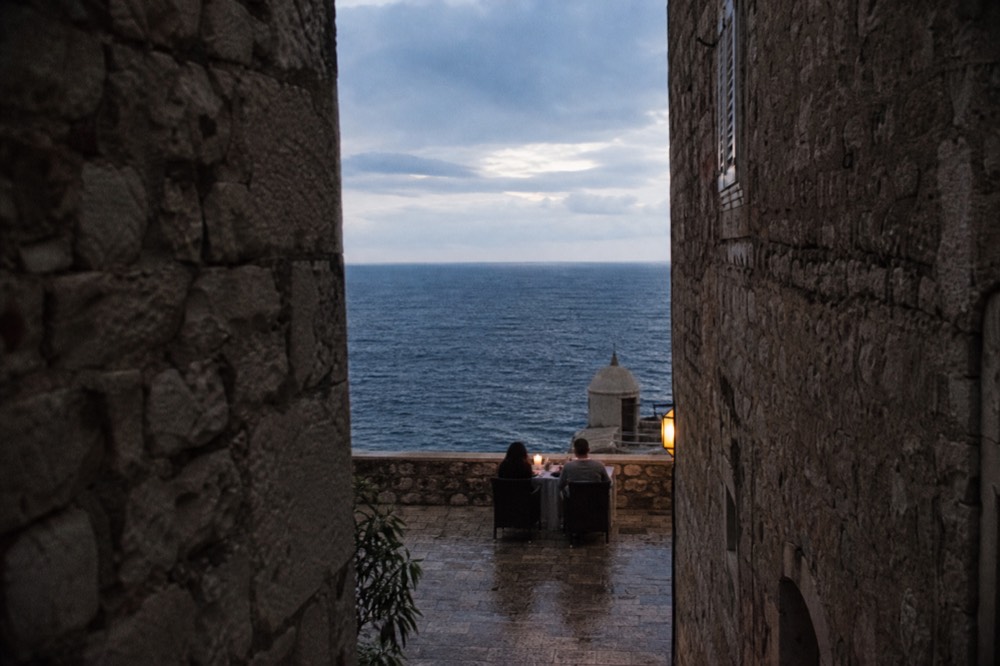
For a visitor, the practical takeaway is not to chase a specific celebrity table but to copy the formula. Book the water's edge, order the fish, go early or go late to dodge the excursion crowds, and treat the host's recommendation as the menu. If a famous face lands two tables over, that is the Dalmatian evening doing what it does.
What Do Locals Eat in Dubrovnik?
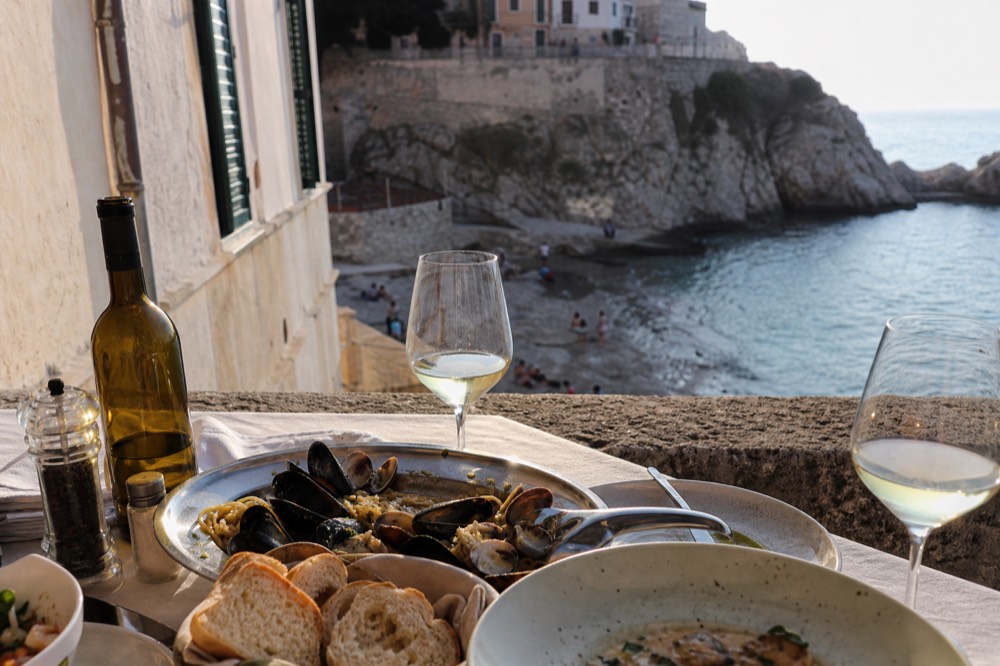
Locals eat grilled and salted fish, black risotto, octopus salad, peka of meat or octopus under a baking bell, pasticada with homemade pasta, and seasonal shellfish, washed down with house wine or a local Plavac Mali. The rhythm matters as much as the dishes: fish at lunch or long Sunday dinners, small fried fish as everyday fare, and shellfish when the coast serves them up.
The canon is coastal and seasonal. Black risotto, coloured and flavoured with cuttlefish ink, is the dish that tests a kitchen, because the rice must be loose and the seafood generous. Octopus salad, slow-cooked octopus with potato, onion and parsley in olive oil, is summer standard. Pasticada, beef slow-braised in wine and prunes served with gnocchi-like njoki, is the celebration dish of the Dubrovnik region, the thing a family cooks for a christening. The full index of guides sits on Things to Do in Dubrovnik.
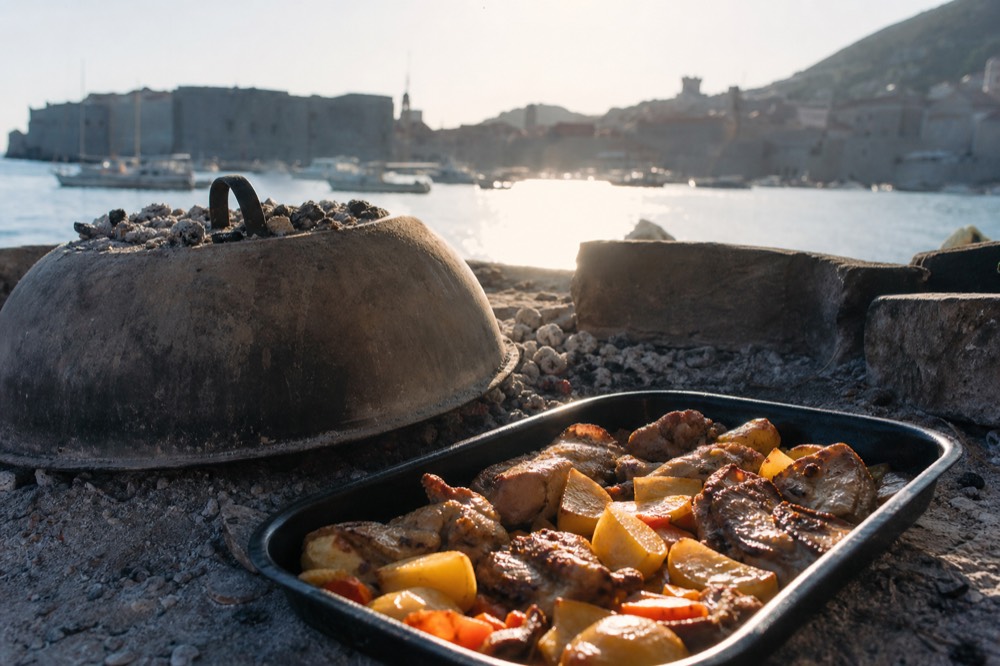
Peka deserves its own paragraph because it defines konoba cooking. Meat, or octopus, or both, is placed in a shallow pan with vegetables, doused in wine and olive oil, covered with a domed metal bell, and buried in embers for hours. You must order it in the morning or the day before; a kitchen cannot produce peka for a walk-in. The four-hour Croatian traditional cuisine peka cooking lesson, from $159.83 per person on the live listing, teaches the whole technique, and it is the rare food experience where the meal you eat is one you helped build.
| Dish | What It Is | When Locals Order It |
|---|---|---|
| Black risotto | Rice with cuttlefish and its ink | Lunch, any season |
| Octopus salad | Slow-cooked octopus, potato, olive oil | Summer, with a chilled white |
| Peka | Meat or octopus baked under an ember bell | Sunday and celebrations, ordered ahead |
| Pasticada | Wine-braised beef with njoki | Winter and family feasts |
| Grilled fish | Whole fish by the kilo, olive oil and lemon | Whenever the catch is good |
| Oysters and mussels | Shellfish from nearby Ston waters | Spring and autumn, with local wine |
Wine is not an afterthought here. The local reds are Plavac Mali from the Pelješac slopes, and the region also produces respectable Pošip and other whites. Our Plavac Mali explainer and the Pelješac wine guide cover what to look for on a konoba's wine list, and the Ston oyster guide explains why the shellfish an hour up the coast taste the way they do.
If you want the whole canon decoded while you eat your way across it, the food and drink walking tour with a local guide, from $165.64 per person and rated 5 across 704 reviews, is the strongest option on the roster.
Is Dubrovnik Expensive to Eat?
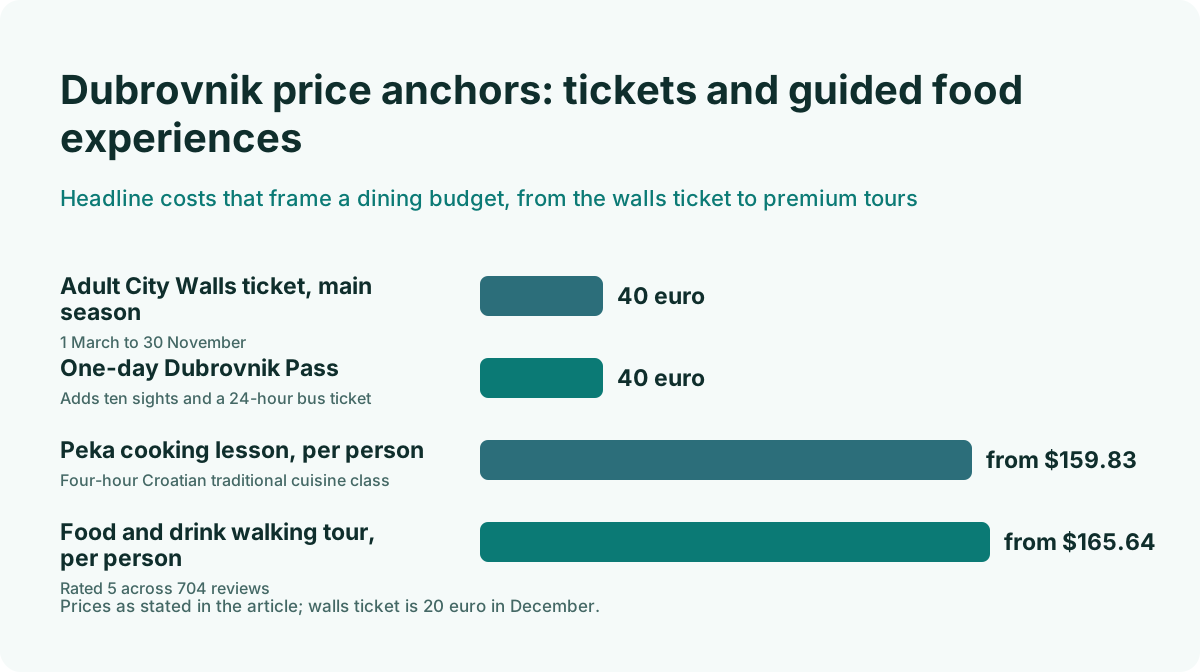
Yes, inside the walls, where rents and footfall push prices to the top of Croatia's range, and noticeably less so a mile away in Gruž, Lapad or the villages. The honest anchors: the adult City Walls ticket is 40 euro in main season, the one-day Dubrovnik Pass is also 40 euro, and the region's flagship food tours run from $157 to $165.64 per person, which tells you where premium experiences sit.
Eating is the most elastic cost in Dubrovnik. A visitor can pay Old Town terrace prices for an average plate, or eat a genuinely excellent konoba dinner outside the walls for a fraction of it. The premium inside the walls is not a scam exactly, it is rent, and the same physics applies to the whole visitor economy. The Croatian Bureau of Statistics counted about 4.2 million overnight stays here in 2025, shared first place nationally with Rovinj, and demand at that level prices accordingly.
The comparison that frames every Dubrovnik budget is the walls ticket. At 40 euro for an adult in main season, 1 March to 30 November, it equals the one-day Dubrovnik Pass, which adds ten more sights and a 24-hour bus ticket; in December the standalone ticket drops to 20 euro and no pass tier is on sale at all. A meal inside the walls sits in the same bracket as those headline costs, while a konoba dinner in Gruž does not.
| Item | Verified Price | Season Condition |
|---|---|---|
| City Walls adult ticket | 40 euro | Main season, 1 March to 30 November |
| City Walls adult ticket | 20 euro | December |
| One-day Dubrovnik Pass | 40 euro | Main season only, no winter tier on sale |
| Oyster, mussel and wine tour, Ston | From $157 per person | Listing price |
| Peka cooking lesson | From $159.83 per person | Listing price |
| Food and drink walking tour | From $165.64 per person | Listing price |
Two habits keep the bill sane. First, follow the fish pricing: whole fish sold by the kilo is honest anywhere, but ask the weight and the price before it hits the grill, every reputable konoba expects the question. Second, drink the house wine. It is local, it is poured by the carafe, and it is a fraction of a bottled import. For the wider picture, our trip cost guide and the answer page on how expensive a meal in Dubrovnik is break the arithmetic down.
How Do You Spot a Good Konoba Before You Sit Down?
Read four signals before you commit: a short board rather than a long laminated menu, fish priced by the kilo from a daily list, a grill you can see or smell, and a room where at least some tables speak Croatian. Add the peka test: if the kitchen needs hours of notice for the ember bell, it is doing the real thing. None of these signals costs anything to check.
I walk visitors past dining rooms every week, and the checklist above filters out most disappointments in under a minute. The menu is the fastest tell. A konoba cooking from the morning's catch cannot offer forty dishes; the arithmetic of a short menu and a full dining room is the arithmetic of fresh food. The language of the room is the second tell, and it is the one that requires a little nerve: walk in, listen, and if the only Croatian you hear is from the staff, weigh that.
Timing matters as much as selection. The Old Town's counting system, six counters at every entrance updating a headcount every 15 minutes, recorded a real morning curve on one September day of 5,419 people at 08:00 rising to a 7,739 peak at 10:00, against an official carrying capacity of 11,275. Dinner crowds crest later, but the lesson holds: the quiet table at 19:00 beats the squeezed one at 21:00, and a konoba an hour's walk or a short bus ride from the gates beats both. Our walkability guide maps how far a dinner search realistically stretches on foot.
It is not a food tour, but it will leave you knowing which alley leads where before you choose a table.
When Is the Best Time of Year for Konoba Food?
Late spring and early autumn are the sweet spots: September and October bring the new olive oil, oyster season at its plump best and the sea still warm for swimming, while carrying far fewer peak-summer queues. Counter to instinct, September was 2025's busiest cruise month at 101,246 passengers, ahead of July's 96,072, so book the celebrated konobas even in autumn.
The Dalmatian table moves with the calendar. Spring brings wild asparagus and young lamb. High summer is grilled fish and tomato season, eaten late and outdoors. Autumn is the connoisseur's season: new wine, new oil, oysters fattening in the Ston beds, and peka weather returning. The sea holds its warmth well into autumn, the September long-run average for this coast is about 23.6 degrees, a grid-cell average rather than a beach reading, and sheltered bays run warmer still.
Do not assume autumn means empty streets. Port Authority data shows cruise passengers in 2025 peaked in September at 101,246 and October at 100,132, both above July's 96,072 and August's 87,385, and 461 cruise calls are scheduled for 2026. Those are ship-capacity figures rather than guaranteed ashore counts, but the direction is clear: the best eating months are also busy months, and a peka order placed the day before is the difference between a table and a shrug.
| Season | On the Table | Crowd Reality |
|---|---|---|
| Spring | Wild asparagus, lamb, first grilling weather | Moderate, rising |
| Summer | Grilled fish, tomatoes, everything outdoors | Peak queues, book every table |
| Autumn | New wine, new oil, oysters, peka season | Still busy: September led 2025 cruise months |
| Winter | Pasticada, hearty braises, city for residents | Quietest; some coastal konobas close |
Whenever you come, the strategy on this page holds: short menus, fish by the kilo, the ember bell ordered ahead, and a willingness to ride a bus for twenty minutes to eat where the city eats. The konoba is not a theme, it is a working tradition, and it rewards the visitor who treats it like one.
Common Questions About Konoba Dining in Dubrovnik
Where Do Locals Eat in Dubrovnik?
Mostly outside the walls: around the Gruž market and marina, along the Lapad bay promenade, and in Konavle and the coast villages to the south. The Old Town holds a few genuine rooms, but residents treat it as the place they take guests, not their own weekly table.
where do celebrities eat in dubrovnik?
On the water, mostly: the long-standing waterfront konobas of Lapad, Mlini and the Cavtat coast, plus a handful of historic Old Town institutions. Famous visitors want fish off the boat and a discreet host, which is the same formula every local would recommend.
what do locals eat in dubrovnik?
Grilled whole fish by the kilo, black risotto, octopus salad, peka cooked under an ember bell, pasticada with njoki on feast days, and Ston shellfish in season, with house wine or a Plavac Mali red.
is dubrovnik expensive to eat?
Inside the walls, yes, among the priciest tables in Croatia. A mile away in Gruž or Lapad, far less so. Flagship food experiences run from $157 to $165.64 per person, while the adult City Walls ticket is 40 euro in main season, a useful bracket for the whole budget.
Do I Need to Book a Konoba in Advance?
For peka, always: the ember bell needs hours, so order the morning before or the day prior. For a waterside table in summer or September, book the same day. A weekday winter table usually needs no reservation at all.
What Should I Drink With Konoba Food?
The house wine, poured by the carafe, is the traditional answer and usually a local Plavac Mali or a Dalmatian white. Ask what the family pours for itself; in a genuine konoba that question gets a straight answer.