Do US Citizens Need a Visa for Croatia in 2026?
US citizens do not need a visa for a short tourist visit to Croatia. Here is what to check before you fly, what Dubrovnik costs, and how to get there from the United States.
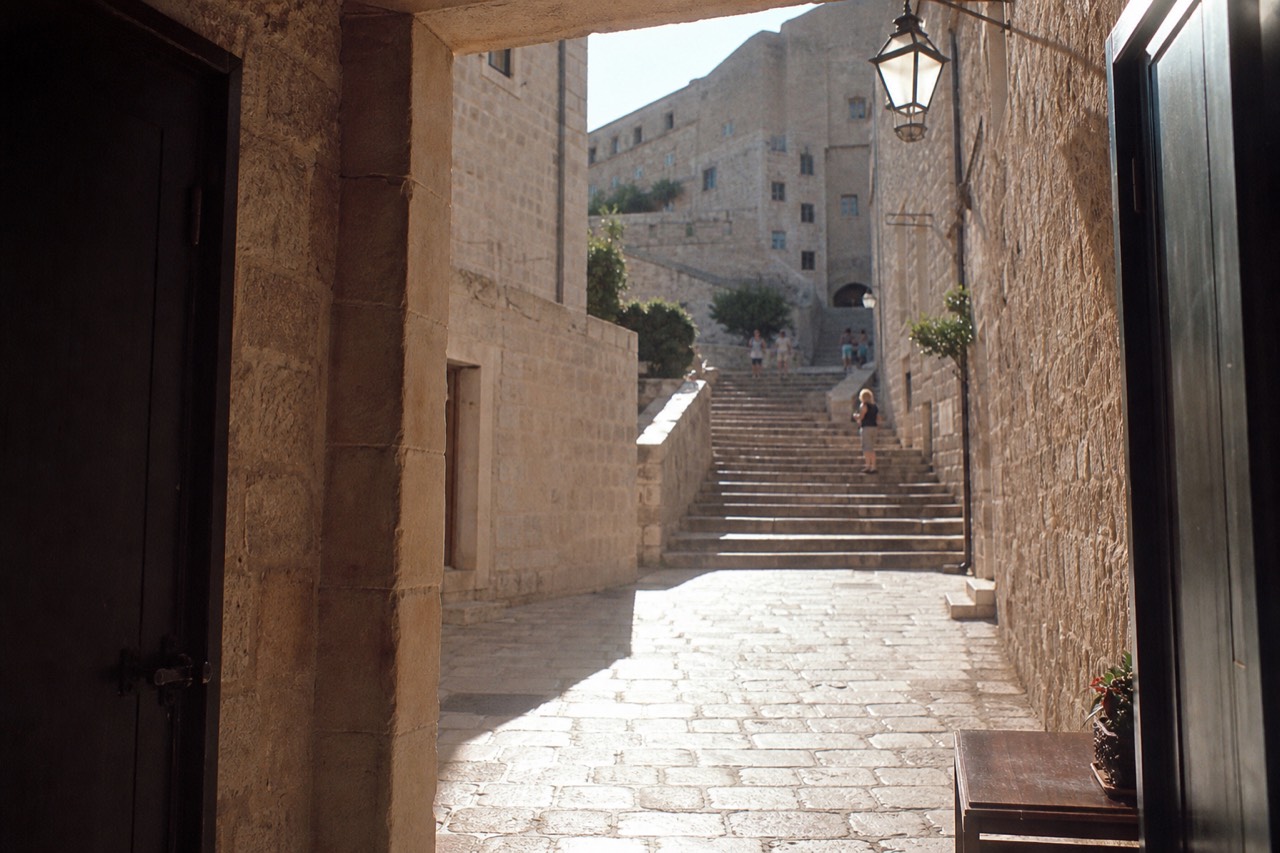
Do US Citizens Need a Visa for Croatia in 2026?
No. For a short tourist visit, US citizens travel to Croatia without a visa, and a valid US passport is the core requirement. Croatia sits inside Europe's border-free zone, so the same short-stay rules that apply to France or Italy apply on the Adriatic. Check your passport's validity date before booking, and confirm current entry rules on an official government source shortly before departure.
That is the short answer, and it is a genuinely easy one. Croatia has become one of the most straightforward European destinations for American travellers on the paperwork side. There is no consulate visit, no application form and no fee for a standard holiday stay. Your passport, your boarding pass and your accommodation details are what the border officer wants to see.
A few practical notes from the planning side. I have watched the arrival hall at Dubrovnik Airport move quickly in every season, and Americans holding ordinary tourist passports pass through the same line as other visa-exempt nationals. Keep your return ticket and your first night's booking accessible on your phone, because officers occasionally ask. And make sure your passport has blank pages and a validity window that comfortably covers your whole trip, since airlines check this at check-in and can refuse boarding if it looks tight.
One thing worth saying plainly: entry rules can change, and the authoritative word is never a travel blog, including this one. The US State Department's Croatia country page and the Croatian Ministry of Foreign and European Affairs publish the binding rules. Read them the week you fly, not the month you book, because that is when any change would be announced.
What Americans usually underestimate is not the visa question but the crowd question. Dubrovnik recorded about 4.2 million overnight stays in 2025, sharing first place among Croatian destinations with Rovinj, according to the Croatian Bureau of Statistics. The city is busy, and the busiest stretch of the year is not when most people assume. Cruise passengers in 2025 peaked in September at 101,246 and October at 100,132, above July's 96,072 and August's 87,385, per the Port Authority's own statistics. If you are planning a first visit around the American school holidays, that counter-intuitive autumn peak is worth knowing.
Once you are through the border, the classic first move in Dubrovnik is the Old Town and the walls. If you want the paperwork-free version of that plan, these three options cover the spread:
Are US Citizens Welcome in Croatia?
Yes, and visibly so. Croatians are used to American visitors, English is spoken widely in Dubrovnik's restaurants, shops and ticket offices, and US travellers are a normal, expected part of the summer mix. There is no anti-American sentiment a tourist would notice, and the local economy depends on exactly this kind of visitor. You will be treated as a guest, not a curiosity.
Dubrovnik has been an international crossroads for a long time, and the numbers back that up. The city counted 41,562 inhabitants at the 2021 census, yet it hosted roughly 4.2 million overnight stays in 2025, which means the town lives on tourism the way a port lives on ships. Americans are a big slice of that. The Port Authority even notes on its own site that Dubrovnik is strengthening its position as a home-port destination for 2026, with 461 cruise calls scheduled, and a substantial share of those passengers are US citizens stepping ashore for the day.
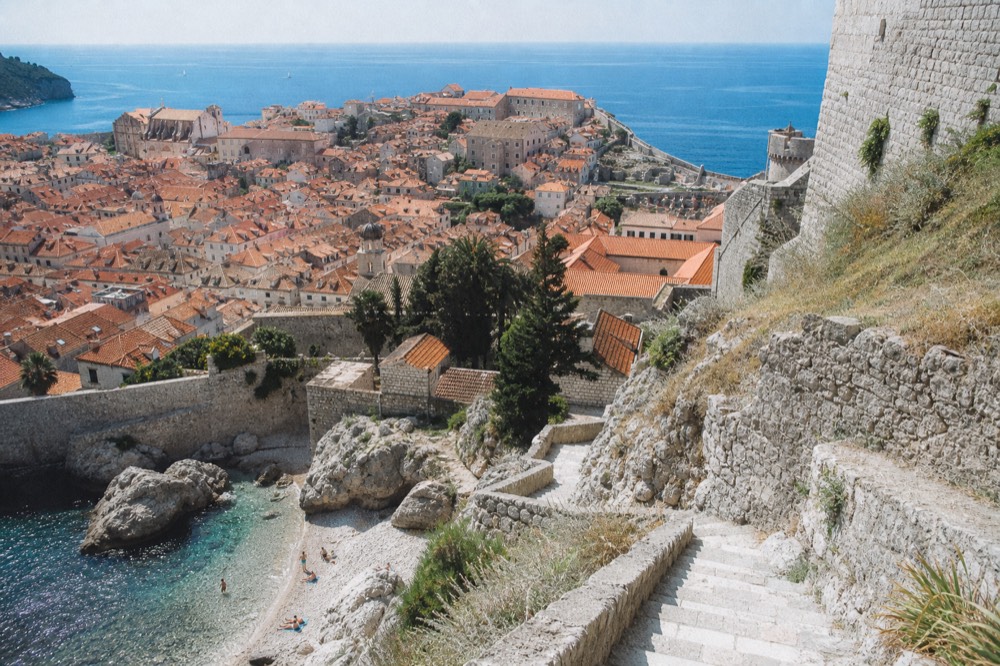
Practically, welcome shows up in small ways. Menus in the Old Town are printed in English as often as in Croatian. Ticket staff at the walls and the cable car deal in English all day. Tour operators run their walks in English by default. You will hear American accents on the Stradun, the 298-metre main street whose final plan was fixed by the Statute of 1272, at every hour of the day.
If you want the deeper background on the city before you arrive, our guide to Dubrovnik's history is the place to start, and the Old Town area guide covers the streets, gates and staircases in detail. For the site's full picture, start at Things to Do in Dubrovnik and work outward from there.
One honest caution: welcome is not the same as unlimited space. The Old Town's official carrying capacity, from the UNESCO carrying-capacity assessment, is 11,275 people, tracked by six counters at every entrance that update a headcount every 15 minutes. On a real September morning the curve read 5,419 people at 08:00, a 7,739 peak at 10:00, then 7,205 at 11:00. Arrive early or late and the town feels like yours; arrive at 10:00 on a four-ship day and it feels like a stadium concourse.
Is Croatia Cheap for US Citizens?
No, Dubrovnik is not cheap, but it is predictable. The walls cost 40 euro in main season, a cable car round trip is 30 euro, and a guided Old Town walk starts around $20 per person. Food and drink sit somewhere between mid-range and expensive by US standards. The fix is timing and structure: December prices drop sharply and self-guided days cost almost nothing.
The honest budget picture, in figures the operators themselves publish. The adult City Walls ticket is 40 euro in main season, 1 March to 30 November, and 20 euro in December, with children 7 to 18 at 15 euro then 5 euro, and under 6 free. That 40-euro ticket is actually the walls plus Fort Lovrijenac combination, and it also covers the Western Outer Wall and the Collection of Coins of the Republic of Ragusa. There is no family ticket; the operator sells exactly two paid article types. The walls operator's own site carries the details, and the walls themselves run 1,940 metres, up to 25 metres high.
| Sight or activity | Main season price | December price |
|---|---|---|
| City Walls + Fort Lovrijenac, adult | 40 euro | 20 euro |
| City Walls, child 7 to 18 | 15 euro | 5 euro |
| Cable car, adult round trip | 30 euro | closed January to March |
| Lokrum island ticket with return boat | 30 euro | 30 euro |
| One-day Dubrovnik Pass | 40 euro | not on sale |
Two of those rows deserve a sentence each. The one-day Dubrovnik Pass costs the same 40 euro as the standalone walls ticket in main season and adds ten more sights plus a 24-hour bus ticket, but that equivalence is a main-season claim only: in December the walls ticket falls to 20 euro and no pass tier is on sale at all. And the cable car, which climbs 367 metres over a 778.2-metre track in three and a half minutes to a station at 405 metres above sea level, is closed January to March, so a winter trip plans around it. The operator's price page lists the full timetable.
Tours are where the range opens up. The cheapest paid Old Town walk starts at $20 per person, rated 4.8 across 5,826 reviews. At the other end, a food and drink walking tour with a local guide runs from $165.64 per person, rated 5 across 704 reviews. Between them sit kayaking from $35, sunset cruises from $23.66 and full-day island cruises with lunch from $59.16, the most reviewed of which carries 10,312 reviews at 4.9. For a deeper look at the value question, our piece on whether Croatia is cheap or expensive breaks it down by category.
If the walls are your one booked sight, the admission ticket on its own is the lean way to do it:
For context on how the walls price is set, and why it feels steep to some visitors, see why the Dubrovnik walls cost so much. The short version: the ticket funds the monuments, not just the walk.
Is It Safe for US Citizens to Travel to Croatia Now?
Yes. Croatia is one of the safest destinations in Europe for American travellers, with low violent crime, a stable political situation and no specific threat directed at US visitors. The realistic risks in Dubrovnik are petty theft in dense crowds, sun and heat on the walls, and slippery limestone when wet. Ordinary city caution covers almost everything.
I say that as someone who walks these streets daily. The Old Town is the kind of place where the main hazards are physical rather than criminal: polished limestone steps that turn slick after rain, heat with little shade on the wall circuit in July and August, and cruise-day crowds that pickpockets, like anywhere in southern Europe, occasionally work. Keep valuables front-pocketed on the Stradun at midday and you have handled the crime picture.
The sea is worth a sentence too, because Americans often ask. The September average for this coast is about 23.6 degrees, from a long-run 1991 to 2020 open-water average, and August sits at 25.8; sheltered bays run warmer still, and swimming is generally safe at patrolled beaches. Follow the flag system at beaches like Banje and you are fine.
On the crowds side, the city manages itself better than its reputation suggests. The Port Authority limits cruise passengers to 8,000 a day in most cases, with a "2+1" berthing arrangement, and refused about forty cruise call requests in one season to hold that line. Of 243 cruise days a year only 18 exceed 8,000 passengers and only 4 exceed roughly 10,000, per the Port Authority's own cruise page. That is a city actively protecting the visitor experience, not one drowning in it.
Healthcare is European-standard in Dubrovnik, pharmacies are marked with green crosses, and tap water is safe to drink. US insurance generally does not cover you abroad, so travel medical insurance is the one genuinely recommended purchase; our travel insurance guide covers what to look for.
What Is the Best Way to Get to Croatia from the US?
Fly into Dubrovnik Airport nonstop from a US hub where the seasonal routes run, or connect through a major European gateway like Frankfurt, London or Zagreb into Dubrovnik, Split or Zagreb. There is no train from anywhere outside Croatia's north, and no ferry from the US, so the plane is the answer. Within the country, buses and boats do the rest.
Dubrovnik Airport is small, efficient and about 20 kilometres from the Old Town. Seasonal nonstop routes from the United States exist and are the fastest option when their schedules align with your dates; outside those windows, the standard plan is a transatlantic hop to a European hub followed by a short flight south. For the details on which US airports connect directly, see which airports fly directly to Dubrovnik, and for the last leg, our airport to Old Town guide compares the bus, taxi and transfer options.
Once you are on the ground, the geometry is simple. Croatia has no train station in Dubrovnik at all, so the coast runs on buses and ferries. A shared departure transfer to the airport starts at $20 per person if you prebook. Ferries connect Dubrovnik to the Elaphiti islands, Lokrum, Korcula, Mljet and Cavtat, and boats leave the City Harbour for Lokrum at 09:00, then every 15 minutes from 10:00 to 18:00, with a Lokrum ticket at 30 euro covering both reserve entry and the return boat.
| Route or activity | Typical duration | Starting price |
|---|---|---|
| Shared airport transfer, Dubrovnik to airport | about 1 hour | from $20 per person |
| Old Town walk with local guide | about 1.5 hours | from $20 per person |
| Convertible bus panorama tour | about 1 hour 30 minutes | from $34.77 per person |
| Elaphiti islands cruise with lunch | about 8 hours | from $59.16 per person |
| Montenegro day trip | about 11 hours | from $58 per person |
Two of those rows deserve a note. The Montenegro day trip crosses a land border, so carry your passport; a recent traveller on that exact tour reported the September crossing took 15 minutes, but build slack into any same-day plans. And the panorama bus tour, rated 4.6 across 796 reviews, is the low-effort orientation option if you land late and want the geography explained before you walk it yourself.
If your first day is short, a guided walk is the most efficient use of it. The Old Town walk with a local guide runs from $20 per person and carries a 4.8 rating across 5,826 reviews:
Alex was a fantastic guide, she explained the complex history of Dubrovnik to give a lasting impression of the history of the area. Really appreciated that she aimed for shaded areas on a boiling September day. The food recommendations for after were much appreciated too! Great tour for a first experience of the old town!
Sophie
Planning the Trip: What to Book Before You Fly
Book three things from home: your walls or pass ticket for a specific day, any day trip that crosses a border, and your airport transfer. Everything else, from restaurants to kayak tours, can be arranged on the ground. September and October are the sweet spot for Americans who can travel off-peak, because the sea is still warm and the cruise peak is already counted.
The timing argument deserves its own paragraph, because it is the single best planning insight an American visitor can get. Everyone assumes July and August are the crush and books around them, but the Port Authority's monthly data shows September at 101,246 cruise passengers and October at 100,132 in 2025, ahead of July's 96,072 and August's 87,385. The sea in September averages about 23.6 degrees on the long-run series, the air is gentler for the walls, and the remaining 2026 season schedule holds 149 ship calls across 80 cruise days, with the busiest single days on 6 October at 5,798 passengers by capacity and 29 September at 5,675. Those are ship-capacity figures, not people who actually walk ashore, but the pattern is real: early autumn is peak Dubrovnik.
Structure your days around it. Walk the walls at 08:00, when the operator's stated hours open and the half-hourly counts are still climbing from 5,419 toward the 10:00 peak. Spend midday on the water or on Lokrum, where the peacocks and the botanical gardens absorb crowds easily. Return to the Old Town after 17:00, when day-trippers have sailed. That single rhythm, morning walls and afternoon island, is what I would tell any American friend booking their first trip.
Before you lock the itinerary, these are the three bookings worth having in hand:
Common Questions About US Citizens Visiting Croatia
Do US citizens need a visa for Croatia in 2026?
No. US citizens can visit Croatia for a short tourist stay without a visa, using a valid US passport. Croatia is part of Europe's border-free zone, so the short-stay rules that apply elsewhere in the region apply here. Confirm current entry requirements on an official government source shortly before you travel.
Is It Safe for US Citizens to Travel to Croatia Now?
Yes. Croatia is one of Europe's safest destinations for American travellers, with low violent crime and no specific threat to US visitors. The realistic risks in Dubrovnik are petty theft in crowds, heat on the city walls, and slippery limestone after rain. Ordinary city caution, sunscreen and water cover nearly everything.
Is Croatia Cheap for US Citizens?
Dubrovnik is not cheap, but it is predictable. The walls cost 40 euro in main season, the cable car round trip is 30 euro, and a guided Old Town walk starts at $20 per person. December prices drop sharply, with the walls ticket at 20 euro, and self-guided days cost very little.
What Is the Best Way to Get to Croatia from the US?
Fly. Seasonal nonstop routes serve Dubrovnik Airport from US hubs, and otherwise you connect through a European gateway like Frankfurt, London or Zagreb. There is no train to Dubrovnik and no ferry from the US. On the ground, buses, transfers from $20 per person, and local ferries handle everything.
Do US Citizens Need a Passport Valid for Six Months?
Check your passport's expiry before booking rather than relying on a rule of thumb. Airlines verify validity at check-in and can refuse boarding if the window looks short. Blank pages and a validity period comfortably covering your whole trip are the safe standard for any European itinerary.
When Is the Least Crowded Time to Visit Dubrovnik?
Early morning any day, and the shoulder months if you can travel off-peak. Counter-intuitively, September and October are the busiest cruise months, with 101,246 and 100,132 passengers in 2025, above July and August. Walk the walls at opening time and spend midday on the water to stay ahead of the peak.