What Is the Best Way to Get Around in Dubrovnik?
The honest answer to getting around Dubrovnik: your feet inside the walls, buses outside them, and a handful of panorama tours worth the ride. Local advice on arrivals, Kotor and Split routes.
What Is the Best Way to Get Around in Dubrovnik?
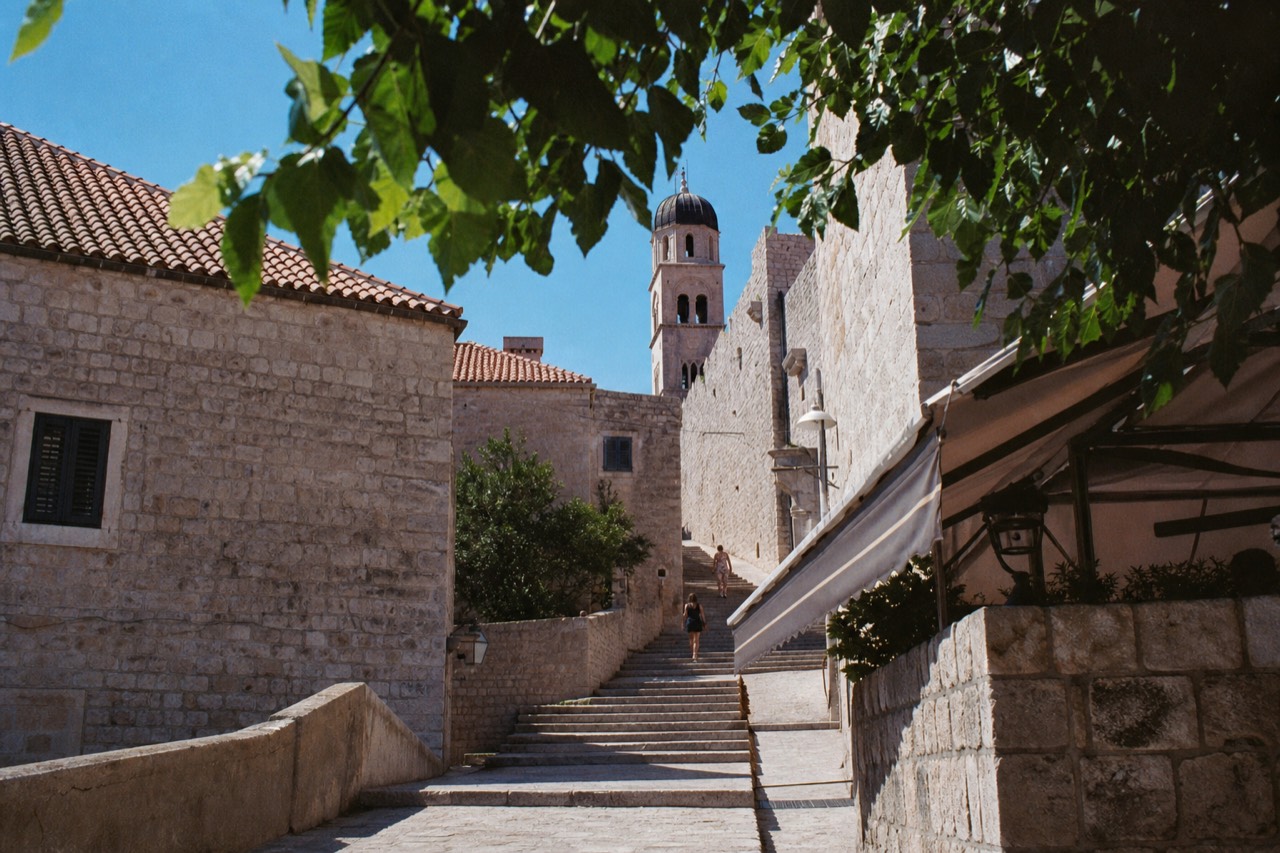
The best way to get around Dubrovnik is on foot. The walled Old Town is car-free, compact and built entirely of limestone stairs, so walking is not just the cheapest option, it is the only option inside the walls. Outside them, the city bus network covers Lapad and Gruž, the cable car climbs Mount Srđ, and organised panorama tours replace the need for a rental car for most visitors.
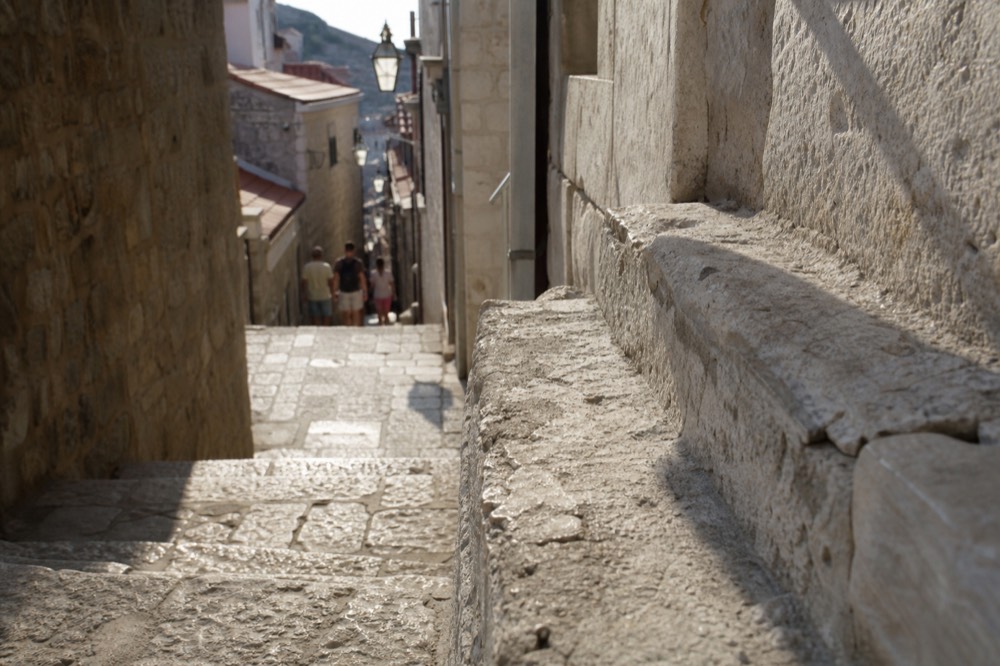
I walk this city for a living, and I can tell you the single most common mistake visitors make: they assume they need wheels. They do not. The Old Town property inscribed by UNESCO in 1979 covers just 24.7 hectares, and the Stradun, its main street, is 298 metres long. You can cross the entire historic core in fifteen unhurried minutes if you know the lanes, and the 1272 Statute that fixed the street plan did not leave room for cars. What the plan did leave is stairs, thousands of them, so pack shoes that grip polished stone. When the limestone is wet, and in autumn it often is in the morning, it turns slick under smooth soles in a way that surprises everyone once.
The geography explains the transport picture better than any timetable. Dubrovnik wraps around a peninsula, with the pedestrian core inside the walls, the neighbourhood of Ploče climbing east, Lapad spreading west along its bay, and Gruž, the port and bus hub, sitting beyond it. Everything funnels toward Pile Gate on the west or Ploče Gate on the east, and the city buses terminate within a short walk of both. That funnel shape is why a single bus line decision usually solves a visitor's entire transport problem: find the line that connects your accommodation to Pile, and you are finished planning.
Outside the walls the calculus changes. Lapad, Gruž, Babin Kuk and Ploče are real neighbourhoods spread along the coast, and the city buses connect them to Pile Gate, the main western entrance to the Old Town. The Dubrovnik Pass includes a 24-hour bus ticket on its one-day tier and 72 or 168 hours on the three-day and seven-day tiers, which is one reason the pass works for people staying outside the centre. The getting around guide breaks down every bus line in detail, and the walkability guide answers the fitness question honestly, because the stairs are no joke in August heat.
For the views that normally demand a car, there are now tours that do the driving. The hop-on hop-off yellow bus with audio guide, from $35.46 per person and rated 4.9 across 1,147 reviews, loops the key panoramas in about an hour and a half. The convertible panorama bus, from $34.77 and rated 4.6 across 796 reviews, covers similar ground in open air, which matters when the sun drops behind Srđ and the whole bay turns gold. And the e-tuk-tuk tour, from $59.24 and rated a perfect 5 across 1,799 reviews, squeezes down lanes a rental car would not attempt, which is precisely why visitors rate it so highly.
One more thing worth knowing before you plan: the city counts its visitors. Six counters at every Old Town entrance update a headcount every 15 minutes, and the official carrying capacity from the UNESCO assessment is 11,275 people. On a September morning the curve I watched climbed from 5,419 people at 08:00 to a 7,739 peak at 10:00, then eased to 7,205 by 11:00. Timing matters more than transport here, because everyone arrives on the same foot, and the lanes near the Stradun fill hours before the side streets do.
A few practical notes follow from all of this. If you are staying in Lapad, Gruž, Babin Kuk or Ploče, the bus is your daily workhorse and the pass tiers decide your best buy: the one-day tier's 24-hour bus ticket suits a short stay or a single day of heavy sightseeing, while the 72-hour and 168-hour bus windows on the three-day and seven-day tiers make sense once you are riding to and from Pile Gate more than a couple of times. Because every line funnels toward Pile or Ploče Gate, you never need to learn the full network, just the one line that links your door to the walls, and the getting around guide maps each of them.
The tours fill the one gap walking cannot, which is the panorama from above and around. If you want the classic viewpoints without a rental car, the yellow hop-on hop-off bus and the convertible bus cover similar ground at similar prices, so the real choice is the open air: the convertible matters most in the golden hour before sunset, when the light drops behind Srđ and the bay turns gold. The e-tuk-tuk costs more but goes where the bigger vehicles cannot, squeezing down lanes a car would never attempt, and its perfect 5 rating across 1,799 reviews reflects exactly that. Pair any of them with the cable car up Mount Srđ if you want the height without the driving.
Finally, let the counters shape your day rather than your mode of transport. The headcount updates every 15 minutes at all six entrances, and the September curve I watched tells the story: 5,419 at 08:00, a 7,739 peak at 10:00, easing to 7,205 by 11:00. Arrive before the peak or after it and you will see the same lanes, the same stairs and the same Stradun with thousands fewer people sharing them, and since autumn mornings now draw more cruise passengers than midsummer ones, that early start matters even more in September and October than it does in July.
Putting the pieces together is simpler than it first looks. If you are staying in Lapad, Gruž, Babin Kuk or Ploče, choose with the bus map
What Is the Best Way to Get to Dubrovnik?
Most visitors arrive by air into Dubrovnik Airport, roughly half an hour south of the city, then take a pre-booked shared transfer, the airport bus or a taxi to the Old Town. A shared departure transfer starts from $20 per person and is rated 4.5 across 57 reviews. Cruise passengers arrive at Gruž port or tender ashore near the Old City, and both connect to the centre without a car.
The airport question has its own economics. A shared transfer booked ahead is the cheapest organised option on this site's roster, and it drops you at your accommodation rather than a stop, which matters if you are staying in Lapad or Babin Kuk where the airport bus does not reach every door. The alternative is the local airport bus, which runs on the flight schedule rather than a fixed timetable, so a delayed landing can mean a wait; the airport bus guide has the practical detail. Taxis and ride-hailing exist but cost more, and the airport to Old Town guide compares them honestly, including what to expect late at night when the shared options have stopped running.
Cruise arrivals are a different animal. The Port of Dubrovnik recorded 625,257 cruise passengers in 2025, up from 582,499 in 2024, and 461 calls are scheduled for 2026. Ships berth at Gruž or anchor off the Old City, and the walk or shuttle from either is short. If your day starts at the pier, the cruise port to Old Town guide is written for exactly your situation, and the cruise day itinerary tells you what to do with the hours you have once you arrive.
| Arrival route | Typical use | Booked option on this site |
|---|---|---|
| Dubrovnik Airport to city | Flights into DBV | Shared transfer, from $20 per person, rated 4.5 across 57 reviews |
| Cruise port to Old Town | Day callers at Gruž | Walk, shuttle or taxi; no tour needed |
| Ferry from Split or islands | Coastal arrivals | Arrive at Gruž, then a city bus to Pile |
| Arrival with a panorama tour | First-day orientation | Convertible bus tour, from $34.77, rated 4.6 across 796 reviews |
Arriving by road, from Montenegro, Bosnia or up the Croatian coast, you face the parking question, and it is a real one: spaces near the Old Town are scarce and expensive, and the few garages fill early on cruise days. The parking guide maps the honest options, including the trade-off between walking distance and price. For most fly-in visitors, though, a car in Dubrovnik is a liability, not a convenience, and the panorama tours do the sightseeing drive for you at a fraction of what a week of garage fees costs.
If your first day is your only full day, consider spending the arrival afternoon on wheels rather than on stairs. The yellow bus tour doubles as an orientation ride: you see where Lapad sits relative to the walls, where the cable car station climbs, and how the harbour fits together, all with an audio guide explaining what you are looking at. Plenty of visitors treat it as a rolling map that pays for itself in saved wrong turns.
What Is the Best Way to Get from Dubrovnik to Kotor?
The best way from Dubrovnik to Kotor is an organised Montenegro day trip, from $58 per person and rated 4.4 across 5,611 reviews, or from $70.99 with an optional boat trip on the Bay of Kotor. Independent drivers can take the coastal road, but border crossings eat time and parking in Kotor's old town is tight, so a guided bus does the hard parts for you.
The border is the variable. One recent guest on the Montenegro trip noted that the crossing in September took only 15 minutes, but queues build in July and August when the coastal route is at its busiest, and a tour driver who crosses weekly knows which lane moves. The semi-private version has its fans too: the same reviewer described a six-person group with a guide named Robert who was, in her words, knowledgeable and enthusiastic about everything. That smaller format costs more than the standard coach, and for many people it is worth it precisely because the border wait feels shorter when you are not watching the clock for a return departure. The wider set of guides lives on Things to Do in Dubrovnik.
If you would rather go independently, the Kotor day trip guide covers the route, and the question of how long the ferry from Kotor to Dubrovnik takes has its own answer page. What I would not do is underestimate the paperwork: bring your passport, not a national ID, and check whether your nationality needs anything more, because the Croatia-Montenegro border is an external European Union frontier. The road itself is spectacular, clinging to the shoreline around the bay, but the driver sees none of it, which is the strongest argument for handing the wheel to someone else.
There is also a wider point here about getting around the region. Dubrovnik sits in a narrow Croatian corridor between Bosnia's short coastline and Montenegro, so several of the best day trips are international. Mostar in Bosnia, from $35 per person and rated 4.6 across 10,019 reviews, is the most booked of them, and it runs on the same logic: let someone else handle the border while you look out the window. One guest on that route described it as a long day and an early start, but well worth it, with a guide named Tina keeping everyone informed throughout, and a simple piece of advice that belongs in every itinerary: bring euros.
What Is the Best Way to Get from Split to Dubrovnik?
The best way from Split to Dubrovnik depends on your priorities: the bus runs the coastal route several times a day and is the cheapest regular option, a private transfer is fastest door to door, and the seasonal catamaran serves the islands on the way. There is no train, and driving yourself means the Bosnian border crossing at Neum unless you take the Pelješac bridge.
The train point surprises people: Dubrovnik has no rail connection at all, so the question of a train from Zagreb always ends in a bus or a plane. From Split, the bus is the workhorse, hugging the coast for most of the run and dropping you at Gruž, where a city bus or a short taxi ride finishes the journey to Pile. The catamaran is the romantic option, stopping at Hvar and Korčula, but it is seasonal and weather-dependent, and the ferries guide tracks what actually runs. Sailing south in the late afternoon, with the islands sliding past on the left, is one of the better transfers in Europe; it simply is not a guarantee, and a stiff bora can cancel it outright.
Drivers should know the geography before they set off. The old road passes through Bosnia at Neum, a short stretch that means two extra border checks, while the Pelješac bridge now lets you stay in Croatia the whole way, past the walls of Ston and the vineyards that make this coast worth slowing down for. The Ston and Pelješac guide makes the case for turning the drive into the day itself, and the Pelješac wine guide makes the case for not driving it at all.
| Split to Dubrovnik option | Best for | Watch out for |
|---|---|---|
| Intercity bus | Budget and simplicity | Summer seats sell out; luggage fees can apply |
| Seasonal catamaran | Island stops en route | Weather cancellations; book far ahead |
| Private transfer | Groups and early flights | Costs rise per vehicle, not per person |
| Rental car via Pelješac | Stopping in Ston and wine country | Parking in Dubrovnik is scarce and pricey |
For anyone weighing the two cities as bases rather than as a route, the Dubrovnik versus Split comparison covers the trade-offs, and the answer on which airport to fly into often decides the direction of travel before anything else does. In summer the catamaran route doubles as an island-hopping preview, and the island hopping guide explains how to split a week between the two cities without backtracking.
What Is the Best Way to Get from Dubrovnik to Split?
Heading north, the same three options apply in reverse: bus, seasonal catamaran or a transfer, with no train existing in either direction. The bus is the dependable daily choice, the catamaran turns the transfer into an island hop through Hvar and Korčula, and a private transfer suits groups with luggage or a flight to catch. Allow a full day for the journey whichever way you choose.
The direction matters less than the timing. Catamaran sailings thin out outside summer, and the last buses of the day arrive late, so an early start protects your first evening in Split. If your goal is not just to move but to see something on the way, a Korčula day trip, from $81.69 per person with wine tasting and rated 3.8 across 131 reviews, samples the island the ferry calls at, and the Korčula day trip guide covers the independent version. Korčula town is a miniature of Dubrovnik's walled charm, and the wine poured in its cellars, mostly from the local Pošip grape, is reason enough to break the journey.
The bridge changed this route more than any timetable did. Before Pelješac, every Dubrovnik-Split driver crossed Bosnia twice; now the road stays Croatian and passes straight through oyster and wine country. Some travellers now plan the journey around lunch in Ston rather than around the border, which is exactly the right instinct. The oyster farms there are the reason the Ston oysters guide exists, and the town's own walls, the longest defensive structure of their kind in this part of Europe, deserve an hour even on a driving day.
For the flight-home scenario, one practical note: the shared airport transfer that works on arrival also works in reverse, from $20 per person, and it collects from Dubrovnik and Cavtat addresses. On a tight morning it removes the single biggest variable, the taxi that does not come. Book it for the hour your airline actually recommends, not the hour you wish you had to leave, because the road to the airport narrows through villages and a delayed pickup cannot be driven back.
Common Questions About Getting Around in Dubrovnik
What is the best way to get around in Dubrovnik?
On foot. The Old Town is car-free and compact, roughly 24.7 hectares of limestone lanes and stairs, so walking is the only way inside the walls. Outside them, city buses link Lapad, Gruž and Ploče to Pile Gate, and the cable car, panorama bus tours and e-tuk-tuk rides cover the viewpoints without a rental car.
Is Dubrovnik Walkable Without a Car?
Completely. The historic core is pedestrian-only, the Stradun is 298 metres long, and even the outer neighbourhoods sit on frequent bus lines. A car helps only for day trips, and organised tours or buses handle those too.
Do You Need a Rental Car in Dubrovnik?
Almost never for the city itself. Parking near the Old Town is scarce and expensive, and the sights inside the walls are reachable only on foot. A car earns its keep only if you plan multiple independent day trips along the coast or through Pelješac wine country.
How Do Cruise Passengers Get from the Port to the Old Town?
Ships berth at Gruž, a short bus or taxi ride from Pile Gate, or tender ashore near the Old City port. Cruise passengers in 2025 totalled 625,257, and the Port Authority limits most days to 8,000, so the walk-in crowds are managed but real.
Can You Take a Day Trip from Dubrovnik Without Driving?
Yes, and most visitors do. Montenegro runs from $58 per person, Mostar from $35, and the Elaphite islands by boat from $59.16. Every one of them collects you in the city and returns you there, which is the whole point of basing yourself in Dubrovnik.