Dubrovnik Buses and Local Transport: How to Get Around Without a Car
Dubrovnik is small, steep and walkable, but the buses matter more than most visitors expect: they link the Old Town to Lapad, Gruž and the airport shuttle hub, and the Dubrovnik Pass bundles a bus ticket into every tier. Here is how the system fits together, and where a bus is the wrong answer.
Short answer
You rarely need a car in Dubrovnik. Local buses link Pile Gate, the Old Town, Lapad and Gruž, and every Dubrovnik Pass tier includes a bus ticket: 24 hours on the one-day pass at 40 euro, 72 hours on the three-day at 50, 168 hours on the seven-day at 60. The cable car, Lokrum boats and airport shuttle cover almost everything else.
Dubrovnik Buses and Local Transport: How to Get Around Without a Car
Dubrovnik recorded about 4.2 million overnight stays in 2025, sharing first place among Croatian destinations with Rovinj, and almost none of those visitors needed a car inside the city. The walled Old Town is a pedestrian zone of 24.7 hectares, entirely closed to traffic, and everything else you might want, Lapad's beaches, Gruž port, the cable car's lower station, sits within a short bus ride or a stiff walk. I have been guiding travellers here since 2015, and the single most common transport mistake I see is not the bus network itself but the assumption that a city this famous must be hard to move around in. It is not. It is just vertical in places.
This guide covers the buses themselves, how the Things to Do in Dubrovnik pass system folds a bus ticket into every tier, whether the cable car needs booking ahead, and how many days you actually need, because those four questions decide most trip plans.
How Do You Get Around Dubrovnik Without a Car?
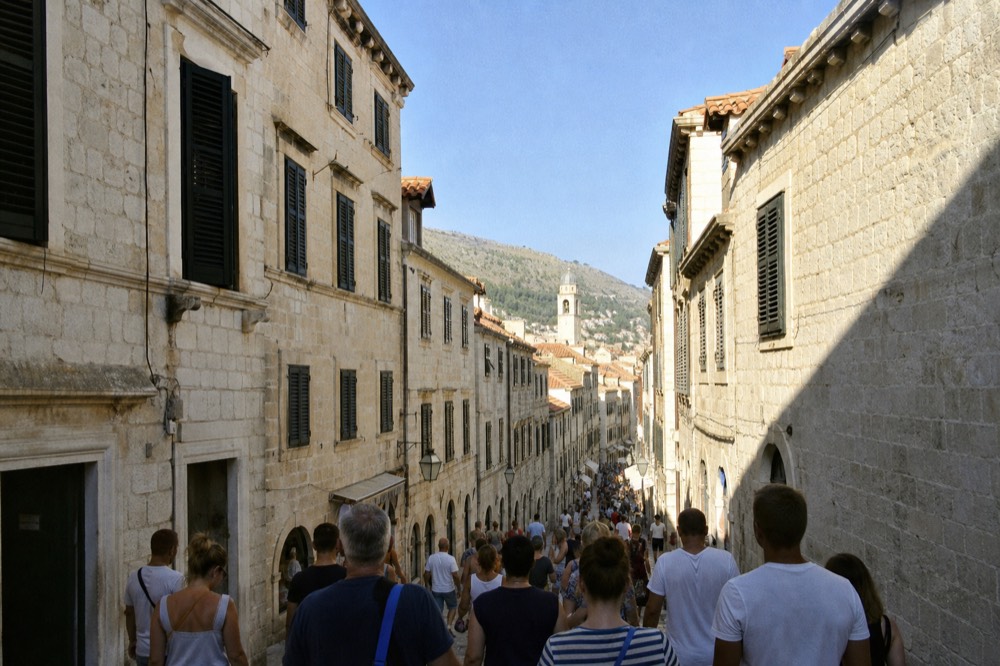
You walk inside the walls and take a bus everywhere else. The Old Town is fully pedestrianised across its 24.7 UNESCO hectares, the Stradun runs 298 metres from Pile to the clock tower, and the local bus network connects Pile Gate and Gruž to Lapad, Babin Kuk and the suburbs. A car adds nothing except parking fees and stress.
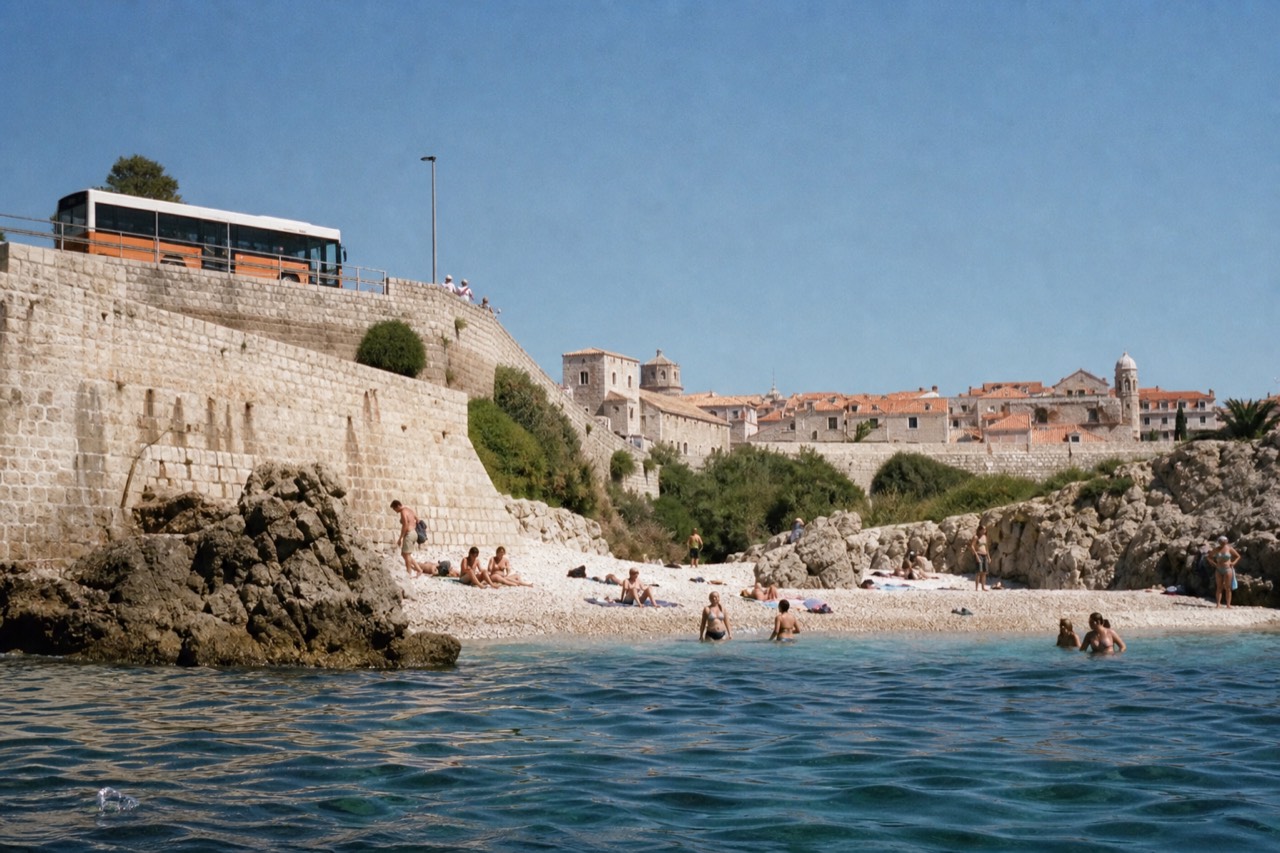
Start with the geography, because it explains the buses. The Old Town sits on a spur of rock between Pile Gate to the west and Ploče Gate to the east, with Mount Srđ rising behind it. Lapad, where most of the mid-range hotels cluster, is a peninsula to the northwest. Gruž, the cruise and ferry port, sits in the bay to the north. None of these are far apart in distance, but the heat, the stone staircases and the humidity of a July afternoon change the arithmetic considerably.
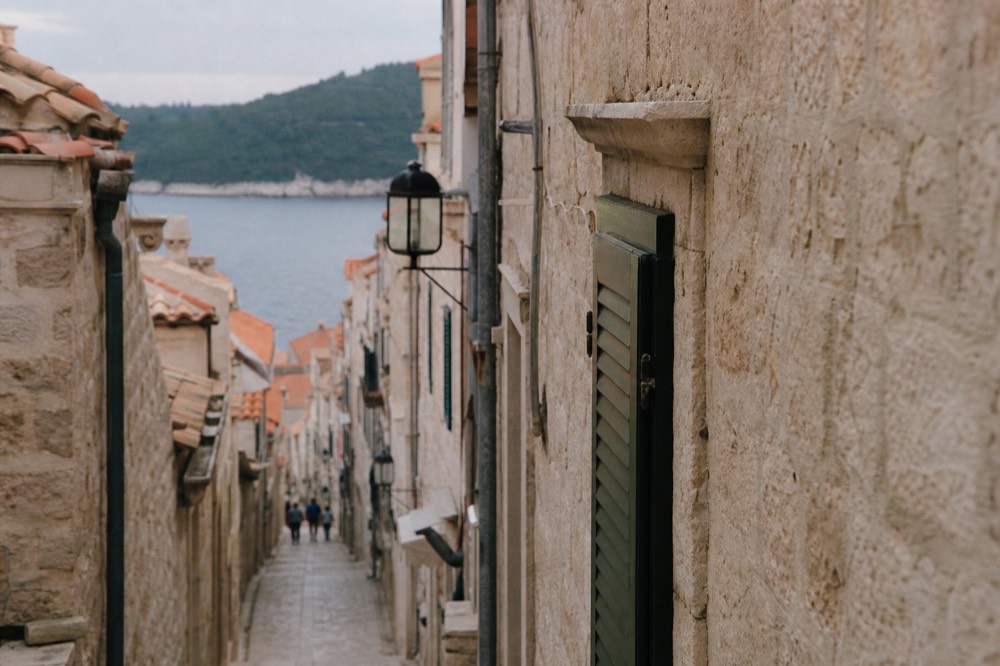
I always tell visitors to think of the city in three layers. The first layer is the Old Town itself, where walking is the only option and every distance is short: the Stradun is 298 metres end to end, so crossing the whole core takes minutes, not hours. The second layer is the coastal strip from Pile around to Lapad and Babin Kuk, which the buses serve directly. The third layer is everything above and beyond: Mount Srđ by cable car, Lokrum by boat, and the day-trip destinations in Bosnia, Montenegro and the islands, which are tour and ferry territory rather than bus territory.
For the practical details of walking versus riding, the Dubrovnik walkability guide breaks down the stair counts and the flat alternatives, and the getting around overview compares every mode in one place.
Which Bus Routes Serve the Old Town, Lapad and Gruž?
The routes that matter run between Pile Gate, the Old Town's western entrance, and the hotel zones of Lapad and Babin Kuk, with Gruž port and the main bus station as the northern hub. If your hotel is in Lapad, the number 6 bus is the classic connection toward Pile rather than a long walk. Buy tickets before boarding if you can, and validate anything bought in advance.
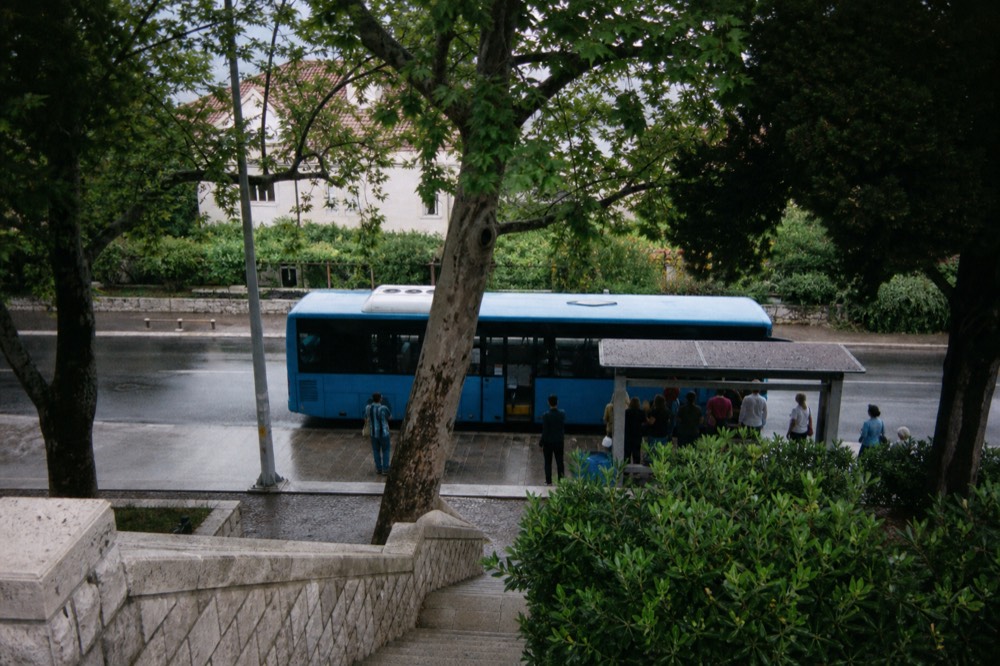
Pile Gate is the anchor for almost everything. Buses terminate or pass within a two-minute walk of the gate, and from there you are inside the walls in under five minutes on foot. From the Gruž side, the main bus station sits right by the cruise and ferry port, which makes it the natural transfer point if you arrive by ship or catamaran. The cruise port to Old Town guide covers that specific journey in detail.
Lapad is the busiest corridor in both directions, because that is where the bulk of the city's hotel capacity sits. Hotel Komodor, a budget three-star rated 7.8 out of 10 across 822 Expedia reviews, sits about a 29-minute walk from the Gruž cruise and ferry port, and the number 6 bus is the sensible connection toward Pile Gate rather than that walk in summer heat. The peninsula's beaches, restaurants and the Lapad bay promenade are all reachable on foot once you are there, so Lapad works as a base where you ride once in the morning and once in the evening and walk the rest.
A rough orientation, using the connections I trust:
| District | Role for visitors | Best connection |
|---|---|---|
| Old Town (inside the walls) | Sights, restaurants, evening life | Pedestrian only, enter at Pile or Ploče Gate |
| Pile and Ploče fringes | Closest hotels to the walls | Walk everywhere, no bus needed |
| Lapad | Main hotel and beach zone | Number 6 bus toward Pile Gate |
| Gruž | Cruise port, ferry port, main bus station, market | Bus hub, walkable to Lapad in about half an hour |
| Babin Kuk | Resort hotels and beaches | Local bus along the Lapad coast |
If you would rather have the orientation done for you on day one, a guided walk is the fastest way to learn the city's layout, and the Old Town walking tours compared page ranks the options by length and price.
How Much Does the Dubrovnik Pass Help With Buses?
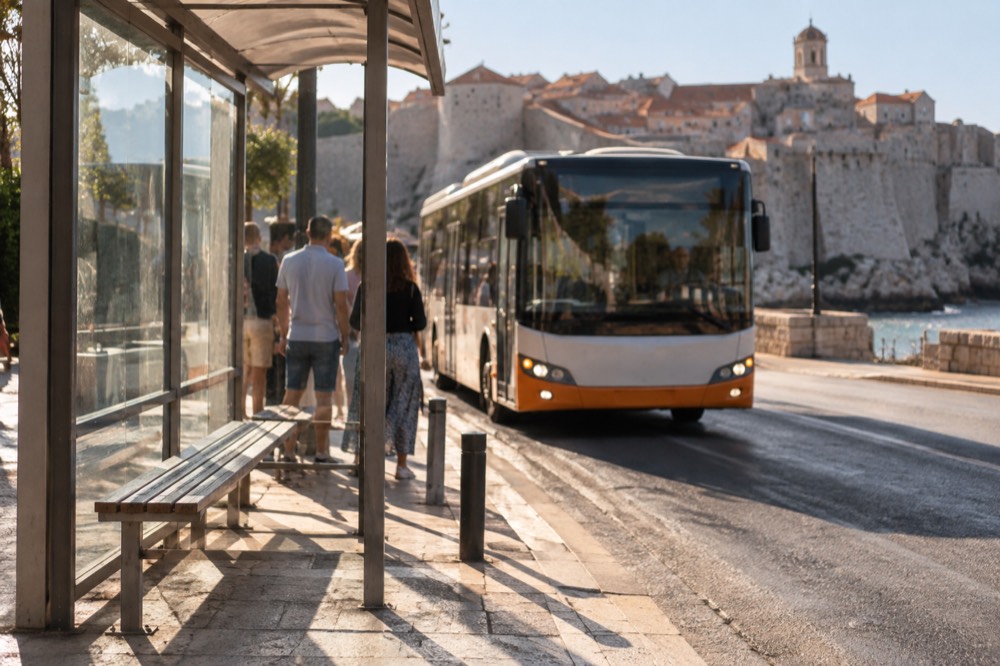
Every Dubrovnik Pass tier includes a public bus ticket for Dubrovnik city transport: 24 hours on the one-day pass, 72 hours on the three-day, 168 hours on the seven-day. The one-day pass costs 40 euro, the same as a standalone walls ticket in main season, 1 March to 30 November, and adds ten more sights plus the buses.
The pass is sold for the summer window, 1 March to 30 November, in one ticket type only, the adult pass for ages 7 and up, and the official checkout lists the bus ticket alongside the cultural inclusions on every tier. The walls and Lovrijenac Fortress come first on every tier's inclusion list, followed by the Rector's Palace, the Maritime Museum, the Ethnographic Museum, Marin Držić House, the Natural History Museum, the Franciscan Monastery Museum, the Museum of Modern Art, the Dulčić-Masle-Pulitika Gallery, Pulitika Studio and the archaeological exhibitions. The three-day and seven-day tiers add suburban bus coupons and House Bukovac in Cavtat.
| Pass tier | Price | Bus ticket included | Sights |
|---|---|---|---|
| One day | 40 euro | 24 hours, city buses | Walls plus ten more |
| Three days | 50 euro | 72 hours, city buses plus suburban coupons | Walls plus ten more, House Bukovac in Cavtat |
| Seven days | 60 euro | 168 hours, city buses plus suburban coupons | Walls plus ten more, House Bukovac in Cavtat |
One limit matters and is easy to miss: each included institution, the City Walls included, can be visited once per pass. The official checkout states this plainly, so a pass is not a licence to walk the walls twice at golden hour. The full breakdown, including the December caveat when no winter pass tier is on sale at all, is in the Dubrovnik Pass guide, and the operator's own site at dubrovnikpass.com carries the live inclusions.
The honest way to frame the value: in main season the one-day pass costs the same 40 euro as the standalone walls ticket and adds ten sights plus the buses, so it pays for itself the moment you ride to Lapad. In December the standalone walls ticket drops to 20 euro and no pass tier is on sale at all, so the pass conversation is a main-season conversation.
Do I Need to Buy Dubrovnik Cable Car Tickets in Advance?
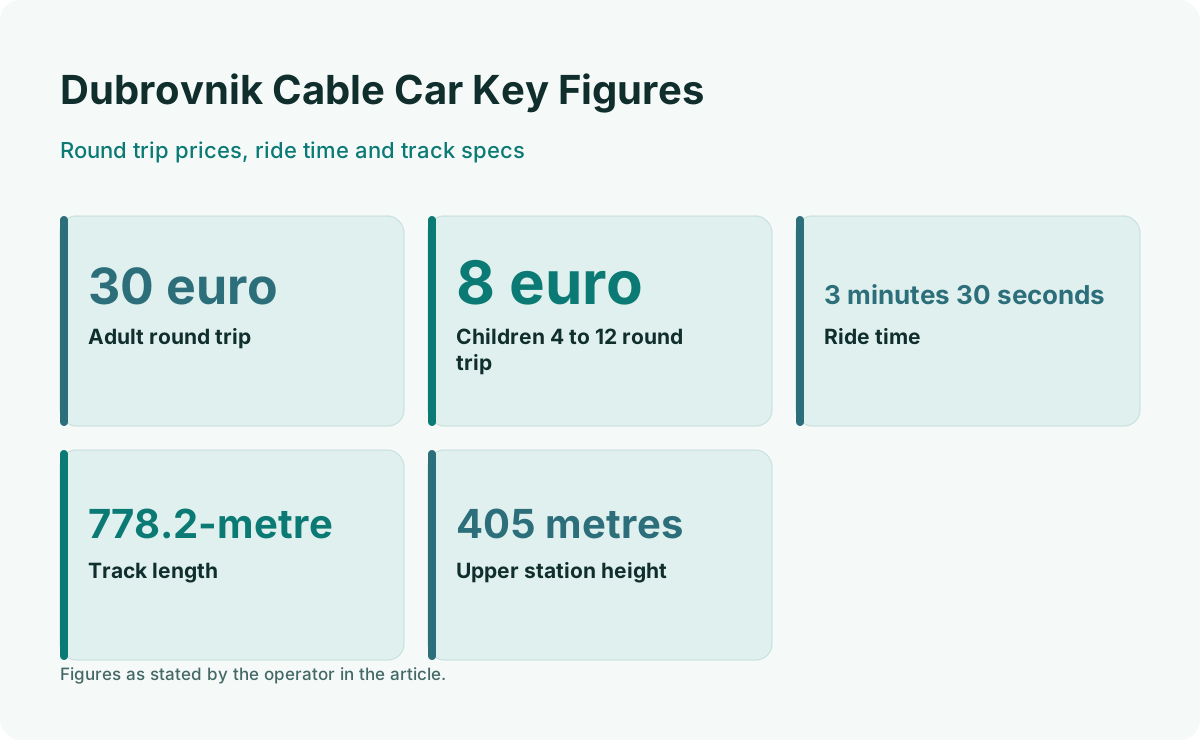
In peak months, yes, book ahead. The cable car runs two cabins of 32 plus 1 persons each on a 778.2-metre track, rising 367 metres to the upper station at 405 metres, and queues at the lower terminal build through the day. A round trip costs 30 euro for adults, 8 euro for children 4 to 12, and the ride itself takes 3 minutes 30 seconds.
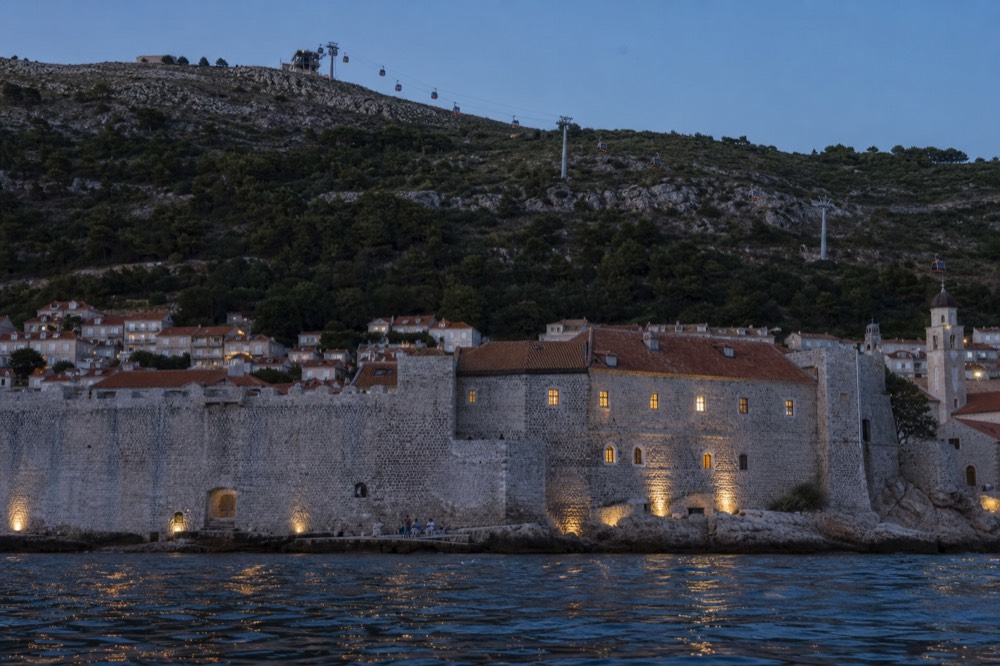
The cable car is not a bus, but it belongs in any getting-around plan because Mount Srđ is the one place the buses cannot take you. Built in 1969, it climbs from a lower terminal at 38 metres to 405 metres at 6.5 metres per second, and the operator states a view range of up to 60 km on a clear day. The timetable shifts through the season: closed January to March, 09:00 to 21:00 in April, extending to midnight in June, July and August, and tapering again from mid-September. The operator's own timetable and prices page is the source to check before you go.
| Ticket | Round trip | One way |
|---|---|---|
| Adult | 30 euro | 17 euro |
| Child 4 to 12 | 8 euro | 5 euro |
| Under 4 | free | free |
Sunset is when the queues are longest, because everyone wants the terrace light. Riding first thing in the morning, or pairing the ride with a tour that includes the ticket, sidesteps the wait entirely. The combined tour that includes the cable car ticket and an Old Town walk runs about 3 hours from 92.04 dollars per person, rated 4.4 across 118 reviews, and it is the version I point people toward when they ask whether to queue or not.
The reason this format works for a getting-around question is simple: the ticket is in the price, so there is no second queue at the lower terminal, and the walk that follows means you leave the ride with the city mapped in your head rather than just photographed. Travellers who queue separately for the cable car and then improvise the Old Town afterwards spend their first afternoon lost on the stair streets, which is exactly the fatigue a first day does not need.
There is also a lighter option worth knowing: a cable car and museums multipass from 24 dollars per person, rated 4 across 101 reviews, which bundles the ride with museum entry and can run anywhere from 10 minutes to 3 hours depending on how you use it. If the walls are already covered by your pass, the multipass is the cheaper way to add the view.
For the full decision framework, including walking down instead of riding, see Do I Need to Buy Dubrovnik Cable Car Tickets in Advance?.
How Many Days Do I Need to See Dubrovnik?
Three days is the honest minimum for a first visit. Day one covers the Old Town and the walls, day two the cable car, Lokrum or an island cruise, day three a day trip or the beaches of Lapad. Two days work if you skip the day trip; one day means the walls, the Stradun and one viewpoint, and nothing else.
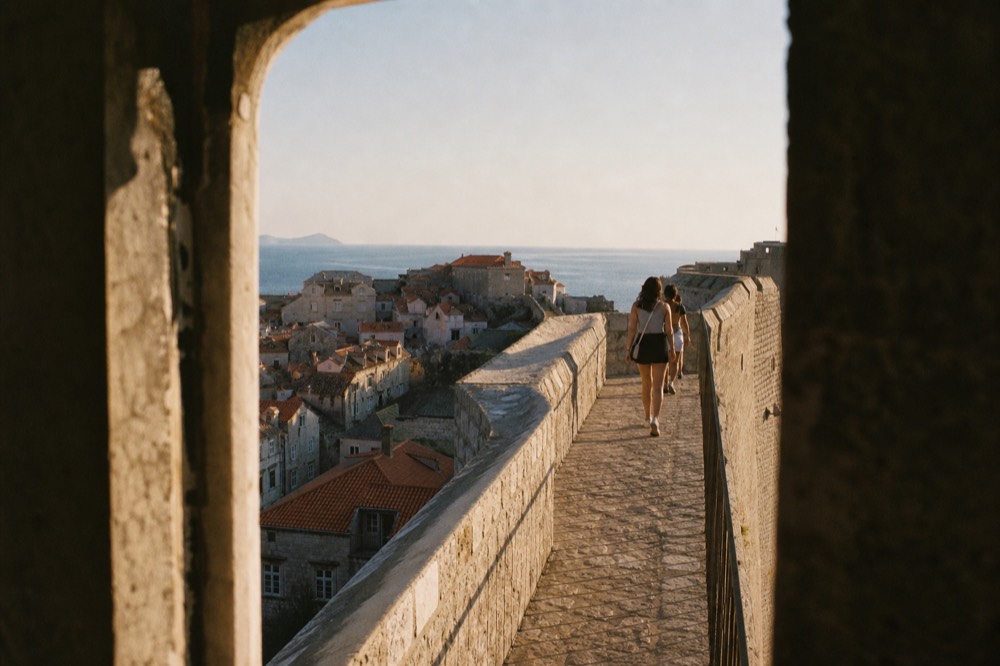
The walls alone deserve half a day, and not only because of the ticket. The circuit is 1,940 metres long, up to 25 metres high, with 16 towers, 3 fortresses and 6 bastions along the way, and the operator's stated hours run 08:00 to 19:30. Walking it takes most people around two hours, longer in heat or with photo stops, and the 40-euro main-season adult ticket, valid 1 March to 30 November, also covers Fort Lovrijenac on its 37-metre sea rock, the Western Outer Wall and the coin collection at Gundulić Square.
| Ticket | Main season, 1 Mar to 30 Nov | December |
|---|---|---|
| Adult, walls plus Lovrijenac | 40 euro | 20 euro |
| Child 7 to 18 | 15 euro | 5 euro |
| Under 6 | free | free |
| Lovrijenac alone | 15 euro | 15 euro |
The deeper itinerary logic, day by day with the bus and pass woven in, is laid out in the how many days guide and the ready-made three-day itinerary.
How Many Days Do You Need for Dubrovnik?
Four days is the sweet spot if Dubrovnik is your only base. Three days inside the city plus one day trip, Mostar, Montenegro or the Elaphiti islands, gives you the walls, the view, the sea and a border crossing without rushing. Beyond five days you will want a second base, because the city itself is finite.
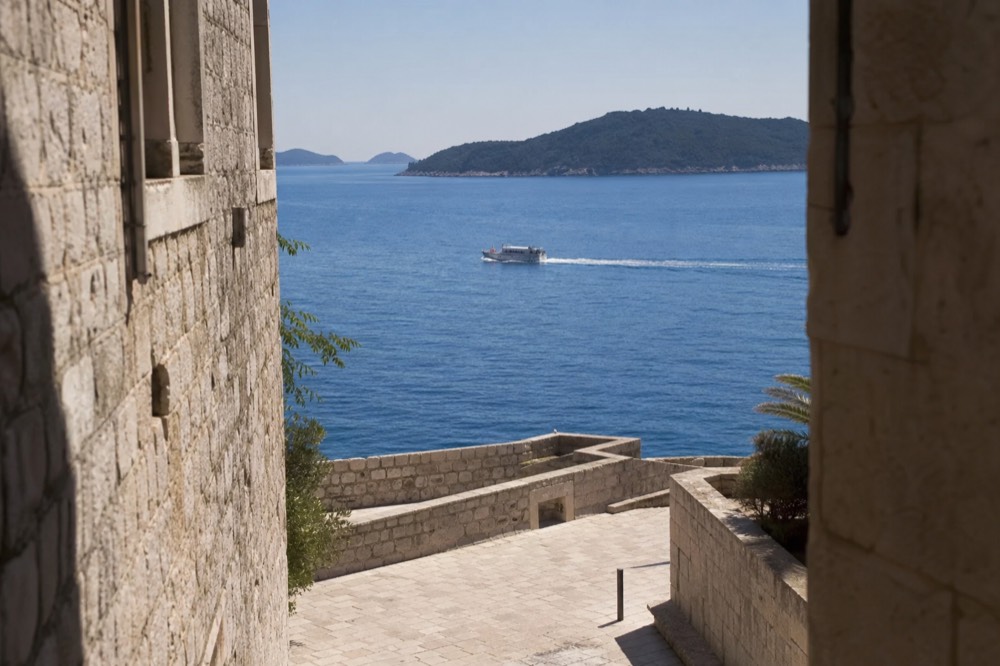
The reason a fourth day pays is that the best experiences around Dubrovnik are half or full days by their nature. Lokrum is a 30-euro ticket covering reserve entry and the return boat, with departures from the City Harbour at 09:00 and then every 15 minutes from 10:00 to 18:00, and the ticket office at Luža works 08:00 to 18:00. An Elaphiti islands cruise runs about 8 hours. Mostar and the Kravica waterfalls run about 11 hours door to door. None of these fit alongside the walls and the cable car on the same day without turning a holiday into a march.
That is also why the buses and the tours divide the work so cleanly: buses handle the city, boats handle the islands, and coaches handle the borders. If you are weighing a fourth day at all, the is-3-days-in-Dubrovnik-too-much answer works through the trade-offs from both sides.
What Not to Do in Dubrovnik?
Do not drive into the Old Town, it is closed to traffic. Do not plan the walls at midday in July and August. Do not assume summer is the cruise peak: September and October carry more cruise passengers than July or August. Do not buy a pass in December, when no tier is on sale. Do not skip water and flat shoes on the stair streets.
That September and October point surprises people, so let me give it its full weight. Port Authority data shows 2025 cruise passengers peaked at 101,246 in September and 100,132 in October, above July's 96,072 and August's 87,385, with a full-year total of 625,257 against 582,499 in 2024 and 461 cruise calls scheduled for 2026. The Port Authority limits cruise passengers to 8,000 a day in most cases, and of 243 cruise days a year only 18 exceed that number. The Port Authority's cruise destination page publishes the measures in full.
| Month, 2025 | Cruise passengers |
|---|---|
| July | 96,072 |
| August | 87,385 |
| September | 101,246 |
| October | 100,132 |
The other classic mistakes are transport mistakes. Renting a car for a city you cannot drive into. Walking from Gruž to the Old Town with luggage in August instead of taking the bus. Trying to see the walls, the cable car and Lokrum in one day. And refusing all tours on principle, which usually costs a border-crossing day: the Mostar and Kravica waterfall trip from 35 dollars per person, rated 4.6 across 10,019 reviews, handles the logistics of two border crossings in both directions, which is worth real money in time and nerves.
For the full list of pitfalls, the first-timers guide is the companion page to this one.
When Is a Bus Not the Answer?
Take the bus for Lapad, Gruž and Babin Kuk, and take a tour or a boat for everything beyond the city: the islands, Mostar, Montenegro and the Elaphiti circuit. The hop-on hop-off panorama bus with audio guide, from 35.46 dollars, rated 4.9 across 1,147 reviews, splits the difference, covering the viewpoints a city bus does not reach.
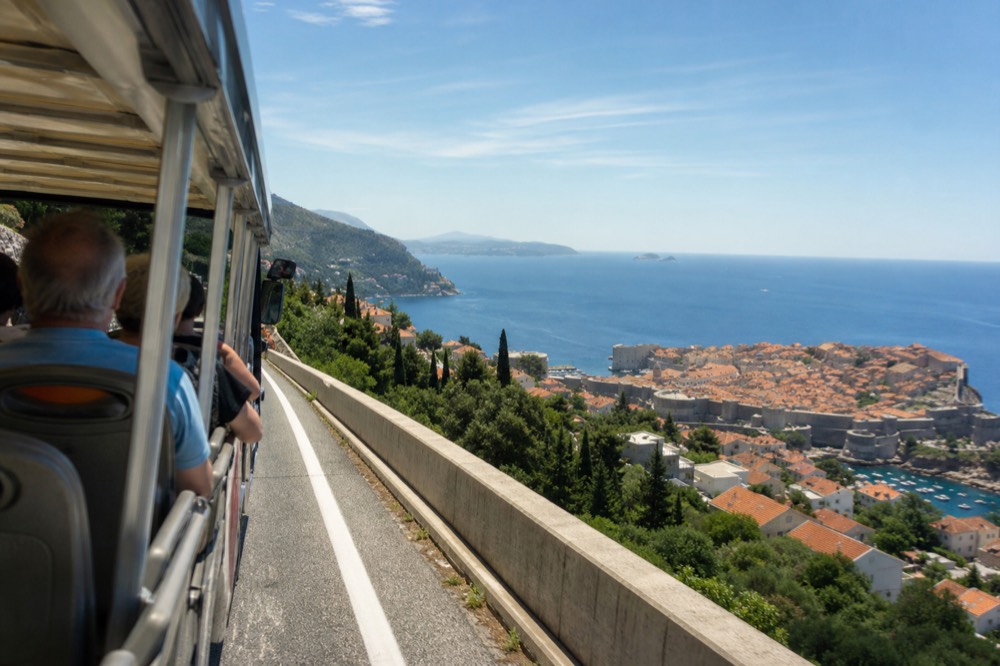
The panorama bus deserves its own sentence here because it solves a specific problem: the city buses are transport, not sightseeing, and their routes stay low. The convertible panorama tour with audio guide, from 34.77 dollars and rated 4.6 across 796 reviews, and the hop-on hop-off version above it, climb to the viewpoints above the Old Town that would otherwise cost you the stair streets. For anyone with limited mobility or limited time, that is the bus that earns its fare, and the hop-on hop-off guide compares both.
Beyond that, the pattern holds: boats for the sea, coaches for the borders, feet for the walls. The Elaphiti cruise with lunch from 59.16 dollars, rated 4.9 across 10,312 reviews, is the most-reviewed product on this site for good reason, and the boat tours guide ranks the whole fleet.
Common Questions About Dubrovnik Buses
Do the Dubrovnik Pass Tiers Include the Buses?
Yes. Every tier includes a public bus ticket for Dubrovnik city transport: 24 hours on the one-day pass at 40 euro, 72 hours on the three-day at 50 euro, 168 hours on the seven-day at 60 euro. The three-day and seven-day tiers add suburban bus coupons usable for a trip to Cavtat.
Do I Need a Car in Dubrovnik?
No. The Old Town is fully pedestrianised, the buses link Pile Gate, Lapad, Gruž and Babin Kuk, and the cable car, Lokrum boats and tour coaches cover the rest. A car mainly buys you parking problems.
Do I Need to Buy Dubrovnik Cable Car Tickets in Advance?
In peak months, yes. Two cabins of 32 plus 1 persons each mean the queue at the lower terminal builds fast around sunset. Booking a combined tour that includes the ticket, or riding early in the morning, avoids the wait. An adult round trip costs 30 euro.
How Many Days Do I Need to See Dubrovnik?
Three days is the honest minimum: walls and Old Town on day one, cable car and Lokrum or an island cruise on day two, a day trip on day three. Four days is the comfortable version if Dubrovnik is your only base.
what not to do in dubrovnik?
Do not drive into the Old Town, it is closed to traffic. Do not walk the walls at midday in high summer. Do not assume July and August are the busiest cruise months, September and October carry more cruise passengers. Do not buy a pass in December, when no tier is on sale, and do not plan the walls, the cable car and Lokrum all in one day.