Dubrovnik to Bari Ferry: Crossing the Adriatic by Sea
The sea route between Dubrovnik and Italy is the most atmospheric way to arrive on the Dalmatian coast, and the one most travellers know the least about. Here is how the Bari crossing works, what leaves from Gruž, and how to judge the coastal alternatives.
Short answer
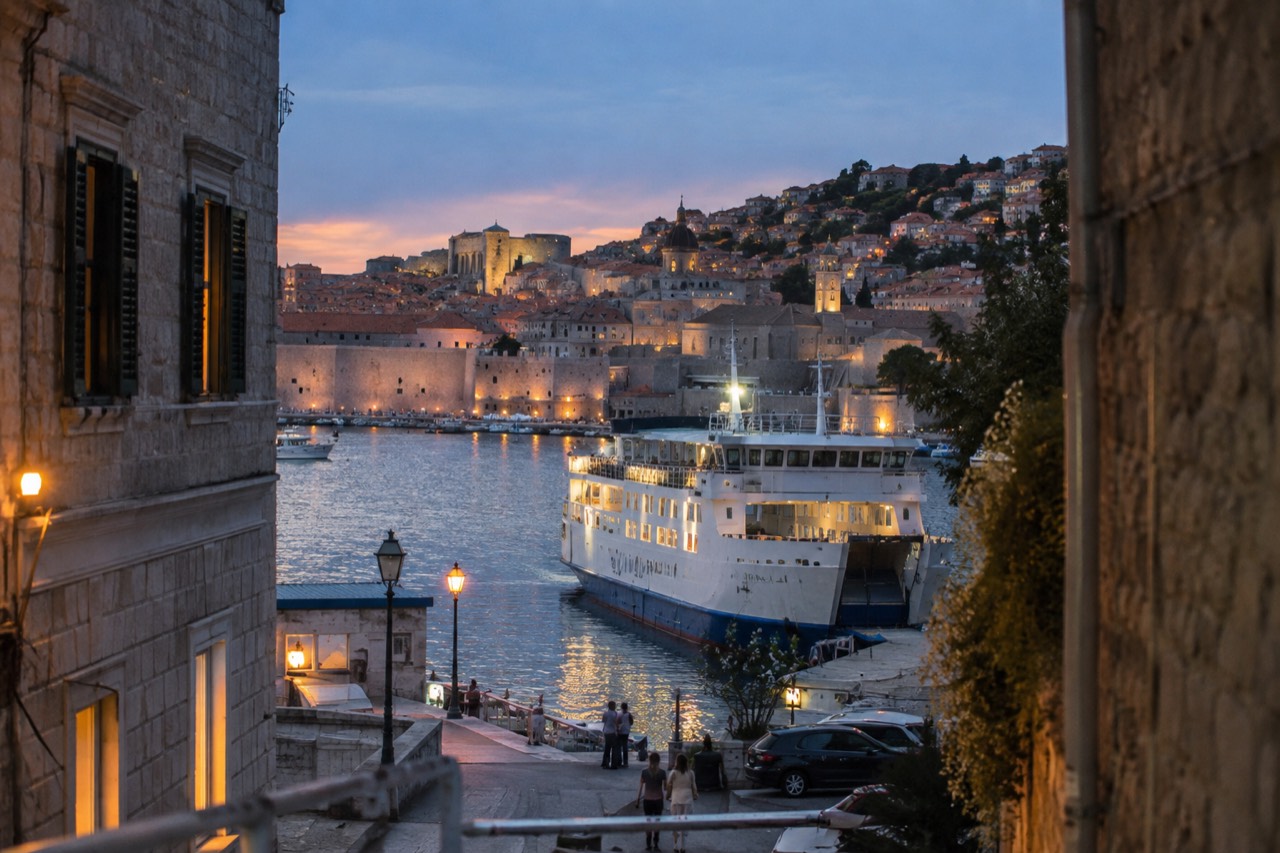
Yes, there is a ferry between Dubrovnik and Bari, running seasonally from the Gruž port. Crossings are typically overnight, with cabins or aircraft-style seats, and schedules, durations and prices change with the season, so the operator's live listing is the source of truth. There is no year-round service, and no direct passenger ferry to Venice or Greece.
Gruž, the working port west of the walled town, is where the sea lanes meet Dubrovnik. In 2025 it handled 625,257 cruise passengers, up from 582,499 the year before, and 461 cruise calls are scheduled for 2026. Against that backdrop of ships and schedules sits a quieter question travellers ask constantly: can you actually take a ferry from here to Italy, and is it worth it over flying?
The short answer is yes, the link exists, and it is one of the better travel decisions you can make on this coast if you time it right. This guide covers the Bari route, the ports on both ends, the coastal alternatives, and what to do with your first hours ashore. I have walked the Gruž quays and the Old Town lanes for years, and the practical detail below is what I would tell a friend arriving off the overnight boat.
Is There a Ferry From Italy to Dubrovnik, Croatia?
Yes. A seasonal international ferry connects Bari, on Italy's Adriatic heel, with Dubrovnik, arriving at and departing from the Gruž port rather than the Old Town harbour. Schedules, sailing days, durations and prices shift with the season, so treat the operator's live listing as the source of truth rather than any printed timetable, and book ahead in July and August when berths sell out.
The route runs in both directions, and it is the only regular international passenger ferry serving Dubrovnik directly. That matters because the map misleads people: Dubrovnik sits at the southern tip of Croatia, hemmed in by Bosnia's short coastline on one side and Montenegro on the other, so the sea is genuinely the most natural way in or out if you are coming from Italy. The alternative is a long bus or drive around the bay of Kotor or up the Croatian coast.
A word on what "seasonal" means in practice. The Adriatic ferry calendar is built around the summer, with the densest sailing frequency in the peak months and a thinning schedule into autumn. If you are travelling in the shoulder season, the sailing might run only on certain days of the week, and a winter crossing may not run at all. Checking the live listing for your exact date is not bureaucratic caution; it is the difference between a planned crossing and a night in a Bari hotel you did not want.
One thing that surprises first-time arrivals: the ferry does not put you inside the postcard. Gruž is a commercial port, a couple of kilometres from Pile Gate, and the transfer from quay to Old Town is a short bus or taxi ride. Once you are through the gate, the UNESCO-inscribed Old City, 24.7 hectares of it, opens up in front of you, and the walk from the bus stop to the Stradun takes minutes. For the full picture of the city once you arrive, start with Things to Do in Dubrovnik and work outward from there.
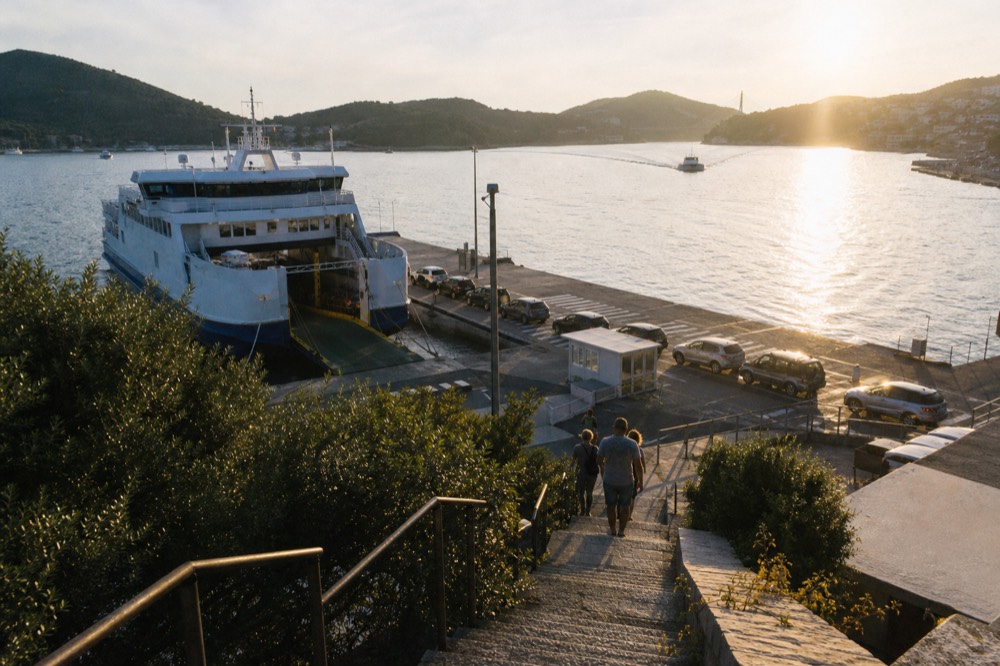
Dubrovnik's sea traffic is split between two very different places, and knowing which one your boat leaves from saves real confusion:
| Port area | What sails from it | Character |
|---|---|---|
| Gruž port | International ferries to Italy, coastal catamarans, cruise ships, local island boats | Commercial, spacious, bus and taxi links, the working heart of the harbour |
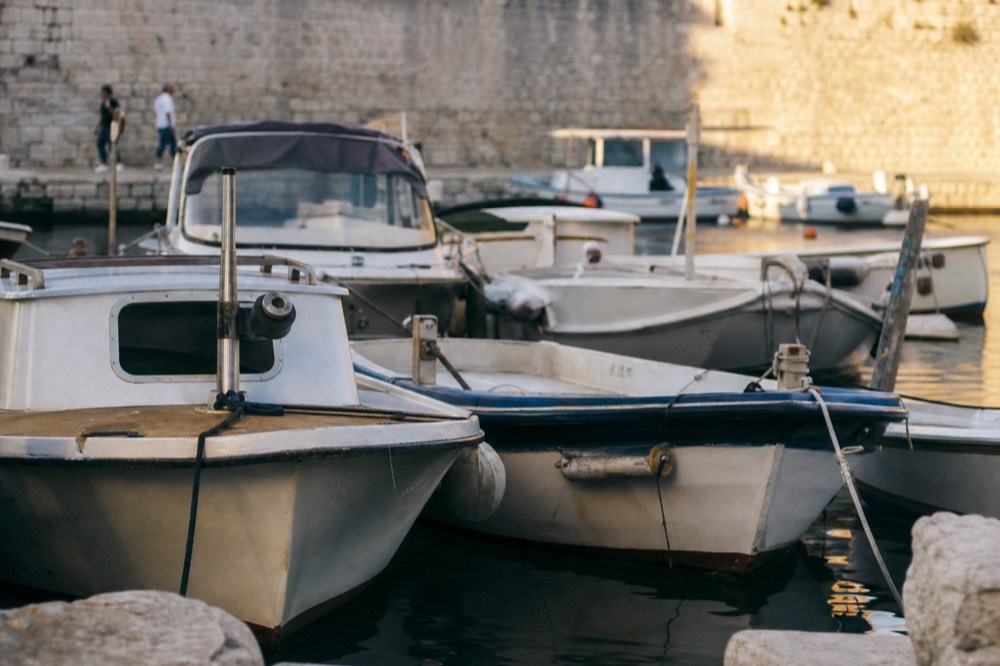
| Old City Harbour | Lokrum reserve boats, taxi boats, small excursion craft | Picturesque, tiny, inside the walls, walk-on only |
How Long Is the Ferry From Bari to Dubrovnik?
The Bari to Dubrovnik crossing is generally an overnight sailing, long enough that cabins and reclining seats are part of the product rather than an upgrade. Exact durations vary by ship, direction and season, and the operator's live listing states the current figure for each departure, so book against the listing rather than a number quoted in a forum or a guidebook.
I will not print a crossing time here, and the reason is honesty rather than coyness: ferry durations on this route are exactly the kind of figure that gets copied from an old forum post and repeated for years after the schedule changed. What I can tell you firmly is the shape of the experience. You board in the evening in Bari, the ship works its way down and across the Adriatic through the night, and you arrive at Gruž in the morning with the whole day in front of you. In the other direction you leave Dubrovnik in the evening and wake up in Italy.
Because it is a night at sea, the booking decision that matters most is where you sleep. Cabins, shared or private, give you a door, a bunk and a shower, and they are worth it if you want to arrive functional. Aircraft-style reclining seats cost less and are fine for one night if you can sleep sitting up. Deck passage is the budget option and, on a warm summer crossing, plenty of people treat the open deck as the best room on the ship anyway. Whichever you choose, book the sleeping arrangement when you book the ticket; the cheap categories disappear first.
Two practical notes from the Croatia side. Croatia uses the euro, so there is no currency step to worry about on arrival, and Croatia is in the Schengen area and the EU, which makes the border formalities on an Italy to Croatia sailing far lighter than they were a few years ago. Still, arrive at the port with time to spare: ferry check-in closes well before departure, and the queue for vehicles in particular builds early on sailing days.
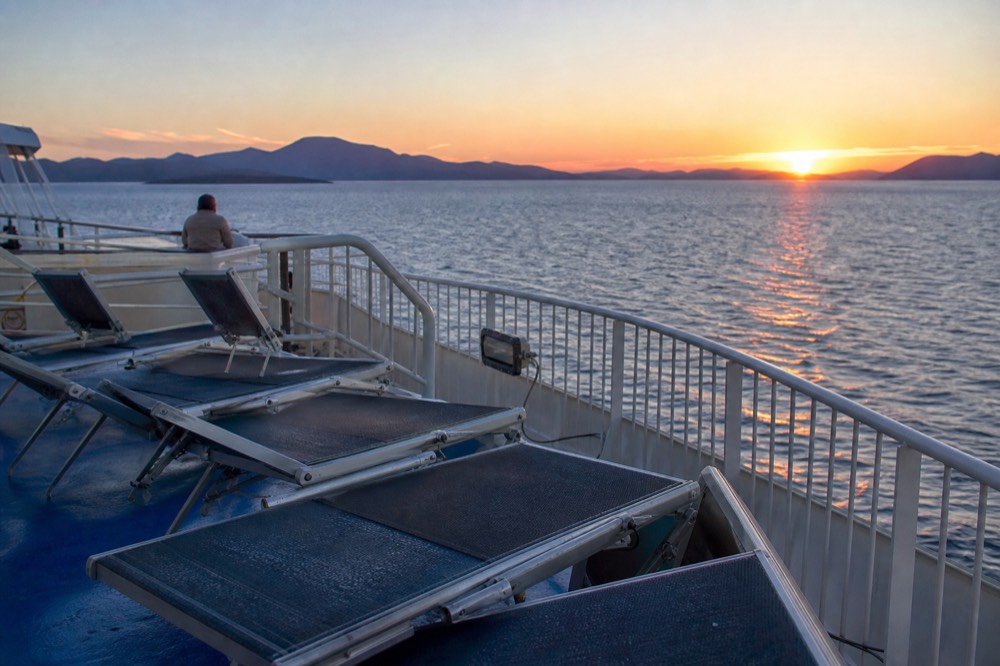
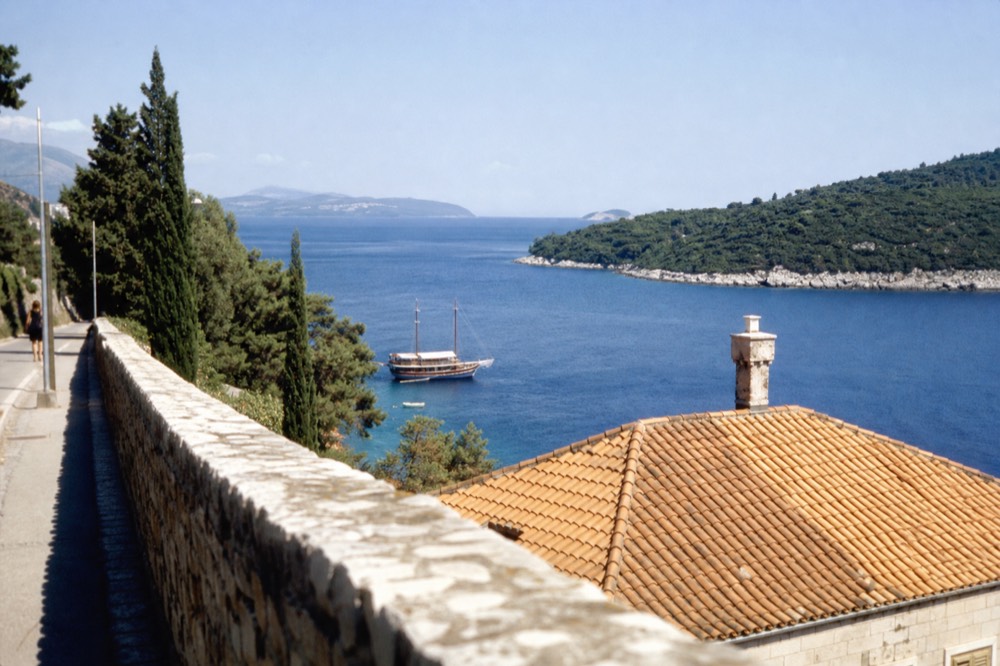
If your dates are flexible, the crossing itself can be the best part of the itinerary. The approach to Dubrovnik from the sea gives you the view the city was designed to show: walls, towers and red roofs rising straight out of the water, with Fort Lovrijenac standing on its 37-metre sea rock off to the side. Get on deck early for arrival. You will not regret setting an alarm for it.
While you are weighing how to spend the sea days around your crossing, these are the three experiences travellers most often pair with an arrival or departure through Gruž:
Where Do Ferries From Dubrovnik Go To?
From Gruž, the international options are the Bari route to Italy and seasonal coastal catamarans up the Croatian shore, with Split the key connection. From the Old City Harbour, the boats are local: the Lokrum reserve service and taxi boats. There is no direct scheduled passenger ferry from Dubrovnik to Venice or to Greece; those journeys run through Italian ports or through Split.
Start with the international picture, because it is narrower than people hope. Bari is the Italian gateway, and from Bari you can connect onward by sea or rail to the rest of Italy. Travellers heading for Venice typically route via Split and its longer crossing options, or overland through Italy once they reach Bari. Travellers heading for Greece take the Italian Adriatic ports and the crossings to Patras or Igoumenitsa from there. Dubrovnik is a beautiful endpoint, not a hub, and planning around that fact saves a lot of false starts.
The domestic picture is richer. Seasonal catamarans link Dubrovnik with towns up the coast, and the Elaphiti islands sit just offshore, served by local boats and by a fleet of excursion craft. The guide to Dubrovnik ferries covers the timetables in detail, and the Elaphiti islands guide covers the island-hopping side.
Then there is Lokrum, which is the ferry question most visitors actually end up asking, because the boats leave from inside the Old City Harbour where everyone is standing anyway. The reserve's own service is the official way across, and the facts are refreshingly firm:
| Lokrum service | Detail |
|---|---|
| Ticket price | 30 euro per person, covering reserve entry and the return boat transfer |
| Departures from City Harbour | 09:00, then every 15 minutes from 10:00 to 18:00 |
| Ticket office | Luža, Old City Port, open 08:00 to 18:00 |
| Ticket validity | Usable up to three days after the date printed on it |
| Combined ticket | 42 euro, adding Trsteno Arboretum and an air-conditioned boat |
The official reserve site, lokrum.hr, carries the current schedule, and it is the one place worth checking before you walk down to the quay, because the 30 euro ticket is charged whether you ride the official boat or arrange your own transport.
If your ferry day leaves you with a spare afternoon in the city rather than a spare day at sea, the question is how to see the most coastline with the least logistics. That is exactly what the smaller sightseeing formats are built for.
Is the Ferry From Split to Dubrovnik Worth It?
For most travellers, only sometimes. The coastal catamaran between Split and Dubrovnik runs seasonally, can sell out in summer, and does not run year-round, so the bus is usually the dependable choice. The ferry earns its keep when you want the sea passage itself, when you are island-hopping along the way, or when the timetable happens to fit your dates perfectly.
Let me be even-handed about this, because the honest answer is genuinely "it depends". The catamaran, when it runs, is a lovely few hours along a coast that buses only glimpse from above. If your itinerary is Split to Hvar to Korčula to Dubrovnik, the boat is not an alternative to the bus, it is the whole point. The Dubrovnik to Split transport guide lays out every option side by side, and the deeper weighing of the question is in is the ferry from Split to Dubrovnik worth it.
Against that: the bus runs all year, several times a day, on a motorway-grade road for most of the way, and it does not sell out the way summer catamaran berths do. If you are simply moving from A to B with a suitcase and a schedule, the bus is the rational pick, and every local I know would tell you the same.
The deciding factors, in order of how often they actually decide it: the season, because the catamaran thins out outside summer; your luggage, because boat baggage allowances are stricter than a bus hold; and your appetite for the sea itself. If the third factor is high, nothing I write here will talk you out of it, and you should not be talked out of it. The Adriatic from the water in the late afternoon is one of the reasons people come back to this coast.
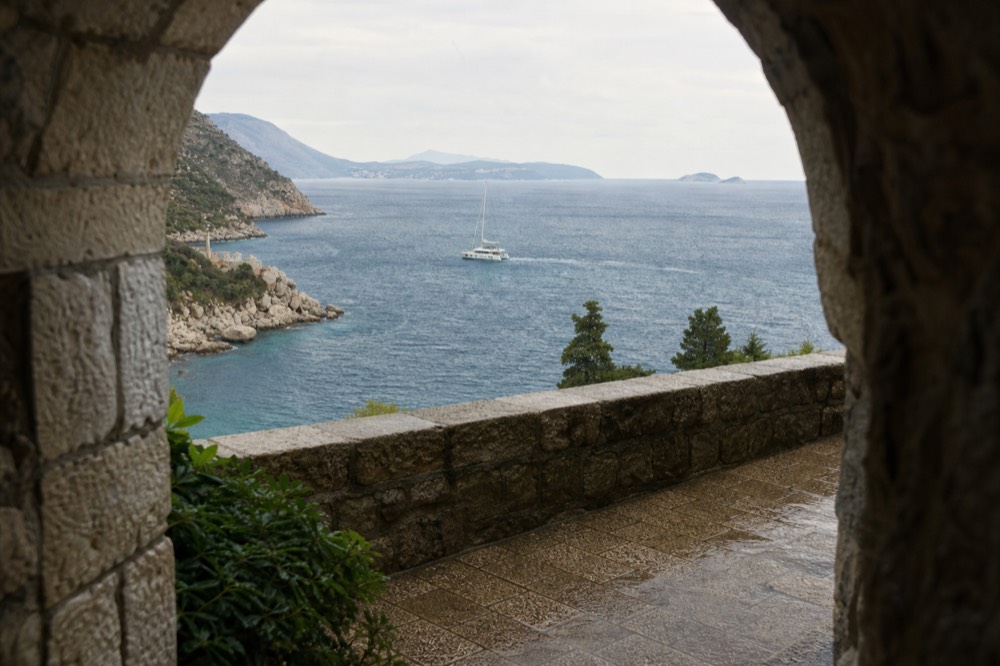
One planning note that ties the two ferry questions together: if you are combining the Bari crossing with coastal travel, build a buffer day. International ferry schedules and coastal catamaran schedules are set by different operators, and a missed connection in Split is a long way from your cabin in Bari.
What Is the Gruž Port Like When You Arrive?
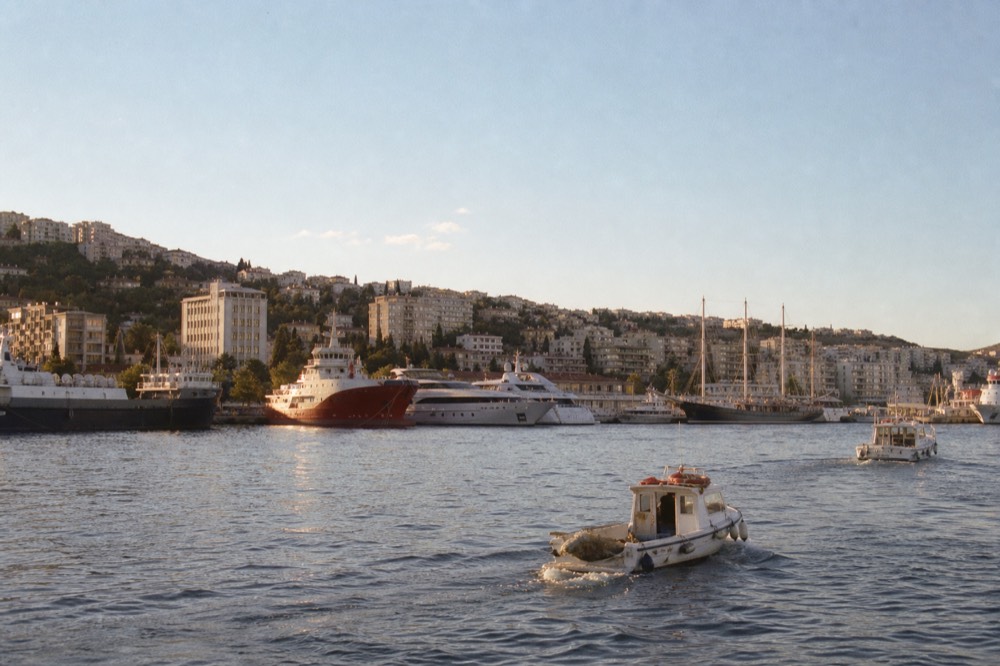
Gruž is a working port first and a visitor gateway second: cruise ships, international ferries, catamarans and local boats all share it, with bus stops, taxis and a market within a short walk of the quays. It is functional rather than beautiful, and the Old Town is a short ride away, so plan your transfer before you step ashore rather than after.
The numbers behind the port explain its rhythm. In 2025 the Port of Dubrovnik recorded 625,257 cruise passengers across the year, and 461 cruise calls are scheduled for 2026. The Port Authority's own statistics page, portdubrovnik.hr, publishes the full series, and it is worth a look if you are sensitive to crowds, because the monthly pattern is not the one most people expect.
| Month, 2025 | Cruise passengers |
|---|---|
| July | 96,072 |
| August | 87,385 |
| September | 101,246 |
| October | 100,132 |
Read that table twice, because it inverts the usual assumption. September and October, not July and August, were the two busiest cruise months of 2025 in Dubrovnik. The ferry traveller should care: an autumn crossing can land you in a town whose streets are, by the official counts, busier than midsummer's. The Port Authority limits cruise passengers to 8,000 a day in most cases, and six counters at every Old Town entrance feed a headcount every 15 minutes against an official carrying capacity of 11,275, so the city is actively managed, not simply overrun.
For the practical side of arriving, the cruise port guide maps the walk, the buses and the taxi ranks, and almost all of it applies to ferry arrivals too. The number 6 bus and the local taxis both connect Gruž with Pile Gate and the Old Town, and the Gruž market is right there if your first instinct on dry land is fruit and coffee rather than sightseeing.
When Is the Best Time to Cross the Adriatic?
The sweet spot for the Bari crossing is late spring through early autumn, when the sea is calm, the schedule is at full strength and the water is genuinely warm on both coasts. June through September offers the warmest sea, with long-run averages from 22.5 to 25.8 degrees, while May and October trade a few degrees of water warmth for thinner crowds and easier bookings.
A caveat I insist on, because it is the difference between an honest number and a misleading one: sea temperature figures for this coast are long-run open-water averages, not a promise about the water on your travel date. The headline series is a NOAA climatology for 1991 to 2020, an open-water grid-cell average, and sheltered bays run warmer; the Croatian met service's own Dubrovnik buoy read 27.0 to 27.4 degrees on 8 September 2026 against a September average of 23.6. Treat the table as a planning shape, not a forecast.
| Month | Average sea temperature | Month | Average sea temperature |
|---|---|---|---|
| January | 14.3 °C | July | 24.9 °C |
| February | 14.0 °C | August | 25.8 °C |
| March | 14.2 °C | September | 23.6 °C |
| April | 15.4 °C | October | 21.0 °C |
| May | 18.6 °C | November | 18.5 °C |
| June | 22.5 °C | December | 16.0 °C |
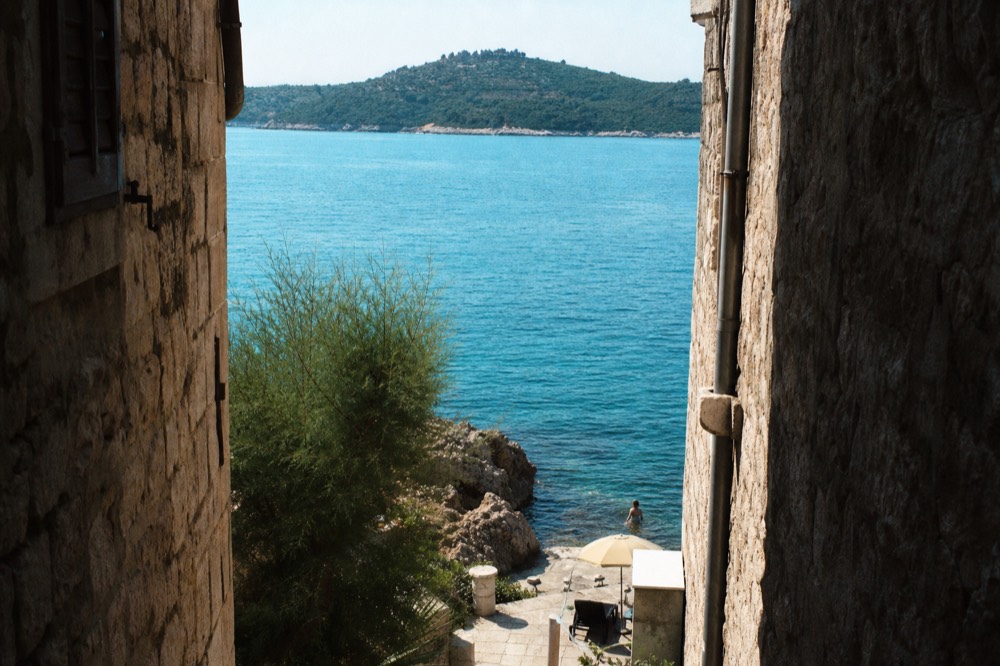
For the crossing itself, the shoulder months have a quiet advantage beyond crowds: the deck. A night crossing in June or September is warm enough to spend the evening outside watching the coastlights go by, which is the part of the journey people remember. In the depth of winter the same deck is a wind tunnel, and the schedule has usually thinned to nothing anyway.
How Do You Get Around Once You Are Ashore?
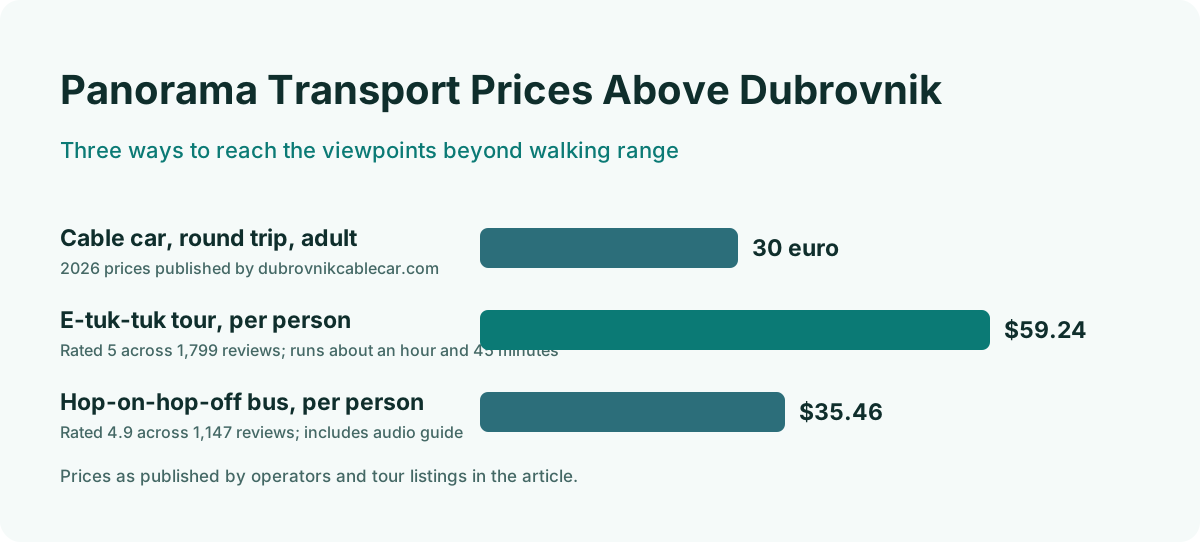
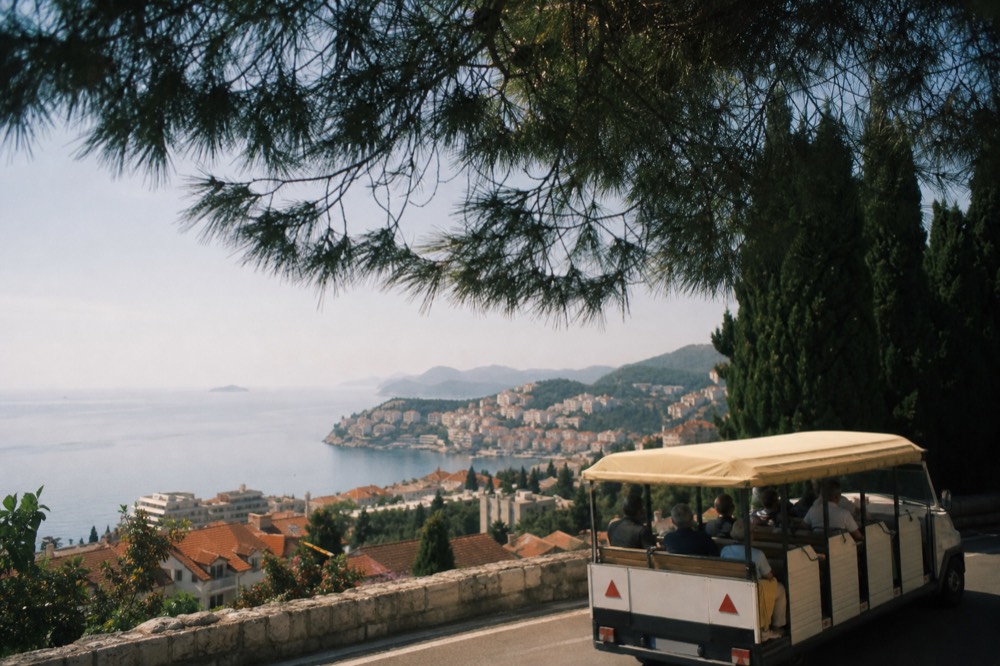
You walk, mostly. The walled Old Town is entirely pedestrian, compact and stair-heavy, so comfortable shoes do more for your visit than any vehicle. For the views beyond walking range, Mount Srđ and the coastal panoramas, the options are the cable car at 30 euro round trip for an adult, guided e-tuk-tuk rides from $59.24 per person, or the hop-on-hop-off bus from $35.46 per person.
The e-tuk-tuk format deserves a specific mention for ferry arrivals, because it solves the exact problem a boat schedule creates: you land in the morning, your hotel room is not ready, and you have four hours and a suitcase. The E-Tuk Tuk Tour in Dubrovnik, rated 5 across 1,799 reviews, runs about an hour and 45 minutes through the panorama points above the town, long enough to see the full amphitheatre of walls and sea without committing a whole day. It is a reporting note rather than a boast, but the format consistently suits travellers who want the overview before their legs have adjusted to the timezone.
The bus alternative covers more ground at a lower price. The Hop-On Hop-Off Yellow Bus Tour with Audio Guide, from $35.46 per person and rated 4.9 across 1,147 reviews, loops the key viewpoints with commentary, and you can board with a daypack and step off wherever the light looks right. For a family or anyone travelling with limited mobility, the bus beats the stairs.
The cable car is the third leg of the panorama triangle, and its 2026 prices are published by the operator at dubrovnikcablecar.com. The ride itself is short, 3 minutes 30 seconds up a 778.2-metre track, gaining 367 metres to the upper station at 405 metres above sea level, and on a clear day the operator claims a view range of up to 60 km. Note the calendar before you build a plan around it: the cable car closes January to March.
| Cable car ticket, 2026 | Price |
|---|---|
| Adult round trip | 30 euro |
| Adult one way | 17 euro |
| Child 4 to 12 round trip | 8 euro |
| Child 4 to 12 one way | 5 euro |
| Under 4 | free |
If museums are more your speed than viewpoints, the Dubrovnik Pass wraps the sights together: 40 euro for one day, 50 for three days, 60 for seven, each tier including the City Walls and Lovrijenac Fortress plus a bus ticket. In main season, 1 March to 30 November, the one-day pass costs exactly the same 40 euro as the standalone walls ticket, so the extra sights and the 24-hour bus ride are effectively free; in December the standalone walls ticket drops to 20 euro and no winter pass tier is on sale at all, which flips the arithmetic completely.
| Panorama option | From | Rating |
|---|---|---|
| E-Tuk Tuk Tour in Dubrovnik | $59.24 per person | 5 across 1,799 reviews |
| Hop-On Hop-Off Yellow Bus Tour with Audio Guide | $35.46 per person | 4.9 across 1,147 reviews |
| Convertible Bus Panorama Tour with Audio Guide | $34.77 per person | 4.6 across 796 reviews |
| Cable car, adult round trip | 30 euro | operator pricing |
What If You Want One More Day on the Water?
If the ferry has given you a taste for the sea, the best follow-ups are a full-day Elaphiti islands cruise with lunch, from $59.16 per person and rated 4.9 across 10,312 reviews, or a border-crossing day trip to Montenegro's bay, from $70.99 per person. Both leave from Dubrovnik, both return the same evening, and neither requires you to repack a suitcase.
The Montenegro day trip pairs particularly well with a ferry itinerary, and not only because the border is close. The Montenegro Day Trip from Dubrovnik with Optional Boat Trip runs 11 to 12 hours, rated 4.4 across 3,829 reviews, taking in the fjord-like Bay of Kotor with an optional boat ride on the water. One recent review puts the border worry to rest neatly: crossing in September took the writer's group 15 minutes. The Kotor day trip guide covers the route in depth if you want to weigh self-driving against the guided option.
The Elaphiti cruises are the gentler sibling: a boat, a fish picnic lunch, three islands and a swim stop, out and back in a day. The most reviewed of them carries 10,312 reviews at 4.9, which on this coast is about as strong a consensus as exists. Either way, the pattern is the same one the overnight ferry teaches you: the sea is not an obstacle between places here, it is the main road, and the travellers who use it as one go home with the better stories.
Before you lock anything in, here is the shortlist of formats that pair best with a ferry arrival or departure, chosen for the same reason the crossing itself is worth taking: they trade road time for water and viewpoint time.
Common Questions About the Dubrovnik to Bari Ferry
Is there a ferry from Italy to Dubrovnik, Croatia?
Yes, a seasonal international ferry links Bari with Dubrovnik, arriving at and departing from the Gruž port. Sailing days and frequencies change with the season, and the summer months are the busiest, so check the operator's live listing for your exact date and book ahead in peak season.
How long is the ferry from Bari to Dubrovnik?
The crossing is generally overnight, with cabins and reclining seats available rather than a quick daytime hop. Exact durations vary by ship and season, and the operator's live listing states the current figure for each departure, so treat that as the authoritative source.
Where do ferries from Dubrovnik go to?
Internationally, to Bari in Italy. Domestically, seasonal catamarans run up the Croatian coast toward Split and the islands, while the Old City Harbour sends boats to Lokrum. There is no direct scheduled passenger ferry from Dubrovnik to Venice or Greece; those routes connect through Italian ports or via Split.
Is the ferry from Split to Dubrovnik worth it?
It depends on your priorities. The coastal catamaran is seasonal and can sell out in summer, so the bus is the dependable year-round choice for simple point-to-point travel. The ferry is worth it when the sea passage itself is part of the trip, or when you are island-hopping along the way.
Which port does the international ferry use in Dubrovnik?
Gruž, the commercial port west of the Old Town. It is a short bus or taxi ride from Pile Gate, and the number 6 bus connects the port area with the city centre. The Old City Harbour inside the walls handles only small boats, including the Lokrum service.
Do I need to book the Bari ferry in advance?
In July and August, yes, and the cheapest sleeping categories, cabins and reclining seats, sell out first. In the shoulder season you have more flexibility, but always confirm the sailing day on the operator's live listing before building the rest of your itinerary around it.