How to Pronounce Dubrovnik (And Say It Like a Local)
Most visitors say it wrong before they say it right. Here is the correct Dubrovnik pronunciation, broken into syllables, along with the Croatian phrases that earn a smile at the konoba and the background facts that explain why this small city is on everyone's list.
Short answer
Dubrovnik is pronounced doo-BROV-neek, with the stress on the first syllable, DOO-brov-nik, a rolled Croatian r in the middle and a clean, unsoftened k at the end. The common English manglings, Doo-brov-NICK and Dub-rov-nik, both miss the stress. Three syllables, weight on the first, and the name lands correctly.
How Do You Pronounce Dubrovnik?
The correct pronunciation is DOO-brov-nik, three syllables with the stress landing firmly on the first one. Say "doo" as in do, "brov" rhyming with stove but with a lightly rolled r, and finish with a crisp nik, never a softened nitch. Croatian is a phonetic language, so every letter you see is a letter you say, and nothing hides in the spelling.
I hear the name spoken a dozen ways every week in high season, and the pattern is always the same: English speakers push the stress to the end, saying doo-brov-NICK, or they swallow the first vowel entirely and produce DUB-rov-nik. Both are understandable. English words of three syllables very often carry their stress at or near the end, so the instinct is natural. Croatian works the other way. Almost without exception, Croatian words stress the first syllable, and Dubrovnik follows that rule exactly.
The r deserves a moment of practice. In Croatian, r is fully rolled or tapped, the tip of the tongue flicking once against the ridge behind the teeth. It is not the soft, almost-vowel r of standard English. If you can say a quick Spanish "pero", you already have the movement. And the final k is a true k, pronounced the same at the end of a word as at the start. There is no silent letter anywhere in the name.
Here is the full breakdown, syllable by syllable:
| Syllable | Sounds like | How to make it |
|---|---|---|
| DOO | "doo" as in do | Long, clear oo. This syllable carries the stress. |
| brov | "brov" as in stove | Tap or roll the r once, then a plain v at the end. |
| nik | "nik" as in unique | Short i, crisp k. Never "nick" with a hard English accent shift. |
Put the three together at a relaxed pace, DOO-brov-nik, and you have it. Locals will understand you whatever you say, because they hear every possible version of their city's name all summer long, but the first syllable stress is the single detail that separates a confident visitor from a hesitant one. For more on the language you will hear in the streets, see our piece on what language they speak in Dubrovnik.
Why Do English Speakers Get It Wrong?
The mistakes come from three habits: English stress patterns that favour the final syllable, the unfamiliar rolled r, and the spelling "Dub" at the start, which invites an English short u sound. Croatian places stress on the first syllable almost universally, rolls every r, and pronounces u as a clean "oo". Correct all three and the name fixes itself almost automatically.
Think of the name as a Croatian word wearing an English costume. The letters are familiar, so your brain reads it with English rules, and English rules are wrong for this word. The u in Croatian is always "oo", as in "flute" held long. The v is a v, never softened toward w. The i is a short "ih", not the long "eye" an English reader might expect before a k.
The most common versions I hear at Pile Gate, ranked by frequency:
| Said as | What goes wrong | Fix |
|---|---|---|
| doo-brov-NICK | Stress moved to the last syllable. | Put the weight back on DOO. |
| DUB-rov-nik | English short u, stress okay. | Stretch the u into "doo". |
| Doo-BROV-nick | Stress on the middle syllable. | First syllable only. |
| Dub-ROV-nich | Soft ch ending, wrong stress. | End in a clean k. |
None of these will cause a problem. Dubrovnik lives from tourism, and 4.2 million overnight stays were recorded in the destination in 2025, sharing first place among Croatian destinations with Rovinj, so the city has heard every variant imaginable. But getting the stress right is a small courtesy that registers, especially outside the Old Town where the visitor density thins out.
If pronunciation is your way into the culture, the walks are a good next step. A local guide will correct your Croatian gently and tell you the story of the walls at the same time.
What Is Dubrovnik Best Known For?
Dubrovnik is best known for its complete medieval city walls, 1,940 metres of stone enclosing a car-free Old Town that UNESCO inscribed on the World Heritage List in 1979 under criteria (i), (iii) and (iv). The walls reach up to 25 metres high and 4 to 6 metres thick on the land side, and they are the single most visited paid sight in the city.
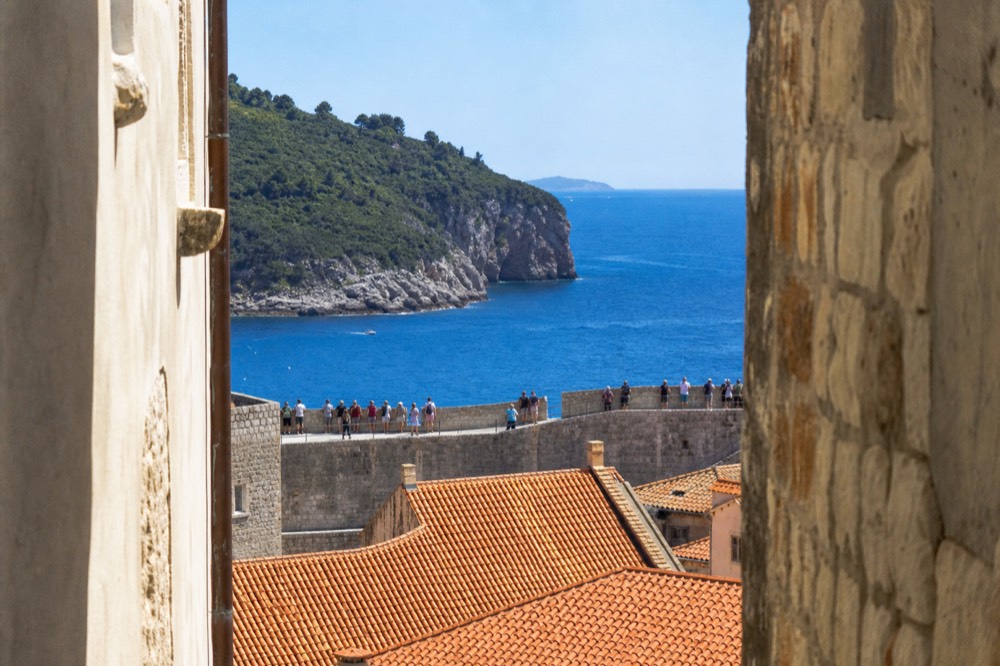
The walls are the headline, and the numbers behind them explain why. Sixteen towers, three fortresses, six bastions, two corner fortifications, three bulwarks with rows of turrets, three moats, two flank fortresses, one breakwater and two drawbridges, all listed by the walls' own operator, the Society of Friends of Dubrovnik Antiquities, on its official site. The circuit reached its basic shape in the 13th century and was finished in 1660 with the Bastion of St Stephen. Walking it is the one thing almost every visitor does, and the adult ticket in main season, 1 March to 30 November, is 40 euro, which is actually a combination ticket covering Fort Lovrijenac, the Western Outer Wall and the Collection of Coins of the Republic of Ragusa as well.
The second thing the city is known for is the light and the stone. The Stradun, the main street, is 298 metres long, polished to a shine by centuries of feet, and the whole walled core covers just 24.7 hectares with a 1,188.6-hectare buffer zone, per the UNESCO listing. Everything is close together, which is why the Old Town rewards walking far more than any other transport. Our Old Town area guide covers the streets in detail.
Third, and newer: television. Dubrovnik served as a principal filming location for a certain fantasy series about kings and queens, and the Game of Thrones economy is now woven into the city's daily life, from themed walks to a gift shop on nearly every lane. The Game of Thrones locations guide maps the spots.
| Known for | The short version | Where to read more |
|---|---|---|
| The city walls | 1,940 m circuit, up to 25 m high, 40 euro adult main season. | City walls guide |
| The Old Town | UNESCO World Heritage since 1979, 24.7 hectares, car-free. | Old Town area guide |
| Screen fame | Major fantasy-series filming locations across the core. | Game of Thrones locations guide |
| Islands and sea | Lokrum, the Elaphiti chain, kayaking under the walls. | Boat tours guide |
What Is Dubrovnik Famous For?
Beyond the walls, Dubrovnik is famous for having been the capital of the Republic of Ragusa, a maritime trading state that rivalled Venice, and for its Adriatic setting: Lokrum Island offshore, the Elaphiti chain to the northwest and a cable car that lifts you 367 metres to Mount Srd in three and a half minutes. Cruise tourism is part of the fame too, with 625,257 cruise passengers in 2025.
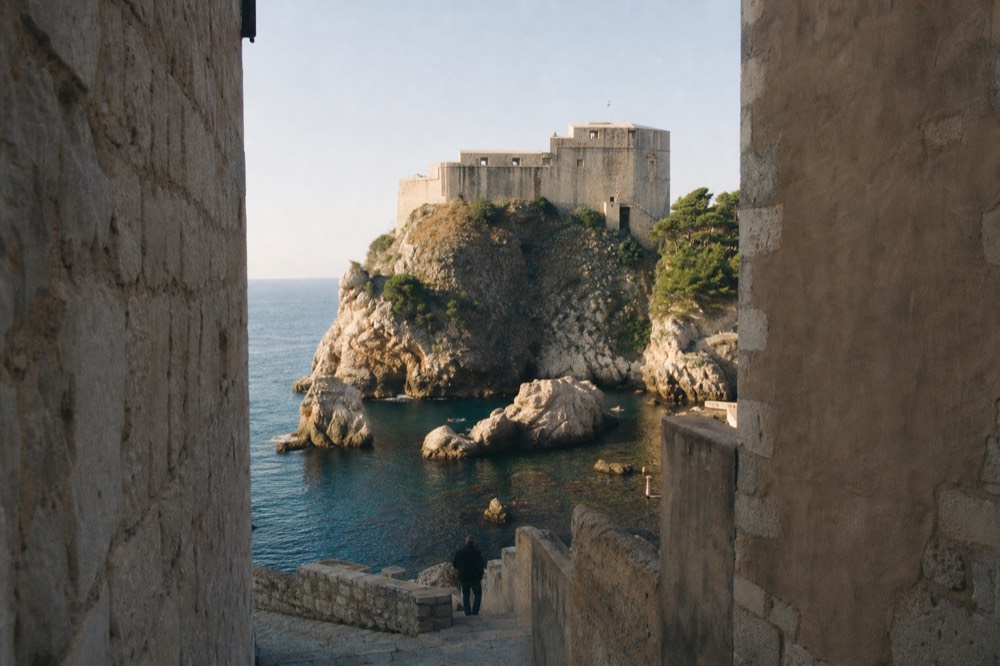
The historical fame is the part most visitors underweight. This was a republic of merchants and diplomats, run from the Rector's Palace, with a fleet that carried goods across the Mediterranean. Fort Lovrijenac, standing on its 37-metre sea rock on the Tourist Board's own description, guarded the western approach, and it is included with your walls ticket. The Statute of 1272 fixed the final plan of both the city and the Stradun, which is why the main street runs so straight and so deliberately.
The modern fame is the sea. Lokrum sits a short boat ride off the Old City Port, with departures at 09:00 and then every 15 minutes from 10:00 to 18:00, and a 30 euro ticket covers both the reserve entry and the return boat. The Elaphiti islands, Kolocep, Lopud and Sipan, fill the day-cruise schedules. And the cable car climbs from a lower terminal at 38.0 metres above sea level to an upper terminal at 405.0 metres, at 6.5 metres per second, with the operator advertising a view range of up to 60 km on a clear day.
If you want the walls and the Old Town in one morning, the combo walk is the efficient choice, at 3 hours 30 minutes from $50.94 per person and rated 4.8 across 1,183 reviews.
Is Dubrovnik Worth Visiting?
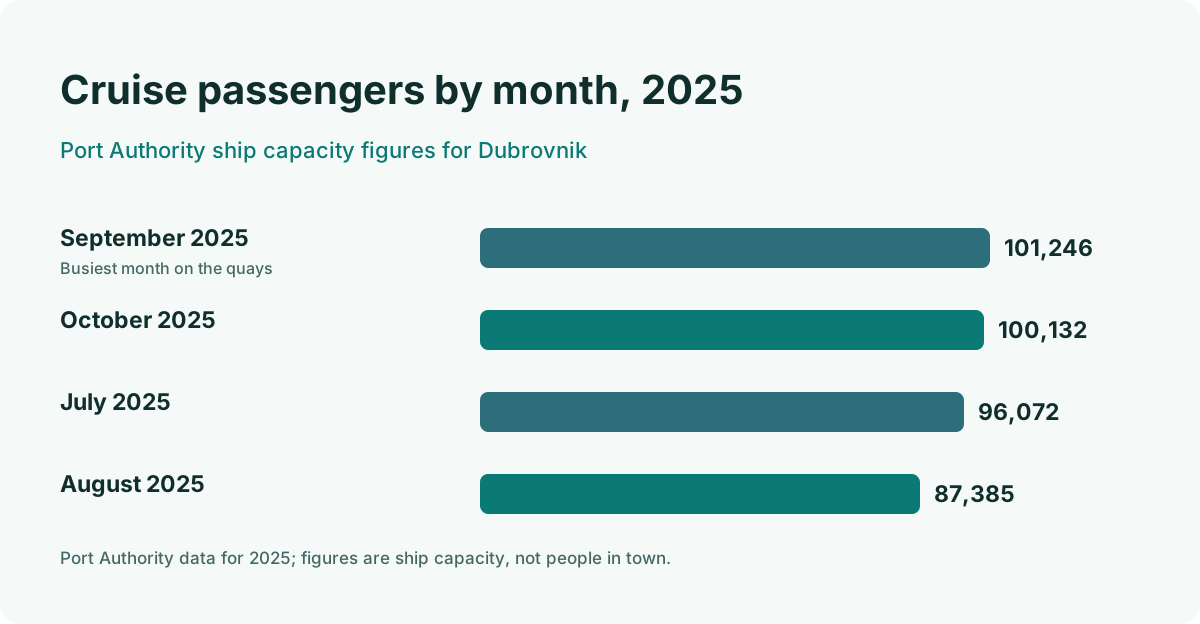
Yes, and the numbers argue the case: 4.2 million overnight stays in 2025, a UNESCO-listed core, and a compactness that puts walls, forts, beaches and island boats within a half hour of each other. The trade-offs are real, summer crowds and high prices, but September and October carry the most cruise passengers of the year, 101,246 and 100,132 respectively in 2025, so timing matters more than most guides admit.
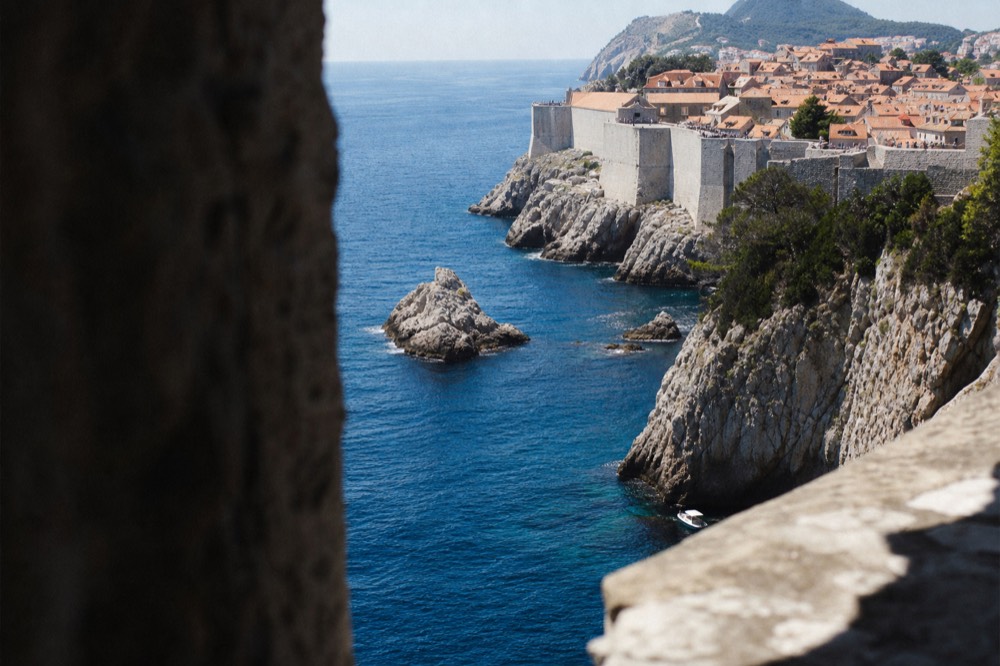
I plan visits for people for a living, and my honest answer is that Dubrovnik rewards two kinds of traveller most: the one who walks early and the one who leaves the core. The Old Town at 08:00 is a different city from the Old Town at noon. The official counting system, six counters at every entrance updating a headcount every 15 minutes, recorded 5,419 people at 08:00 on a September day, rising to a 7,739 peak at 10:00 and still 7,205 at 11:00, against an official carrying capacity of 11,275. Walk the walls at opening and you share the parapet with a fraction of the midday crowd.
The counter-intuitive fact worth planning around is that cruise passengers peak in September and October, not July and August. Port Authority data shows September 2025 at 101,246 and October at 100,132, above July's 96,072 and August's 87,385. Those are ship capacity figures, so write "up to" rather than "will be in town", but the pattern holds: late summer and early autumn are the busiest months on the quays, even though the sea is at its warmest then, with the September long-run average at about 23.6 degrees. Those are open-water climatological averages, not beach readings, and sheltered bays run warmer still.
The value question usually comes down to the walls versus the pass. In main season the one-day Dubrovnik Pass costs the same 40 euro as the standalone walls ticket and adds ten more sights plus a 24-hour bus ticket, with every tier listing City Walls + Lovrijenac Fortress as its first inclusion. In December the standalone walls ticket drops to 20 euro and no pass tier is on sale at all, so the equivalence is a main-season claim only. The Dubrovnik Pass guide works through the arithmetic.
For the walls themselves, a guided walk adds the story to the stones. The 2-hour Ancient City Walls and Wars tour runs from $29.58 per person, rated 4.8 across 1,387 reviews.
This well organized tour helped put Dubrovnik's past (and present) into perspective. It's incredible that the city walls have withstood the test of time. Antun was a wonderful guide.
linda_a
What Not to Do in Dubrovnik?
Do not drive into the Old Town, it is car-free and the parking outside is scarce and expensive. Do not walk the walls at midday in July and August without water, there is almost no shade on the circuit. Do not expect to pay by card everywhere in the smaller konobas, and do not plan a same-day border trip to Montenegro or Bosnia without factoring in queue time at the crossing.
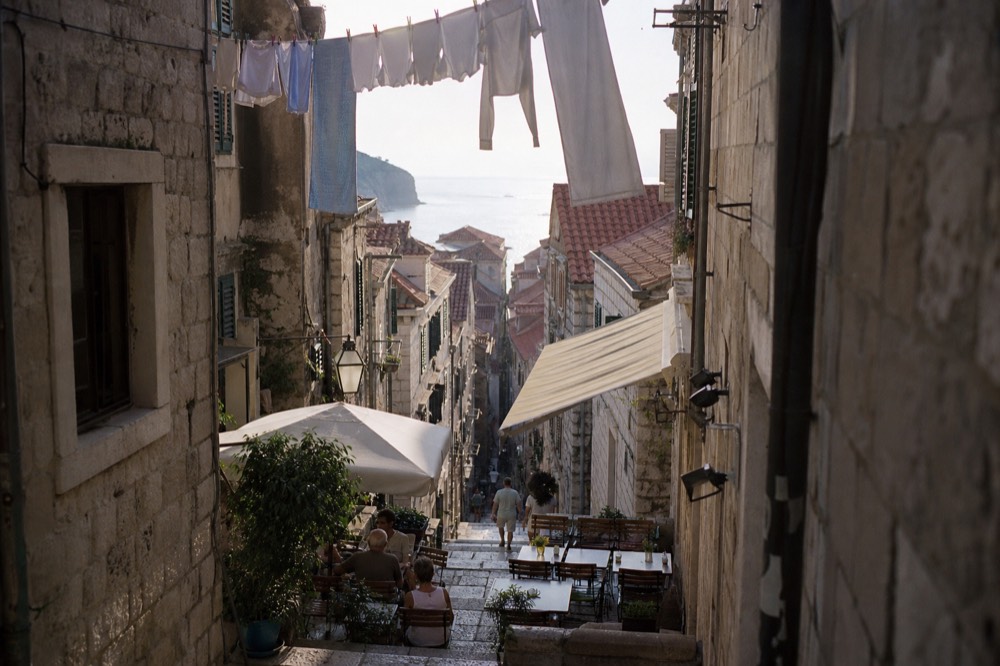
The list of practical errors is short but expensive. Parking is the first one: the parking guide covers the lots, but the headline is that the core itself is pedestrian only and the nearest garages fill early in season. The second is timing the walls badly. The operator's stated hours at time of check were 08:00 to 19:30, and the first two hours are the calmest and coolest of the day. The third is underestimating the sun. The parapet is exposed limestone, and there is a reason the locals retreat to shade between noon and three.
A fourth mistake is treating Dubrovnik as only the Old Town. Lapad has its beaches and its own slower rhythm, Gruž has the market and the port, and Cavtat is a boat ride away. Our what to do besides the Old Town answer lists the options. A fifth is skipping the free orientation walks entirely: the city has three pay-what-you-want walks on GuruWalk, including a free Game of Thrones and history walk rated 4.74 across 444 reviews, and they cost nothing but your attention and a tip at the end.
| Mistake | Why it hurts | Better plan |
|---|---|---|
| Driving to the Old Town | Car-free core, scarce parking. | Bus or taxi to Pile or Ploče, walk in. |
| Walls at midday in high summer | No shade, peak crowds from 10:00. | Start at 08:00 with water and a hat. |
| Assuming cards work everywhere | Small konobas can be cash-only. | Carry some euro cash for the day. |
| Same-day border trips without buffer | Border queues vary widely. | Book an organised trip that plans for it. |
| Never leaving the walled core | You miss beaches, Gruž, Cavtat. | Give one day to outside-the-walls. |
The Game of Thrones walking tour, for the record, is one of the best-value paid introductions to the city, from $29 per person and rated 4.9 across 1,052 reviews, and it doubles as an orientation walk even if the series is not your reason for coming.
Which Croatian Words Are Worth Learning?
Learn "dobar dan" for good day, "hvala" for thank you, "molim" for please and you're welcome, "račun" for the bill, and "ograd" style patience with the rolled r. Croatian is written exactly as spoken, every letter sounds, and stress almost always falls on the first syllable, so a handful of words goes a long way in shops, konobas and taxis.
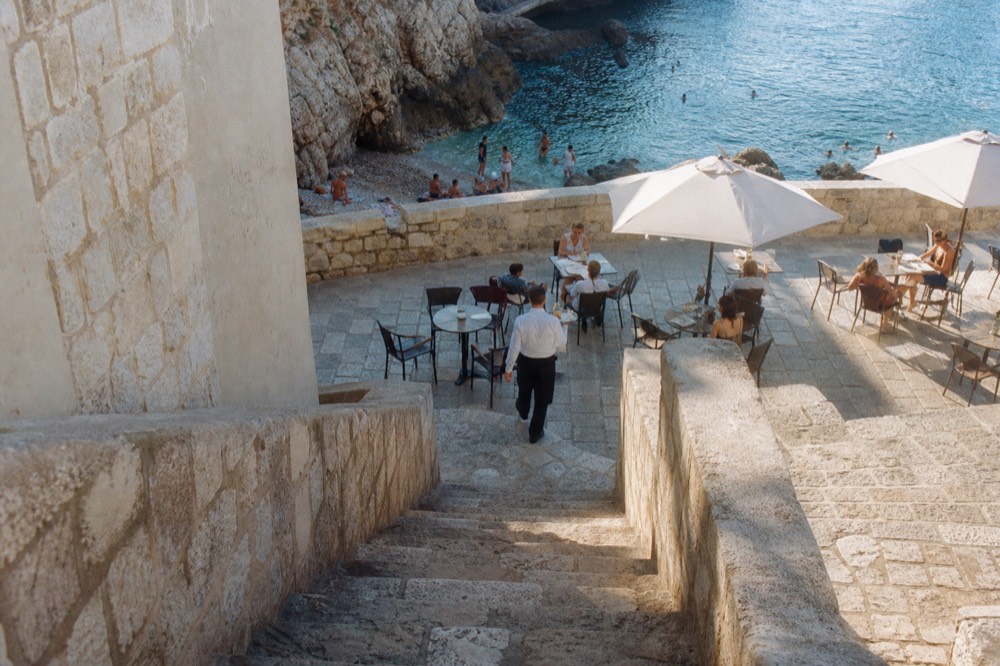
The phonetic consistency is the good news. Once you accept that c before e or i sounds like "ch", that j is an English y, and that u is always "oo", you can pronounce any written Croatian word, including place names on the ferry timetable, with reasonable confidence. This is exactly why Dubrovnik itself is easier than it looks: read it letter by letter with first-syllable stress and it comes out right.
| Croatian | Sounds like | Means |
|---|---|---|
| Dobar dan | DOH-bar dahn | Good day |
| Hvala | HVAH-lah | Thank you |
| Molim | MOH-leem | Please / you're welcome |
| Račun | RAH-choon | The bill |
| Doviđenja | doh-vee-JEH-nya | Goodbye |
| Oprostite | oh-PROHS-tec-teh | Excuse me |
English is widely spoken in the tourist economy, so you will never be stuck, but the greetings matter socially. A "dobar dan" when you enter a shop, and a "hvala" when you leave, is the local rhythm, and it costs nothing. Our how to say hi in Croatia answer covers the greetings in more depth, including the informal "bok" you will hear between friends.
One pronunciation trap worth flagging: the diacritic letters. Č and ć are both "ch" sounds to an English ear, subtly different to locals. Š is "sh", ž is "zh" as in measure, and đ is a soft "j" as in juice. You will see them on menus and museum signs, and knowing the four takes a minute.
When Should You Visit, and How Do You Beat the Crowds?
Visit in May, June, late September or October for the best balance of weather, sea temperature and manageable crowds, and expect September and October to be the busiest cruise months rather than July and August. The Port Authority limits cruise passengers to 8,000 a day in most cases, with 461 calls scheduled for 2026, and the Old Town's official carrying capacity is 11,275 people.
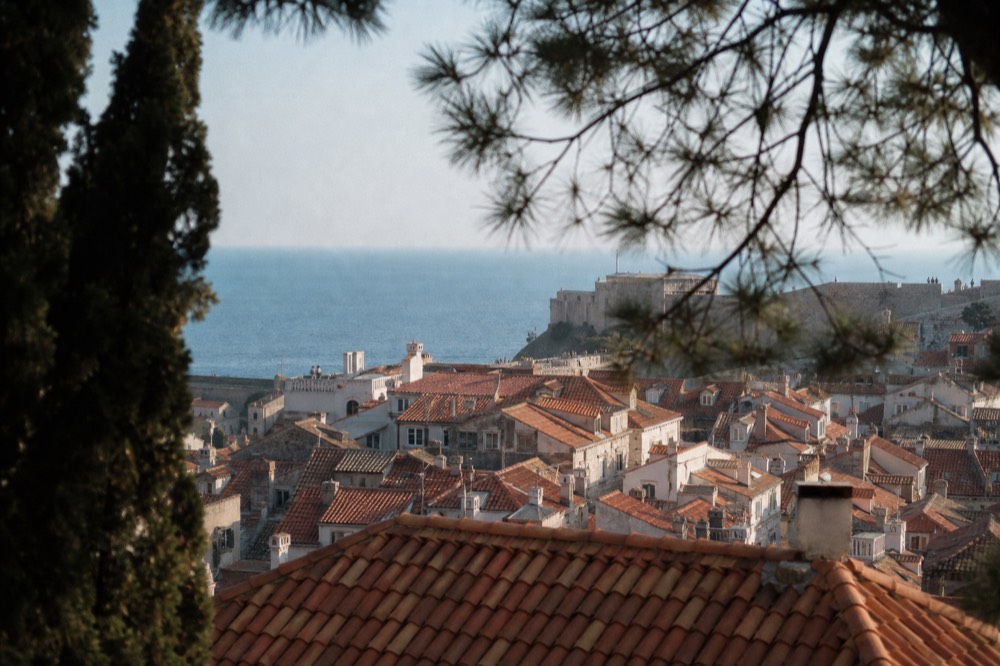
The crowd math is more encouraging than the headlines suggest. Of 243 cruise days a year, only 18 exceed the estimated 8,000-passenger daily limit and only 4 run slightly above 10,000, according to the Port Authority's own crowd-management page, and about forty call requests were refused in a single season. The counting system means the city knows its numbers in real time, and you can plan around them: early mornings, the hours after 16:00, and any day you spend on the water or outside the walls.
The sea is part of the timing decision. The long-run monthly averages for this coast run 18.6 degrees in May, 22.5 in June, 24.9 in July, 25.8 in August and 23.6 in September, falling to 21.0 in October, and those are open-water grid-cell averages, not beach readings; sheltered bays run warmer, as the Croatian met service's Dubrovnik buoy showed when it read 27.0 to 27.4 degrees on an early September day against that 23.6 monthly mean. June and September are the sweet spot for swimming without peak heat.
| Period | Sea average | What to expect |
|---|---|---|
| May | 18.6 °C | Quiet, green, sea still cool. |
| June | 22.5 °C | Warm sea, crowds building. |
| July and August | 24.9 to 25.8 °C | Warmest water, most heat, most land visitors. |
| September | 23.6 °C | Lovely sea, but the year's biggest cruise month. |
| October | 21.0 °C | Second-biggest cruise month, soft light, quieter lanes. |
Whatever month you choose, the same three walks below cover the walls, the full Old Town and the filming locations, and they are the tours I point first-time visitors toward on Things to Do in Dubrovnik when the question is where to start.
Common Questions About Dubrovnik Pronunciation
How do you pronounce Dubrovnik?
DOO-brov-nik, with the stress on the first syllable, a lightly rolled r in the middle and a clean k at the end. Three syllables, weight at the front, and every letter pronounced exactly as written.
What Is Dubrovnik Best Known For?
The complete medieval city walls, 1,940 metres of circuit up to 25 metres high, enclosing a UNESCO World Heritage Old Town inscribed in 1979. Add island boats, a cable car to Mount Srd and major fantasy-series filming locations, and the picture is complete.
Is Dubrovnik Worth Visiting?
Yes. The walled core is genuinely exceptional, the sea access is immediate, and the city recorded 4.2 million overnight stays in 2025. Plan around crowds by walking early and using September and October knowingly, since those are the busiest cruise months, ahead of July and August.
What Not to Do in Dubrovnik?
Do not drive into the car-free Old Town, do not walk the walls at midday in high summer without water, do not assume every small konoba takes cards, and do not plan a same-day border trip without buffer time for the crossing.
Do Croatians mind if you mispronounce Dubrovnik?
No. The city hears every variant all season long and service staff will understand you instantly. Getting the first-syllable stress right is appreciated, but nobody will correct you or take offence.
Is Croatian hard to pronounce?
Less than it looks. Croatian is written exactly as spoken, stress almost always falls on the first syllable, and once you learn the handful of diacritic letters, c as ch, s as sh, j as y, you can read any sign on the street aloud with confidence.